
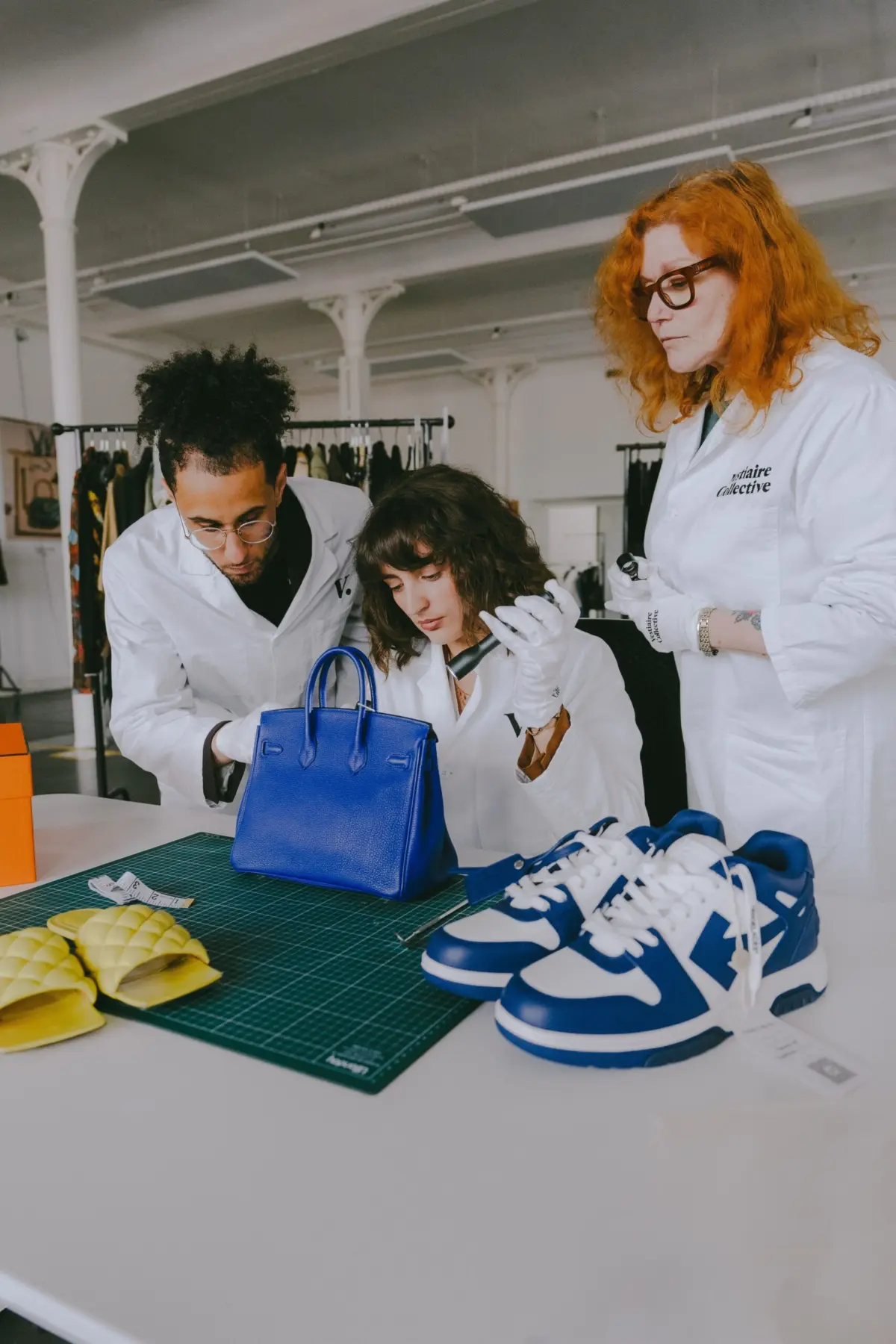
Deep within an aging, repurposed spinning mill in Tourcoing, northern France, the industrial hum of Vestiaire Collective’s largest authentication warehouse serves as the heartbeat of a global operation. This is where the aspirational world of luxury fashion meets the granular reality of logistics. Security is paramount; visitors are ushered through heavy metal gates by dedicated personnel and required to surrender personal bags to lockers before stepping onto the factory floor. Inside, the atmosphere is one of clinical efficiency. Workers clad in crisp white lab coats navigate a complex ecosystem of conveyor belts, meticulously unpacking, authenticating, and inspecting the condition of thousands of items before they are repackaged for global shipment.
For years, this multi-step authentication process has been the cornerstone of Vestiaire Collective’s business model, designed to protect the integrity of the secondary market against the ever-present threats of counterfeits and fraud. However, the platform—and the broader resale industry—now finds itself navigating a volatile new challenge. Following a wave of civil unrest and widespread looting across France and Italy that began on October 17, reports have surfaced indicating that stolen goods from high-end boutiques are increasingly appearing on digital marketplaces. As the resale sector grapples with the fallout, Vestiaire Collective has moved to implement rigorous new measures to ensure that no stolen property—from labels like Louis Vuitton, Dior, Celine, and Hermès—successfully transitions through its platform to new owners.
The scale of the looting, which targeted scores of luxury storefronts, has dramatically elevated the risk profile for resale sites. What was once a battle primarily against sophisticated counterfeiters has evolved into a high-stakes effort to intercept legitimate, yet stolen, merchandise. The urgency of the situation was underscored on Monday, October 19, when the Vestiaire team held an emergency meeting to brief commercial and legal departments on the evolving threat.

During a visit to the Tourcoing facility, PR manager Candice Francisco explained that employees have been issued specific directives to identify suspicious listing patterns. The primary red flag, she noted, is the emergence of new user profiles uploading multiple "never-worn" items in rapid succession. While the company has yet to confirm the presence of looted goods on its platform, the internal posture is one of heightened vigilance. "All of our teams are more and more vigilant," Francisco said. "We are verifying all the new members. If you have an account made two days ago with never-worn Celine, it’s a bit suspicious."
The stakes for the platform go beyond reputation; the French government has issued stern warnings that both buyers and sellers could face severe legal repercussions for trafficking in goods obtained through looting. For a marketplace built on the fundamental pillars of buyer and seller trust, the challenge is twofold: the platform must not only distinguish between genuine and counterfeit items but also verify the legal provenance of every piece.
As the unrest has continued to unfold, the company has maintained a close watch on the situation. If an item is flagged as potentially stolen, the platform’s policy is immediate: the listing is removed, the seller’s account is placed under restriction, and the user is required to provide irrefutable proof of purchase or provenance before any further action can be taken. According to Francisco, this process is deeply collaborative. "Establishing whether a specific item has been stolen requires verified ownership and police records, so our operational response relies heavily on our longstanding relationships with brand rights holders, retailers, or e-tailers and public authorities in France and abroad," he explained.

This sentiment is echoed by Victoire de Coutard, a senior brand manager and authentication specialist at Vestiaire Collective. "When anomalies are detected, we take appropriate preventative measures," she said. "This includes quarantining listings to demand verifiable proof of purchase and systematically complying with official judicial requisitions to support police investigations."
The company maintains direct, open channels with luxury brands, many of which are eager to provide data on serial numbers, RFID tags, and other unique identifying features that can help distinguish stolen inventory from the legitimate secondary market. This intelligence sharing is crucial, as it allows the platform to move beyond visual inspection and leverage the technical tracking capabilities inherent in modern luxury manufacturing.
The broader implications of the looting reached the highest levels of the French government on October 19, when Minister of the Economy Roland Lescure convened an emergency meeting to address the threat of looted goods appearing on digital platforms. Representatives from major resale sites—including Vinted, eBay, and Leboncoin—were briefed on the government’s expectations, which include mandatory and regular reporting of enforcement activities to the authorities, with the first reports due within 48 hours of the meeting. While Vestiaire Collective did not attend the briefing directly, they were represented by the Fédération du e-commerce et de la vente à distance (FEVAD).

De Coutard suggests that the government’s primary focus was on mass-market, peer-to-peer platforms that handle vast, uncurated volumes of low-cost goods. In contrast, she argues that Vestiaire’s "highly controlled" model, which integrates both advanced AI monitoring and specialized human expertise, provides a more robust defense against the illicit trade of stolen luxury goods. "Consequently, we were not the primary target of these specific governmental discussions," she added.
The authentication process at Vestiaire is a sophisticated blend of art and science. Once a listing survives the initial digital vetting—where AI flags suspicious account activity or pricing—the item arrives at the center. There, authenticators examine the minutiae of the product: the typography of labels, the precision of the stitching, the weight of the metal hardware, and the texture of materials. They utilize specialized tools, including high-intensity UV lamps and magnifying glasses, to confirm the item’s pedigree. Quality control inspectors then perform a final audit, cross-referencing dimensions, colors, and stated condition against the digital listing.
However, the sheer volume of trade presents a daunting obstacle. With events like the upcoming Black Friday sale expected to drive traffic—potentially seeing between 1,500 and 3,000 items uploaded daily—detecting stolen goods becomes exponentially more difficult. Henric Hadrien, the director of the authentication site, acknowledged the complexity of the task. "It’s not difficult to create five different accounts and post across them," he said. "Sometimes, it’s impossible to know if you don’t have the serial number."

Despite these hurdles, the company has a track record of cooperating with law enforcement. Before the recent lootings, Vestiaire had already received alerts from Italian and German police regarding items suspected of being stolen. The response protocol is designed to be discreet; rather than alerting the seller immediately, the platform removes the item from the site and coordinates directly with legal teams and the police. If there is sufficient evidence to support a theft claim, the item is surrendered to the authorities. For the buyer, the process involves a full reimbursement, shielding them from the financial fallout of a compromised transaction.
"It’s important to be transparent and serious on this topic," de Coutard emphasized. "Trust doesn’t only cover counterfeit, but all items that don’t follow the commercial rules of the fashion industry."
As the situation in France remains fluid, the retail sector continues to prepare for the possibility of further instability. Ahead of a scheduled protest on October 24, many luxury retailers in Paris and beyond preemptively boarded up their storefronts and bolstered their private security teams. While the intensity of the damage was lower than during the initial wave—with a preliminary government report indicating 24 businesses were looted on October 24 compared to 1,522 the week prior—the challenge for companies like Vestiaire Collective is far from over. As the dust settles, the platform remains on high alert, bracing for a long-term effort to ensure that the secondary market remains a space for circular fashion rather than a conduit for stolen goods.