
Several Western European nations have voiced strong opposition to the potential resumption of the war on Iran, as spiraling global oil and energy prices heavily aggravate a continent-wide cost of living crisis.
Major powers such as Germany and the United Kingdom, which largely maintained a muted stance during the initial phases of the United States and Israeli bombardment of Iran, have increasingly aired their concerns. These governments are now calling for robust diplomacy to end a conflict that has severely disrupted global oil and energy supplies.
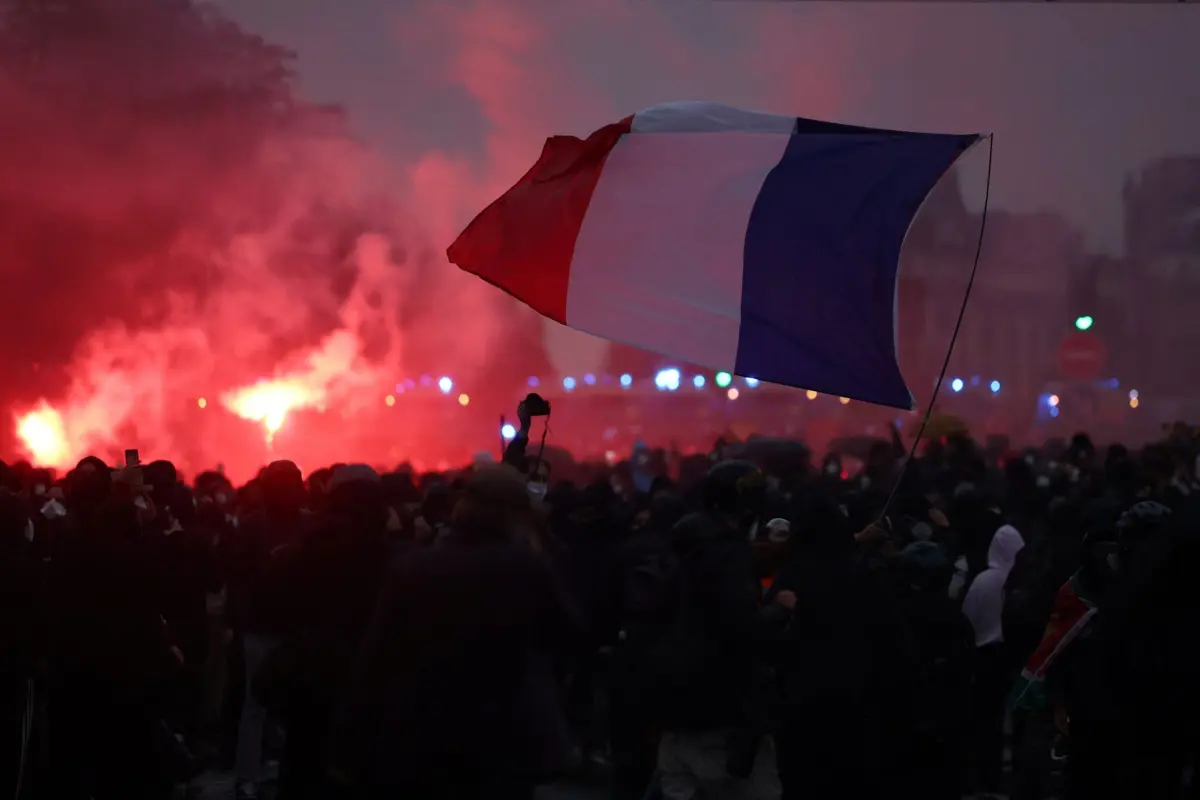
As the winter season approaches in Europe, the continued disruption to energy supplies is pushing household costs upward. This economic pressure is adding fuel to a wave of protests over living standards that has engulfed various European capitals in recent weeks.
The political climate shift has not gone unnoticed by Tehran. Iran’s Foreign Ministry spokesperson Esmaeil Baghaei drew direct attention to what he characterized as a notable change in Germany’s diplomatic position regarding the military attacks against his country. In a public post on the social media platform X, Baghaei recalled remarks made by German Chancellor Friedrich Merz during Israel’s military campaign in June 2025, where Merz had reportedly stated that Israel was doing "the dirty work" for everyone.
Baghaei contrasted those past words with recent warnings from German officials against renewed attacks and their growing appeals to prevent further escalation. To emphasize the philosophical shift, the Iranian spokesperson cited a passage from Friedrich Schiller’s The Maid of Orleans, quoting lines that portray reason being helplessly dragged toward an abyss by the forces of madness.
Experts note that Baghaei’s remarks accurately reflect a broader recalibration across Europe, where leaders are increasingly questioning their alignment with the ongoing US-Israeli war on Iran. With Washington reportedly preparing options for renewed military strikes, policymakers and analysts are asking what further escalation would mean for Europe and whether the conflict might permanently strain already frayed transatlantic relations.
How Has Europe’s Position Changed?
When the United States and Israel launched their initial military strikes on February 28, the leaders of Britain, France, and Germany issued a joint statement condemning Iran’s retaliatory strikes across the region. In their public declaration, British Prime Minister Keir Starmer, French President Emmanuel Macron, and German Chancellor Friedrich Merz stated that they condemned Iranian attacks in the strongest terms.
Significantly, that initial joint statement did not explicitly condemn the opening US-Israeli military campaign, though it did call for subsequent political negotiations. However, nearly eight months into the protracted war, European governments are adopting a vastly different tone, explicitly warning against another major military campaign.
The diplomatic shift was on display when the foreign ministers of Britain, France, Germany, and Italy met with their counterparts from Türkiye, Saudi Arabia, Pakistan, and Egypt in Istanbul to discuss the ongoing conflict and the critical security of the Strait of Hormuz. French Foreign Minister Jean-Noel Barrot warned during the gathering that further escalation between Iran and the US would create nothing but losers and would undoubtedly generate severe consequences for global hydrocarbon prices. Barrot emphasized that the group of eight countries would collectively call on both sides to exercise the utmost restraint because the region cannot afford another spiral of escalation.
While these warnings against new attacks signal an evolving European posture, they do not necessarily mean European governments have abandoned their longstanding concerns regarding Iran’s nuclear program or its regional activities. Instead, the shift reveals deep cracks in European unity regarding how to handle the war.
Spanish Prime Minister Pedro Sanchez has consistently and vocally opposed the US-Israeli military campaign from its inception. At a European Union summit, Sanchez once again condemned the war as illegal, unjust, and unjustified, directly linking the military actions to Europe’s mounting domestic economic costs.
Western nations have long opposed Iran’s nuclear program, which Tehran maintains is strictly for civilian purposes. European powers were signatories to the landmark 2015 nuclear agreement with Iran, which limited Tehran’s nuclear activities in exchange for crucial sanctions relief. However, during his first term in 2018, US President Donald Trump unilaterally withdrew the United States from the accord. Both Washington and Tel Aviv subsequently invoked Iran’s nuclear program as the justification for launching their military offensive in February.
Have European Bases Been Used?
Europe’s underlying divisions over the conflict have been particularly visible when it comes to granting access to military bases and national airspace. While the February 28 statement from Britain, France, and Germany asserted that they did not directly participate in the opening strikes, it noted that they remained in close contact with international partners, including the US, Israel, and regional allies.
Non-participation in the initial wave of strikes, however, did not translate into a uniform European refusal to support subsequent military operations. Germany indicated early in the conflict that it would not restrict the US military from utilizing its bases on German soil, including the vital Ramstein air base, a major hub for American operations.
Britain initially withheld permission for the opening attacks. London later authorized the US to use British military facilities for what were described as specific, limited defensive strikes against Iranian facilities involved in attacks on regional allies. Following that initial reluctance, Britain expanded its authorization to include operations targeting missile sites and military capabilities being utilized to disrupt shipping lanes in the Strait of Hormuz.
France permitted US support aircraft to operate out of Istres, emphasizing that these assets were intended for the defense of regional partners rather than direct participation in attacks inside Iran. Paris later blocked a weapons transport flight destined for Israel that was connected to the ongoing campaign.
Spain took a much firmer stance. After refusing permission for military operations to be launched from the jointly operated Rota and Moron bases, the Madrid government closed its national airspace entirely to US aircraft involved in the war.
These divergent policies represented a patchwork of national restrictions rather than a unified European refusal to cooperate with Washington. Nevertheless, the friction provoked a fierce reaction from US President Donald Trump, who publicly labeled Spain "terrible," threatened to sever trade ties, and declared that Washington wanted nothing to do with the country.
The dispute has exposed a widening transatlantic argument over whether alliance commitments require European governments to facilitate a military campaign they did not choose to join. Mark Hilborne, a senior lecturer at the School of Security Studies at King’s College London, told Al Jazeera that it is entirely possible the war could push European leaders to openly challenge the Trump administration and limit logistical support. What began as a diplomatic disagreement, Hilborne noted, is transforming into a more direct confrontation, suggesting that future requests for European support may face increased resistance.
High Prices and Protests
The economic toll of the conflict has steadily moved to the forefront of European politics. Following the death of Iran’s Supreme Leader Ali Khamenei in the opening strikes, European Commission President Ursula von der Leyen initially expressed hope for the people of Iran while warning that regional instability could trigger a dangerous spiral of violence. By October, however, the direct economic costs to Europe dominated her public messaging. Following an EU summit, von der Leyen remarked that households and industries across the continent were paying the heavy price for a war raging far beyond Europe’s borders.
According to European Commission figures, Europe’s collective bill for imported fossil fuels surged by 106 billion euros, while natural gas prices skyrocketed by approximately 140 percent since late February. Diesel prices across the continent have effectively doubled.
The disruption of energy supplies from the Gulf region and severe restrictions on commercial shipping navigating through the Strait of Hormuz have triggered massive spikes in energy markets. Brent crude, which settled at $72.48 a barrel on February 27 just before the war began, surged to $126.41 by the end of April. Prices have consistently remained well above $100 a barrel, offering little prospect of immediate relief.
Julie Norman, an associate fellow at Chatham House, noted that European nations face profound economic pressures, with energy market disruptions driving up domestic prices just as the continent enters the winter heating season. This dynamic is intensifying public pushback against governments.
Mark Hilborne pointed out that the economic fallout extends beyond energy to vital agricultural inputs. The Persian Gulf serves as a major global hub for nitrogen-based fertilizers, and supply chain disruptions have driven the price of urea up by roughly 70 percent. Furthermore, shipping companies are grappling with soaring insurance premiums and are forced to reroute vessels along much longer maritime journeys. Hilborne emphasized that the war has delivered a direct, measurable, and remarkably rapid impact on consumer and industrial prices throughout Europe.
The desperate search for relief from the energy crisis has generated additional friction between allies. Washington has pressured European governments to release emergency national diesel stocks, while President Trump simultaneously eased restrictions on Russian diesel imports in an effort to drive down domestic fuel costs. That policy shift drew sharp criticism from Ukraine and its international supporters, who warned that renewed energy revenues would directly strengthen Moscow’s war effort.
Meanwhile, the sharpest political consequences are unfolding in the streets of European cities. Protests centered on the soaring cost of living, housing shortages, stagnant wages, and strained public services have erupted in France, Belgium, Italy, Spain, Portugal, Greece, and Albania. While the specific domestic grievances vary and do not constitute a single coordinated movement, sociologists and political analysts agree that the cost of living crisis, deeply compounded by war-induced price hikes, serves as a common thread uniting protesters across the continent.
Donatella della Porta, a prominent sociologist and political scientist, explained to Al Jazeera that opposition to militarism has become a central theme in recent demonstrations organized by young people across Europe. These movements reflect mounting anger over surging military budgets implemented at the expense of public welfare programs. Della Porta pointed to active student opposition to military recruitment initiatives in schools, defense-related research at universities, and the use of national ports to transport weaponry, linking these specific concerns to broader generational anxieties about the future.
Young protesters are increasingly worried that their futures are being compromised not only by global warming, but also by geopolitical conflicts that threaten to draw them into the battlefield, she noted. Della Porta added that younger generations frequently connect modern wars with broader concepts of violence, having been politically socialized during the massive public mobilizations against the Israeli military campaign in Gaza.