
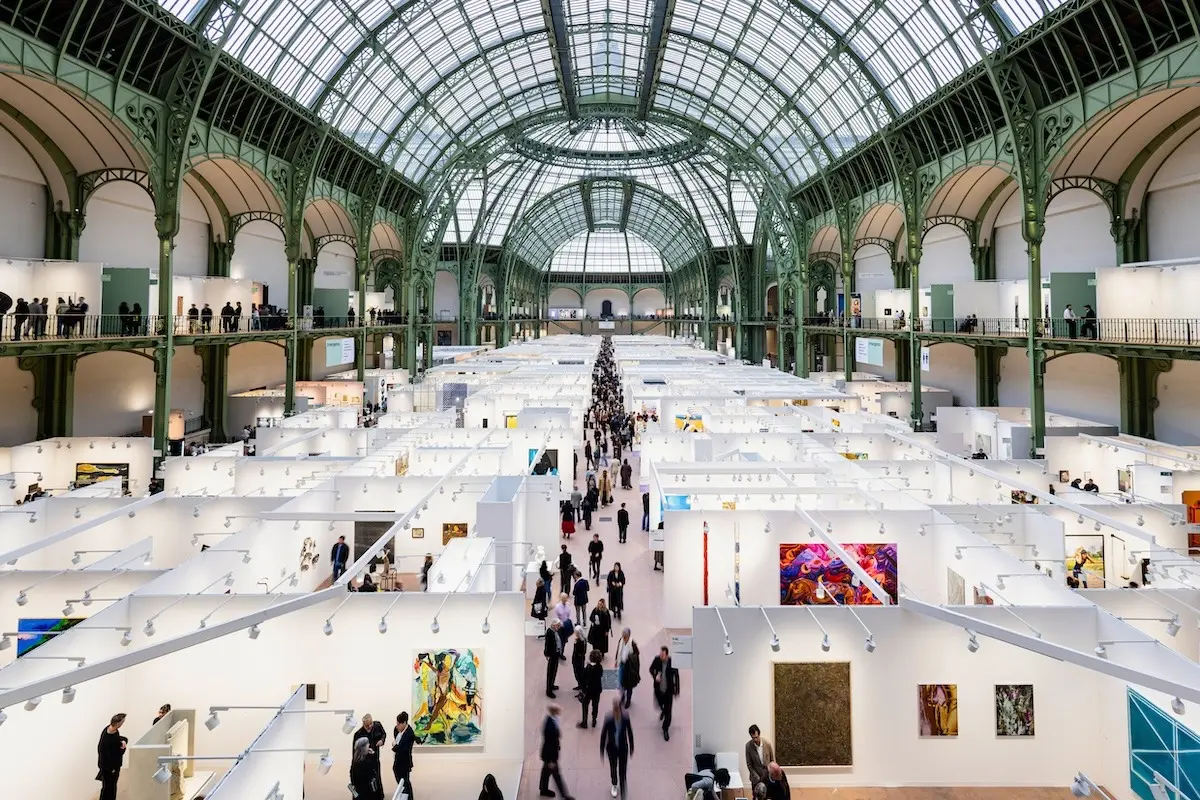
As France faces a period of heightened social volatility, the cultural heart of Paris has been forced into a defensive posture. Major institutions—including the Louvre, the Musée d’Orsay, the Picasso Museum, and the exhibition spaces at the Grand Palais—have announced they will close their doors this coming Saturday. This preemptive measure follows reports of planned protests within the French capital, raising concerns over the safety of both the public and the nation’s irreplaceable cultural heritage.
The decision was guided by the French Ministry of Culture, which issued a directive urging all national and public museums to take every necessary precaution to protect visitors, staff, and the artworks themselves. This move comes in the wake of significant civil unrest across France, where largely peaceful protests regarding social and economic inequality, exacerbated by the rising cost of living, have recently taken a more chaotic turn. In many districts, shop owners have begun boarding up storefronts in anticipation of a potential second round of looting.
President Emmanuel Macron has taken a hardline stance in an attempt to restore order. He has announced that only demonstrations formally organized by labor unions will be permitted on Saturday, and partial curfews are set to be implemented in several cities. Addressing the violence that marred the previous weekend’s events, President Macron attributed the chaos to "political and seditious acts by ultra-far-left groups who aimed to bring down the republic." For the museum sector, the closures represent a significant disruption, highlighting the precarious position of cultural institutions when national stability is threatened.
A Recognition of Intimate Resistance: The Marcel Duchamp Prize
Amidst the backdrop of national unrest, the French art world paused to celebrate one of its most prestigious honors. The Marcel Duchamp Prize, which recognizes excellence in the contemporary art scene, has been awarded to the artist duo Brognon Rollin, comprised of David Brognon and Stéphanie Rollin. The announcement was made by the Musée d’Art Moderne de Paris (MAM), where the pair’s winning project, titled "5,376 years, 1892 months, 1110 days, 1201 hours," is currently being highlighted.
The project is a poignant examination of the passage of time and the human condition. To create the work, Brognon and Rollin, who split their time between Paris and Luxembourg, collaborated with members of various abstinence groups. They collected sobriety tokens—physical markers representing the length of time an individual has maintained their sobriety—and aggregated these periods of time into a single, immersive installation. The visual language of the piece evokes the atmosphere of an arcade or a fairground, juxtaposing the fleeting, playful nature of such environments with the heavy, persistent weight of personal transformation.
Fabrice Hergott, the director of MAM, lauded the selection, noting that the duo’s work is uniquely focused on the invisible struggles of daily life. "With Brognon Rollin, the Marcel Duchamp Prize recognizes a demanding body of work that is committed to materializing what usually escapes the eye: the time of waiting, of addiction, and of intimate resistance," Hergott said. The win cements the duo’s reputation as observers of the human psyche, turning abstract concepts of endurance into tangible, sculptural form.
Perspectives from the Global Art Market and Cultural Sphere
Beyond the borders of France, the art world continues to grapple with a variety of complex issues ranging from the ethics of provenance to the physical security of public monuments.
In Spain, a heated debate has emerged regarding an upcoming sale at Magna Art Auctions. The auction house is preparing to sell everyday items and mementos belonging to the family of the late dictator Francisco Franco. As the sale date approaches, interest from collectors has caused prices to surge; however, historic preservationist groups are vehemently opposing the auction. These organizations argue that a significant portion of the lots includes items of genuine national heritage that should be preserved in the public domain rather than sold into private collections. The preservationists are currently calling for an immediate suspension of the sale, citing the need to protect the historical integrity of these objects.
Concerns over state control and cultural preservation are also mounting in France. A legislative bill introduced this past March has sparked intense discussion among legal experts and art professionals. The proposed legislation seeks to significantly broaden the government’s definition of art classified as a "national treasure." Under current law, objects designated as national treasures are subject to strict export regulations, and certificates for their removal from the country can be denied. Critics of the bill fear that expanding this definition could grant the French state excessive authority over privately owned artworks, potentially stifling the freedom of the private art market and placing an undue burden on collectors.
In the United States, acts of vandalism continue to threaten public art installations. In a recent incident in Quantico, Virginia, a man was arrested after allegedly using a sledgehammer to decapitate the figure of a Marine in the iconic Iwo Jima statue. The attack resulted in hundreds of thousands of dollars in damage, leaving officials to manage the difficult task of restoring a monument that carries deep significance for the military community.
Meanwhile, the infrastructure of the art world continues to evolve through institutional growth. In Miami Beach, the Bass Museum of Art has unveiled ambitious design plans for its upcoming expansion. The designs, crafted by the Los Angeles-based architecture firm Johnston Marklee, aim to modernize the museum’s footprint and enhance its ability to host contemporary exhibitions. Similarly, in Shenzhen, China, the Róng Museum of Art (RMoA) is preparing for its highly anticipated 2027 debut. The museum has officially appointed Freya Chou, Li Jia, and Susanna Zhu to its curatorial team, signaling a clear intent to establish a robust intellectual and artistic program before the institution opens its doors to the public.
Reinterpreting a Masterpiece: The Science of Van Gogh’s Sky
While contemporary news shifts rapidly, the art historical world is still finding new ways to illuminate the past. Researchers have recently unveiled findings that may have finally decoded the astronomical mystery behind Vincent van Gogh’s 1889 masterpiece, The Starry Night.
The painting, known for its swirling, expressive skies, has long been a subject of speculation—was it a product of pure imagination, a symbolic interpretation of the artist’s psyche, or a faithful representation of the night sky? According to a report from the Times of London, a team of researchers has utilized modern scientific techniques to determine that the painting is, in fact, a remarkably realistic astronomical observation.
By superimposing maps of the stars as they would have appeared in July 1889 over the composition of the painting, the researchers identified the Taurus constellation, the Hyades star cluster, a waning crescent moon, and the planet Venus. The data suggests that Van Gogh, who was known to observe the night sky from the east-facing window of his asylum room in Saint-Rémy-de-Provence, was recording the sky as it appeared on the night of July 22, 1889.
This date, which falls a month later than previous estimates, provides a fascinating glimpse into the artist’s working method, confirming his commitment to painting from observation even during his most turbulent years. As noted by the Springer Nature group, which published the findings in the journal Scientific Reports, the study effectively settles a long-standing debate. It reaffirms Van Gogh’s genius as an artist who could translate the cold, precise data of the cosmos into a vision that is as emotionally resonant as it is accurate. This discovery serves as a reminder that even in an age of constant change and uncertainty, the works of the past continue to offer new, tangible truths.