
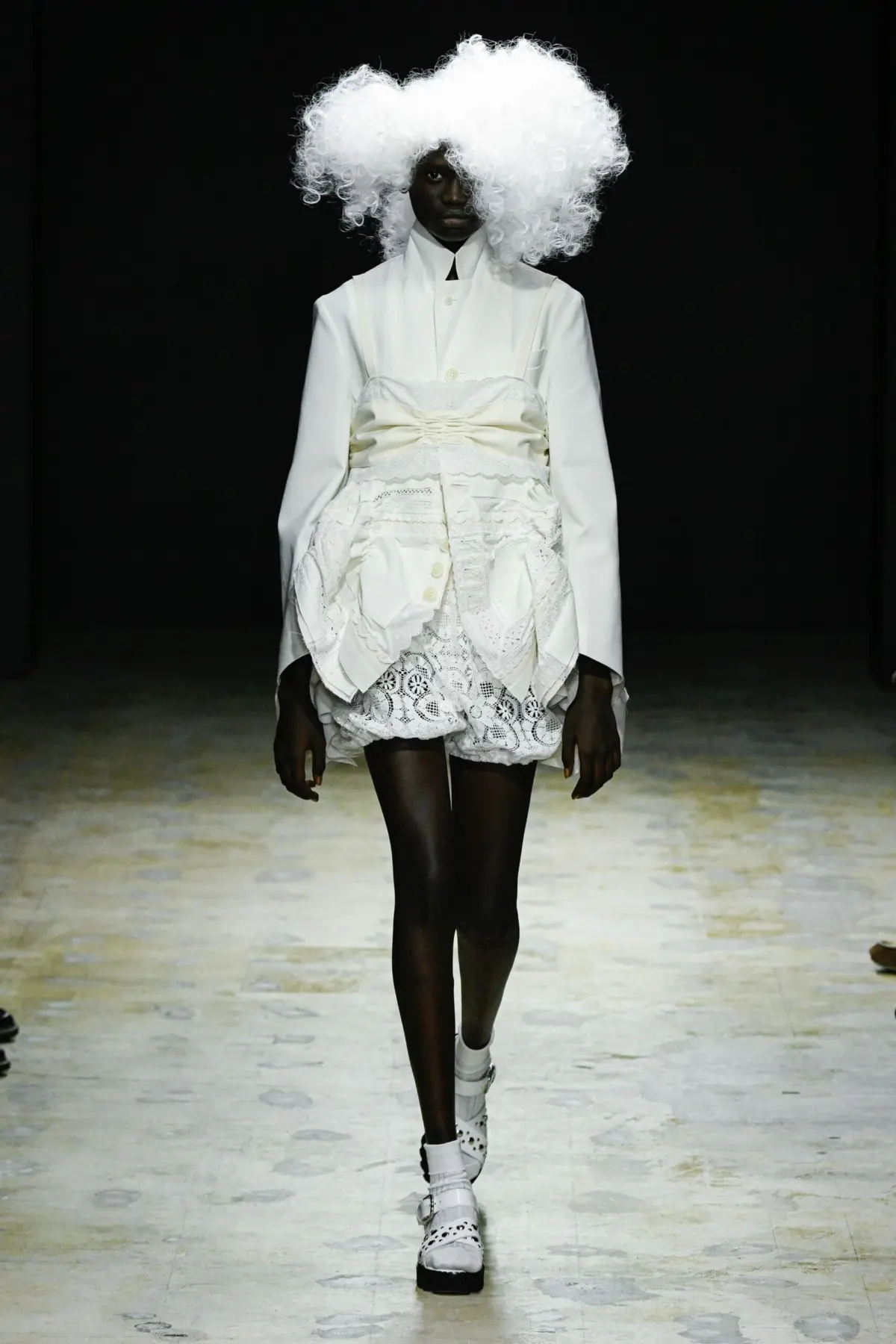
For fashion insiders and loyalists of the Comme des Garçons universe, the Tao Kurihara runway show has established itself as an essential, late-season ritual. Held in the early morning hours within the subterranean depths of the Comme des Garçons headquarters in the Aoyama district of Tokyo, these presentations offer a rare moment of serenity amidst the frantic pace of the fashion calendar. This season, Kurihara invited her audience into a space of quiet reflection and artistic liberation, titling her latest collection "MY TRUE SELF."
The title was not merely a thematic flourish but a foundational philosophy for the work presented. Kurihara aimed to distill the very essence of creation, stripping away the external pressures of industry expectations, critical appraisal, and commercial trend-chasing. The result was a collection defined by a profound sense of purity and freedom, expressed primarily through the expansive and symbolic use of white.
The runway experience began with an intricate exploration of domestic textiles and historical craftsmanship. Kurihara opened the show with layered broderie anglaise, a technique that felt both nostalgic and subversive. The garments featured complex arrangements of doilies, their delicate, lace-laden surfaces meticulously fashioned into coats and dresses. There was a surreal quality to these pieces; as the models moved, the silhouettes evoked the domesticity of lace curtains and ornate tablecloths, blurring the lines between home décor and wearable art. This opening sequence set a tone of quiet, surreal storytelling that has become a hallmark of Kurihara’s design language.
Following this ethereal introduction, the collection pivoted into a sharper, more structured chapter. The delicate whites gave way to a series of gray tailoring pieces. These garments offered a reprieve from the softness of the opening looks, showcasing the rigorous construction and attention to proportion that remains a prerequisite for any designer operating under the Comme des Garçons umbrella. The gray tailoring acted as a bridge, grounding the collection before Kurihara transitioned back into a vibrant, more whimsical finale.
The closing segment of the show erupted in a cacophony of color and texture. Cotton capris and ruffled skirts were emblazoned with Liberty-esque floral prints, a vivid contrast to the monochromatic chapters that preceded them. These garments felt like a celebration of uninhibited joy, reinforcing the collection’s overarching theme of childlike spontaneity.
The visual narrative was further heightened by the styling of the models. Their hair was styled in soft, cloud-like formations, adorned with straw and foliage, which served to emphasize the botanical inspiration behind the collection. This organic motif was brought to life through a collaboration with artist Hitomi Mori. Mori’s contribution featured intricate botanical embroidery, which decorated various garments throughout the show. For those looking to delve deeper into the creative process, Mori’s work, which is documented on her Instagram handle @nuimori1, provides an intimate look at the level of detail that defined the collaboration.
The auditory experience of the show was equally intentional. The soundtrack, composed by Kurihara’s husband, was a delicate soundscape that echoed the storybook whimsy of the clothes. The arrangement featured a blend of harp melodies, birdsong, and the rhythmic, sparse plinking of a piano. This music served as the heartbeat of the show, anchoring the ethereal visuals in a grounded, organic atmosphere that felt removed from the noise of the modern city outside.
Following the presentation, the Comme des Garçons press room, which is currently hosting the seasonal exhibition of all the house’s brands, provided a setting for a more intimate discussion with the designer. Kurihara, appearing characteristically cheery and reflective, spoke candidly about the headspace she occupied while designing the collection.
"I decided to just set aside all of my concerns and just create something I truly, purely wanted to make," Kurihara explained. "How should I put it? It’s like when a child draws a picture; they aren’t thinking about wanting to be praised. It’s that kind of mindset, a state of total, genuine focus."
This pursuit of a "childlike" mindset—one devoid of the anxiety of external validation—was a driving force for the entire collection. When asked if this indicated a departure from her previous work, Kurihara was thoughtful. "Saying this might make it sound like my previous work wasn’t like that," she noted, "but this time I really felt I distilled everything down to just what I purely, from the bottom of my heart, wanted to create."
In the context of the high-stakes fashion industry, where collections are often dissected for their commercial viability and trend relevance, Kurihara’s approach was notably brave. Yet, to her credit, the collection never succumbed to the traps of mere sentimentality or nostalgia. The clothes possessed a clarity and a presence that allowed them to stand on their own merits. They were not "looking back" in a mournful sense; they simply existed as they were—a direct manifestation of the designer’s internal creative process.
The collection also served as a testament to the enduring lessons imparted by Rei Kawakubo, the founder of Comme des Garçons, who has long championed the idea that creativity and commerciality do not have to be mutually exclusive. Kurihara navigated this balance with finesse. While the intricate embroidery provided by Hitomi Mori might be considered difficult to produce at a mass scale, Kurihara found a solution that allowed the art to reach a wider audience. By magnifying these delicate botanical artworks and printing them onto more accessible canvases—such as dresses and T-shirts—Kurihara ensured that the spirit of the collaboration could be shared globally without losing its integrity.
The exhibition at the Comme des Garçons headquarters, which will remain open to the press and industry insiders for the next few days, offers a comprehensive look at the season’s output. Seeing the garments up close allows for a deeper appreciation of the construction—the way the broderie anglaise is layered to create volume, the precision of the gray tailoring, and the way the botanical prints harmonize with the silhouettes.
As the industry looks toward the upcoming seasons, the "MY TRUE SELF" collection stands as a reminder of the importance of artistic autonomy. In a climate often dominated by digital trends and rapid-fire production cycles, Tao Kurihara’s commitment to a personal, almost meditative design process offers a refreshing perspective. By focusing on the purity of her vision and the joy of the creative act, she has crafted a collection that is not only a reflection of her true self but also a poignant invitation for the audience to find beauty in simplicity, nature, and the uninhibited act of creation.
The success of the show, held in the quiet, focused space of the Aoyama headquarters, reaffirms why these early-morning presentations remain a highlight for the fashion community. They provide a moment of stillness, a chance to witness a designer at the height of her craft, working not for the applause of the crowd, but for the satisfaction of the work itself. As the models exited the runway, the lingering impression was one of a story successfully told—a narrative of flowers, lace, and the pursuit of a singular, genuine artistic expression. With this collection, Kurihara has once again demonstrated that when a designer trusts their own intuition, the result is something that resonates far beyond the runway.