
A United States federal judge has issued an order requiring the Department of Homeland Security (DHS) to immediately halt operations aimed at identifying non-citizen voters across nine states, handing down the decision just ahead of the upcoming midterm elections.
The ruling, delivered by US District Court Judge Araceli Martinez-Olguin, found that the ongoing federal investigations likely violate a key provision of the Voting Rights Act that explicitly prohibits voter intimidation. Furthermore, Judge Martinez-Olguin noted that the DHS may have relied on flawed data to execute its investigations, raising serious concerns regarding the accuracy and legality of the agency’s methods during a sensitive electoral period.
The court order specifically applies to federal efforts operating within California, Connecticut, Georgia, Missouri, Nevada, New York, Pennsylvania, Washington, and Wisconsin. The injunction arrives as campaigns enter their final stretches, placing federal voting security initiatives under intense legal and public scrutiny.
Operations Spark Allegations of Intimidation and Flawed Data
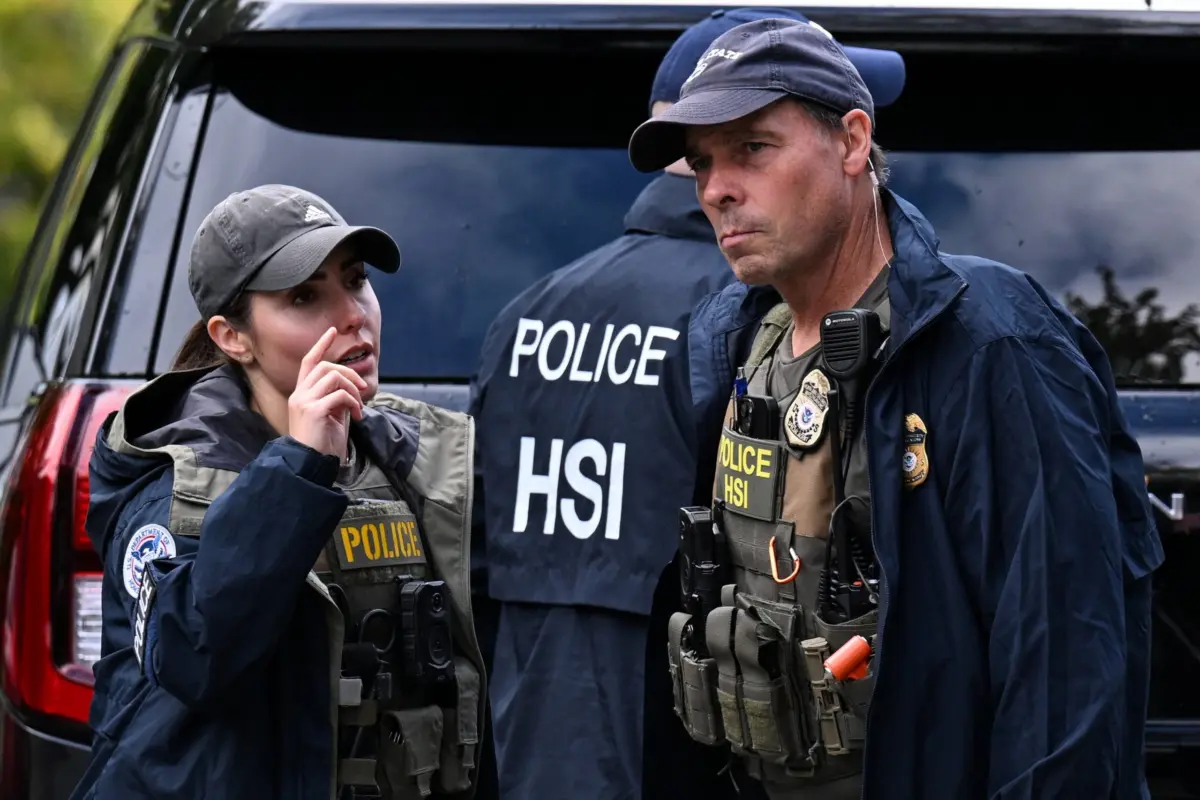
In recent weeks, the DHS has actively publicized what it has described as a concerted push to identify individuals who have committed voter fraud. As part of these operations, some local DHS offices went so far as to post photographs on public platforms showing federal agents knocking on the doors of suspected non-citizen voters.
These high-visibility actions took place as the administration of US President Donald Trump sought to draw heightened national attention to instances of voter fraud in the lead-up to the November 3 midterm vote. While election officials and non-partisan watchdogs routinely document isolated instances of fraud in various election cycles, such cases remain exceedingly rare. Extensive studies and state-level reviews have continuously shown no evidence to indicate that non-citizen voters have ever influenced the outcome of any election at any level in the United States.
Judge Martinez-Olguin emphasized in her ruling that the visible tactics employed by the agency create an "objectively reasonable fear of law enforcement entanglements." She wrote that such tactics ultimately intimidate not only targeted individuals but also citizens who are simply urging or aiding others in exercising their lawful right to vote.
Writing about the potential chilling effect of the operations, the judge underscored that the presence of law enforcement at citizens’ homes weeks before an election crosses the line into prohibited intimidation under federal voting rights protections.
Legal Challenge and Arguments from Plaintiffs
The federal operations were challenged in court through a comprehensive lawsuit filed by a coalition of organizations and local governments, including the California Nurses Association, National Nurses United, the Voto Latino Foundation, and the counties of San Francisco and Santa Clara.
In their legal filings, the plaintiffs presented accounts showing that numerous US citizens felt they had been wrongly identified, targeted, and questioned as part of the DHS’s aggressive investigations. Attorneys representing the groups argued that the agency’s methodology was fundamentally compromised from the beginning.
A lawyer representing the plaintiffs stated that it was clear from the start that the DHS built its target lists on bad data, failed to cross-examine or verify how often its information was incorrect, and recklessly deployed armed agents to people’s homes mere weeks before a critical election.
In response to Thursday’s ruling, the DHS defended its actions in an official statement, maintaining that its investigations were strictly aimed at safeguarding the electoral process. The agency asserted that its operations were designed for "removing aliens who vote and dilute the votes of US citizens."
"We have no plans to question or investigate people we believe to be US citizens," the DHS statement added, defending the necessity of maintaining integrity within the voter rolls.
Reactions and Broader Implications for the Midterm Elections
Civil rights advocates and legal experts hailed the federal court’s decision as a vital defense of democratic participation. Benjamin Farley, the supervisory counsel for democracy defense at the National Immigration Law Center, emphasized that the ruling sends an unambiguous message regarding the boundaries of federal power and voter protection ahead of the midterm vote.
"Yesterday’s decision is a clear rebuke of the government’s efforts to scare voters away from the polls this November and a reminder that all US citizens — regardless of color, place of birth, or the nationality of their family members — have the right to participate in American elections free of intimidation," Farley said.
Reiterating the resilience of the electorate in the face of federal scrutiny, Farley added, "No armed federal agent is going to stop us from casting our vote."
The ruling places an immediate halt on the targeted door-to-door operations in the nine specified states, forcing the Department of Homeland Security to reevaluate its strategies as election day approaches. With early voting already underway in several jurisdictions, the decision provides immediate relief to advocacy groups and local election administrators working to ensure that voters can access the polls without fear of government interference or unwarranted law enforcement encounters.