
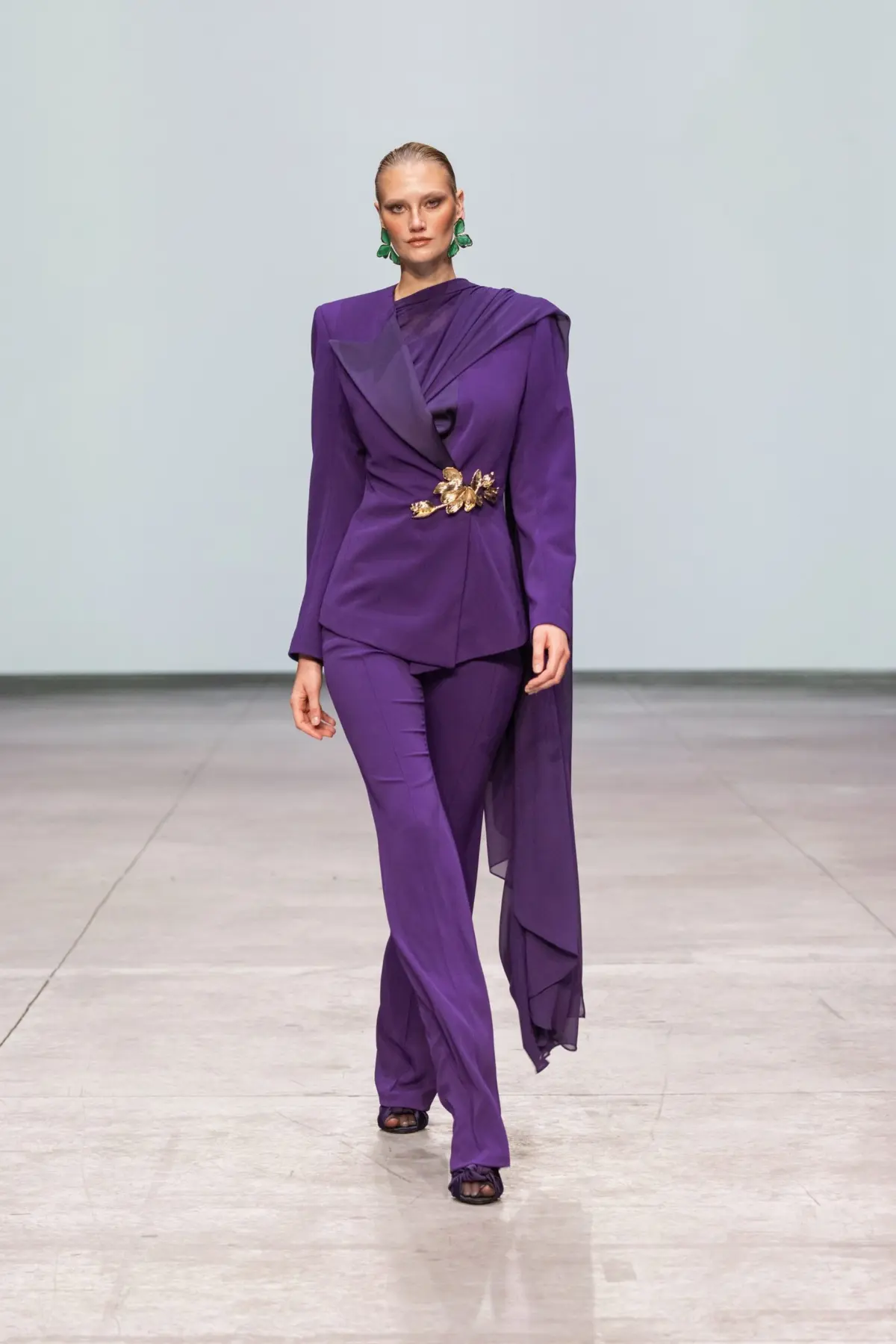
Alfredo Martínez has long been a fixture of the Mexican fashion landscape, known for his ability to craft silhouettes that command attention. For his spring 2027 collection, the Guadalajara-born designer turned his focus toward the subconscious, citing the various stages of sleep as the foundational framework for his latest work. The runway show was structured into three distinct chapters, each intended to reflect a different phase of the dreaming process. Yet, as the garments made their way down the catwalk, the narrative arc of the subconscious felt less like a literal translation and more like a fluid, atmospheric backdrop. While the thematic connection to the dream state—and even the intellectual influence of a poem by the legendary 17th-century nun and poet Sor Juana Inés de la Cruz—remained somewhat abstract, the clarity of the clothing itself left little room for ambiguity.
In the world of high fashion, the success of a collection is often measured not by the complexity of its conceptual inspiration, but by the tangible strength of its execution. By this metric, Martínez delivered a resounding success. The pieces presented were imbued with a timeless quality; while they certainly resonated with the contemporary zeitgeist, they possessed a structural integrity that would have been just as striking in 1987. This specific year was no mere coincidence or stylistic whim on the part of the designer. It served as a deliberate homage to a pivotal moment in fashion history, particularly the work of Yves Saint Laurent during that era. The unmistakable influence of Saint Laurent’s sharp tailoring and bold, architectural approach to evening wear served as a grounding force throughout the collection, bridging the gap between historical reverence and modern sensibility.
Beyond the ateliers of Paris in the late eighties, Martínez drew from a closer, more visceral source of inspiration: the world of Latin American telenovelas. These cultural touchstones, which reached their zenith of influence during the same decade that informed his tailoring, provided the emotional fuel for the collection. Telenovelas are characterized by their larger-than-life heroines, high-stakes plots, and, most importantly, the impeccably dressed villains who often steal the show. These antagonists, with their razor-sharp style and commanding presence, became a central archetype for the designer.
"I really went all in on the drama this time, the kind of drama you see in soap operas, because I love it," Martínez remarked during a press briefing before the show. "It’s part of who I am, but I don’t bring it out that often." By leaning into this theatricality, Martínez tapped into a reservoir of fashion that prioritizes impact and visual narrative. He managed to distill the essence of the "telenovela villainess"—someone who faces the world with a sense of unwavering elegance and high-octane glamour, regardless of the turmoil unfolding in her personal life.
In his previous seasons, Martínez has built a reputation for centering his collections around iconic, singular figures. He has explored the legacy of Paloma Picasso in his fall 2022 collection and the artistic spirit of Carmen Mondragón for fall 2025. This season, however, represented a shift in his creative process. Instead of channeling a specific historical woman, he was occupied with the concept of a "dream woman." The figures on the runway were not so much distinct individuals with backstories, but rather manifestations of fleeting images, emotional situations, and dramatic scenes.
The common thread connecting these images was a collective desire for spectacle. Martínez conceptualized his muse as a woman who refuses to let her circumstances diminish her appearance. Whether she is navigating the aftermath of a divorce, wiping away tears, or celebrating a monumental personal victory, her attire serves as armor. "There’s the woman who’s about to get divorced and is going to look spectacular; there’s the woman who’s just finished crying but still needs to look amazing when she goes out to face people; and there’s the woman who just accomplished something incredible and is feeling on top of the world," he explained. By designing for these specific psychological states, Martínez transformed his clothes into vessels for empowerment and self-expression.
To achieve this vision, Martínez leaned into the signatures that have established him as the undisputed king of sharp, structured shoulders and precisely cut pencil skirts within the Mexican fashion industry. These elements were omnipresent, anchoring the collection in his established design language. The tailoring was aggressive and precise, creating a silhouette that felt both formidable and sophisticated. To heighten the drama, he utilized a color palette that moved from stark, authoritative black to deep, moody violet, punctuated by lush shades of green ranging from chartreuse to seafoam. Accents of gold were woven throughout, serving as the necessary hardware to reinforce the 1980s-inspired glamour that the collection sought to reclaim.
Perhaps the most surprising development in this collection was the designer’s venture into floral motifs. Martínez is not typically known for botanical prints, making their inclusion a notable departure from his usual monochromatic or solid-color preferences. He chose the orchid as his primary subject, integrating the delicate, complex flower into the show’s second chapter. These motifs appeared on fluid dresses and separates that offered a necessary counterpoint to the rigid tailoring of the other chapters. Even with the introduction of these organic, softer elements, the clothes retained the strength and character that have become synonymous with the Martínez name. The orchids felt like an evolution rather than a detour, demonstrating his ability to incorporate new textures and patterns while staying true to his core identity.
What makes Martínez’s work particularly compelling is his capacity for introspection. Many designers struggle to balance the need for growth with the desire to maintain a recognizable aesthetic, often falling into the trap of repetitive design. Martínez, however, has mastered the art of revisiting his own codes, finding fresh interpretations that allow his brand to evolve without losing its soul. By layering the dramatic sensibilities of the telenovela with the rigorous tailoring of 1980s high fashion, he proved that he is not interested in standing still.
The thematic link to the stages of sleep may have remained an elusive, perhaps even secondary, element of the presentation, but it did not detract from the collection’s overall impact. The show succeeded because it leaned into what Martínez does best: dressing women who want to be seen, who want to project strength, and who understand that fashion can be a powerful tool for navigating the drama of life. Whether or not the audience fully grasped the nuance of his dream-inspired chapters mattered little compared to the visual payoff of the garments themselves.
In the final assessment, the spring 2027 collection serves as a testament to Martínez’s enduring vision. It was a show defined by its theatricality, its technical precision, and its unwavering commitment to the idea that clothing should be a source of confidence. As the final looks left the runway, it was clear that Martínez had successfully navigated the balance between nostalgia and innovation. By drawing from the past—be it the iconic silhouettes of the 1980s or the larger-than-life archetypes of television drama—he managed to create a collection that feels entirely relevant to the women of today, proving once again that in the hands of a skilled designer, the most dramatic dreams can be translated into reality.