
(This story was co-published with ProPublica, a nonprofit newsroom that investigates abuses of power.)
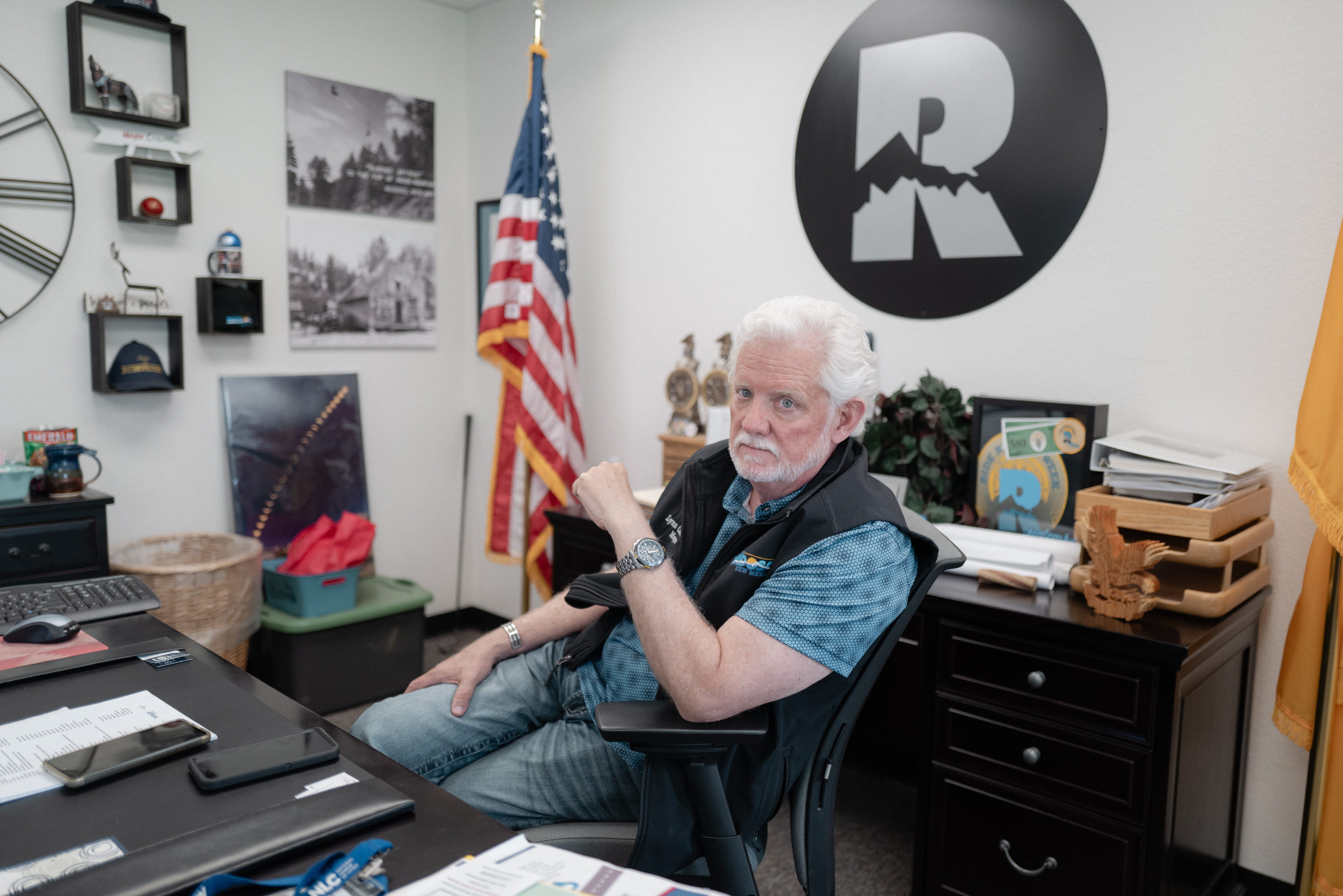
Peak tourist season had arrived in Ruidoso, New Mexico, and Mayor Lynn Crawford was campaigning hard to convince the public that the mountain village was completely safe. A Republican with white hair and a distinct Texas drawl, Crawford expressed deep frustration with residents who were sharing warnings of potential flooding on social media. "They spout stuff off," he said in a local radio address on June 30, 2025. "And I don’t know why they’re so afraid. I do not understand it."
The community was still reeling from severe flooding the previous summer, a disaster that struck after two major wildfires burned 25,000 acres of forest above the town in the Sacramento Mountains. Combined, those fires and subsequent floods had destroyed roughly 1,000 homes. The Village of Ruidoso and its smaller neighbor, Ruidoso Downs, are home to a permanent population of some 10,000 residents, but that number more than doubles during the lucrative summer months.
Since the previous year’s catastrophe, local residents had been perpetually on edge. A new monsoon season had just arrived, bringing sporadic, high-pressure flooding that directly jeopardized the town’s primary economic engine: horse racing. At stake were massive crowds gathering to celebrate the Fourth of July, watch elite quarter horse racing, and enjoy the cool mountain weather that had lured generations of Texans across the state line for generations.
"We have flooding temporarily," Crawford told a Texas news anchor in a televised interview. "And just almost as fast as it came to town, and went through town, it’s gone." Crawford, who was 64 years old at the time, managed an exclusive club at the Ruidoso Downs Race Track & Casino, once openly referring to that work as his "real job." He earned less than $26,000 annually as the village’s mayor.
But if the town’s economy was precarious, its geography was even more dangerous. The South Fork and Salt fires had severely charred the landscape, leaving behind hydrophobic soils that could no longer absorb heavy water. Experts often compare the phenomenon to spilling hot wax on a carpet, letting it cool, and then repeatedly pouring water over it. Placing that hardened, impermeable surface on steep hillsides directly above a river lined with log homes, tourist shops selling wooden bears, and an iconic racetrack created a ticking time bomb.
Elected officials were well aware of the threat, yet they clung tightly to Ruidoso’s foundational premise: that nature could somehow be subdued for the enjoyment of tourists and the financial profit of the community. Nowhere was this attitude more apparent than at the racetrack itself, where the Rio Ruidoso, channeled through concrete culverts, crossed directly through the infield. After the 2024 flooding severely damaged the facility, the culverts were rebuilt using a $16 million public investment authorized by New Mexico’s Democratic governor, Michelle Lujan Grisham.
The racetrack had only recently reopened to the public, and flooding was once again threatening to derail the racing season. On June 26, internal records show, Ruidoso’s emergency management department was operating at a heightened threat awareness level. Flash flooding had already destroyed a bridge upstream from the town, and the local forecast called for continued heavy rain.
Yet publicly, the village insisted it was fully prepared and that the community was entirely safe. The very next day, the local emergency manager reduced the threat level a notch, and the village’s communications department openly chided residents for sharing warnings of catastrophic flooding on social media, complaining that some posts featured outdated videos. "Protect our community from fear-based falsehoods," the village implored in a published public service announcement.
On July 4, just one state over, violent flooding killed more than 130 people in central Texas. However, multiple tourists arriving in Ruidoso for the holiday weekend said they had no idea the mountain town was facing any danger. At the local racetrack, the horses ran as scheduled, and Mayor Crawford hosted affluent members at the exclusive Ruidoso Jockey Club, where private tables cost as much as six figures.
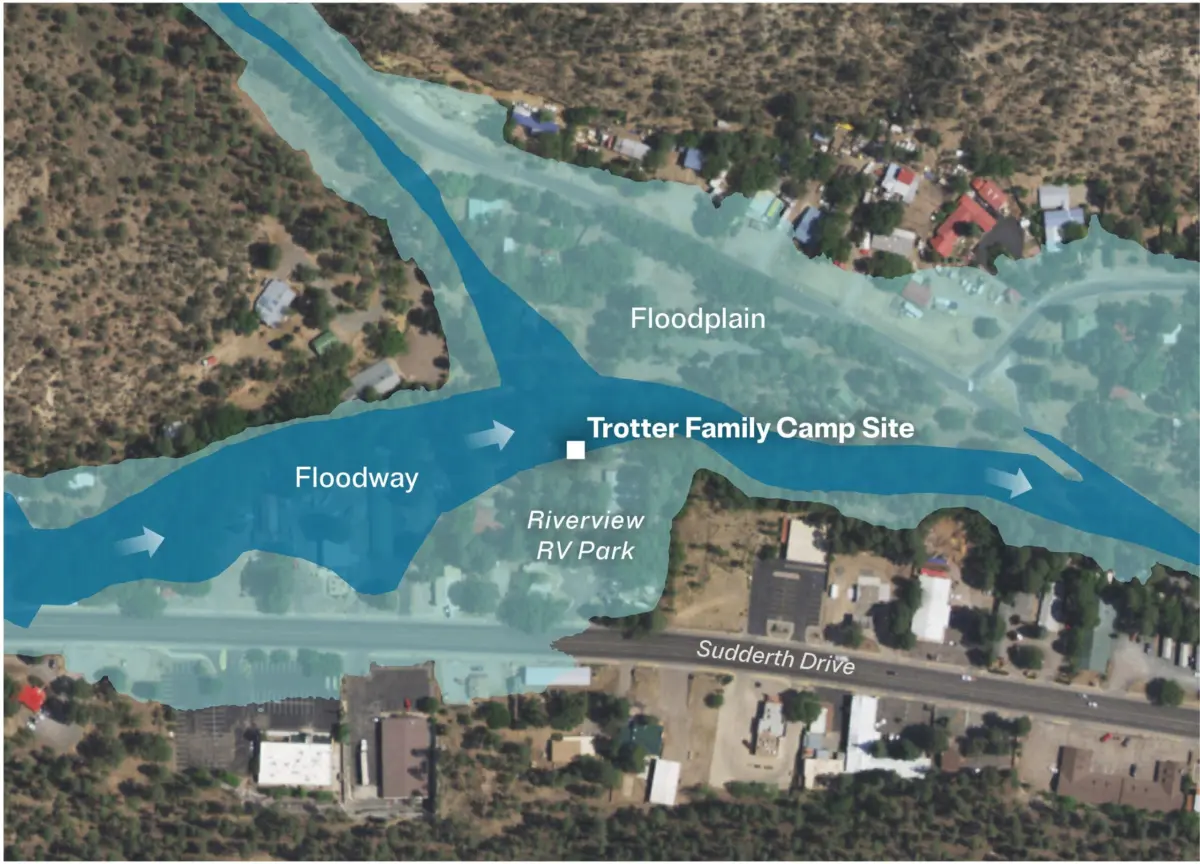
That weekend, Sebastian Trotter and his family traveled to Ruidoso from El Paso, Texas. Sebastian was an active-duty Army helicopter pilot stationed at Fort Bliss; his wife, Stephanie, was a nursing student. Believing the destination was family-friendly and finding no severe weather warnings online, they brought their two children and three dogs. On Sunday, July 6, they parked their travel trailer in a desirable, picturesque spot at the water’s edge inside the Riverview RV Park. In online photographs, the local river appeared gentle and inviting. "You could go put your toes in," Sebastian recalled.
That afternoon, the Rio Ruidoso—whose name translates from Spanish as "noisy river"—briefly flooded its banks, prompting local firefighters to rescue at least four people. The Trotters watched the water rise, but the campground host assured them it was a regular, harmless occurrence. Soon enough, the river receded back into its channel.
Within the park, the Trotters’ children—seven-year-old Sebastian Rowan and four-year-old Charlotte—bicycled beneath the tall mountain pines. The young boy was an enthusiastic soccer player enchanted by the idea of camping in the deep woods, while Charlotte was bright and cheerful, known to playfully apply glitter to her father’s mustache. Later, the family walked together through the village, where elk and wild horses occasionally graze within plain sight of visiting tourists.
On Tuesday, July 8, the Trotters visited a nearby lake before dark storm clouds began forming overhead. Deciding to head back into town, they ordered pizza and allowed the children to pick out small souvenirs. Young Sebastian selected a colorful rainbow gemstone, while Charlotte chose a matching bracelet and ring. They then returned to the RV park to relax by the riverbank.
At 1:00 p.m. that afternoon, Mayor Crawford presided over a scheduled council meeting at Village Hall. He began the session by recognizing the victims of the Texas floods and drawing a comparison to Ruidoso’s relative success. "We want to keep all of central Texas in our thoughts and prayers and see how bad it was and how fortunate we’ve been," he said. "The goal of the village is to protect the village." To Crawford, that meant carefully balancing public safety with the vital demands of tourism.
At almost that exact moment, massive storm clouds gathered rapidly over the surrounding mountains. Even short periods of moderate rainfall on severe burn scars can instantly unleash destructive post-fire floods. By 1:30 p.m., radar indicated that severe storms might douse both burn scars simultaneously. A little before 2:00 p.m., local firefighters texted radar images to one another. "It could be interesting," one wrote. At the time, only about a third of the fire department was on duty, and Fire Chief Cade Hall had for weeks declined to position additional flood specialists near low-lying areas.
Chief Hall subsequently disputed ProPublica’s reporting regarding the emergency response posture, though he declined to comment with specific details.
Less than an hour later, a devastating new flood arrived, carrying heavy debris that quickly backed up behind narrow bridges. The water kept rising, spilling over roadways until the natural course of the river entirely disappeared. What the wall of churning brown water carried downstream told local residents it was time to panic.
Jason Fulcher, co-owner of the Riverview RV Park, spotted a log the size of a full-grown tree surging down the waterway. Two miles downstream, a maintenance worker at a mobile home park watched an empty car float past and wedge itself firmly against a bridge piling. Farther down the valley, racetrack executives needed no physical signs of danger; they had already received direct alerts.
The Trotters, however, were caught completely unprepared. Around 3:00 p.m., they retreated inside their travel trailer to escape the sudden downpour. Moments later, a wall of water tore through the structure, sweeping their children away.
The wildfire crisis currently engulfing the American West presents a secondary, cascading threat that has historically received far less attention: entire neighborhoods can wash away in the intense debris flows and flash floods that inevitably follow major fires.
Scientists emphasize that there is a direct correlation between fire intensity and subsequent flood risk. Research demonstrates that when more than 20 percent of the ground burns at moderate to high severity—particularly on steep mountain slopes—there is a drastically increased danger of debris flows and post-fire flooding during heavy rainstorms. The fires that burned above the Rio Ruidoso watershed far exceeded that critical threshold.
Prior to the 2025 tourist season, local and state officials had clear opportunities to safeguard Ruidoso and adapt to the grim realities of a warming climate that continues to exacerbate both wildfires and floods. Both the state and the village commissioned independent engineering experts to model potential flooding scenarios. Those engineering reports predicted severe, life-threatening inundations. "They told us exactly where it was going to come and what it was going to do," Fire Chief Hall acknowledged. Federal emergency officials even suggested that significant portions of the town should permanently relocate away from the riverbanks.
Instead, leaders ranging from the local mayor to the state governor firmly recommitted to prioritizing tourism and protecting the racetrack.
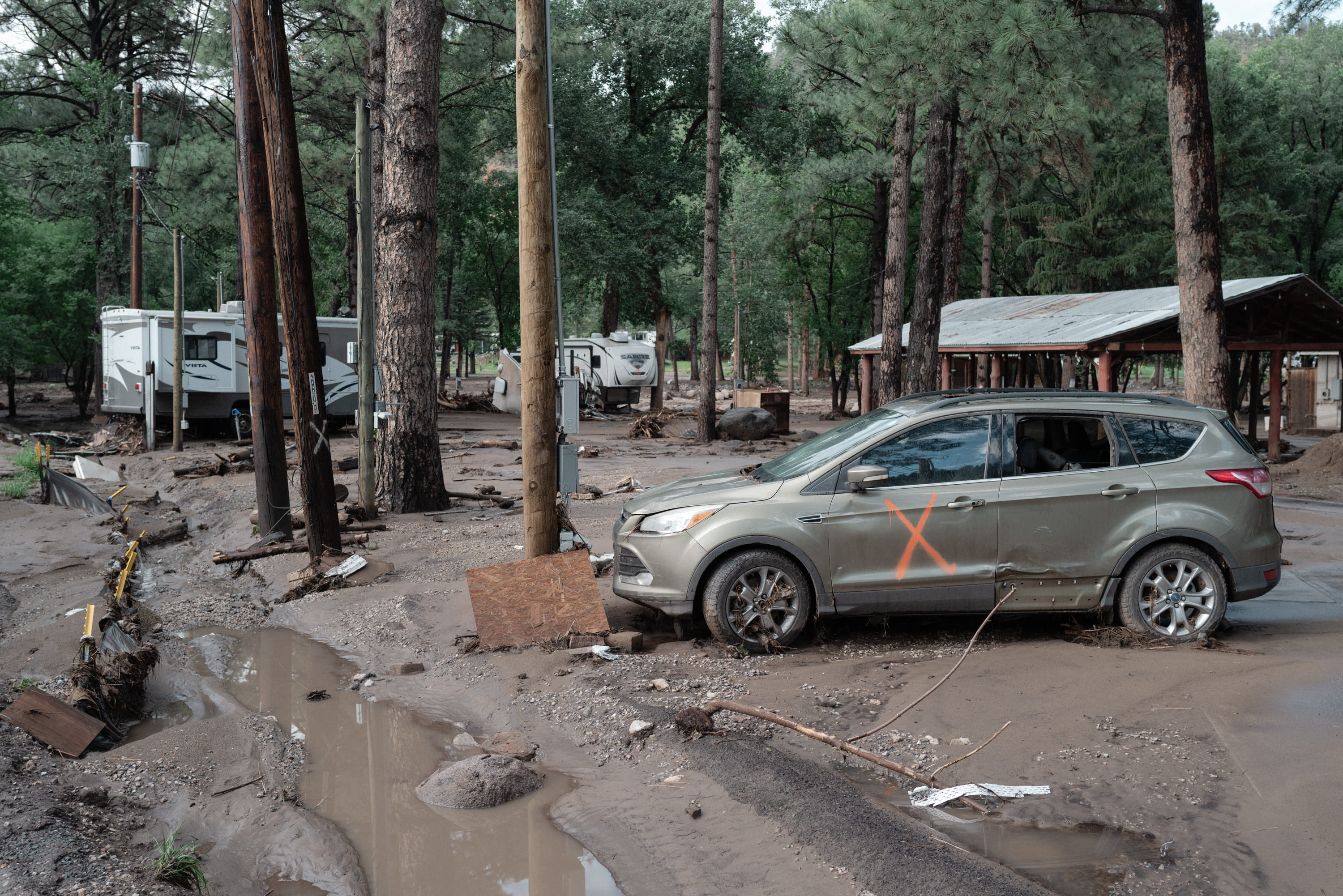
In the aftermath of the July 8, 2025, flood, officials consistently insisted they had performed admirably against a truly historic natural disaster. Michael Martinez, the village’s former deputy manager who helped direct the emergency response, remarked, "We’re lucky we didn’t have a Texas."
However, according to five first responders who spoke on the condition of anonymity out of fear of professional reprisal, the tragedy could easily have been avoided. Their accounts are strongly supported by public records, including internal emails, administrative reports, and hydrologic assessments. Before July 8, Crawford, Hall, and other officials made deliberate decisions that left residents and unsuspecting tourists profoundly vulnerable, even though they knew a destructive flood was highly likely.
Some of those choices—such as the aggressive promotion of tourism to visitors who were completely unaware of the local topography—appeared to be driven primarily by financial motives, according to current and former officials involved in disaster response. "Money was the driver," said Thora Walsh Padilla, former president of the Mescalero Apache Tribe, whose reservation lies south and west of town. "You’re taking a chance with people who aren’t even from this area and don’t know how to get around enough. You’re putting them in jeopardy."
Other critical missteps stemmed from sheer inaction: the persistent failure to relocate vulnerable residents and to replace aging infrastructure damaged during previous flooding, even as the governor spearheaded a $16 million public investment into the racetrack. Furthermore, just before the deadly flood struck, at least one of the RV park’s owners received emergency alerts but failed to evacuate the campers.
Village officials, including Mayor Crawford, did not respond to more than 70 detailed questions from ProPublica, including inquiries about whether they had improperly prioritized tourism at the racetrack over human safety. However, in an interview the previous year, Crawford defended his position, asking, "Who’s to blame? I didn’t start the fire."
Reached by telephone, Kerry Gladden, the village’s public information officer, referred all questions to an attorney, who did not respond. Village representatives maintained that their emergency department had sent text-message warnings prior to the flood via an opt-in public notification system.
A spokesperson for Governor Lujan Grisham asserted that state investments in the racetrack were strictly necessary to protect life and safety. Racetrack General Manager Rick Baugh did not respond to multiple inquiries regarding the reporting, and one of the racing operation’s primary owners did not answer emailed questions.
The administrative lapses and missed opportunities in Ruidoso offer stark and challenging lessons about the harsh reality facing communities across the American West. During the same summer, post-fire flooding and debris flows killed one person and prompted more than a dozen emergency rescues in Colorado. In August, flash floods in the Grand Canyon killed three people, with some of the floodwaters coursing directly over burn scars. In Utah, Governor Spencer Cox declared a state of emergency following severe post-fire flooding across three counties.
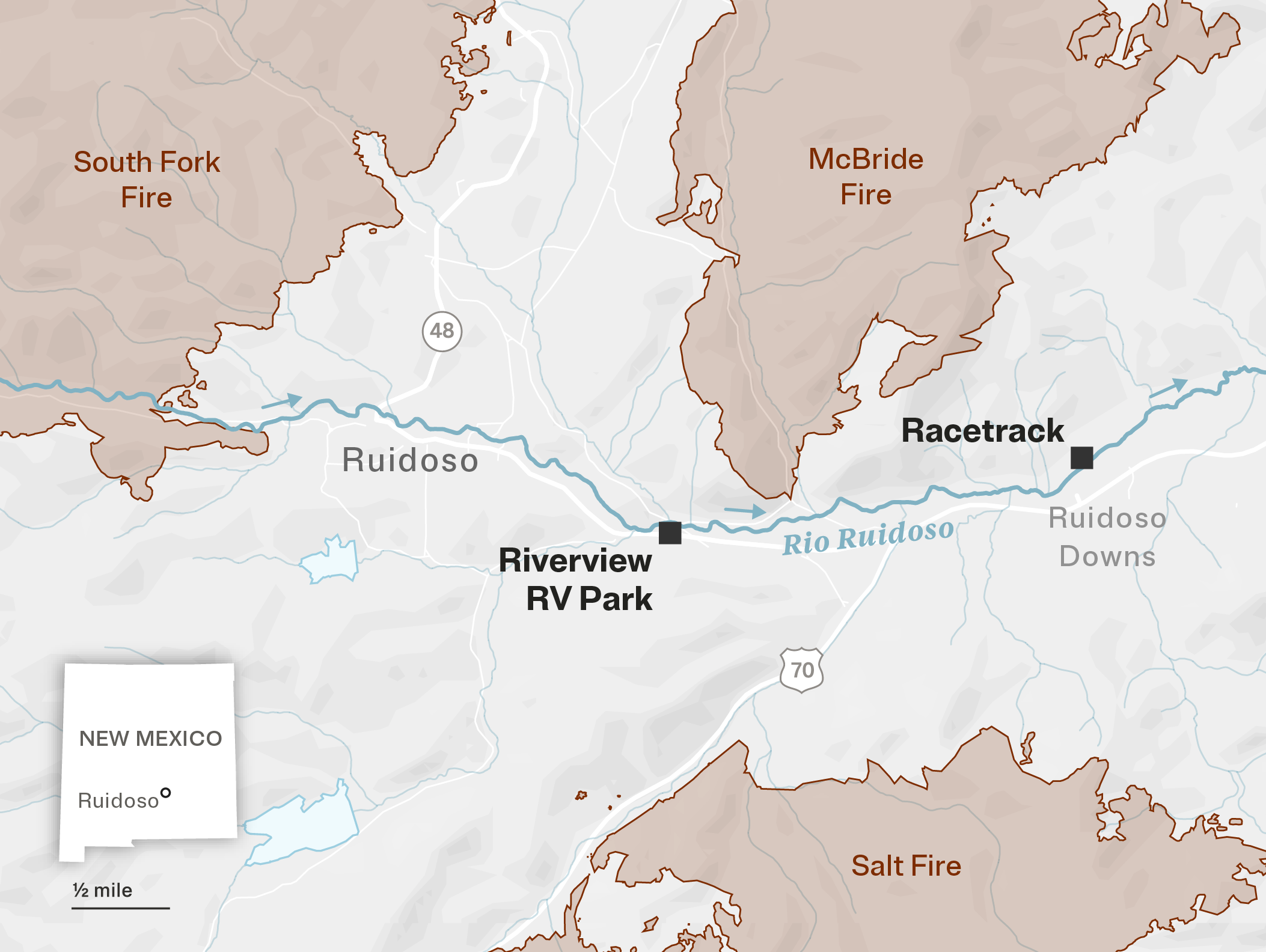
The American West remains largely unprepared for this spreading threat. While federal scientists have developed a national model to assess the likelihood of post-fire debris flows, local communities still lack easily accessible tools to gauge their specific risks of post-fire flooding.
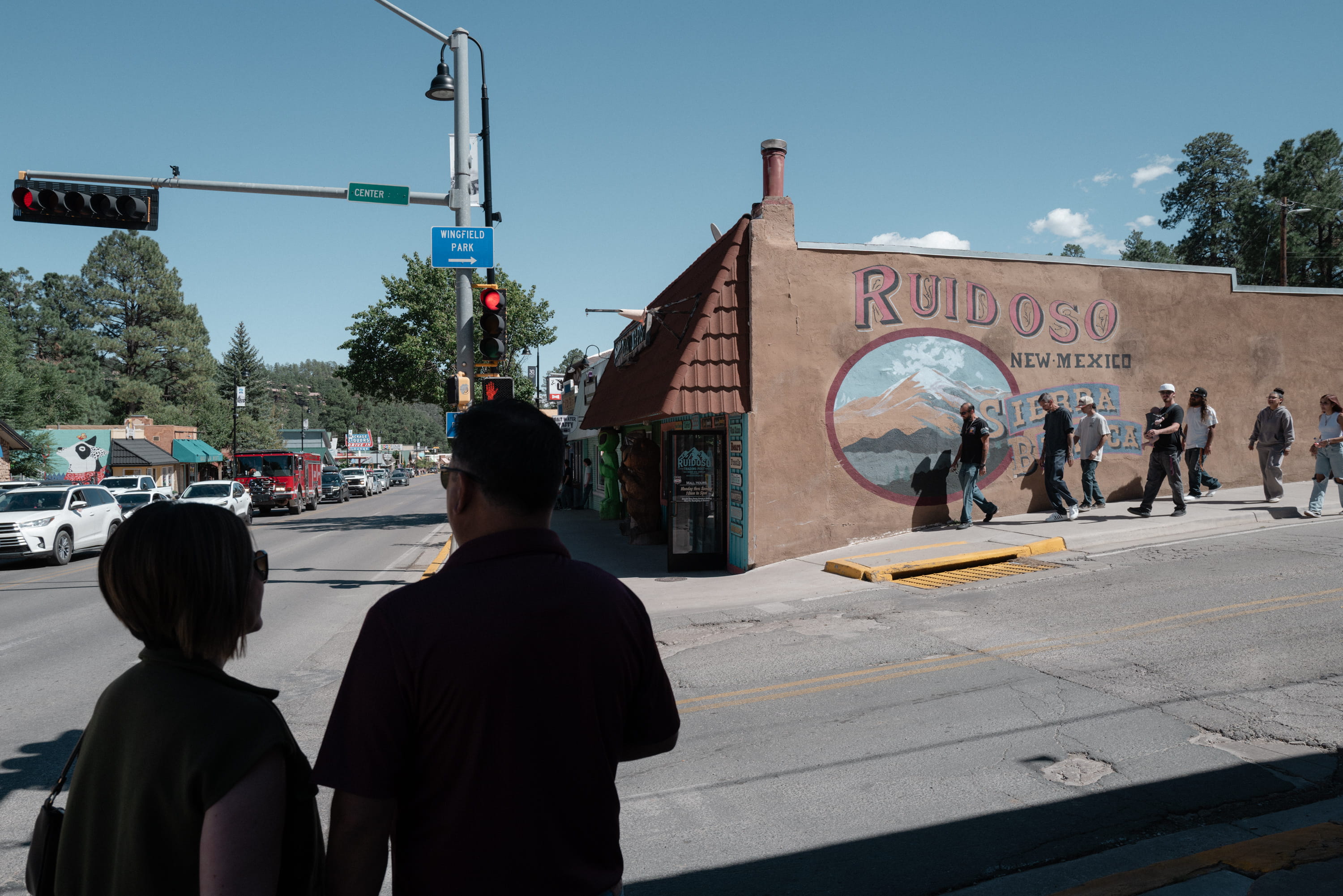
Today, Ruidoso maintains the outward appearance of a bustling tourist hub, but it survives almost entirely on emergency disaster aid from state and federal governments. Since 2024, state and federal agencies have poured more than half a billion dollars into disaster relief in Ruidoso—an amount equal to nine times the village’s annual operating budget.
Even as mountains of funding pour in, first responders warn that the village remains inadequately prepared to protect residents and visitors alike. Ruidoso is not a sprawling alpine resort; homes are built tightly together along narrow riverbanks, heavily overhung with mountain trees, where cabins directly abut commercial RV parks. Located in Lincoln County, the town has long served as a weekend escape for working-class families from Texas and soldiers stationed at Fort Bliss, 130 miles to the south. "Our kids deserved this small trip," Stephanie Trotter wrote on social media after losing her children in the flood.
The campsite the family booked sat directly across from a 19th-century historic mill recognized as the village’s birthplace. Jason Fulcher noted that if one looked closely enough, bullet holes from old Western skirmishes could still be found in the surrounding trees.
The area’s colonial founders had been unwise to establish their permanent settlement directly on the river. Historically, the Mescalero Apache traditionally lived on the elevated hillsides above creeks and wetlands to avoid rising seasonal waters and mosquitoes, Walsh Padilla explained. Time and again, the Rio Ruidoso flooded, including notable events in 2008 and 2022. Randall Camp, the former Lincoln County manager and public works director for Ruidoso, bluntly noted, "The river can’t be trusted."
Many newer residents, however, completely misunderstood the underlying danger. Jason and Lindsey Fulcher had moved to Ruidoso from the Houston area in 2022, seeking a quiet life near family after Jason left a high-stress career in gas sales. Their 1.5-acre property sat just below the treacherous confluences of the Rio Ruidoso and two major tributaries.
The Fulchers arrived just as the regional threat reached unprecedented extremes. A decade earlier, researchers from Northern Arizona University studying tree rings on the Mescalero Apache reservation discovered that natural fires had occurred with regular frequency—every six to 18 years—until the turn of the 20th century. Afterward, fire frequency declined sharply as federal agencies aggressively suppressed blazes. With fewer fires clearing the underbrush, the forests grew unnaturally thick, drawing tourists with deep shade and scenic beauty. But, as Walsh Padilla observed, "This isn’t natural. It’s not natural anymore."
The U.S. Forest Service’s long-standing policy of quickly extinguishing all wildfires was symbolically tied to Lincoln County, where firefighters in 1950 rescued a singed bear cub from the mountains northeast of Ruidoso. That injured cub, named Smokey Bear, was flown to the National Zoo in Washington, D.C., where he became the enduring living icon for the agency’s wildfire prevention messaging campaigns.
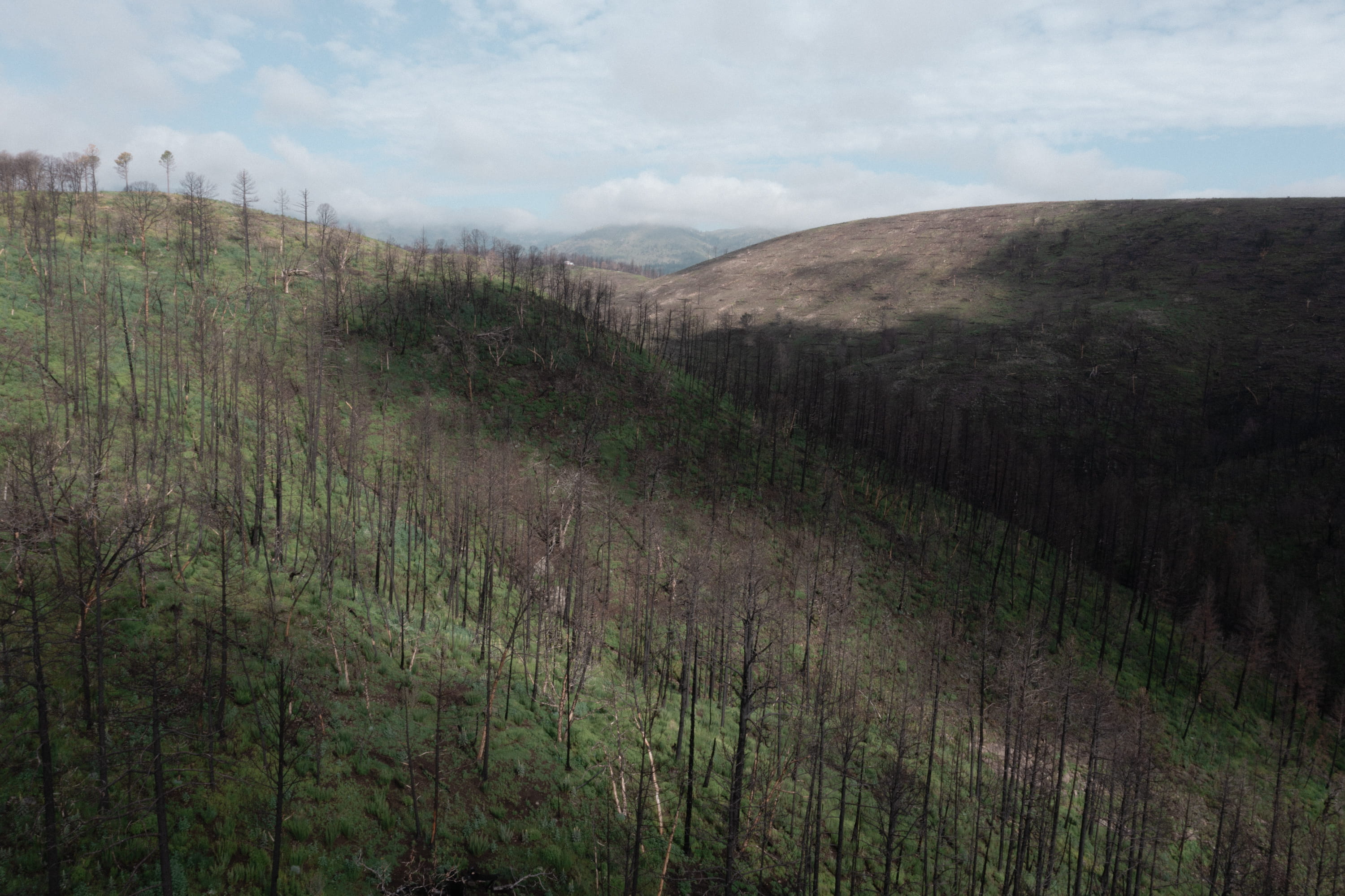
As the regional climate warmed, the government’s total suppression of fire fundamentally altered the landscape. Between 1950 and 2010, wildfires in the Rio Ruidoso watershed burned just under 11,000 acres, according to a ProPublica analysis of data from the National Interagency Fire Center. Since then, nearly 54,000 acres have burned—an area nearly five times larger than in the preceding six decades. Scientists confirm these modern fires burn much hotter than historical blazes as heavy fuels like Douglas firs and ponderosa pines dry out in a warming climate.
In June 2024, two massive wildfires ignited, followed swiftly by heavy monsoon rains. A devastating 16-foot flood tore straight through the heart of town on July 20, 2024.
The Fulchers’ home sustained minor damage during that flood, but their relatives’ property just a few hundred yards upstream was entirely destroyed. The Federal Emergency Management Agency deemed that house uninhabitable and barred the owners, Chelsey Jarvis and Darrel McKay, from building even temporary housing on the land. The couple closed their RV park for the rest of the season. "I wasn’t going to put people in harm’s way because I wanted their money," Jarvis said during an October 2024 village meeting, begging the council to buy out their property. "It’s just going to be Groundhog Day. Next year it’s going to wash away."
Jarvis proposed turning the ruined campground into a natural retention pond to slow future floodwaters and protect downstream businesses. Local officials were indeed considering such drastic measures. The Natural Resources Conservation Service (NRCS), a subagency of the U.S. Department of Agriculture, had raised the concept of a large-scale property buyout, having recently committed $106 million to relocate over 600 homes following severe 2022 flooding in Kentucky.
A similar project in Ruidoso would be vastly more expensive. Michael Martinez and Randall Camp estimated it would require $650 million to relocate roughly 1,000 properties. However, the NRCS required a local partner to provide a 25 percent matching contribution, meaning the county, village, or state would have to raise massive sums of money. While Jarvis and McKay desperately wanted a buyout, Jason Fulcher was torn; he loved his property, yet worried the local infrastructure could not adequately protect his family. In December 2024, the Fulchers submitted forms requesting relocation.
During New Mexico’s 2025 legislative session, no lawmaker proposed funding a buyout for Ruidoso. By spring, as the window for a mass relocation closed, official optimism crept back into public discourse.
According to Jarvis and McKay, Mayor Crawford encouraged them to reopen their RV park, arguing the village urgently needed affordable rentals. As the tourist season approached, the families adopted conflicting strategies. Jarvis remained profoundly uncomfortable with reopening, but McKay felt they had little choice given their heavy financial investments. They resolved to keep the property open while booking only half of their campsites.
Jason Fulcher, conversely, sought a fully operational park from June through September, capturing peak tourist season and monsoon rains alike. He explained that he had withdrawn his entire retirement savings to cover the down payment and improvements on the $645,000 property, rebuffing multiple potential buyers because of his deep attachment to the land. The park had to run at full capacity, he said, "because at 50 percent operational, we’re losing money every month."
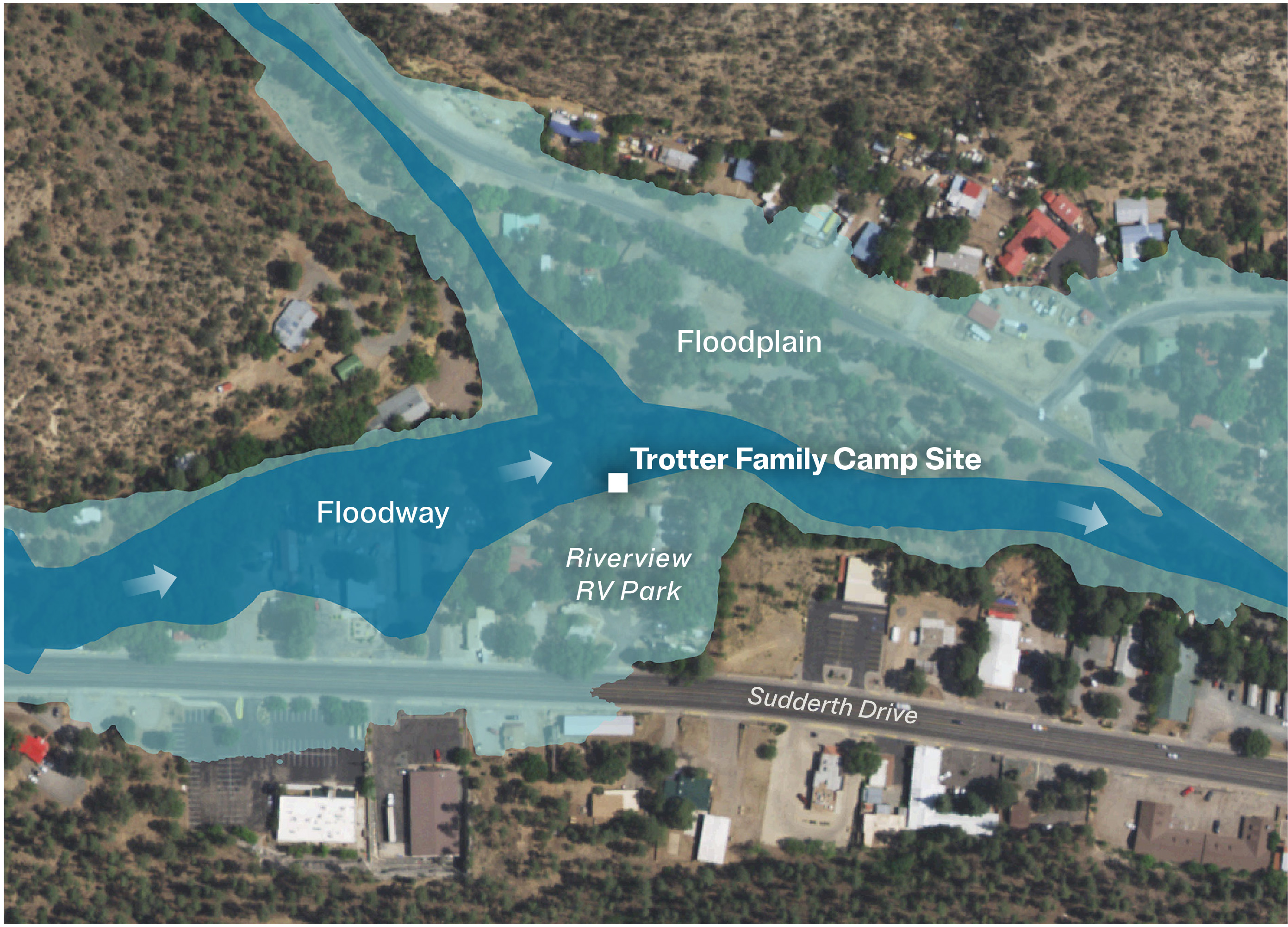
On March 31, 2025, the village released a newly updated floodplain map online, allowing citizens to examine their specific properties. The map relied on detailed flood models created by Cobb, Fendley & Associates, a firm that had months earlier warned village officials of a dire scenario.
The company had been hired to model a 100-year storm event. In January 2025, a Cobb Fendley engineer emailed the village to state that a 100-year storm would likely bring six times the water volume of the July 2024 flood that destroyed Jarvis and McKay’s home. In a separate report, the firm identified more than 200 at-risk addresses, including both RV parks.
Yet the village never clearly communicated the lethal threat to existing property owners. When officials discussed the maps, they typically focused strictly on building permits and development restrictions. "There was never a time where we specifically said, ‘Someone can die,’" Martinez, the former deputy manager, admitted in an interview. "Never have I ever stated those words. Everything I’ve ever shared with somebody has been: ‘This is the floodplain. This is what was adopted. These are the new high-water marks. If we ever get a flood that is a 100-year flood, the waters will get this high.’"
Both RV parks lay squarely within the floodplain. Yet both Fulcher and McKay internalized the government’s pervasive optimism. "The leadership dang sure makes you feel like it’s gonna be OK," McKay said. "All they kept saying was build back better. We’re stronger."
On May 25, 2025, Governor Lujan Grisham celebrated the triumphant reopening of the Ruidoso Downs racetrack, made possible by the state funds she secured. "Ruidoso Downs has reopened for its first races since those disasters in record time," read a post on the governor’s official Instagram page, adding, "Ruidoso Strong!"
While New Mexico’s constitution generally prohibits the use of public funds on private businesses, exceptions exist for certain public and economic development projects. Records show that starting in September 2024, then-Transportation Secretary Ricky Serna directed a team of engineers to prioritize work at the racetrack, even as subordinates raised concerns that FEMA might not reimburse the costs because the project failed to meet federal standards.
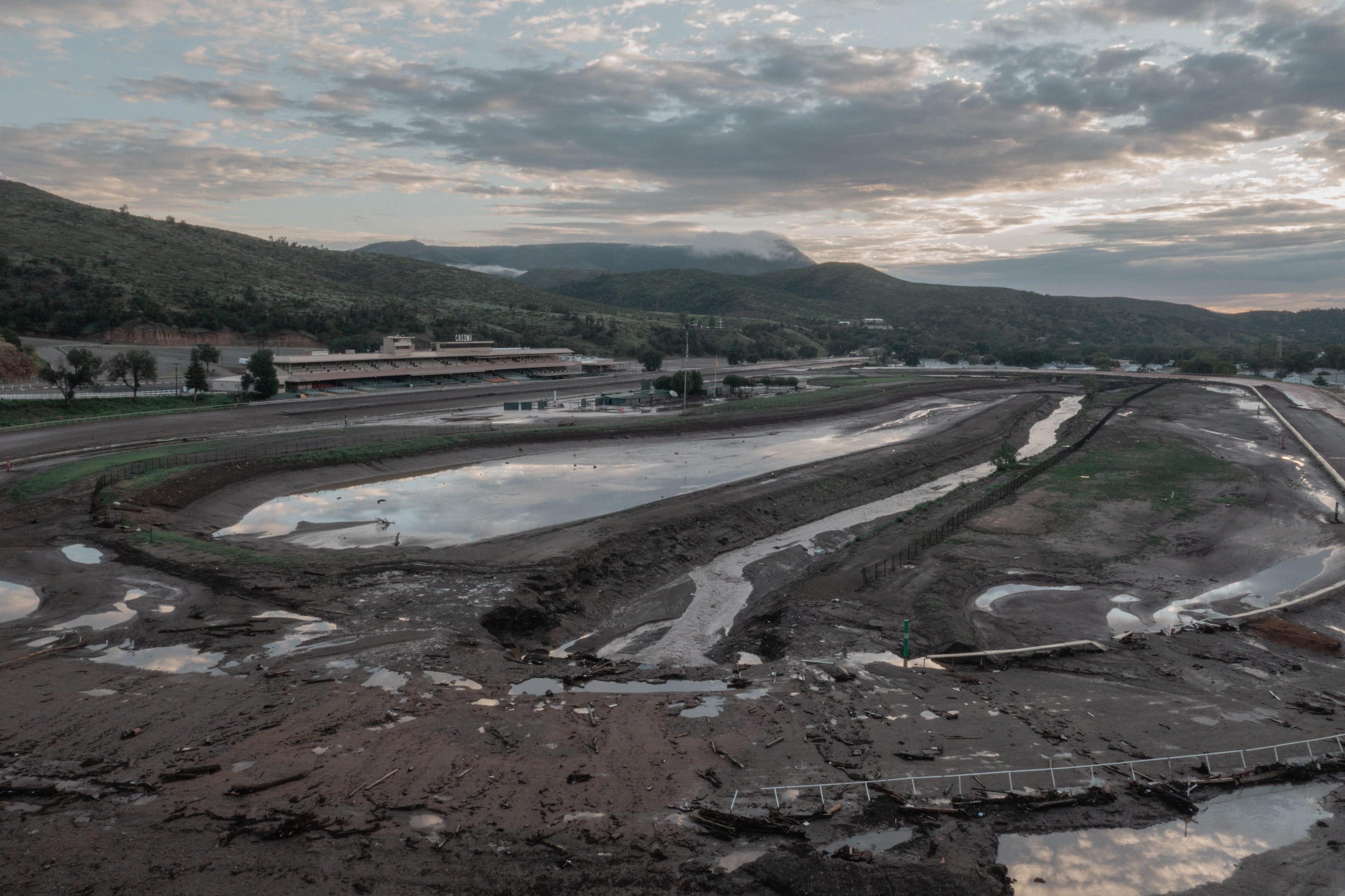
Construction crews excavated an 8-acre basin in the racetrack infield to serve as a holding pond, rebuilt the culverts, and reinforced the access road. While ostensibly designed to slow floodwaters, these efforts directly enabled the racetrack to resume operations.
The track was nationally famous for hosting the All American Futurity, the world’s richest quarter horse race, which awarded $3 million annually, with half going to the winner.
The horses were cared for by grooms—many of them immigrants—who worked for independent trainers rather than the track itself. The track provided living spaces in barns and storage rooms, conditions one executive described as "industry-standard." General Manager Rick Baugh did not respond to inquiries regarding living conditions, while Izzy Trejo, executive director of the New Mexico Racing Commission, stated that the commission held no regulatory authority over housing, noting it was the responsibility of individual trainers.
There was remarkably little critical scrutiny of these conditions at the beloved racetrack. Beyond the mayor’s ties, the village’s public information officer had previously handled publicity for the track, and the mayor of Ruidoso Downs had formerly overseen its security.
Furthermore, the racetrack’s corporate owners, Jana and Johnny Trotter—no relation to Sebastian and Stephanie Trotter—had contributed more than $35,000 to Governor Lujan Grisham’s political campaigns. Michael Coleman, a gubernatorial spokesperson, insisted the infrastructure projects were undertaken strictly to mitigate life-safety risks to the broader community, asserting the work was "not solely for economic development reasons."
Yet the racetrack management framed the situation quite differently. "The clock’s ticking," Tim Keithley, the track’s former marketing director, told local news outlet KRQE in February. "We need to race so that the community can have tourism and bring those Texans over to spend some money with us."
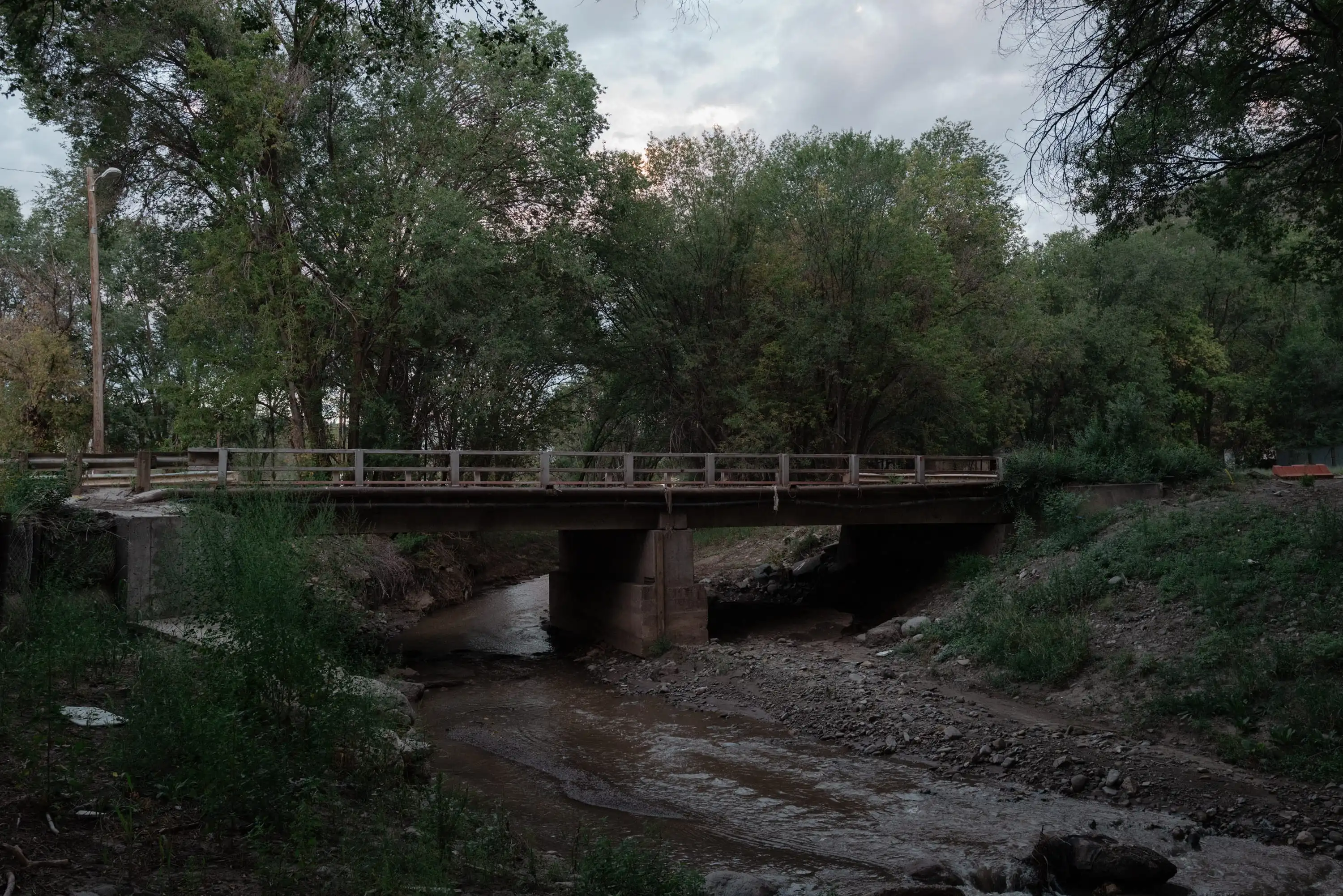
While intense work progressed at the racetrack, an urgent mitigation project upriver lagged behind. Officials had long worried about aging, damaged bridges and culverts along the Rio Ruidoso that could act as makeshift dams during floods, forcing water onto roads and magnifying downstream destruction. "If you have a bunch of debris that comes in and clogs bridges, at some point that’s going to release," explained Eric Queller, Ruidoso’s emergency manager.
Throughout the year leading up to the 2025 tourist season, bridge repairs and replacements fell by the wayside amid ongoing political finger-pointing between village and state officials over jurisdiction. Work at the racetrack, however, was successfully completed by Memorial Day.
On Sunday, July 6, as firefighters conducted at least four separate flood rescues, the Ruidoso News posted a video on Facebook highlighting the racetrack repairs, featuring Mayor Crawford assuring the public that local infrastructure was holding firm.
The following day, an executive at the newspaper’s parent company, El Rito Media, reprimanded General Manager Eugene Heathman, claiming that journalistic coverage featuring severe flood damage footage was bad for business. The executive later left the company, stating he acted on orders from publisher Richard Connor. Connor denied attempting to influence editorial coverage, stating, "We have dug, investigated, and sought out all angles in our flood and racetrack coverage."
Heathman resigned shortly afterward, and the video of Crawford at the track—along with footage of actual flood damage—vanished from the newspaper’s social media accounts.
Just before 2:00 p.m. on July 8, fierce rain began falling near the headwaters of the Rio Ruidoso’s upper forks. Within ten minutes, nearly three-quarters of an inch of rain pelted the charred mountain ground. At 2:12 p.m., the National Weather Service issued a flash flood warning, upgrading it to a flash flood emergency 35 minutes later as massive debris flows surged down steep slopes into the river channel.
At Village Hall, Mayor Crawford adjourned the council meeting just before 3:10 p.m., announcing, "We’ve had a wall of water come over. It’s predicted this is the big one." Shortly afterward, he dialed Racetrack General Manager Rick Baugh.
Josh Gibson, a racetrack executive present during the call, recalled that Crawford "told him he had 45 minutes or so before the water got there." Baugh did not respond to inquiries, and village officials declined to comment on the call.
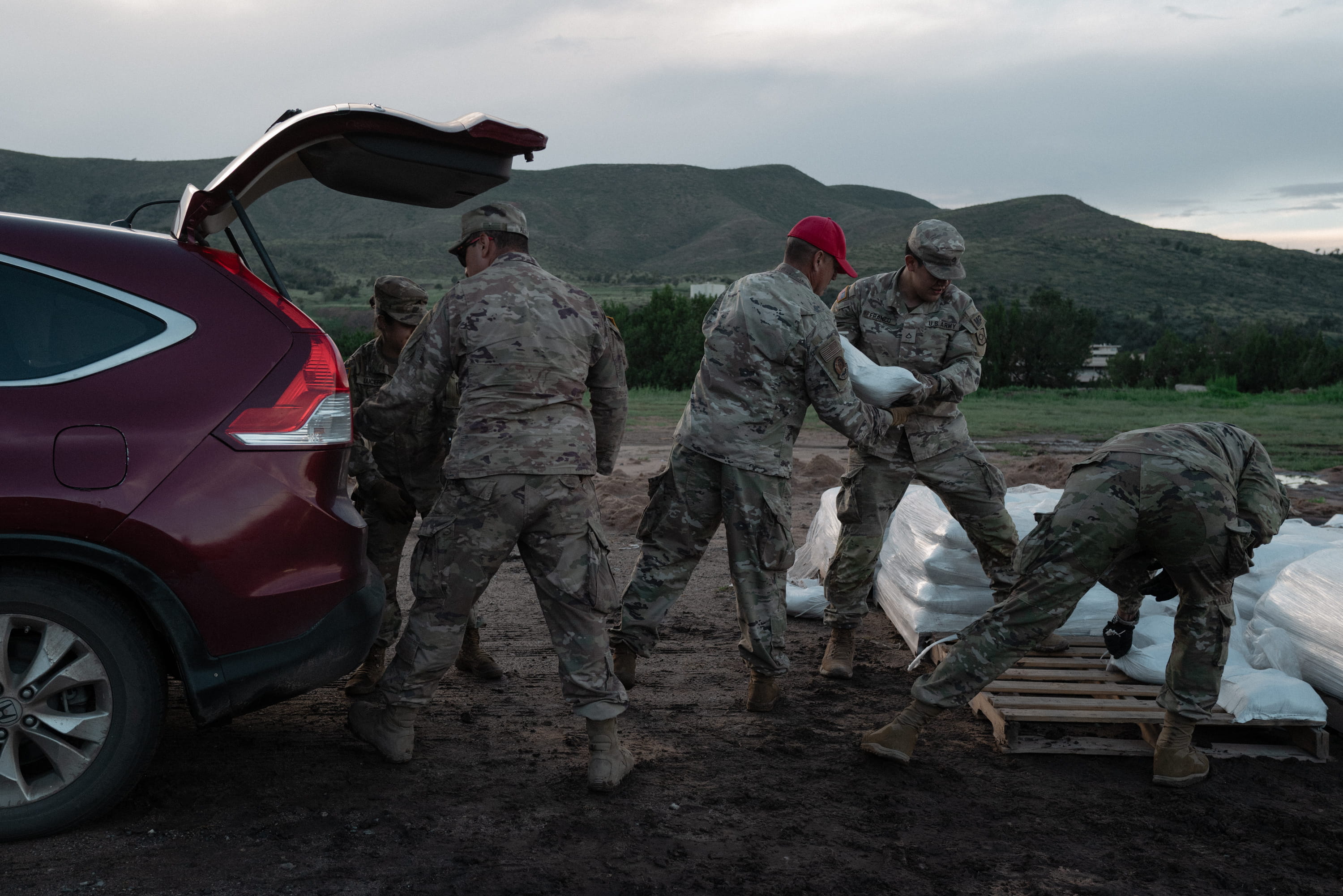
That advance warning allowed Baugh and his staff to evacuate dozens of grooms living in the track barns before the floodwaters arrived.
Three miles upstream at the Riverview RV Park, Jason Fulcher, the Trotters, and other campers stood casually by the river, chatting about the weather, campsite preferences, and local ghost stories while the children played in the shade.
Several park occupants received automated text alerts warning of floods, but all of them—including one of the park owners—dismissed the alerts as routine. "We received watch and warning alerts daily, sometimes multiple times in the same day," Fulcher explained. He noted he followed official advice to "stay out of low-lying areas, watch the river." Yet his property remained situated squarely in a low-lying flood zone.
The Trotters stated that despite having their cell phones powered on, they received no alerts whatsoever from the National Weather Service, nor were they aware of the village’s localized alert system. "There was nothing," Sebastian said.
Because residents suffered from widespread "alert fatigue," officials wanted first responders to physically drive into threatened zones on high-risk days to ensure evacuations. In areas like Ruidoso Downs, first responders utilized loudspeakers to urge residents toward high ground moments before the flood struck.
At the Riverview RV Park, however, no emergency personnel arrived, despite the campground sitting just one-third of a mile from the local fire department headquarters.
Upon receiving the weather alerts, Fulcher began his standard monsoon routine, walking down to the riverbank to urge guests to step back. Fulcher recalled asking the Trotters to move slightly away from the river, though the Trotters disputed this account.
When the heavy rain began, the children retreated inside their travel trailer, which featured an expandable slide-out room. As the river surged with churning branches and massive rocks, the Trotters joined their children, preparing to flee to higher ground. Then, Sebastian heard a deafening sound he likened to television static heard through noise-canceling headphones.
The trailer door became jammed by exterior debris. Sebastian managed to force his leg out before getting stuck temporarily, but fought his way back inside. As he reached for a mattress, the wall of water violently ripped away the slide-out room. Stephanie, clutching both children, was instantly sucked out into the raging torrent. "Once I was in the water, I only had Charlotte in my arms," she recalled. Sebastian dove in immediately after his son.
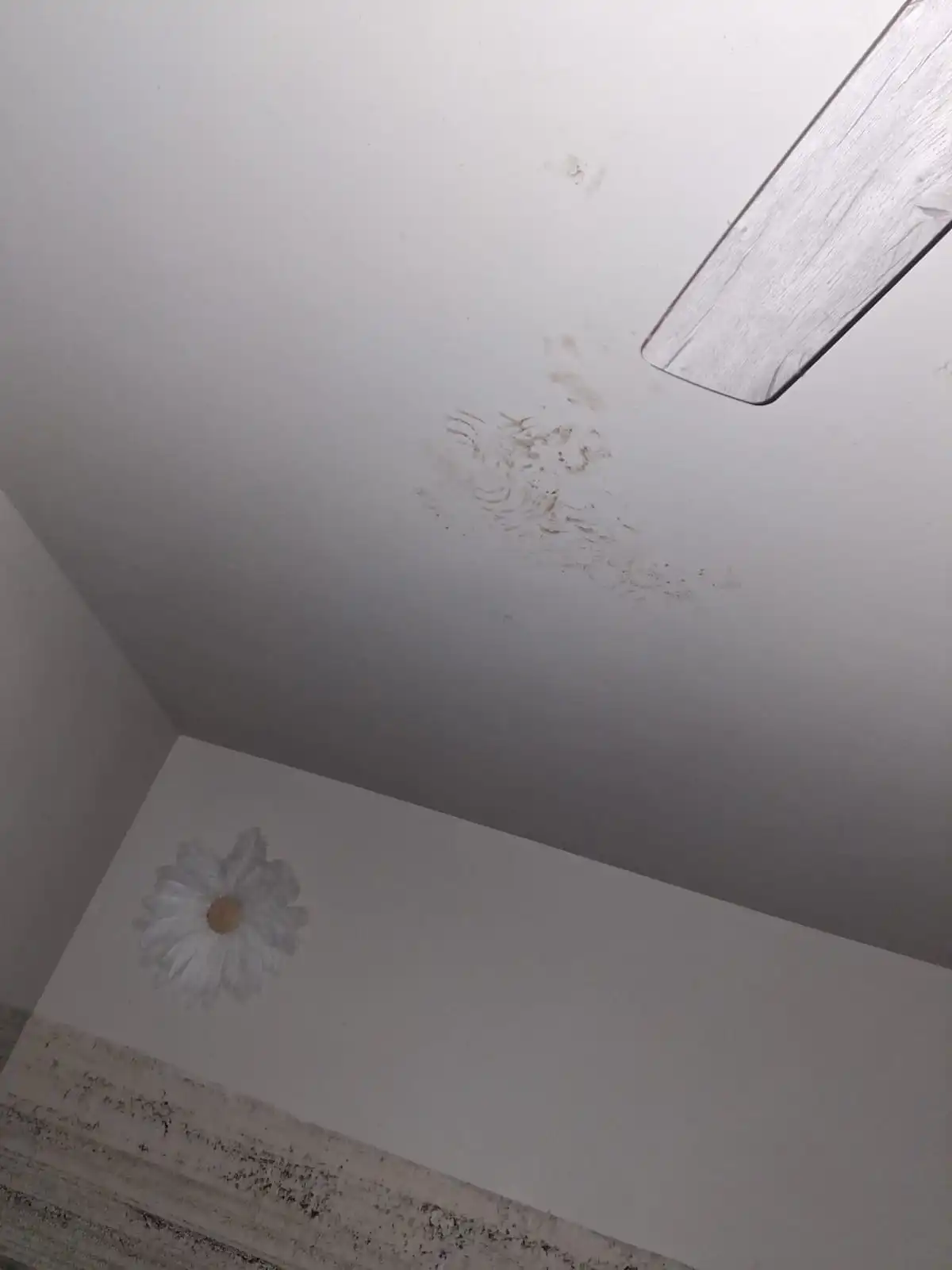
Fulcher managed to drive his truck out of the park, only to encounter impassable, sediment-laden floodwaters carrying vehicles and dumpsters. Recognizing the unprecedented scale of the disaster—subsequent river gauges showed double the volume of the 2024 flood—he abandoned his truck and scrambled to high ground, watching helplessly as his own house flooded with his two children trapped inside. His children survived by clinging to a ceiling fan as the rising mattress pushed toward the ceiling, leaving muddy handprints behind.
Campground host Jere Stark, 71, sought shelter near a pavilion, attempting to rescue another camper, Benjamin Timothy Feagin, from the bed of a pickup truck. Both men were swept away by the current.
Near their campsite, young Sebastian managed to grasp a tree trunk. His father struggled desperately against the current to reach him, getting struck by a heavy boulder and a floating truck. Overpowered by the force of the water, the boy lost his grip and was swept away.
By 3:30 p.m., at least eight firefighters arrived at the RV park, including two swiftwater rescue technicians. They successfully waded to the Fulcher home and rescued the children stranded on the ceiling fan.
Yet not all first responders realized there were other children missing.
Firefighters eventually located an injured, traumatized Sebastian Trotter clinging to a tree. Downstream, rescue crews pulled Stephanie Trotter and Jere Stark from the water. Stephanie frantically informed rescuers that her daughter had been torn from her arms.
When the floodwaters finally receded, Fulcher and McKay forced open the crumpled remains of the Trotters’ trailer, discovering the family’s surviving dog huddled inside.
The first body was recovered beneath a bridge at approximately 5:20 p.m.—it was Benjamin Timothy Feagin.
Firefighters split into teams to scour the riverbanks as fading daylight cast long shadows. One firefighter, searching a debris-strewn softball field near Paradise Canyon, recalled a visceral instinct. "Something told me, ‘Look back,’" he said. There, illuminated by his flashlight beam, he spotted the body of seven-year-old Sebastian Rowan Trotter. Charlotte’s body was recovered shortly thereafter nearby.
In private text messages exchanged on July 8 and 9, state officials expressed primary concern over the safety of horses at the racetrack. Senior disaster recovery official Jeremy Klass messaged colleagues asking if the horses required evacuation. They did not.
The following morning, another official updated Klass on the status of the racetrack. "Village is concerned," he wrote.
"This should be a priority," responded Heath Dobrovolny, the state floodplain coordinator.
Dobrovolny later stated he did not recall the text exchange, maintaining he was focused entirely on preventing downstream casualties. He disputed that he favored the racetrack over the village. Regina Chacon, deputy cabinet secretary for the New Mexico Department of Homeland Security and Emergency Management, added that the agency feared debris buildup would "apply pressure on the dam between the infield" and communities below.
During a news conference on the morning of July 9, Mayor Crawford emphasized the historical scale of the flood crest. Since then, local officials have maintained they exhausted every possible measure to protect the village.
"We pretty much did everything we possibly could and everything worked out, I guess, as best it could for the situation that we had," Fire Chief Hall said. "I don’t know that I would have done anything differently."
"Will I tell you it’s successful when we lost three lives? No," acknowledged Ali Rye, the state homeland security director. But she added, "We put out every bit of messaging we possibly could. I don’t know, from the state’s perspective, what more we could have done."
A month after the disaster, Governor Lujan Grisham remarked in a video interview with a racing website, "No governor, no state, no president, no one at the federal level can sort of predict what happens with the weather and emergencies."
In reality, the catastrophe had been explicitly predicted in technical reports commissioned by the state and village. "Unfortunately, it’s stuff that was modeled," said Joseph Loverich, a civil engineer with JE Fuller, which produced flood models for the state in 2024. Cobb Fendley’s models had warned the village of even worse floods to come; the July 8 flood carried roughly one-third of the volume anticipated in a true 100-year storm event.
On October 8, three months after the flood, Lincoln County hosted a public meeting regarding property buyouts. Michael Martinez told attendees, "That wasn’t even a big one. I mean, that was half of what we expected, of the max," noting the event was a 50-year flood. "It could be twice as much. That’s the honest-to-God truth."
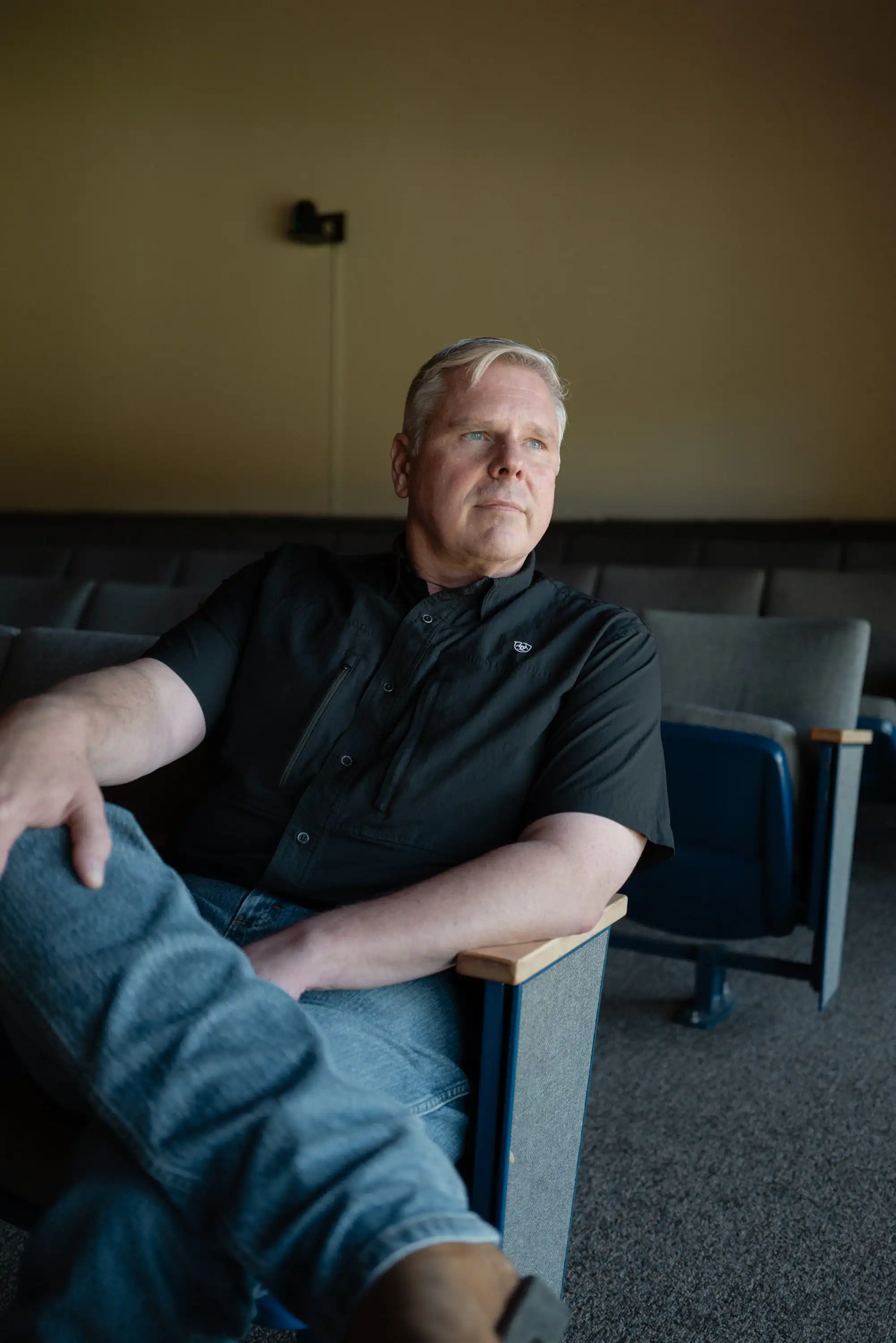
"So you guys knew?" interrupted Fulcher.
"We had campers," added Jarvis.
Lincoln County Manager Jason Burns cut them off, saying, "Hold on. Listen to us. That’s not what he’s saying."
Within weeks, Martinez adjusted his public tone, stating in an interview, "Did I do enough? I ask myself that question every day, and I come to the same realization every day: I don’t know what more I could have done. I honestly don’t."
Martinez subsequently left Ruidoso for a job in El Paso. He was replaced by Heath Dobrovolny, the former state floodplain coordinator who had overseen the racetrack recovery efforts. Dobrovolny later issued an email to village employees strictly prohibiting them from speaking to journalists. Furthermore, the video recording of the contentious October public meeting vanished from the county’s internet archives. County Manager Burns claimed the removal was "not intentional."
The Trotters held a celebration of life for their children on August 15, as Sebastian continued recovering from severe foot, leg, and nerve injuries that left his forearms permanently scarred.
Weeks later, the All American Futurity was held in Albuquerque for the second consecutive year. In Ruidoso, Mayor Crawford hosted a private viewing party at the Jockey Club. When televisions broadcast horses bursting from the starting gates, feet stomped on the club’s carpet. The racetrack outside remained completely empty and quiet. Yet attendees expressed confidence that racing would eventually return. "There’s parts of the community that are totally normal," said Dusty Milanes, a visitor from Texas wearing pink cowboy boots, specifying that those areas were located on "high ground."
The Jockey Club survived primarily on restaurant sales and catering contracts, forcing Crawford to lay off most of his staff. Privately, state officials sought to distance themselves from their $16 million racetrack rehabilitation project. "We have to keep in mind and project to the public NMDOT had minimal involvement in this," a district transportation engineer wrote in an August 2025 email.
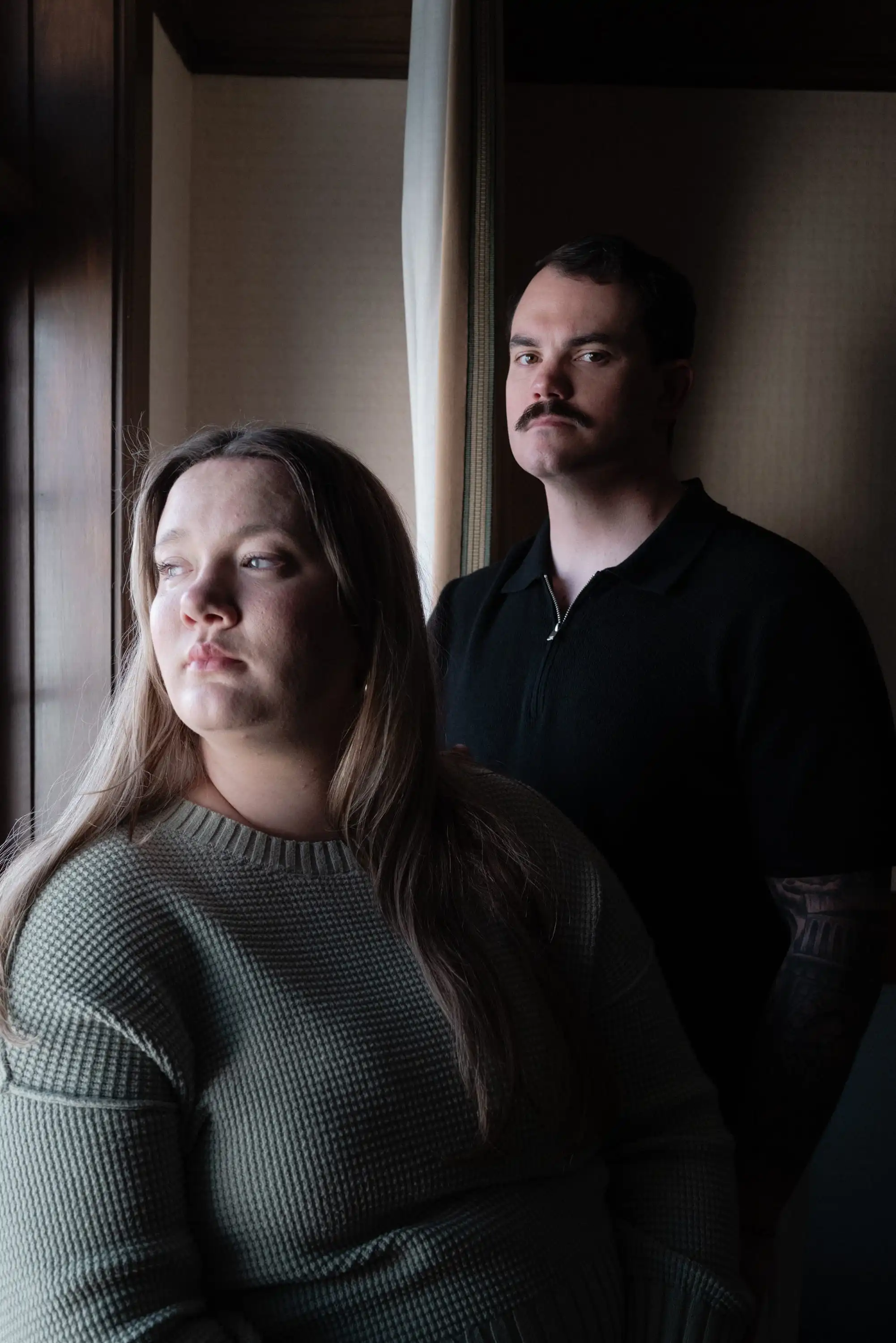
By spring, green shoots of new vegetation sprouted across the mountain burn scars. While new growth can eventually mitigate flooding effects, experts warn against complacency. "This is not a one-and-done kind of thing," said Belize Lane, an associate professor of civil and environmental engineering at Utah State University. "There is still an opportunity for many, many more events that may not look like that, but may still be hugely destructive."
Yet in Ruidoso, public sentiment quickly drifted back toward normalcy. "Everybody always goes back to sleep," remarked former county manager Randall Camp.
In July, the Ruidoso News published a retrospective praising the village government’s emergency response, relying heavily on the mayor’s analysis. "The legacy is one of resilience, not giving up, fortitude, rugged individualism, the ability for you to be all you can be and not give up," Crawford declared.
Though the racetrack remained closed and tall weeds overtook its holding pond, and the All American Futurity relocated to Texas, Crawford promised members that hooves would thunder in Ruidoso once again. "The track deal isn’t over yet," he vowed during a council meeting.
The Fulchers mostly avoided their former RV park. The state ultimately secured $249 million for a buyout program, with over three-quarters funded by the federal government, but the Fulchers—who now operate a mountain-themed store selling antlers and rifles—had not yet received an official property appraisal.
They settled a wrongful death lawsuit brought by the Trotters and Feagin’s family for an undisclosed sum covered by insurance. "Accountability is at the forefront of my mind," Sebastian stated in a television interview, vowing that his children would never be forgotten. An attorney representing the Trotters also filed formal notice of intent to sue the village.
Crawford acknowledged he anticipated litigation from the Trotters but declined to discuss pending legal matters.
The RV park remains vacant and wrapped in police tape. The roof of the Fulchers’ former home sags noticeably, and a child’s muddy handprints remain permanently baked into the ceiling.
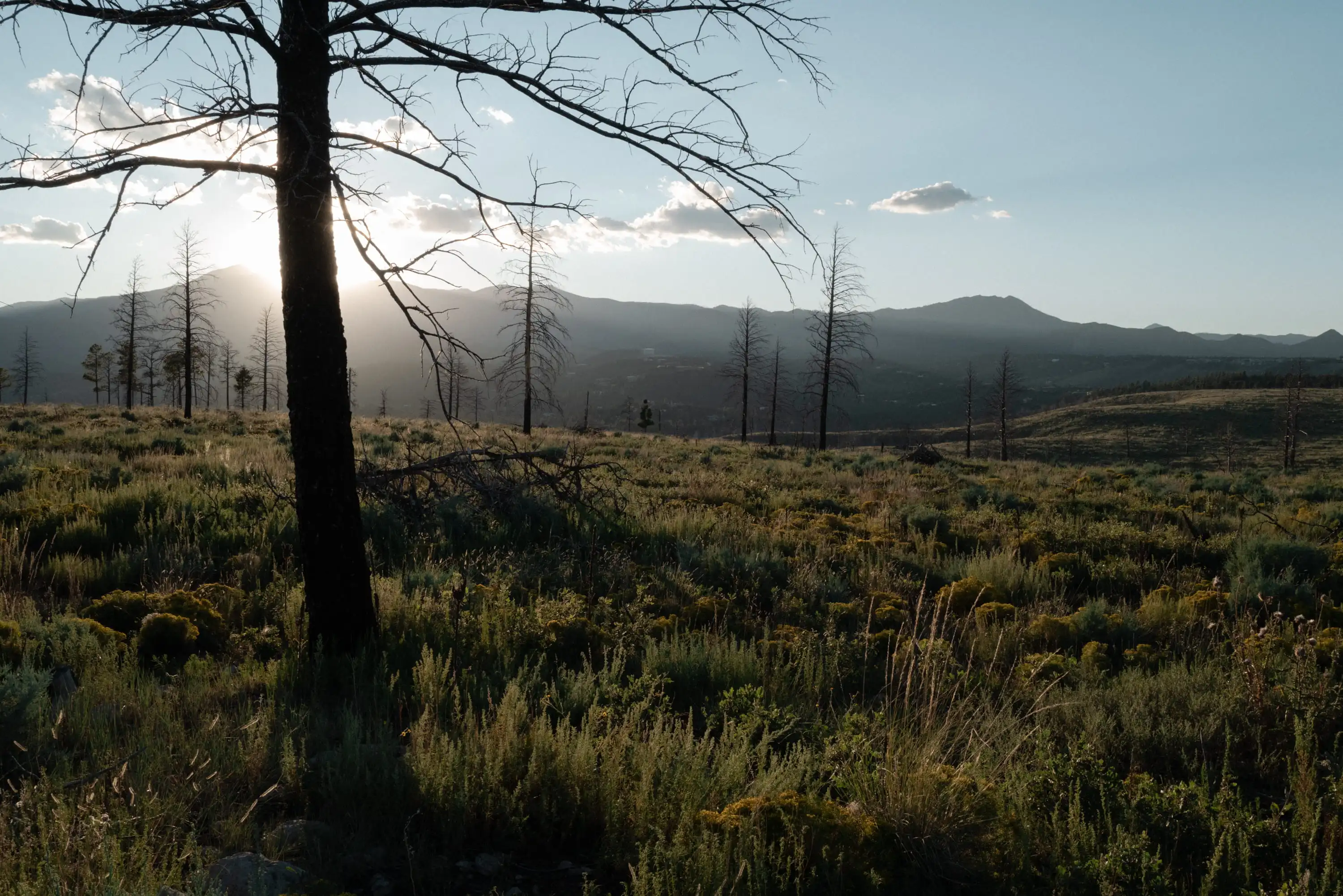
Out front, attached to a towering pine tree, stands a white memorial cross and a plaque:
In loving memory of Benjamin “Tim” Feagin,
Sebastian Rowan Trotter,
Charlotte Emery Trotter,
And their two dogs Zeus & Ellie.
The memorial was erected by the Fulchers on the first anniversary of the flood. A firefighter who participated in the search for the children attended the small gathering. "We carry a lot of guilt for things that we weren’t able to do," he said quietly. "We feel like we could have done more."
Meanwhile, the village continues its tourism advertising campaigns across West Texas. During the summer, a digital billboard near the Trotters’ home in El Paso flashed a bright Ruidoso vacation promotion—one that Sebastian caught sight of while stopping to fill his car with gas.
Just upstream from the shuttered racetrack, a mobile home park remains fully occupied. Children play in the streets, and residential trailers sit perched directly above the riverbanks. The park’s managers insist they are following all local regulations. "I don’t think it’ll ever flood again like that," one manager said.
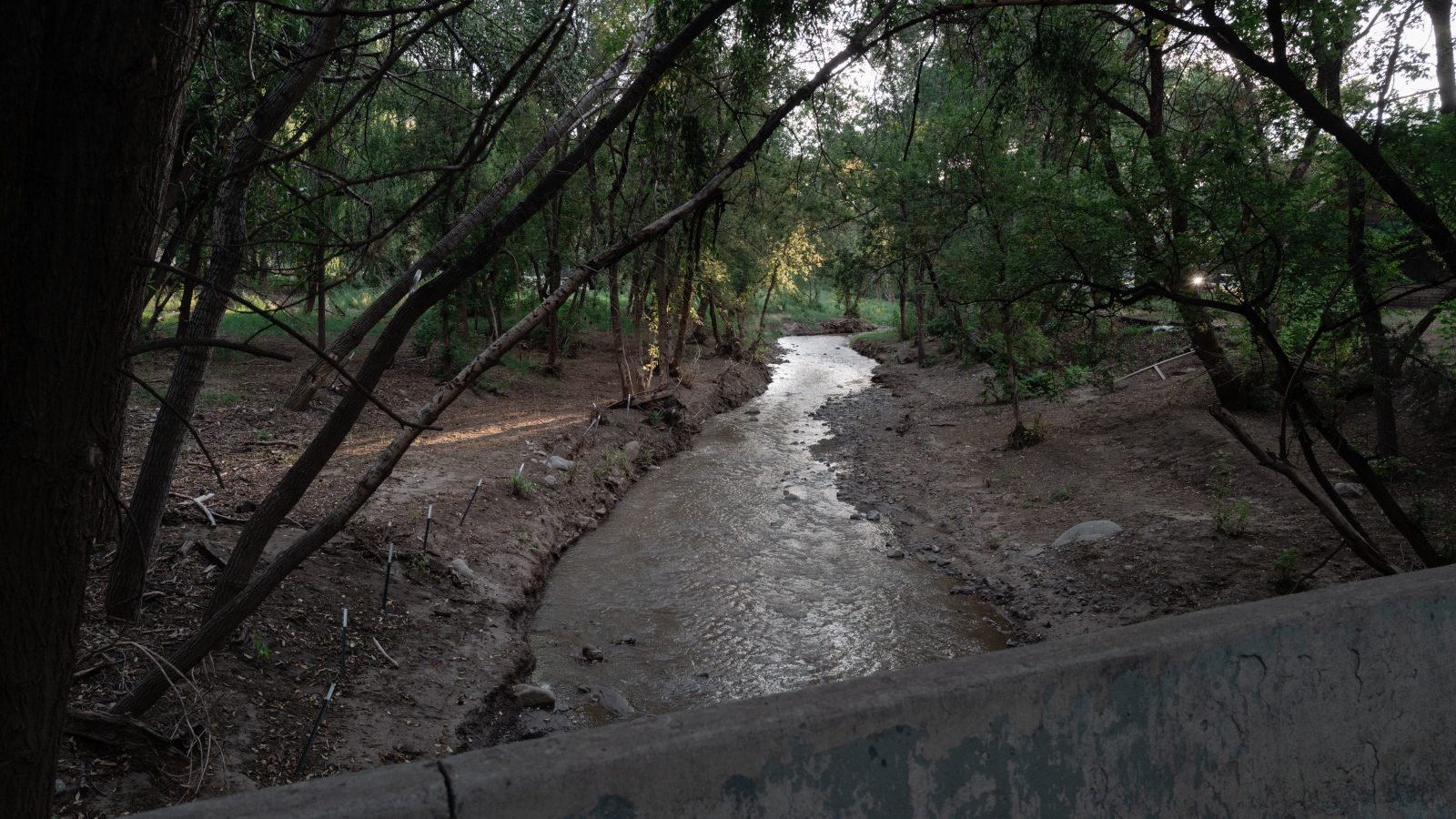
The Rio Ruidoso babbles softly, looking entirely welcoming. On a warm summer day, you could still walk down and put your toes right in.