
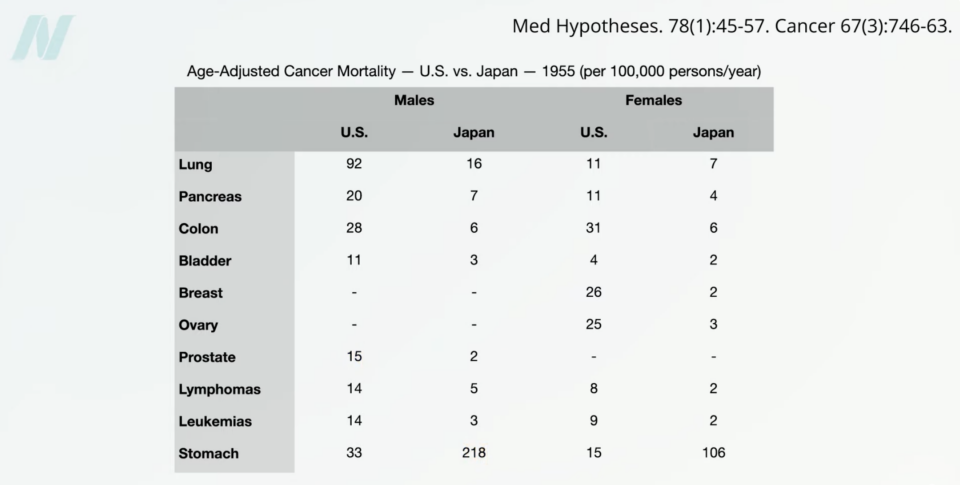
For decades, Japan has stood as a global leader in health metrics, boasting the world’s highest life expectancy while maintaining a healthcare expenditure that is significantly lower than that of other high-income nations. This impressive longevity is widely credited to a traditional dietary pattern rich in nutrient-dense, plant-based foods, which are believed to play a protective role against cardiovascular disease. Indeed, the epidemiological profile of Japan is remarkable for its historically low rates of many common cancers, including those of the colon, breast, prostate, bladder, and blood. However, this public health success story hides a jarring contradiction: Japan also suffers from some of the highest rates of stomach cancer in the world.
This statistical anomaly presents a compelling medical mystery. While a Japanese man might face a significantly lower risk of developing prostate cancer compared to his American counterpart—sometimes by a factor of seven—he remains six times more likely to develop gastric cancer. This disparity has led researchers to search for an "Achilles’ heel" within the traditional Japanese diet, a quest that has spanned decades and involved a shifting landscape of scientific theories.
Investigating the Origins of the Gastric Cancer Epidemic
Early research in the 1970s explored the possibility of environmental contaminants. One prominent theory pointed toward the talc used in the industrial polishing of white rice, which gives the grains their characteristic glossy sheen. This hypothesis gained traction due to established links between talc and other health issues, such as ovarian cancer—a topic that has led to significant legal consequences for major manufacturers like Johnson & Johnson. However, when researchers scrutinized the potential link between talc and gastric cancer, the evidence did not materialize.
If the culprit was not an external chemical additive, could the cause be genetic? Further investigation into the migration patterns of Japanese citizens provided a definitive answer. Studies tracking Japanese migrants who moved to Western countries revealed that as these individuals and their children adopted "Westernized" diets and lifestyles, their rates of stomach cancer began to decline. This suggested that environmental and dietary factors, rather than an inherent genetic predisposition, were the primary drivers of the disease.
The Role of H. pylori and the Question of Geography
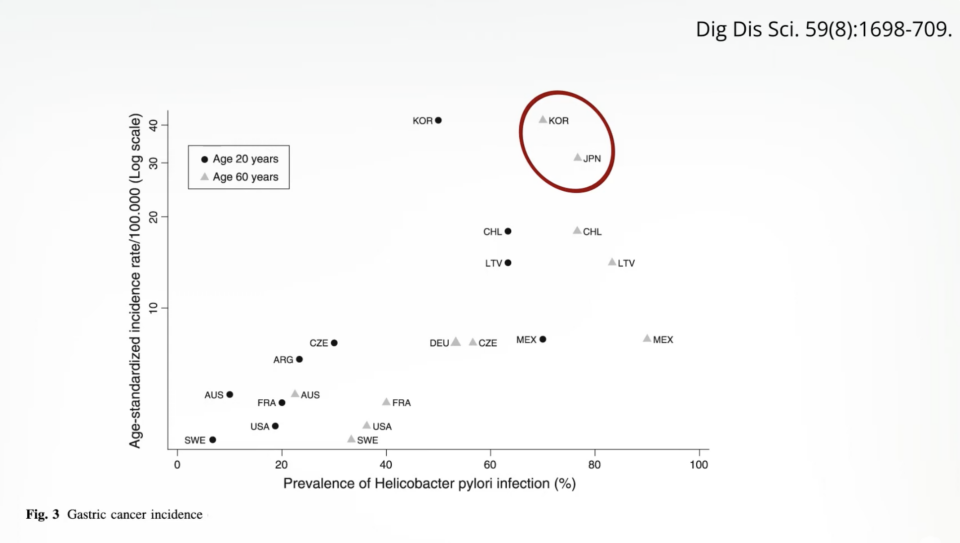
The most significant breakthrough in understanding this health crisis was the identification of Helicobacter pylori (H. pylori), a bacterium that colonizes the stomach lining. H. pylori is now classified as a Group 1 carcinogen, the highest level of certainty regarding its capacity to cause cancer. The mechanism is understood to be a process of chronic inflammation: the infection damages the gastric mucosa, creating a environment where cancer can develop over time. Because South Korea and Japan report both the highest rates of stomach cancer and the highest incidence of H. pylori infection, it appeared that the mystery had been solved.
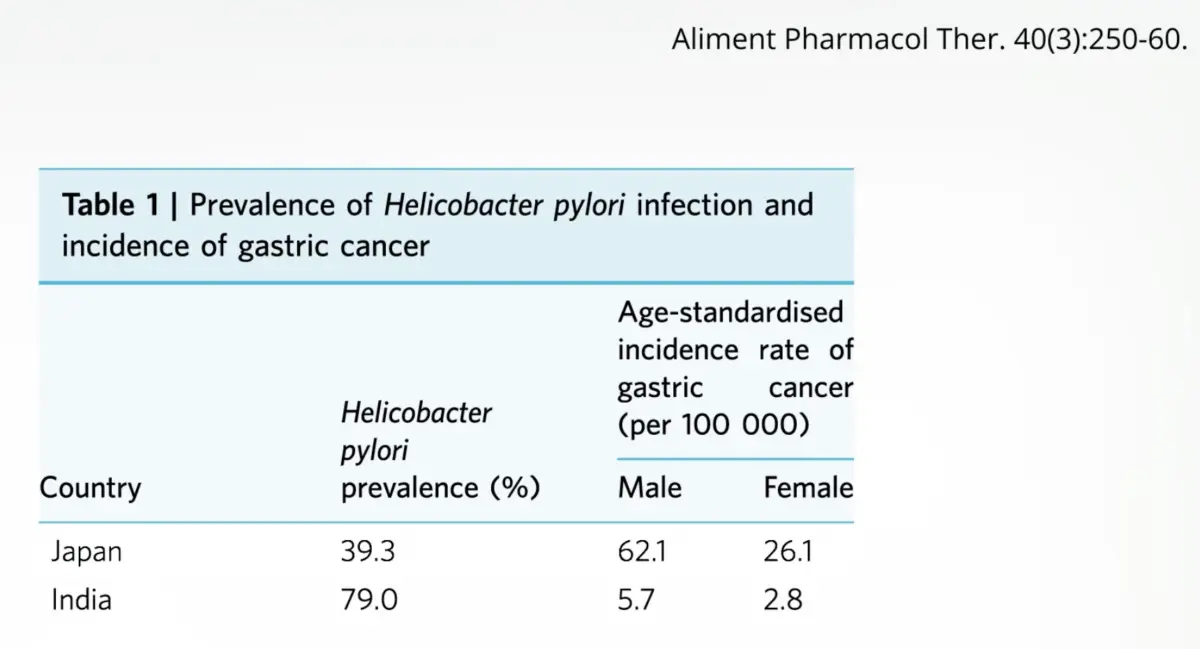
Yet, this conclusion was soon complicated by what researchers have dubbed the "African enigma" and the "Indian enigma." In nations such as Nigeria, the prevalence of H. pylori is high, yet the corresponding rates of stomach cancer are surprisingly low. Similarly, India exhibits an H. pylori prevalence rate twice that of Japan, while experiencing a stomach cancer incidence that is roughly ten times lower.
These global variations force a reconsideration of the disease. While H. pylori is undeniably a major risk factor, it cannot be the sole architect of the gastric cancer epidemic. It is estimated that half of the world’s adult population is infected with H. pylori, yet the vast majority do not develop cancer. This suggests that the bacteria act as a catalyst—setting the stage for disease—but that other co-factors are required to trigger the malignant process. The search for these co-factors points toward the intersection of infection and diet.
Dietary Culprits and the Impact of Preservation Methods
When researchers compared Asian populations with similar H. pylori infection rates but widely divergent cancer outcomes, a common theme emerged: the consumption of preserved, salted foods. Diets high in salted fish and pickled vegetables consistently correlated with higher risks of gastric malignancy. Conversely, populations that consumed high quantities of fresh fruits and vegetables showed an 85% reduction in the odds of developing stomach cancer. Interestingly, the consumption of fresh fish did not show a statistically significant association with the disease in either direction.
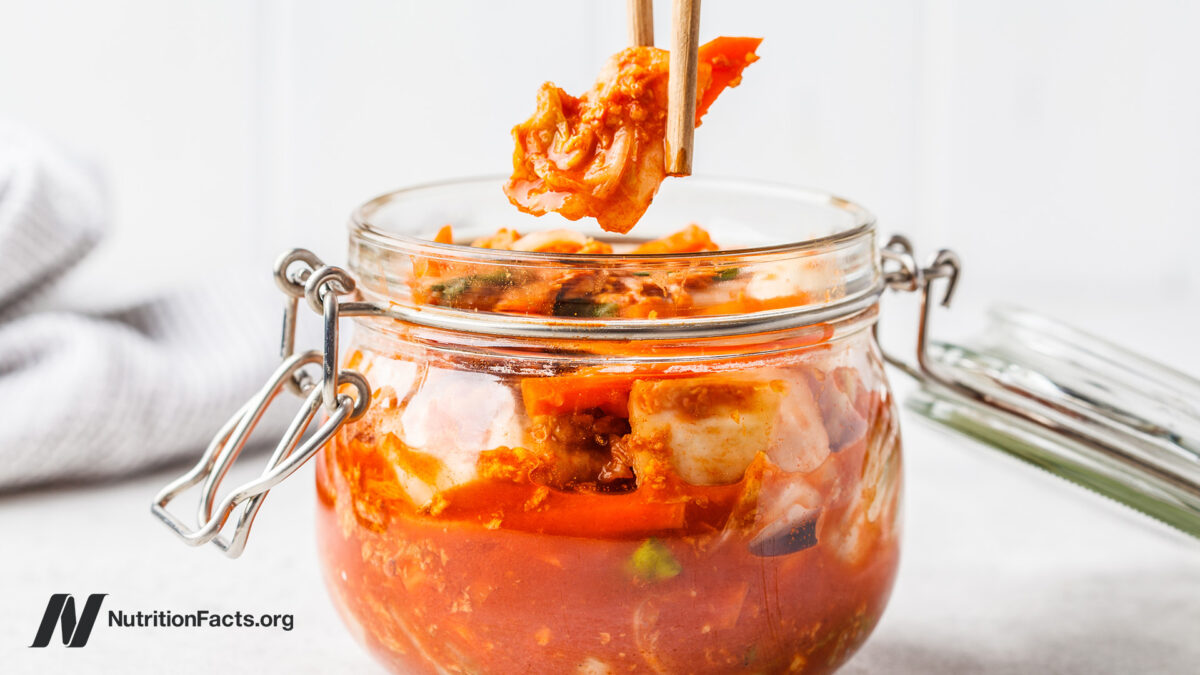
A comprehensive review of 60 studies confirmed that the consumption of pickled foods is a significant risk factor. This trend is particularly pronounced in Korea, where the per-capita consumption of salt-fermented vegetables, such as kimchi, is five to eight times higher than in Japan.
Scientific experiments have sought to validate these observational findings. In a notable study conducted in Vancouver, researchers observed the effects of consuming pickled foods over a three-day period. Participants were given 30 ounces of fukujinzuke—vegetables pickled in soy sauce—or pickled cucumbers. While control subjects who ate fresh carrots or cucumbers showed no changes to their gastric lining, those who consumed the pickled vegetables displayed moderate to severe tissue abnormalities. The findings suggested that these foods could cause direct physical irritation to the stomach lining, potentially exacerbating the damage already caused by H. pylori.
Protective Factors and Future Considerations
The research into the Japanese diet is not entirely focused on risks; it has also identified potential protective agents. The consumption of non-fermented soy foods, such as tofu, edamame, and soy milk, has been linked to a lower risk of stomach cancer. Researchers attribute this protection to the isoflavone compounds found in soybeans, which provide anti-inflammatory and antioxidant benefits. Notably, this protective association was not found with fermented soy foods, even those like miso, which are often highly salted.
Salt itself is not categorized as a direct carcinogen, but its role in the disease process is multifaceted. High salt intake is believed to damage the stomach’s protective mucus layer, which in turn facilitates the colonization of H. pylori and allows dietary carcinogens to penetrate the stomach lining more effectively. Even moderate levels of salt consumption are associated with an increased risk of cancer, though this effect appears most acute in individuals already suffering from H. pylori-induced inflammation.
While the medical community continues to refine its understanding of how diet and infection interact, the current standard of care for H. pylori remains a rigorous regimen of multiple antibiotics. However, the search for natural, diet-based strategies to mitigate the impact of the bacterium and reduce the risk of gastric cancer continues to be a priority for researchers. As the scientific consensus evolves, the focus remains on understanding how dietary patterns can either exacerbate or neutralize the risks posed by this pervasive infection.