
In the ever-evolving landscape of the global art world, this week brings a mix of significant institutional departures, community-driven grassroots resistance against financial strain, and notable developments in the commercial art market. From the Indianapolis Museum of Art to the historic streets of Glasgow, cultural institutions are navigating complex challenges that reflect broader societal tensions regarding stewardship, accessibility, and the preservation of creative spaces.
Institutional Shifts: Belinda Tate Departs Indianapolis
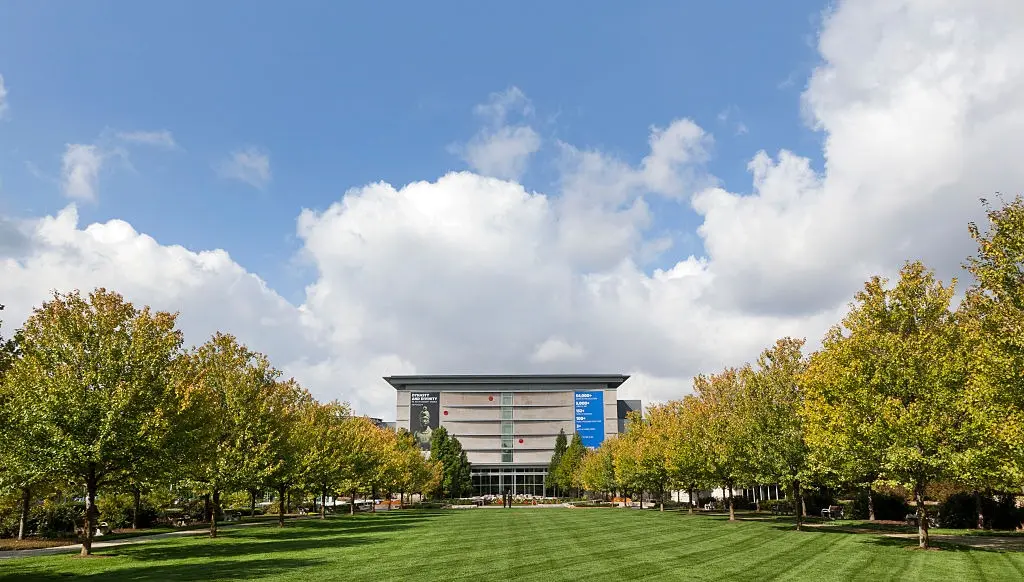
The Indianapolis Museum of Art (IMA) is preparing for a new era as it announces the departure of its executive director, Belinda Tate. After a productive three-year tenure, Tate is stepping down from her role, leaving behind a legacy defined by a dedicated push toward inclusivity and diverse representation. As reported by Mirror Indy, Tate’s leadership was marked by a commitment to elevating voices that have historically been sidelined in traditional museum spaces.
During her time at the helm, Tate curated a bold vision for the museum’s programming, prioritizing women and artists of color through exhibitions that challenged the status quo. Notable among these were "Future Now: Virtual Sneakers to Cutting-Edge Kicks," which bridged the gap between contemporary fashion and fine art, and "The Message is the Medium," an exhibition that explored the intersection of communication and visual culture. Perhaps her most high-profile achievement was securing the "Giants: Art from the Dean Collection of Kasseem ‘Swizz Beatz’ Dean and Alicia Keys" exhibition. By bringing the world-class collection of the famed musical duo to Indianapolis, Tate significantly raised the museum’s national profile and broadened its audience reach.
In a formal statement released by the museum, Tate expressed a sense of accomplishment regarding her trajectory at the institution. "I am proud of the role I have played in advancing the Indianapolis Museum of Art and helping position it for its next chapter," she said. As the museum looks toward its future leadership, the sector will likely keep a close eye on whether the institution maintains the momentum of diversity and community engagement that Tate established during her three-year term.
Crisis and Resistance: Glasgow’s Cultural Uproar
Across the Atlantic, the arts community in Glasgow is currently in a state of profound unrest. The city, long celebrated for its vibrant and self-sustaining arts ecosystem, is reeling from a series of systemic crises that threaten to dismantle the very infrastructure that has allowed its artists to thrive for decades. According to reports from The Art Newspaper, the frustration among local practitioners has reached a boiling point following a sequence of setbacks, most notably the devastating fires at the historic Glasgow School of Art and the announced closure of the city’s Centre for Contemporary Arts (CCA).
The response from the community has been swift and highly organized. Activists have launched the "Save Our CCA" campaign, a movement designed to preserve the institution as a vital hub for independent art. This effort is running parallel to a second, equally urgent campaign to protect "Trongate 103: Centre for the Arts and Creativity." This vital complex, which houses seven distinct arts organizations, is currently facing the existential threat of a 400 percent rent increase. For many, this hike is not merely a financial obstacle; it is viewed as an effective eviction notice that would displace a cornerstone of the city’s cultural life.
Local artist Mark Leckey articulated the gravity of the situation, characterizing the potential loss of the CCA as a strike at the very heart of the city’s creative identity. Leckey noted that Glasgow had previously functioned as an "ideal for artists with an ecology and economy that worked." That delicate balance is now in jeopardy. The situation is further complicated by reports that the CCA’s archive is being put up for sale—a development that spokespeople for the "Save Our CCA" campaign have described as "sickening," citing the potential loss of historical memory and artistic documentation. Whether the concerted efforts of the arts community can force a reversal of these closures and rent hikes remains an open, and increasingly urgent, question.
The Digest: Legal Battles, Market Trends, and High-Stakes Sales
Beyond these structural changes, the art world continues to be shaped by legal, commercial, and technological developments. In the United States, the art-meets-politics sphere is seeing a significant legal confrontation in Arlington County, Virginia. The local elected board has filed a lawsuit against the planned construction of a "triumphal arch" promoted by President Trump. The core of the board’s argument rests on the claim that the project failed to undergo necessary impact assessments, thereby violating established federal laws. The outcome of this case could set a precedent for how future monuments and large-scale installations are permitted and scrutinized in public spaces.
In Europe, the commercial art market is grappling with a phenomenon described by some as a "gallery exodus." As reported by Monopol Magazine, dealers in Vienna are reflecting on why so many galleries are either shuttering or relocating. While the reasons vary from dealer to dealer, a consensus is emerging: the health of an art market is intrinsically tied to the strength of its surrounding ecosystem. Galleries do not exist in a vacuum; they require the support of robust institutions, a stable base of private collectors, and proactive government backing. When these pillars weaken, even the most established galleries find it difficult to sustain their operations.
The world of high-value assets also saw a shocking criminal event in France, where thieves executed a sophisticated heist at a private museum. By disabling video surveillance and alarm systems, the perpetrators successfully stole a giant bronze book cover designed by Salvador Dalí, titled "Livre de l’Apocalypse." The theft of such a singular, iconic work highlights the ongoing vulnerabilities of private collections.
On the technological front, Microsoft has introduced "Michelangelus," a free digital typeface that mimics the handwriting of the Renaissance master, Michelangelo. While it serves as a creative tool for designers and historians alike, it highlights the intersection of classical art history and modern digital utility. Meanwhile, in the luxury market, Christie’s is preparing for a landmark auction in Geneva on November 10. The centerpiece of the event is a rare 24-carat emerald-cut "Bulgari Pink" diamond, which experts estimate could fetch as much as $18 million, underscoring the enduring appetite for rare colored gemstones among the world’s elite collectors.
The Kicker: Uncovering the Artistry of Esphyr Slobodkina
While many of the week’s headlines focus on institutional upheaval and market fluctuations, there is also room for the rediscovery of underappreciated historical figures. Most readers are intimately familiar with the classic 1938 children’s book Caps for Sale, written and illustrated by Esphyr Slobodkina, with its rhythmic refrain: "Caps for sale! 50 cents a cap!" However, few are aware of the breadth of her artistic output beyond the page.
A new exhibition at the Rosenberg & Co. gallery in New York City is currently working to rectify this imbalance. Titled "Esphyr Slobodkina: An Unbound Creativity," the show highlights the artist’s prolific work in abstract painting, sculpture made from found objects, and complex, mixed-media fabric collages. The exhibition serves as a powerful reminder that Slobodkina was a pioneering figure in American modernism, possessing a singular sense of freedom that allowed her to navigate between the commercial world of children’s literature and the rigorous demands of avant-garde art.
"She didn’t shy away from new development," says gallery director Kadie Ross. By placing her lesser-known works in the spotlight, the exhibition invites a reconsideration of Slobodkina’s place in the art historical canon, proving that her creativity was as vast and multifaceted as the storied, hat-stacking peddler she brought to life in her most famous work. This exhibition stands as a testament to the value of looking past the familiar to find the profound, rounding out a week that reminds us of the constant tension—and the constant opportunity—found within the world of art.