
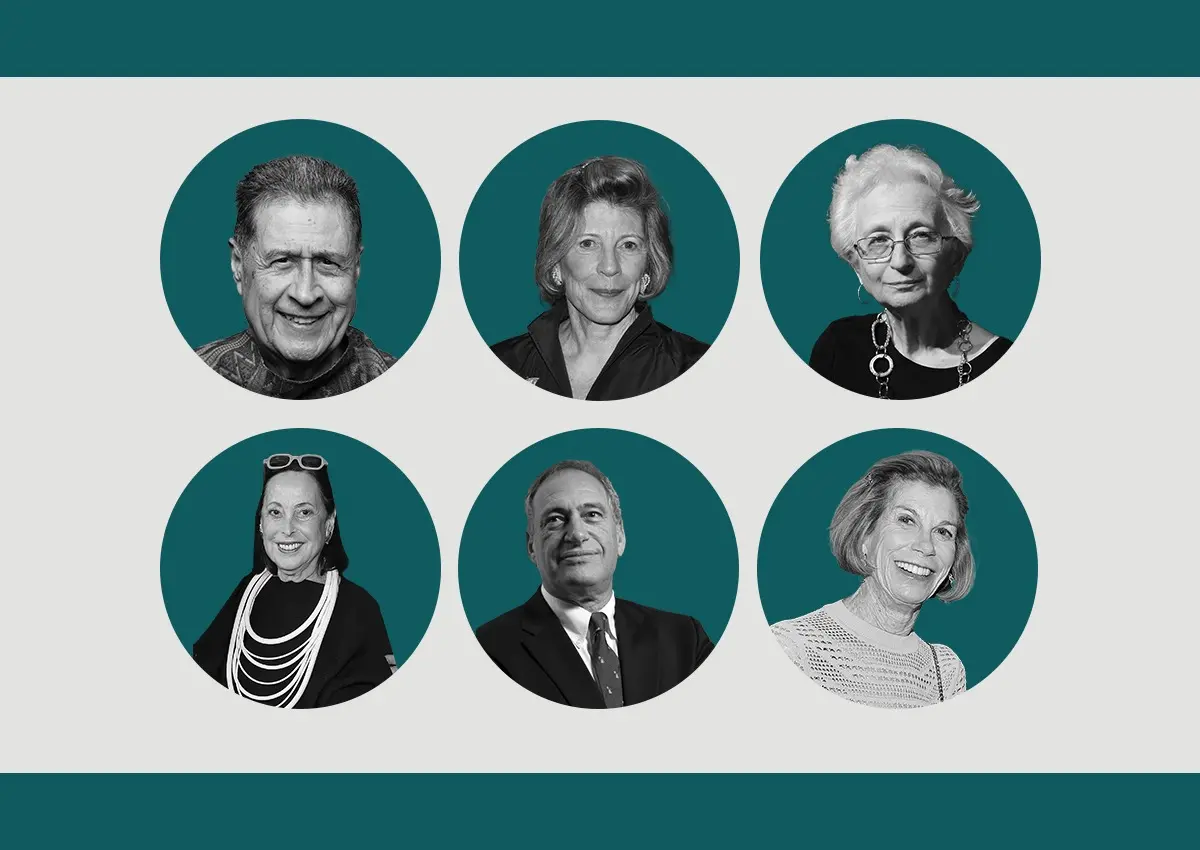
The landscape of the international art world is defined not only by the artists who create its masterpieces but by the dedicated individuals who ensure those works are preserved, studied, and made accessible to the public. Over the past twelve months, the cultural community has mourned the loss of several preeminent collectors whose influence was felt far beyond the walls of their private residences. These figures were not merely passive acquirers of art; they were active patrons, committed trustees, and visionary stewards of culture whose lifelong dedication to the institutions they supported has fundamentally altered the trajectory of American museums.
The impact of these individuals—Agnes Gund, Barbara Jakobson, Dorothy Vogel, Susan Marx, John P. Axelrod, and Gilberto Cárdenas—is woven into the very fabric of the institutions they championed. Their combined legacies represent a significant chapter in the history of art philanthropy, one characterized by an unwavering belief in the power of art to shape public discourse and broaden historical narratives. By donating vast holdings and providing sustained institutional support, these collectors ensured that their private passions became public assets.

The Museum of Modern Art (MoMA) in New York City, a cornerstone of the global art establishment, stands as a testament to the decades of leadership provided by Agnes Gund and Barbara Jakobson. Both women served as long-term trustees, navigating the museum through various eras of growth, expansion, and changing curatorial priorities. Their roles were not limited to the board room; they were deeply embedded in the museum’s intellectual life, fostering relationships with curators and artists alike. Their departure marks the end of a specific era of institutional stewardship, one defined by a hands-on approach to museum governance and an instinctive understanding of the museum’s evolving role in the twenty-first century.
Similarly, the transformation of the National Gallery of Art in Washington, D.C., owes a profound debt to the singular vision of Dorothy Vogel. Unlike many of her contemporaries, Vogel’s approach to collecting was deeply rooted in her professional life as a librarian. Alongside her husband, Herb, she spent years assembling a legendary collection of postwar and contemporary art. Despite their modest means, the Vogels managed to acquire works that captured the essence of their time, focusing on minimalism, conceptualism, and process-oriented art. Their donation to the National Gallery was not just a gift of objects, but a gift of a complete, coherent intellectual journey. For a librarian, the importance of the collection lay in its ability to tell a story, and the National Gallery’s holdings remain transformed by the meticulousness and foresight that Vogel applied to her acquisitions.

In the mountains of Colorado, the Aspen Art Museum stands as a beacon of contemporary practice, a status bolstered significantly by the involvement of Susan Marx. Her patronage was essential in the museum’s development, helping it grow from a local institution into a recognized force in the international art circuit. Marx’s influence was characterized by her ability to bridge the gap between private support and public experience, ensuring that the Aspen Art Museum remained a space where experimental and challenging work could find a home. Her commitment to the museum reflected a broader philosophy of community engagement, where the support of art was inextricably linked to the fostering of a vibrant, intellectually curious public.
The institutional footprint of these collectors extends well beyond the major cultural hubs of the East Coast. At the Museum of Fine Arts, Boston (MFA), the collection is significantly more robust thanks to the generosity of John P. Axelrod. His contributions, numbering approximately 700 artworks, provided the MFA with a diverse range of pieces that filled critical gaps in their holdings. Axelrod’s collecting habits were driven by an expansive view of art history, one that valued depth and variety. His legacy is now physically present in the galleries of the MFA, where the works he donated continue to educate and inspire visitors, serving as a reminder of how private philanthropy can rectify historical imbalances in institutional collections.

Perhaps one of the most transformative recent gifts in the realm of institutional representation comes from Gilberto Cárdenas, whose donation of 5,000 works to the Blanton Museum of Art at the University of Texas at Austin has fundamentally altered how the museum presents Latinx art. This massive acquisition provides a comprehensive narrative of the artistic contributions of the Latinx community, moving beyond sporadic representation to a sustained, scholarly exploration of the field. By entrusting this body of work to the Blanton, Cárdenas ensured that the stories, struggles, and triumphs depicted in these 5,000 works would be integrated into the canon of American art history. The donation is a landmark achievement in the movement toward a more inclusive museum experience, proving that a single collection can provide the critical mass necessary to change the institutional status quo.
The passing of these six individuals invites a moment of reflection on the changing nature of patronage. The relationship between the collector and the institution is a delicate one, requiring mutual trust, shared goals, and a long-term commitment to the public good. These collectors did not simply "give" art; they participated in the life of the institutions they supported, shaping the curatorial vision, funding exhibitions, and ensuring that future generations would have the opportunity to engage with these works.

To gain a deeper understanding of the profound impact these figures had, ARTnews has reached out to the curators who worked alongside them and the fellow collectors who shared their journeys. The stories shared by these colleagues provide a window into the personal side of philanthropy—the late-night conversations in galleries, the shared excitement of discovering a new talent, and the quiet, often overlooked work that goes into managing a major collection.
These individuals, while diverse in their interests and the institutions they supported, shared a common thread: the conviction that art is a public trust. Whether it was the conceptual rigor of the Vogels, the sustained institutional leadership of Gund and Jakobson, or the inclusive vision of Cárdenas, their actions have set a standard for what it means to be a patron of the arts. As the museum world looks toward the future, the foundations laid by these six collectors will continue to provide the bedrock upon which new narratives are built, new artists are discovered, and the public is invited to experience the transformative power of art. Their lives serve as a poignant reminder that while collections may be built by individuals, their ultimate purpose is to serve the collective cultural heritage of the world.