
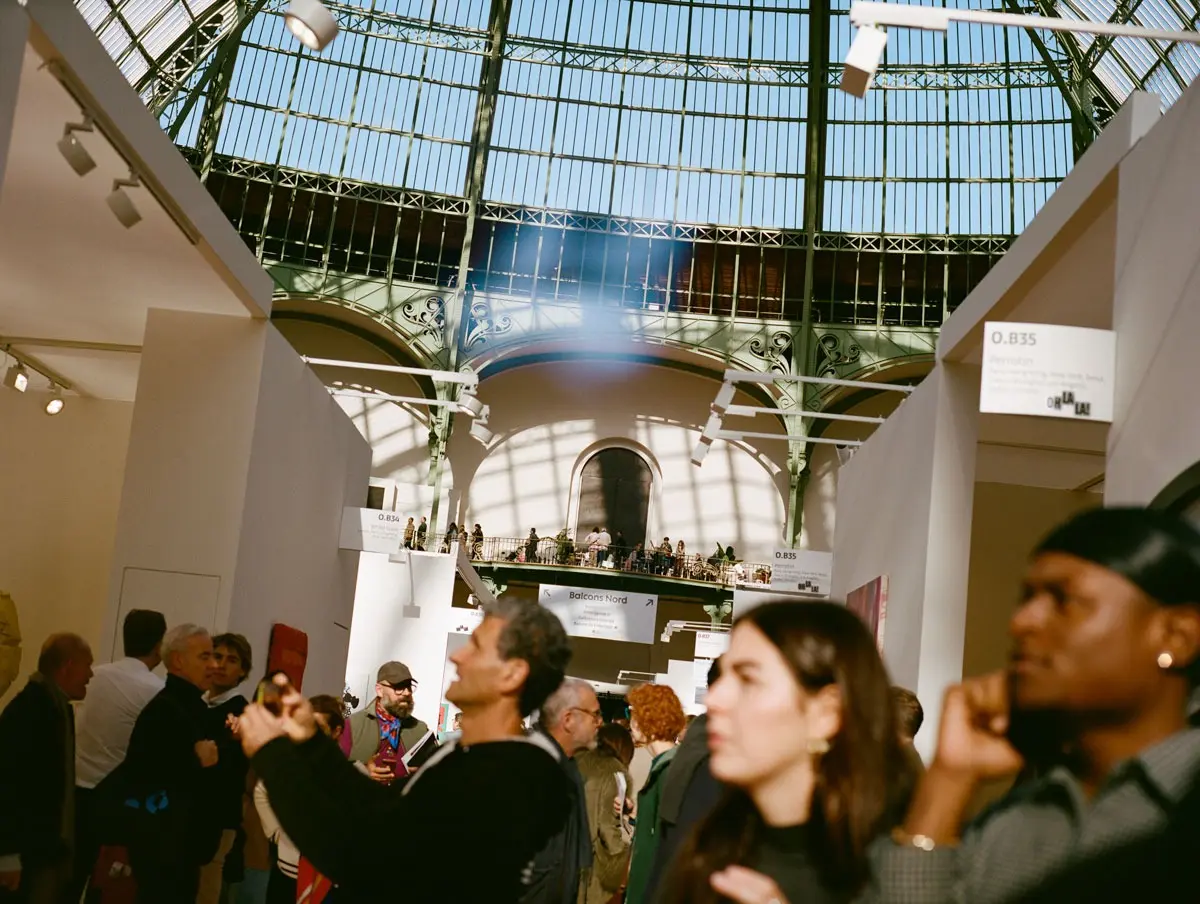
The global art market is currently navigating a period of profound recalibration, defined by an increasingly selective approach from dealers, advisers, and collectors alike. As the European art circuit prepares for a high-stakes, back-to-back autumn schedule—with Frieze London opening from October 14–18, immediately followed by Art Basel Paris from October 21–25—the industry is keenly focused on the shifting power dynamics between these two historic capitals.
For years, the conversation has been dominated by a perceived "drain" from London to the French capital. Three years ago, prominent dealer Thaddaeus Ropac began to voice significant concerns regarding the long-term vitality of the London art market. The mixed auction results of 2022 and 2023 served as a stark indicator of a period that many in the trade viewed as stagnant. Meanwhile, Paris, bolstered by the arrival and rapid ascent of Art Basel, seemed to be cementing itself as the dominant hub for international commerce.
“London lost part of the market because Paris became very attractive,” Ropac recently told ARTnews. Yet, despite these systemic shifts, Ropac remains fundamentally bullish on the British capital. His gallery has signaled a strong commitment to the city by renewing its London lease for another decade, a vote of confidence echoed by other industry heavyweights. Hauser & Wirth, a pillar of the London scene since 2003, is currently deep into the construction of a sprawling, 15,000-square-foot gallery space on Mayfair’s South Audley Street, demonstrating that institutional commitment to the city remains steadfast.

The Strategic Pivot: Balancing Two Capitals
The current market environment is characterized by an "uneven" landscape, where dealers are becoming hyper-selective about which fairs they attend. However, as the industry gears up for the October window, a more nuanced narrative has emerged: London is experiencing a resurgence in identity, even as Paris maintains its magnetic pull for high-end transactions.
“Paris’s strength is its blockbuster museum exhibitions, which are attracting the Americans and international collectors,” Ropac noted. His gallery will maintain a presence at both fairs, reflecting a trend among top-tier dealers who view the two events not as competitors, but as complementary legs of a single journey. “Many of the American collectors now plan their trips so that they can combine London and Paris,” he added.
This sentiment is shared by Zoe Sperling, a partner at Hauser & Wirth London. The gallery, which maintains a deep roster of 15 artists and estates based in the UK, views the city as an essential nexus for contemporary practice. “Our artists want to be in London,” Sperling said. “The majority of them call London home, but so many of our international artists want to exhibit here too. It’s evident that the city’s cultural pull remains very powerful.”

For Ropac, London’s enduring appeal lies in its status as a city for working artists. In this regard, he suggests that London has successfully absorbed the creative energy that previously defined Berlin, a city he believes has “lost a bit of its attractiveness” as a primary commercial hub. At Frieze London, Ropac’s booth will highlight this commitment to the studio, featuring works by Denzil Forrester, Jordan Casteel, Oliver Beer, Mandy El-Sayegh, and Antony Gormley. “Frieze London reflects what’s going on in the studios and in the young scene,” he explained. This stands in contrast to his strategy in Paris, where the focus leans toward significant historical works, including pieces by Marcel Duchamp, Lucio Fontana, Roy Lichtenstein, and Andy Warhol.
The Holistic Fair Strategy
American galleries are increasingly looking to leverage both fairs to showcase the breadth of their programs. Kenta Murakami, a partner at the New York-based Ortuzar gallery, acknowledges the shifting landscape but emphasizes London’s enduring weight. Ortuzar will participate in both events, utilizing Frieze Masters to show historical works while pivoting to primary market works at Art Basel Paris.
“We think of the two fairs as one extended fair, split between two different cities in two very different contexts,” Murakami said. “They allow us to show the breadth of our program. In a way, you can start a conversation in London that you might close in Paris. From a sales numbers perspective, we look at both fairs holistically.”

At Frieze Masters, Ortuzar is bringing a heavy-hitting selection of art spanning from the 1940s to the 1990s, with prices ranging from $50,000 to over $10 million. The booth will feature works by Josef Albers, Claire Falkenstein, Robert Ryman, Lynda Benglis, Joan Snyder, Suzanne Jackson, Jay DeFeo, and Agnes Martin. In Paris, the gallery will pivot to living artists like Takako Yamaguchi, Claudette Johnson, Suzanne Jackson, and Matt Connors, paired with historical 1970s works by Yoko Ono, Miyoko Ito, and André Cadere.
The "Paris Effect" on High-Value Sales
While some industry voices argue that comparing the two is unfair—given that Art Basel Paris has begun to dominate the conversation even against its own flagship event in Switzerland—the financial realities are impossible to ignore. “I think it would be really shortsighted to say that London wasn’t important,” said adviser Meredith Darrow. “[But] Paris has stolen the thunder of really every art fair, including Basel, Switzerland.”
Bernard LaGrange, a senior adviser at Gagosian Art Advisory, echoes this perspective. “If you’re looking to sell an expensive work of art at a fair, you’re going to choose Art Basel Paris, maybe now above all others,” he told ARTnews. “Maybe Art Basel Switzerland, but it’s one of those two.”

The statistics from last year underscore this divide. At Art Basel Paris, sales included a $23 million Gerhard Richter by Hauser & Wirth, a nearly $10 million Amedeo Modigliani by Pace, and a $7.5 million Ruth Asawa by David Zwirner. By contrast, the largest reported sales at Frieze were in the low seven figures. However, some see this as a potential catalyst for Frieze to reclaim its former identity. “Hopefully that allows Frieze to go back to being a place where you can discover what’s new and what’s exciting,” LaGrange noted.
The Economic Reality of Fairs
Ultimately, the choice of where to exhibit is governed by the bottom line. For London, post-Brexit challenges—including the loss of temporary import fee exemptions and the burden of customs red tape—have transformed the fair’s landscape. According to adviser Arianne Piper, these factors have forced Frieze London to evolve from a high-volume transactional hub into a more curated, talent-focused platform.
The cost of participation is significant. At Frieze, booth fees for the smallest spaces begin at £17,910, while the largest XXL booths can cost up to £87,230. Across the Channel, Art Basel Paris utilizes a variable pricing structure, with booths on the ground floor ranging between €880 and €1,098.50 per square meter, while offering strategic discounts for first-time or sophomore exhibitors to encourage participation.

This economic pressure is driving new collaborative models, such as the record 12 shared booths at this year’s Art Basel Paris. Karim Crippa, the fair director, frames this as “an edition of renewal and evolution.” Yet for individual gallerists, the math remains daunting. Eva Presenhuber, a Zurich-based dealer, estimates that the total cost of participating in a major fair has risen by 50 percent over the last decade. She anticipates spending between $250,000 and $350,000 on her Paris participation this year. “You have to sell at least $1 million just to cover that,” she noted.
Despite these hurdles, the consensus remains that the art fair circuit is an indispensable engine for the industry. As galleries navigate a world marked by geopolitical and economic uncertainty, the fairs serve as vital, physical spaces for cultivating relationships with collectors. Whether in the historic halls of Paris or the park-side tents of London, the goal remains the same: to bridge the gap between artists and the collectors who sustain them, proving that despite the shifts in geography and scale, the market’s reliance on these marquee events is as strong as ever.