
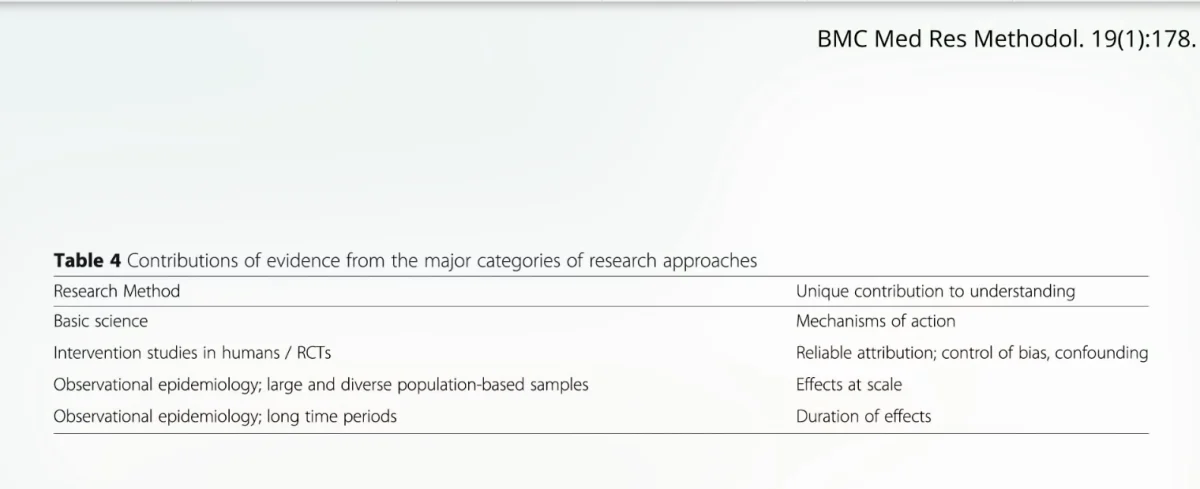
In recent years, a persistent critique has emerged from corporate-funded corners of the research world: the claim that observational studies in nutrition are inherently flawed and unreliable. This argument suggests that because these studies do not adhere to the strict, randomized controlled trial (RCT) framework favored by pharmaceutical research, their findings should be dismissed as "low-quality evidence." However, this narrative—often used to undermine public health guidelines regarding sugar, meat, and processed foods—ignores both the practical realities of nutritional science and the profound risks associated with applying a drug-centered paradigm to dietary habits.
The Limits of Randomization in Nutrition
To understand why this debate matters, one must first distinguish between testing a pharmaceutical intervention and studying a lifetime of dietary patterns. Randomized controlled trials are undoubtedly the gold standard for testing drugs. In an RCT, researchers can isolate a single variable—a specific compound—and observe its effects over a controlled period. But human diet is not a pharmaceutical compound.
Dietary habits are complex, multifaceted, and deeply ingrained. Diseases linked to nutrition, such as heart disease or certain cancers, often take decades to develop. It is practically and ethically impossible to conduct an RCT that requires thousands of people to eat a specific "placebo diet" for 30 years. You cannot force participants to adhere to a rigid, assigned diet for the duration of a human life, nor can you ethically randomize people into groups where some are required to consume harmful substances for the sake of long-term observation.
Because of these logistical constraints, nutritional science relies heavily on observational studies. These involve tracking large populations over long periods, recording what they eat, and noting the incidence of disease. Critics argue that these studies are prone to bias and lack the rigor of an RCT. Yet, when researchers compare data from large-scale observational studies to those from randomized trials, the findings are remarkably consistent. In approximately 90% of treatments examined, the effects observed in population studies were not only in the same direction as those in RCTs, but also of the same general magnitude.
The perceived "discrepancies" between these two methods often vanish upon closer inspection. A classic example is the debate surrounding hormone replacement therapy (HRT). Early observational studies suggested that women taking Premarin had fewer heart attacks, while subsequent RCTs appeared to show the opposite. Critics pointed to this as proof that observational science was "wrong." However, subsequent analysis revealed that the discrepancy was not due to flawed observational methods, but to the timing of the intervention. When researchers accounted for when the medication was started, the studies showed consistent results.
The Cost of the "Drug Paradigm"
Even if one were to concede that observational trials provide a lower level of "certainty" than a double-blind, placebo-controlled drug trial, the argument for why that matters is fundamentally flawed. When a doctor prescribes a medication, the patient is often introducing a concentrated, foreign chemical into their system. Prescription drugs are, in fact, the third leading cause of death in the United States and Europe, following heart disease and cancer. Roughly 100,000 Americans die annually due to the side effects of prescription drugs, even when those drugs are taken exactly as directed.
Because the risks of pharmaceuticals are so acute and immediate, we demand rock-solid, gold-standard evidence before they are brought to market. We are effectively "playing with fire," and in that context, the rigorous requirements of an RCT are not just preferred; they are a moral necessity.
However, the risk-benefit profile for dietary advice is entirely different. Telling a patient to eat more broccoli or reduce their intake of soda carries virtually no risk of death or severe side-effect. When the intervention is food—a fundamental part of daily life—the threshold for evidence does not need to be the same as it is for a high-potency chemical intervention. Applying the strict, narrow criteria of a drug trial to nutritional advice is not a hallmark of scientific rigor; it is an inappropriate use of the drug trial paradigm in a field where it was never intended to function.

Industry Influence and the Distortion of Evidence
The push to delegitimize observational nutrition research has a clear, albeit troubling, provenance. Industry-funded papers have frequently concluded that dietary guidelines are "untrustworthy" because they are based on evidence deemed "low quality" by the GRADE (Grading of Recommendations Assessment, Development and Evaluation) system.
While proponents of these critiques argue that they are simply following standard methodological tools, the choice of tools is telling. There are more nuanced assessment systems available, such as NutriGrade. Unlike GRADE, NutriGrade was specifically designed to evaluate nutritional research, and, crucially, it accounts for funding bias. When industry-funded trials are assessed through the lens of NutriGrade, they are often downgraded, which perhaps explains why industry-backed researchers prefer the rigid, drug-oriented GRADE approach.
Similarly, the HEALM (Hierarchies of Evidence Applied to Lifestyle Medicine) framework was developed specifically because traditional hierarchies like GRADE are not feasible for lifestyle medicine. These tools acknowledge that each research method—whether it is a mechanistic lab study, an RCT, or a large-scale longitudinal study—contributes a unique, necessary piece to the puzzle of human health.
The case of trans fats provides a definitive example of how these methods work in tandem. We never had a randomized trial that forced people to eat buckets of trans fats for decades to see who died first. Instead, we relied on RCTs showing that trans fats increased heart disease risk factors, coupled with massive population studies showing a clear correlation between trans fat intake and heart disease. By refusing to let the "perfect" be the enemy of the "good," public health officials acted on the weight of the evidence. Removing trans fats from the U.S. food supply has prevented an estimated 200,000 heart attacks every year.
The Strategy of Doubt
The strategy of attacking "evidence quality" is not limited to sugar. It has been employed by the meat industry to challenge guidelines on red and processed meat consumption. In these instances, research institutes—often funded by the very industries being scrutinized—hire the same consultants who helped design the earlier, sugar-industry-funded studies. They arrive at the same predictable conclusion: that because the evidence is based on observational data, it is "low quality" and therefore can be disregarded.
This tactic relies on a fundamental misunderstanding of how scientific consensus is built. It ignores the fact that we make public health decisions in other areas—such as setting limits for lead or PCB exposure—without the benefit of randomized trials. We do not need a trial where children are randomized to ingest lead to know it is harmful; we look at the totality of the evidence.
Ultimately, the attempt to invalidate nutrition science by demanding impossible standards is a diversionary tactic. By highlighting the lack of "perfect" data, corporate interests aim to paralyze public health efforts. As seen with the history of sugar guidelines, these industries often create the very inconsistencies they then cite as evidence of "untrustworthiness." While dietary guidelines must evolve as science progresses, the current, evidence-based recommendations are the result of a robust, multi-disciplinary approach—one that understands that in the realm of human health, we must balance the evidence we have with the urgent need to protect the public from preventable disease.