
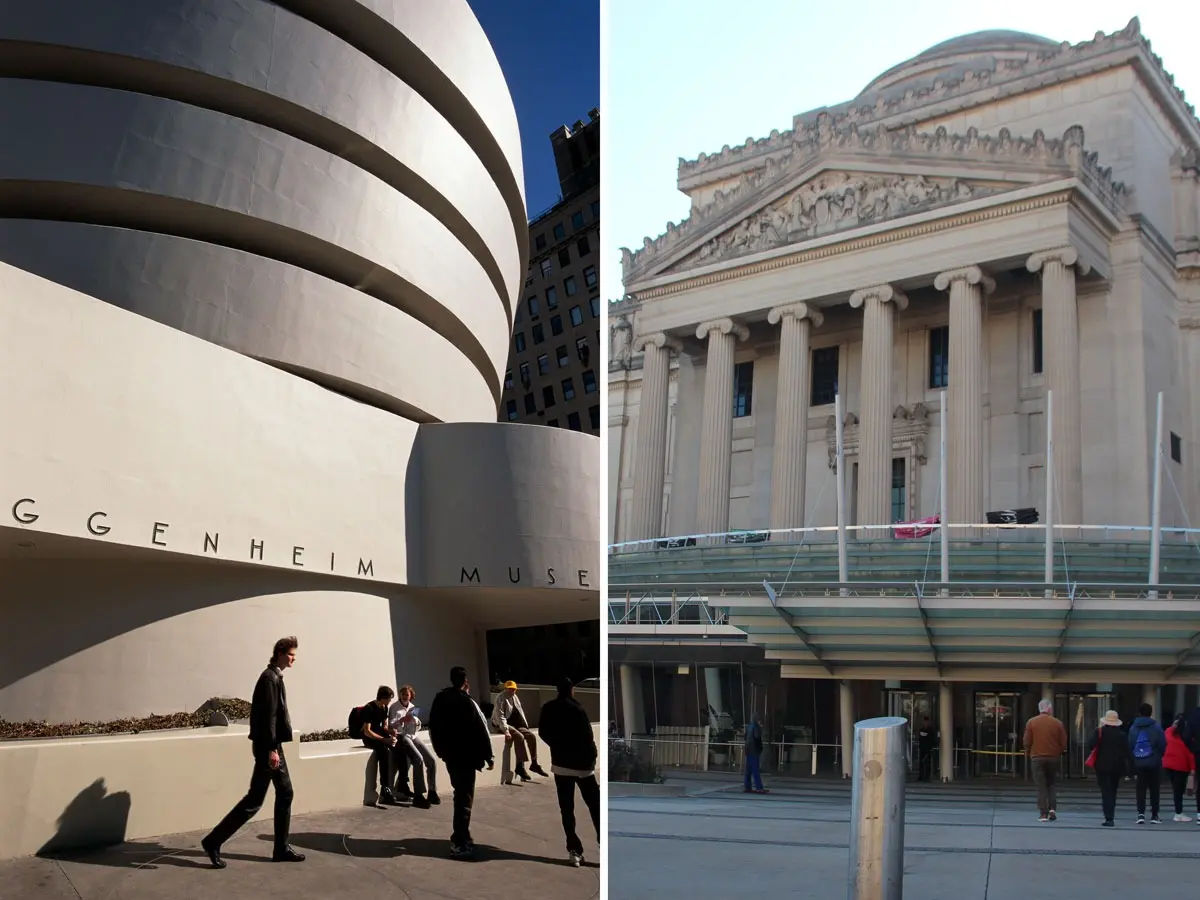
In a significant shift for New York City’s cultural landscape, UAW Local 2110 announced this week that staff at four major institutions have successfully ratified new labor contracts. The agreements mark the conclusion of a high-stakes period of bargaining characterized by intense public demonstrations, financial uncertainty, and evolving concerns over the sustainability of museum careers in an era of rising costs and organizational restructuring.
The Brooklyn Museum and the American Folk Art Museum (AFAM) finalized their respective four-year contracts this week, following similar ratifications at the Solomon R. Guggenheim Museum and the Jewish Museum earlier in September. These agreements represent a major milestone for workers who have spent the better part of the year navigating contentious negotiations centered on job security, inflation-adjusted wages, and the preservation of comprehensive health benefits.
The Brooklyn Museum: From Financial Crisis to Agreement
The second contract secured by the Brooklyn Museum’s unionized staff is perhaps the most notable, arriving after a period of extreme institutional turbulence. Earlier in 2025, the museum’s leadership signaled a potential crisis, announcing plans to cut over 10 percent of its staff in response to a $10 million operating deficit. The move sparked immediate backlash from the two unions representing the museum’s workforce, DC 37 Local 1502 and UAW Local 2110, both of which maintained that they had been excluded from the decision-making process.
What followed was a sustained campaign of pressure, with union members rallying outside the museum’s iconic Beaux-Arts building for weeks. The visibility of the protests eventually drew the intervention of the New York City Council, which stepped in with a $2.5 million grant designed to mitigate the museum’s financial shortfall. The relief package proved pivotal, as the feared layoffs ultimately did not materialize.
Under the terms of the new four-year agreement, staff are guaranteed annual raises, with minimum salaries for full-time positions now ranging from $63,585 to $129,854, depending on the role. These salary adjustments are retroactive to July 1, and the minimum thresholds are set to increase by an additional 10.34 percent by the end of the contract term. Furthermore, front-facing staff, including visitor services and retail associates, will see their hourly wages rise to between $28.69 and $32 per hour by the conclusion of the agreement.
Elizabeth St. George, an assistant curator at the Brooklyn Museum, emphasized that the deal addresses long-standing concerns regarding the quality of life for museum employees. "We are pleased to have negotiated a second contract that preserves the quality of our health care and provides significant wage increases," St. George said in a statement. "It was important to us to maintain affordable health care, including keeping an out-of-network option."
AFAM Secures First Contract After Long Negotiations
At the American Folk Art Museum (AFAM), the ratification of an inaugural contract serves as the culmination of nearly two years of often-frustrating negotiations. The breakthrough comes after the union staged high-profile pickets, including a notable protest during the museum’s annual fundraising gala, where they publicly denounced the institution’s initial offer to raise the minimum wage for front-facing staff from $19 to $21.50 an hour without guaranteeing the retention of existing benefits.
The final agreement provides a significant win for the staff, guaranteeing total wage increases of 13.6 percent over four years. Entry-level employees, including those in the museum store and security and facilities departments, are set to receive raises ranging from 8 to 22 percent, also retroactive to July 1. Beyond base pay, the contract formalizes a binding grievance procedure and mandates additional compensation for employees who are required to work on-site during emergencies or take on extra responsibilities.
Perhaps most significantly for the long-term stability of the workforce, the contract restricts the museum’s ability to replace regular staff with temporary employees or subcontractors and ensures that health-care coverage remains provided without the burden of employee premium contributions.
Richard Ho, a director of information technologies at AFAM with 25 years of service, reflected on the solidarity required to reach the finish line. "AFAM staff voted unanimously to unionize to address pressing concerns about our workplace," Ho stated. "I’m happy that we were able to reach an agreement that will make the museum a more sustainable place to work for all of us. I’m proud that our entire staff stayed involved and supported each other throughout this process."
A Broader Context of Institutional Instability
The recent wave of ratifications comes after a season of collective action across the city’s cultural sector. In late September, unionized staff at the Brooklyn Museum participated in a coordinated strike-authorization vote alongside their counterparts at the Whitney Museum and AFAM. The primary drivers behind this movement were shared: a desire for job security, the maintenance of affordable health care, and, crucially, the pursuit of wages that can withstand New York City’s high cost of living.
The Guggenheim Museum, which had previously ratified a two-and-a-half-year contract in 2023, has also faced significant labor unrest. After the museum announced in February 2025 that it was laying off 20 employees—representing 7 percent of its total workforce—unionized workers pushed back against what they described as a chaotic implementation process. Mariët Westermann, who became the museum’s director and chief executive in 2024, had pointed to a financial situation that had deteriorated over the course of a decade as the rationale for the cuts.
By December 2025, negotiations for a new contract had commenced, with the Guggenheim’s bargaining unit prioritizing stronger job security, including requirements for advance notice of layoffs and improved severance packages. The tension peaked in March when union members picketed the opening of the museum’s high-profile Carol Bove survey, protesting what they characterized as the repeated dismissal of their core demands by leadership.
Looking Ahead: Unfinished Business
While these four museums have successfully reached agreements, the landscape of labor relations in New York’s cultural institutions remains in flux. The Whitney Museum of American Art, which saw its workforce unionize in 2021 following a series of layoffs that reduced staff by 20 percent, is currently locked in difficult bargaining. As of late 2025, a strike date has been scheduled for October 5, just three days before the start of member previews for a major Roy Lichtenstein retrospective.
The scale of this labor movement is substantial. UAW Local 2110, which represents thousands of museum workers across the country, confirmed that it is currently in the midst of negotiating new contracts at several other prominent venues, including the Metropolitan Museum of Art, the New Museum of Contemporary Art, the South Street Seaport Museum, and the Noguchi Museum.
For the staff at the Brooklyn, Guggenheim, Jewish, and Folk Art museums, the path to these contracts was marked by months of uncertainty. However, the ratifications suggest that the era of museum-wide labor organizing is far from over, as institutions continue to balance the mandate of cultural preservation with the economic realities of their workforce. As these institutions move forward, the new agreements set a precedent for how New York’s cultural sector may approach the increasingly complex intersection of artistic mission and labor equity.