
The art world is mourning the loss of Rafael Ferrer, the acclaimed Puerto Rican-born, New York-based artist whose genre-defying career spanned over half a century. Ferrer, a creative polymath whose practice bridged the realms of music, sculpture, and painting, passed away at the age of 93. His death was confirmed late last night by El Museo del Barrio, the institution that played a pivotal role in cementing his legacy later in his life.
In a statement released by the museum, Ferrer was remembered as a “groundbreaking artist whose singular and influential practice challenged boundaries” across a multitude of disciplines. His trajectory was as unconventional as his art; he began his creative life not in a studio, but as a jazz drummer. This rhythmic sensibility would eventually inform his approach to visual composition. His pivot toward the fine arts was sparked by a transformative trip to Paris in 1954, where he was exposed to the radical philosophies of Surrealist artists and writers. This encounter with the avant-garde planted the seeds for a career defined by an restless, experimental spirit that refused to be categorized by medium or movement.
For much of his career, Ferrer operated just outside the mainstream art-historical canon, a situation that began to change significantly in 2010. That year, El Museo del Barrio mounted a long-overdue retrospective titled “Retro/Active: The Work of Rafael Ferrer.” The exhibition, which surveyed five decades of his output, was widely hailed by critics as a necessary intervention in the history of contemporary art. A review in The New York Times noted that the show was “almost criminally overdue,” highlighting the artist’s unique ability to find artistic potential in the most mundane materials. The review further captured the essence of his ingenuity, noting that the “general impression is of someone who would figure out how to make art if confined to a nearly empty room.”
Ferrer’s material palette was famously eclectic. His work encompassed everything from humble paper bags—which he treated as canvases—to discarded garbage can lids, which he transformed into complex, Dada-inspired hanging sculptures. He was equally known for his ephemeral installations of the 1960s and 70s, which utilized organic and volatile materials like straw, dried leaves, and even ice. These works solidified his reputation within the burgeoning Process Art movement, leading to exhibitions at prestigious venues like the Whitney Museum of American Art alongside other titans of the conceptual art scene. By the 1980s, Ferrer shifted his focus back to painting, developing a distinctive “faux-naive” style that frequently depicted tropical landscapes and figures, reflecting his deep ties to his Puerto Rican heritage. His contributions were recognized with prestigious accolades, including a Guggenheim Fellowship in 1975 and a Pew Fellowship in the Arts in 1993, and his works remain held in major museum collections worldwide.
Ongoing Legal Battles: The Villena Treasure Theft
While the art world remembers a pioneer, authorities in Spain are grappling with the fallout of a major cultural catastrophe. Preliminary court proceedings have officially commenced against the mayor of the Spanish town of Villena and the director of the Villena Museum (MUVI). The officials are facing legal scrutiny regarding allegations of negligence that allegedly facilitated the shocking theft of the “Villena Treasure,” one of Europe’s most significant collections of Bronze Age gold artifacts.
The Association for the Defense of the Rule of Law and the Fight Against Corruption (ADED) filed a formal complaint naming both the museum’s security personnel and local government officials. The association argues that the theft, which it characterizes as a grave crime against historical heritage, was made possible by the gross negligence of established security protocols. The accusations extend to the city’s left-leaning mayor, Fulgencio Cerdán, who is being held to account for the city’s failure to adequately protect the municipal institution. A judge is currently reviewing the case to determine if it will proceed to a full trial.
The loss is immense. The treasure consists of 66 exquisite items, including 11 gold bowls and 28 gold bracelets, totaling nearly 10 kilograms (22 pounds) of gold. The theft, which occurred on August 27, saw the vast majority of these priceless objects vanished. Only a few silver vessels, a single bracelet, and one of four crowns remained at the scene—the latter presumably dropped by the thieves during their escape.
Updates from the Art World
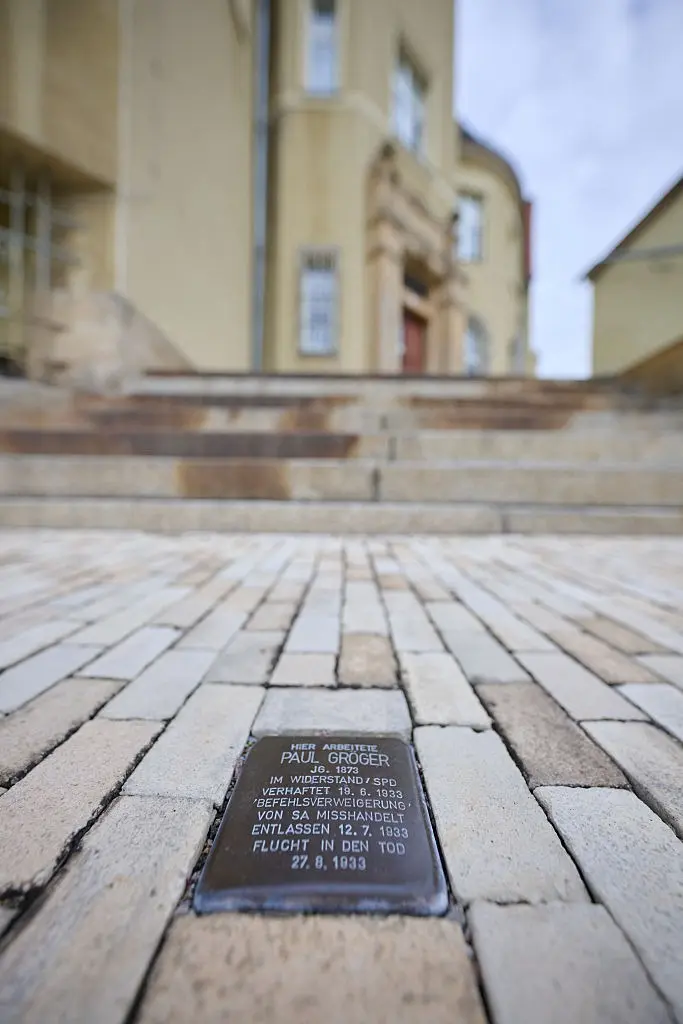
In other news, the cultural landscape is shifting in several significant ways across the globe. In Germany, the town of Heidenau has stirred controversy by voting to cease the installation of new “Stolpersteine” (stumbling stones). These small, engraved brass plaques serve as a poignant, grassroots memorial to Holocaust victims, embedded into the pavement outside the homes where they once lived. The decision has been met with widespread concern among those who view the stones as vital tools for collective remembrance.
Restitution remains a central focus for many European institutions. A notable success occurred recently when a late 19th-century painting, Winter – Napoleon’s Retreat from Moscow by Alfred Wierusz-Kowalski, was returned to the National Museum in Warsaw. The work, which had been looted by Nazis during the war and subsequently hung in an SS officers’ club, was returned by a private owner upon learning of its illicit history.
Similarly, Greece and Bulgaria have entered into a landmark “Memorandum of Understanding” to address the legacy of WWI-era looting. Sofia has agreed to return 48 looted relics to Athens in exchange for the return of the mortal remains of Tsar Samuel of Bulgaria, who reigned from 997 to 1014 and whose remains have been housed in a Greek museum.
In the United States, political friction continues to intersect with cultural heritage. Senator Mike Lee unilaterally blocked a bill this past Monday that sought to prevent the presidential administration from removing or altering presidential memorials, specifically including the John F. Kennedy Center for the Performing Arts.
Meanwhile, in Paris, leadership changes are looming at the Eiffel Tower. Patrick Branco Ruivo, the director of the company managing the monument for the city, is set to step down at the end of the year. His departure follows a period of intense public scrutiny and a labor strike triggered by the controversial decision to replace female workers with men during a visit from a religious delegation in September.
Finally, in the Nordic region, the Sami art collective Däddadällu has been honored with the MUNCH Award, which carries a prize of NOK 300,000 (approximately $31,270), recognizing their significant contributions to contemporary art.
The Kicker: A Deep Dive into the Mind of Etel Adnan
As the art community mourns the loss of one pioneer, it is also celebrating the enduring legacy of another. A new documentary titled Adnan being and time (2026) offers an intimate portrait of the late artist and poet Etel Adnan. The film, directed by Marie Valentine Regan, represents the first feature-length examination of Adnan’s radical and poetic universe.
Shot over the five years leading up to her death on November 14, 2021, the documentary serves as a visual and auditory journey, moving between Adnan’s home in Paris and the base of Mount Tamalpais in Sausalito—a landscape that inspired decades of her poetry and painting. Through the lens, the artist reflects on the profound complexities of her life: her childhood in Beirut, the weight of the history she faced head-on, and the trauma inherited from her parents, who witnessed the collapse of the Ottoman Empire and the destruction of Smyrna in 1922. The film explores her decision to maintain an art practice “in Arabic” and delves into the philosophical questions of “being and time” that served as the heartbeat of her life’s work. Through this final cinematic meditation, audiences are invited to witness the extraordinary internal life of an artist who spent her final years as she had lived: with curiosity, grace, and an unwavering commitment to truth.