
By the time we reach our 50th birthday, approximately half of the population—regardless of gender—will experience some degree of hair loss. It is a universal human experience that often triggers a scramble for quick fixes, expensive shampoos, and a revolving door of dietary supplements. However, the search for a remedy is frequently clouded by persistent myths. Contrary to popular belief, hair loss is not the result of washing your hair too frequently, nor is it caused by the aggressive use of a hairbrush. While these habits might seem like plausible culprits, researchers have consistently found that the vast majority of age-related hair loss is fundamentally genetic.
When scientists examine the heritability of baldness in men, the data is stark: twin studies suggest that about 79% of the variation in hair loss between individuals is genetically determined. This high degree of heritability means that for most people, the trajectory of their hairline is largely written in their DNA before they are even born. However, that remaining 20% leaves significant room for environmental factors, lifestyle choices, and systemic health issues to influence the rate and severity of thinning.
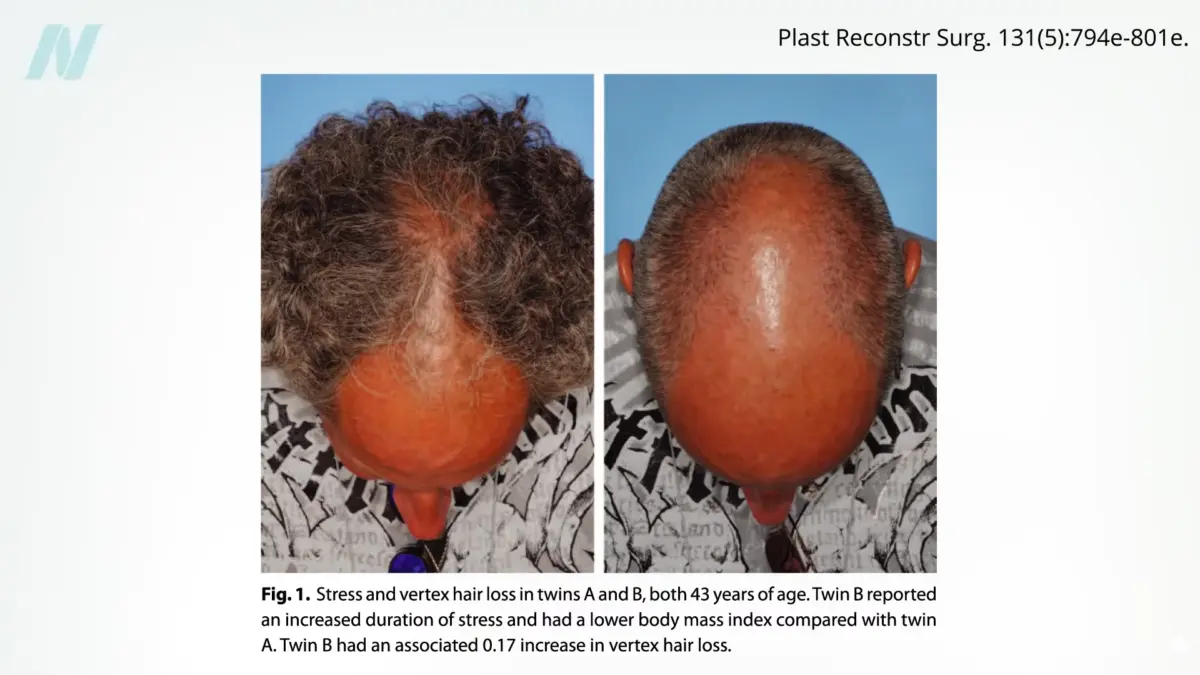
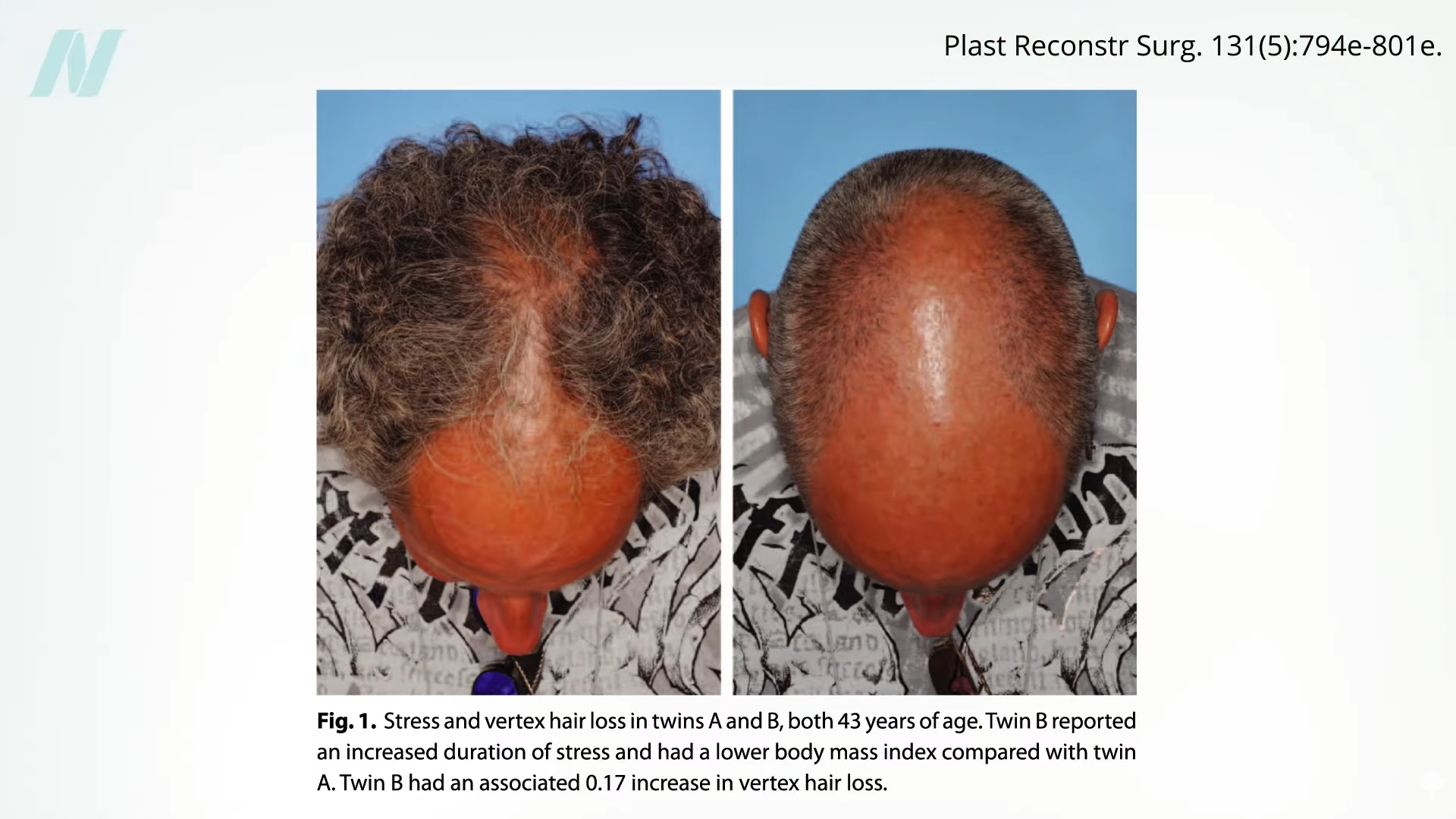
Even among identical twins—individuals who share the exact same genetic blueprint—we often see dramatic discrepancies in hair density. Researchers have observed cases where one twin maintains a full head of hair while the other experiences significant thinning. These differences are rarely accidental; they are frequently linked to lifestyle factors such as chronic stress, heavy smoking, a history of high blood pressure, or even underlying medical conditions like cancer. In visual comparisons of identical twins, the brother who reported higher levels of chronic stress or the sibling who engaged in smoking and excessive alcohol consumption consistently displayed more pronounced hair loss than their counterparts.
These observations underscore a vital reality: while your genes provide the baseline, your environment acts as the editor. Smoking, in particular, is a known contributor to both male and female pattern baldness. Cigarettes contain a cocktail of genotoxic compounds that can damage the delicate DNA within hair follicles. Furthermore, smoking is linked to microvascular poisoning at the base of the follicle, effectively choking the hair’s blood supply and inhibiting growth.

Beyond lifestyle, there are other, more insidious toxic agents that can induce hair loss. Mercury is a primary offender in this regard. Mercury tends to concentrate in human tissue, specifically accumulating in growing scalp hair at rates up to 250 times higher than in other parts of the body. Historically, this has led to some curious medical anecdotes. Some historians have speculated that William Shakespeare’s famous receding hairline may have been a consequence of mercury poisoning, a treatment once common for syphilis during that era. While we have moved past the use of mercury as a medical treatment, it remains a contemporary health concern. According to the U.S. Centers for Disease Control and Prevention, the primary pathway for mercury exposure today is through the consumption of contaminated seafood.
This connection between diet and hair health is not merely theoretical; it is a clinical reality. Women of reproductive age often seek medical intervention for what they believe to be hormone-related hair loss, particularly during the transition into menopause. However, in some instances, the culprit is found in the pantry. One documented case involved a 43-year-old woman evaluated for early menopause who was suffering from significant hair loss. Upon testing, doctors discovered her blood mercury levels were dangerously elevated. The source was a diet high in tuna. When the patient eliminated fish from her diet, her mercury levels plummeted. Within just two months, she began to see signs of regrowth, and after seven months of a fish-free regimen, her hair had completely recovered. This highlights a crucial takeaway for medical practitioners: when patients present with unexplained hair loss, screening for heavy metal toxicity should be a consideration. Simply adjusting diet and re-testing blood levels can, in some cases, resolve the issue entirely.
Given these findings, many people turn to the supplement aisle in hopes of reversing thinning. But can nutrient deficiencies truly be the root cause for the average person? While it is true that nutrient deficiencies can lead to hair loss, they are rarely the primary cause in healthy, well-nourished individuals. The most clear-cut examples of nutritionally induced hair loss are seen in patients who have undergone bariatric surgery, where the patient’s anatomy is purposefully rearranged to induce malabsorption. In the general population, however, there is remarkably little evidence to suggest that popping extra vitamins and minerals offers any benefit to those who are not already clinically deficient.
For centuries, we have known that scurvy—a severe vitamin C deficiency—can lead to hair loss, but this is a far cry from the nutritional status of the average modern person. There is no data to suggest that increasing vitamin C intake beyond a baseline level of sufficiency provides any additional protection for your hair. The same logic applies to zinc. While zinc deficiency, often seen in individuals who abuse alcohol, can cause hair thinning, taking zinc supplements when your levels are already normal does not increase hair growth. In fact, it can lead to negative side effects, just as excessive iron supplementation can cause its own set of health complications.
The most popular ingredient found in top-selling hair loss products is vitamin B7, or biotin. It is frequently marketed as a miracle worker for hair, skin, and nails. While it is true that a severe biotin deficiency can cause hair loss, such deficiencies are virtually unheard of in healthy people eating a normal diet. The only exception occurs in rare cases where individuals consume large quantities of raw egg whites, which contain compounds that bind to biotin and prevent its absorption. Beyond these extremely rare instances, the idea that biotin supplements will make your hair grow thicker or faster is effectively a myth.
If these supplements don’t help, why is there such a pervasive "can’t hurt, might help" attitude toward taking them? The reality is that there is significant potential for harm, driven by a lack of regulatory oversight and the unintended consequences of high-dose supplementation. Many biotin supplements on the market today contain levels up to 650 times the recommended daily intake. This excess biotin does not simply leave the body unnoticed; it can severely interfere with clinical laboratory tests. High levels of biotin in the blood have been known to distort results for thyroid function tests, various hormone panels, and even the cardiac biomarkers used to determine if someone is suffering from a heart attack. In a clinical setting, this interference can lead to misdiagnosis, with potentially life-threatening consequences.
Furthermore, the supplement industry is rife with "manufacturer shenanigans." Because the industry is not regulated with the same rigor as pharmaceuticals, quality control errors can lead to dangerous outcomes. There have been documented outbreaks where consumers suffered from selenium toxicity because a manufacturing error resulted in a supplement containing 200 times the labeled dose—a toxicity that paradoxically caused the very hair loss the supplement was intended to prevent. Similarly, excessive intake of vitamin A has been linked to hair loss.
Ultimately, the best approach to hair health is to focus on avoiding known environmental toxins and addressing genuine, diagnosed nutritional deficiencies through blood work rather than self-prescribing over-the-counter remedies. As we navigate the complexities of hair loss, the science suggests that for most of us, our genetics set the stage, while our lifestyle and environmental exposures dictate the final act. Relying on unverified supplements is not only likely to be ineffective, but it may also introduce new, unnecessary health risks into our lives.