
Please note: This report discusses the significant and often distressing issue of weight bias and discrimination, which may be a sensitive topic for some readers.
In the landscape of social prejudice, weight stigma is frequently described as the "last acceptable form of bias." While society has made significant strides in addressing discrimination based on race, gender, and disability, the rampant stereotyping and mistreatment of individuals living in larger bodies remain deeply entrenched. This systemic issue is not merely a matter of social discomfort; it is a pervasive phenomenon that infiltrates the workplace, the classroom, and, perhaps most critically, the physician’s office.
The daily reality for many overweight individuals is one of persistent, exhausting judgment. Research highlighting the frequency of this stigma is stark. In one telling study, fifty overweight women were asked to document every instance where they felt stigmatized due to their weight. Over the course of a single week, the group recorded more than a thousand distinct instances. On average, an overweight woman may face three separate incidents of bias every day. These encounters range from overt harassment—such as being insulted or called derogatory names—to physical barriers, like the inability to fit into standard public seating, and systemic discrimination, such as receiving substandard service in restaurants or retail environments.
While weight stigma affects all genders, the burden is not distributed equally. Data indicates that obese men report approximately three times less discrimination than women of similar size, suggesting that for men, such bias may be a periodic occurrence rather than the daily grind experienced by women.
These reports are far from anecdotal; they are backed by rigorous sociological research. In controlled studies using professional actors outfitted with theatrical prostheses to simulate an overweight appearance, researchers found that these individuals were significantly more likely to face discrimination when perceived as overweight than when they appeared at their "normal" weight. This employment bias, much like the broader societal trends, shows a marked prejudice against overweight women compared to their male counterparts.
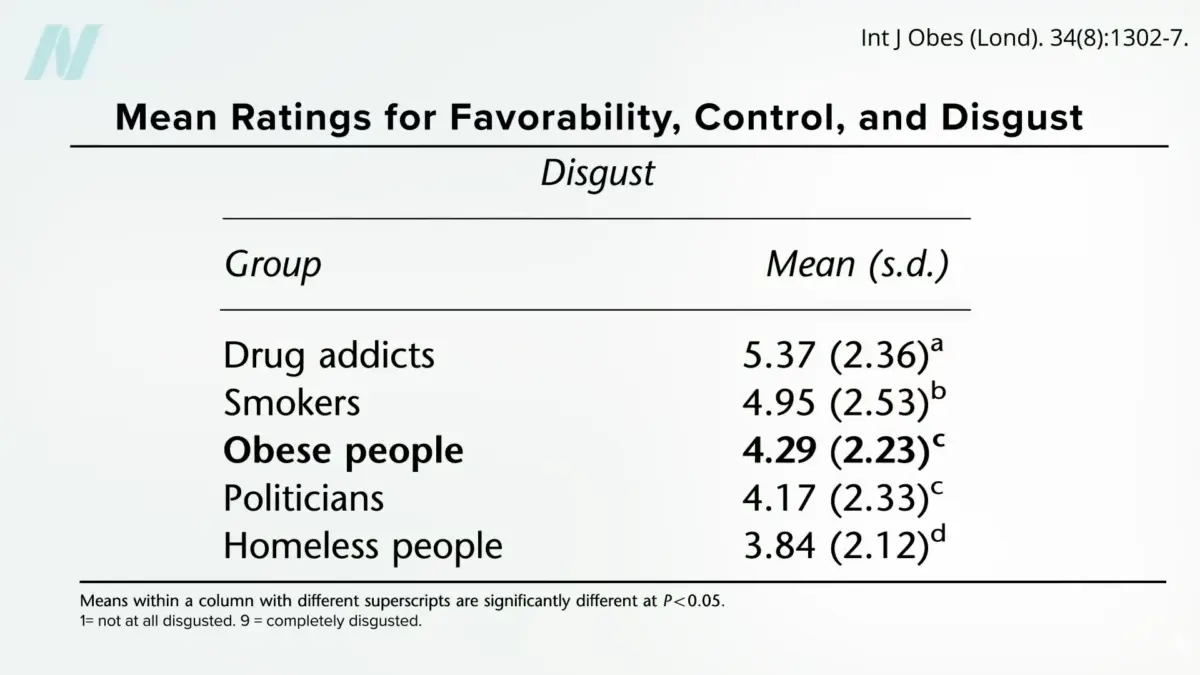
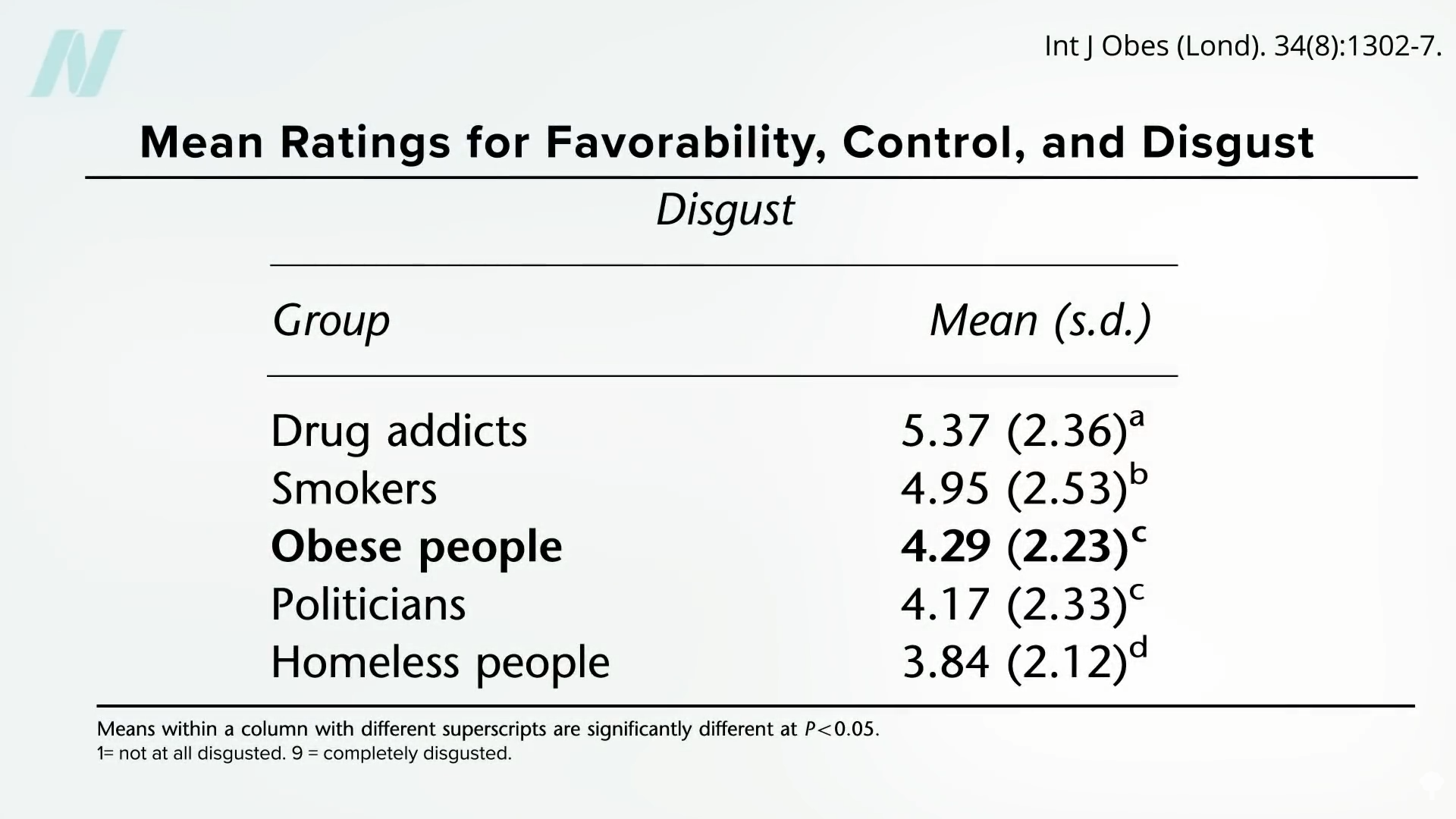
The depth of this social animus is perhaps best captured by comparing it to other marginalized groups. When researchers surveyed attitudes toward sixteen different stigmatized social categories—including individuals experiencing homelessness—they found that only drug addicts and smokers were viewed as more "disgusting" than obese people. In a particularly biting observation, researchers noted that, in terms of social perception, obese people were rated as just as undesirable as politicians.
This cycle of stigma begins at a shockingly young age. Studies have shown that children as young as three years old already categorize their overweight peers using negative labels such as "mean," "stupid," "lazy," and "ugly." As children grow older, this negative language often intensifies, reflecting the broader social conditioning they witness around them.
Historical data provides a sobering look at how this prejudice has evolved—and worsened—over time. A landmark 1961 study conducted across diverse social, cultural, and ethnic backgrounds in California, Montana, and New York asked children to rank photos of their peers to determine whom they liked best. The images included children with varying challenges: a child in a wheelchair, a child on crutches with a leg brace, a child missing a hand, a child with facial disfigurement, and an obese child. The results showed a "remarkable uniformity" across every group tested: the obese child was consistently ranked last.
More than four decades later, researchers published a follow-up study, titled with chilling simplicity: "Getting Worse: The Stigmatization of Obese Children." The 2003 findings revealed that the obese child was actually liked even less than they had been in 1961. This trajectory mirrors broader societal trends, with national surveys recording a nearly 70 percent increase in perceived weight discrimination since the mid-1990s.
The environments intended to nurture children are not immune to these biases. Teachers and school staff, who are tasked with providing a supportive atmosphere, often harbor their own prejudices. Surveys have indicated that more than a quarter of school staff feel that becoming obese is "one of the worst things that could happen to a person." This bias even crosses the threshold of the home. Studies have shown that some parents provide less financial support for college to their overweight daughters compared to their thinner siblings. As two prominent obesity researchers noted, "It is strong prejudice indeed when parents discriminate against their own children."
Perhaps most alarming is the prevalence of weight bias within the medical community. Health care settings are intended to be neutral, healing spaces, yet they frequently serve as sites of profound discrimination. A representative national survey found that more than half of physicians viewed obese patients as "awkward, unattractive, ugly, and noncompliant." Nurses are also implicated; approximately one-quarter of those surveyed agreed or strongly agreed with the statement: "Caring for an obese patient usually repulses me."
This antagonism has tangible and dangerous health consequences. Obese women, for instance, are at a higher risk for developing cervical, endometrial, and ovarian cancers, yet they are less likely to receive the life-saving screenings necessary to detect these conditions early. Morbidly obese patients have only about half the odds of receiving recommended pelvic exams. While some of this disparity is attributed to patient avoidance—likely due to past negative experiences—the issue is also driven by institutional barriers. A survey of OB/GYN practices in Florida by the Sun Sentinel found that one in seven practices refused to see heavier women, setting weight cut-offs for new patients as low as 200 pounds.
Even when patients gain access to care, the quality of that care is often compromised by bias. Research involving physicians who were randomized to receive medical charts for a migraine patient—presented as either average weight, overweight, or obese—found that doctors were prepared to spend roughly 28% less time with the obese patient. Furthermore, recorded doctor visits reveal that physicians tend to build less emotional rapport with patients in higher weight categories.
The professional bias is so pervasive that even obesity specialists—those specifically tasked with addressing the condition—have shown increasing explicit anti-fat attitudes. In surveys conducted between 2001 and 2013, these specialists were found to describe fat individuals as "significantly more lazy, stupid, and worthless" than thin people. Such attitudes have even historically permeated medical literature, with one example from the Annals of Internal Medicine explicitly labeling obesity as an "aesthetic crime."
There is, however, a complex dynamic at play in the patient-physician relationship. A study titled "Obese Patients Overestimate Physicians’ Attitudes of Respect" found that even when doctors harbor negative feelings, their patients often report satisfaction with their providers. The researchers concluded that while physicians may be successfully "playing the part" during the consultation, the underlying lack of true respect suggests that the authenticity and efficacy of the patient-physician relationship remain fundamentally compromised.
This systemic issue remains a significant hurdle in public health. As the medical and educational communities continue to grapple with these findings, the conversation moves toward the broader burden that this persistent bias places on individuals and the healthcare system at large.