
Four years ago, Dallas-based dealer James Cope launched an experiment in the art world that stood in stark contrast to the sprawling, high-pressure environment of global convention-center art fairs. He envisioned a gathering of galleries that prioritized conviviality, community, and genuine connection over the industrial-scale logistics that have long defined the industry’s marquee events. Today, that experiment is crossing the Atlantic, as Cope prepares to launch the inaugural London Invitational during the prestigious Frieze Week next month.
The evolution of the project from a localized, hotel-based gathering in Texas to a satellite event in the heart of London’s Mayfair district marks a significant pivot in the way midsize and emerging galleries are choosing to engage with the market. For Cope, the expansion was never a foregone conclusion. "I’m primarily a gallerist, so I never thought I would be an art fair owner or organizer," Cope told ARTnews during a recent conversation. "To take it to London, I didn’t really have any expectations of that when I started."
The "Invitational" model, as Cope defines it, is built on the antithesis of the traditional, application-heavy fair circuit. Instead of an open call for exhibitors, Cope hand-picks a small, cohesive group of galleries that share a common ethos. "What I’m trying to build with the Invitational is a group of like-minded people coming together to spend a few days together," he explained. The process is personal rather than bureaucratic, focusing on "getting to know each other, getting to know your gallery—what similarities there are between other galleries, and trying to bring a group of galleries together that feel connected."
This intimate approach was born out of necessity and a desire to improve the experience for dealers who often feel like cogs in a machine at larger fairs. Initially, Cope imagined the project as a one-off event—a modest two-day gathering of colleagues held at a Dallas hotel. However, the response from the broader art community was immediate. After the inaugural outing, interest swelled, with galleries reaching out to inquire about the application process, only to be reminded that the event was, by definition, invite-only.
The project quickly outgrew its humble origins. By 2025, the Dallas Invitational found a new home at the Mansion on Turtle Creek, a property managed by the Hong Kong–based Rosewood Hotels & Resorts. The transition to a luxury hospitality setting proved to be a catalyst for growth. The fair began with 15 galleries, and by this past April, it had expanded to include 22 exhibitors across two floors of the hotel.
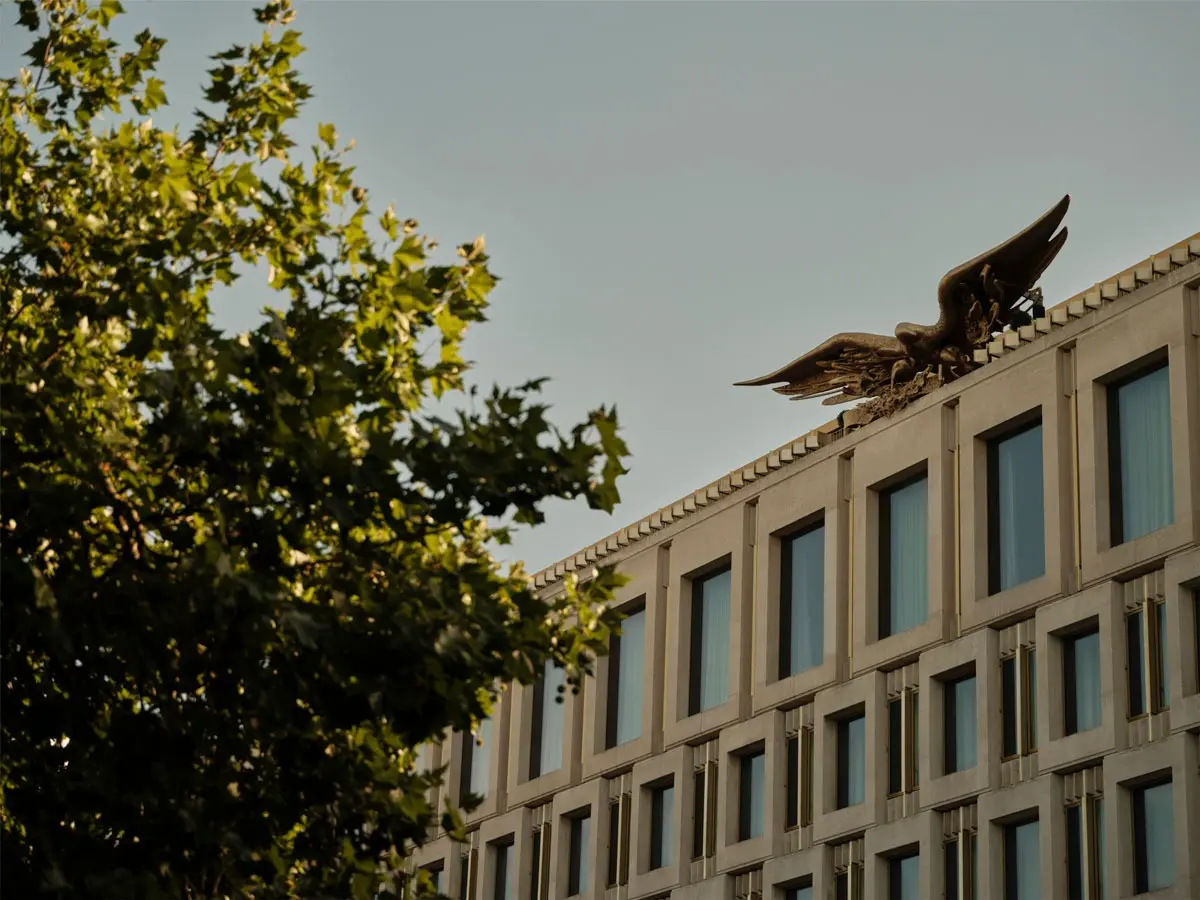
The success of the Dallas editions eventually caught the attention of the Rosewood group itself. Impressed by the model’s focus on high-touch hospitality and its ability to cultivate a refined, manageable atmosphere, the hotel group approached Cope to propose a collaboration at their newest flagship property: the Chancery Rosewood in London. Located in the former US Embassy on Grosvenor Square in Mayfair, the building—recently renovated by the renowned architect David Chipperfield—provided the perfect backdrop for the Invitational’s international debut.

"They want to be very engaged in the art," Cope said, reflecting on his invitation to tour the London property during last year’s Frieze week. The alignment between the hotel’s desire to host culturally significant programming and Cope’s desire to provide a sustainable, high-quality platform for galleries was immediate. "We did a tour of the hotel, and they said, ‘Look, we would love for you to do a London Invitational to coincide with Frieze.’"
For the inaugural London edition, Cope has curated a roster of 12 exhibitors. The lineup represents a carefully balanced mix of midsize and emerging talent, with ten galleries hailing from the United States and two from the local London scene. Among the US contingent are notable names such as François Ghebaly, Lomex, Marinaro, and Bel Ami. Representing London is the rising star Vardaxoglou, a gallery founded in 2020 that recently garnered significant critical attention for hosting the first solo show of Tanoa Sasraku, a current Turner Prize nominee.
The overarching philosophy remains rooted in accessibility and pragmatism. In an era where the art market is experiencing significant volatility, many galleries have struggled to maintain their presence in global fairs, which often demand exorbitant booth fees and travel costs. "The philosophy is to make it accessible for younger galleries and also established galleries to go to a city and do business, because at the end of the day, we’re there to do business," Cope said. "How can we do that in a way that doesn’t make us go bankrupt?"
Cope’s strategy is designed to minimize financial risk while maximizing the quality of the interactions. By keeping the scale of the event small and the atmosphere intimate, he creates a "boutique" environment that fosters meaningful dialogue between gallerists, collectors, and curators. This is not merely a commercial exhibition; it is a hosting exercise. In Dallas, the Invitational is characterized by welcome dinners, private tours of local collectors’ homes, and curated introductions.
"I want to treat the galleries like how I feel I want to be treated if I’m going to a fair," Cope remarked. "I want to create the environment where new connections are happening, business is being done, and we’re enjoying what we’re doing as gallerists."
To ensure the London expansion maintains the same level of care and professional standards, Cope has brought in two seasoned consultants: Jessica Nowitzki and Melissa Ireland. Nowitzki, a philanthropist and adviser who serves as president of the Dirk Nowitzki Foundation and sits on the board of the Zeitz Museum of Contemporary African Art, brings a wealth of experience to the team. Her history with Cope dates back to their time at the Goss-Michael Foundation. She is joined by Ireland, the former director of the prestigious Dallas-based art auction Two x Two for AIDS and Art. Together, the team aims to replicate the "Dallas spirit" within the sophisticated, historic environment of Mayfair.

The launch of the London Invitational arrives at a critical juncture for the art market. Many galleries in the US and abroad have shuttered their doors in recent years, citing the unpredictable nature of the current economic climate and the crushing financial weight of participating in the world’s most expensive art fairs. Cope believes his model offers a sustainable alternative—a "healthy injection" into the traditional model that allows smaller, high-quality galleries to remain competitive without exhausting their resources.
"This model of a smaller boutique fair that is manageable in scale and costs kept down has brought a lot of interest from both galleries and collectors and advisers," Cope observed. "It seems like now is the time to be doing something like this."
The exhibitor list for the London Invitational includes Andrew Reed Gallery (Miami), Bel Ami (Los Angeles), Broadway (New York), Charles Asprey (London), EUROPA (New York), François Ghebaly (Los Angeles and New York), James Cope Gallery (Dallas), James Kelly Contemporary (Dallas and Los Angeles), LOMEX (New York and Las Vegas), Marinaro (New York), franklin parrasch gallery (New York), and Vardaxoglou (London).
As the art world descends upon London for Frieze Week, the Chancery Rosewood will host these 12 exhibitors in a setting that reflects the quiet, focused, and community-driven approach that James Cope has spent the last four years refining. Whether this boutique model can permanently shift the trajectory of the international fair circuit remains to be seen, but for the participating galleries, it offers a refreshing, cost-effective, and deeply human way to navigate the complexities of the modern art market.