
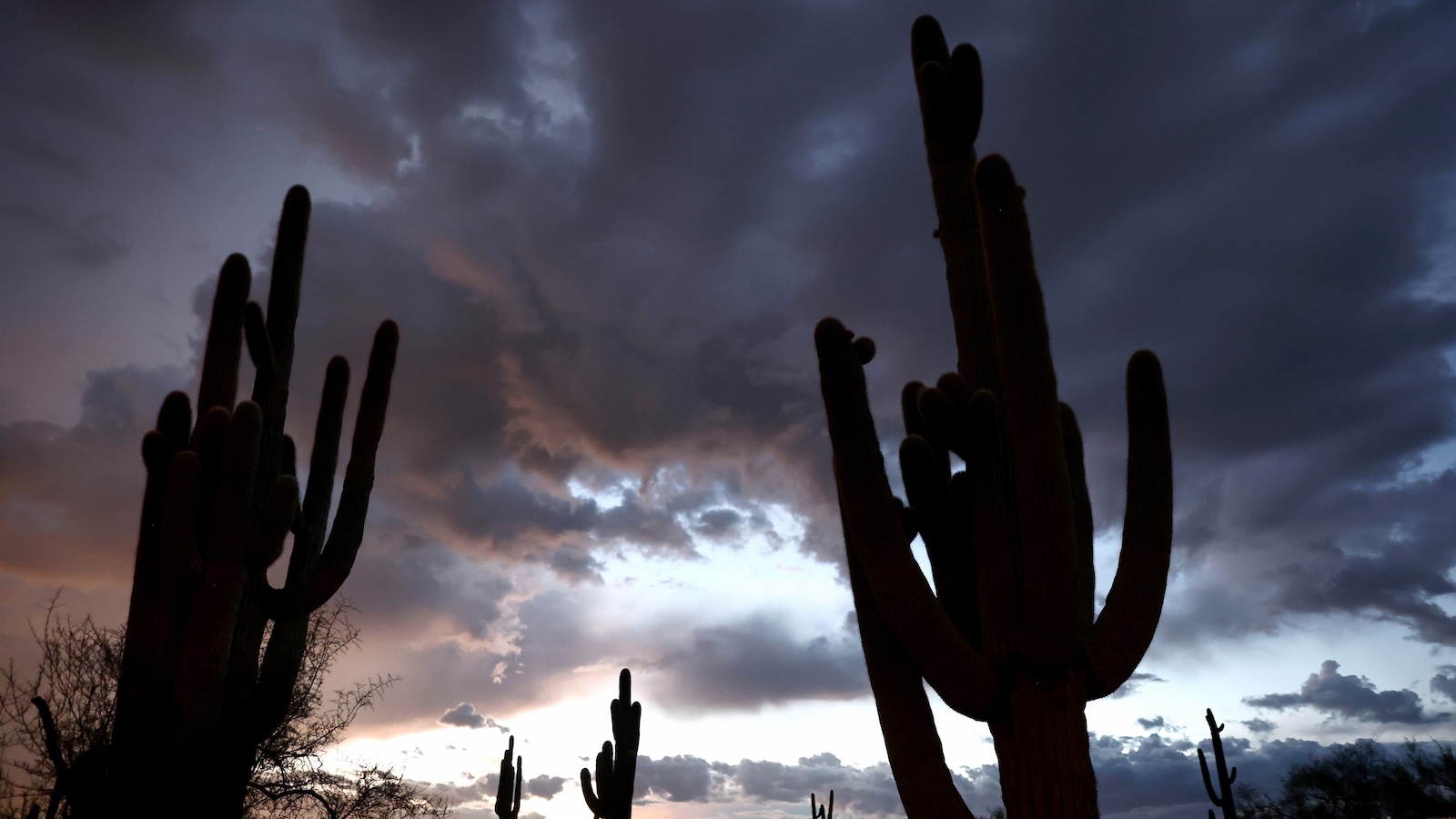
The humble cactus has long served as a universal icon of ultimate resiliency. Anchored in scorching, arid landscapes with minimal rainfall and unrelenting solar radiation, these specialized plants do far more than merely endure harsh conditions—they thrive. In doing so, they weave a vital thread through desert ecosystems, providing critical nesting habitat for creatures like the western screech-owl and other birds, while offering essential nectar-rich flowers for bats and numerous other nocturnal and diurnal pollinators.
Yet, despite their legendary reputation for toughness, cacti are in serious trouble. Long-standing pressures such as widespread habitat loss and the illegal poaching of rare species for private collections have already pushed many populations to the brink. Now, according to a groundbreaking study published in the scientific journal Nature, conservationists must add worsening droughts to that growing catalog of existential threats.
Using sophisticated ecological modeling, researchers evaluated not just a future of relentlessly climbing global temperatures, but the compounding, devastating dry spells that accompany them. Their findings reveal that the vast majority of nearly 1,000 evaluated cactus species will see their natural habitats shrink as the climate undergoes radical transformation. More alarmingly, the study predicts that over a quarter of those species could lose at least 80 percent of their current geographic range by the year 2100.
"The public perception of cacti tends to be of these organisms that are extremely drought-adapted and are just resilient, can handle anything that you can throw at them," said Michiel Pillet, a conservation ecologist at the University of South Florida and lead author of the new research paper. "In reality, cacti are absolutely amazing—and they’re my favorite plant group, clearly—but they’re not that different from other plants."
That biological reality means cacti fundamentally require water to survive and function. In the expansive deserts of the southwestern United States, for example, desert flora relies heavily on predictable seasonal monsoon rains. These seasonal weather patterns typically transform July or August into the wettest months of the calendar year, delivering a vital burst of moisture.
Because these plants exist in inherently arid environments, evolution has equipped them with a remarkable suite of physiological adaptations to quench and conserve their thirst. Among these is a thick, waxy outer skin designed to trap and retain precious rainwater long after a storm has passed.
"Just like other plants, they evolved under conditions that they’re used to," Pillet explained. "When you take them outside of those conditions, they might not be able to handle that."
To understand the hidden vulnerability of cacti, Pillet suggests visualizing them as patients admitted to a hospital. A patient might check in suffering from acute heat-related illness as their physical body struggles desperately to regulate its temperature. At the same exact time, however, that same individual might be suffering from severe, underlying dehydration.
Cacti are currently grappling with those exact dual stresses as global temperatures steadily rise and regional dry spells intensify.
"When we consider drought conditions, then it turns out that they’re much, much sicker than we previously thought," Pillet said. "These results really do change the outlook of cacti, and most likely plants more broadly under climate change."
To move beyond theoretical projections, the research team leveraged massive amounts of real-world data from iNaturalist, a popular citizen science platform where everyday nature enthusiasts and hikers upload photographs of wild plants and animals. This crowdsourced repository yielded an impressive 650,000 documented observations of cacti in the wild, helping scientists construct a vastly clearer and more accurate picture of how individual species are currently faring across their natural ranges.
The crisis facing these plants, researchers emphasize, is rarely a simple, dramatic matter of cacti suddenly withering, turning brown, and dying overnight. While relentless, multi-year droughts can certainly cut off water entirely to individual plants, the ecological stress operates in complex temporal dimensions as well.
"Now we can move towards questions of: What life stages are most affected?" Pillet noted. "Is it the adults or is it the seedlings? But also, which processes? Is it reduced growth or is it increased mortality? Or are plants failing to flower?"
Put another way, countless cactus species could be suffering from the subtle, hidden sublethal effects of ongoing drought. The lack of adequate water may not strike them down with immediate lethality, but it can still deeply interfere with their reproductive cycles. Without successful procreation, local populations inevitably shrink over time. In the sprawling Sonoran Desert, for instance, the iconic and towering saguaro cactus has already demonstrated a troubling trend of reproducing less frequently during prolonged periods of drought, largely because the stressed plants fail to produce flowers consistently.
A major underlying component of the problem is that while desert ecosystems may outwardly project an image of rugged toughness and hardened durability, they are ecologically quite fragile.
"They don’t recover quickly once they are disturbed, or once they are degraded, just because there’s so little water and such higher temperatures," said Marcos Robles, the lead scientist for the Nature Conservancy in Arizona, who was not involved in the new research. "It takes multiple decades to recover, and in some cases, they don’t recover."
Now, drought is actively compounding with a variety of other environmental stressors, pushing cactus species toward irreversible declines. Interestingly, while arid-land cacti suffer from a devastating lack of water, plants on the opposite end of the ecological spectrum face entirely different threats. In Florida, for example, too much water driven by rising sea levels has resulted in the tragic local extinction of the Key Largo tree cactus.
At the same time, rising nighttime temperatures present a unique physiological hurdle. Desert plants like the saguaro typically open their pores at night to respire and absorb carbon dioxide while minimizing water loss through evaporation.
"If the nighttime temperatures are very high, they can’t do it," said Rod Haenni, president of the nonprofit Cactus and Succulent Society of America, who was also not involved in the research study. "Then if you water on top of that, the plants just rot."
Despite these daunting prospects, some cactus species may possess a natural mechanism for persistence: migration. While individual plants are permanently rooted in place, entire populations could theoretically creep over generations into new geographic areas where future climates more closely match the historical conditions to which the species adapted over millennia. A remarkably similar ecological shift is currently underway in the Arctic, where various plant species are marching progressively farther north in search of increasingly agreeable weather and accessible moisture.
Ultimately, the primary goal of this type of forward-looking research is to provide actionable data to inform where conservation professionals concentrate their limited resources. Conservationists cannot magically engineer rainfall or halt regional droughts, but they can actively relocate vulnerable cacti to establish secure populations within botanical gardens. There, these botanical specimens can receive specialized care as the changing climate renders wild habitats increasingly unrecognizable even to the hardiest desert vegetation. In certain favorable scenarios, cultivated species can even be successfully reintroduced to the wild, provided that extreme heat and drought are no longer active threats to the newly established population.
Governments must also step up to legally protect the fragile public lands where native cacti face severe threats, Haenni emphasized. He hopes that the sobering insights provided by this new research will serve as a wake-up call for policymakers and environmental agencies alike.
"Hopefully, it’ll wake people up," Haenni said. "लेकिन the problem is a lot of the governments involved are indifferent to this. There’s a lot of people in the countries that are not indifferent, but they’re not running the governments."