
The quest to understand the underlying causes of stomach cancer has long pointed toward a complex interplay between genetics, environmental factors, and a specific, pervasive bacterium: Helicobacter pylori (H. pylori). While medical science has traditionally relied on heavy-duty pharmaceutical interventions to manage this infection, emerging research is shedding light on how our daily dietary choices might serve as a powerful, natural adjunct—or even a potential alternative—in mitigating the risks associated with this gastric pathogen.
The Hidden Risks in Modern Diets
For decades, researchers have investigated why certain populations exhibit higher rates of stomach cancer, and the trail often leads to the dinner table. One significant area of concern is the consumption of salt-cured and pickled foods. The process of salting and pickling fish, for example, facilitates a chemical reaction between salt, nitrite preservatives, and methionine—an amino acid abundant in animal proteins. This reaction creates a novel DNA-mutating compound known as CMBA.
Beyond this, nitrites frequently interact with other protein components to produce N-nitroso compounds. These substances are classified as powerful carcinogens, sharing chemical characteristics with the toxins found in cigarette smoke. This chemical pathway may help explain the long-standing epidemiological link between the consumption of processed meats—such as bacon, ham, hot dogs, and various deli meats—and an elevated risk of stomach cancer. Importantly, this risk is not limited to processed items alone; evidence suggests that even fresh, unprocessed, and unsalted meats can contribute to the internal environment that fosters carcinogenesis when combined with other risk factors.
The Role of H. pylori and Dietary Synergies
It is widely accepted that the primary driver of most stomach cancer cases is chronic infection with H. pylori. However, the presence of the bacteria alone does not guarantee the development of malignancy. Instead, there is a synergistic interaction between H. pylori-induced inflammatory gastritis and specific dietary patterns.
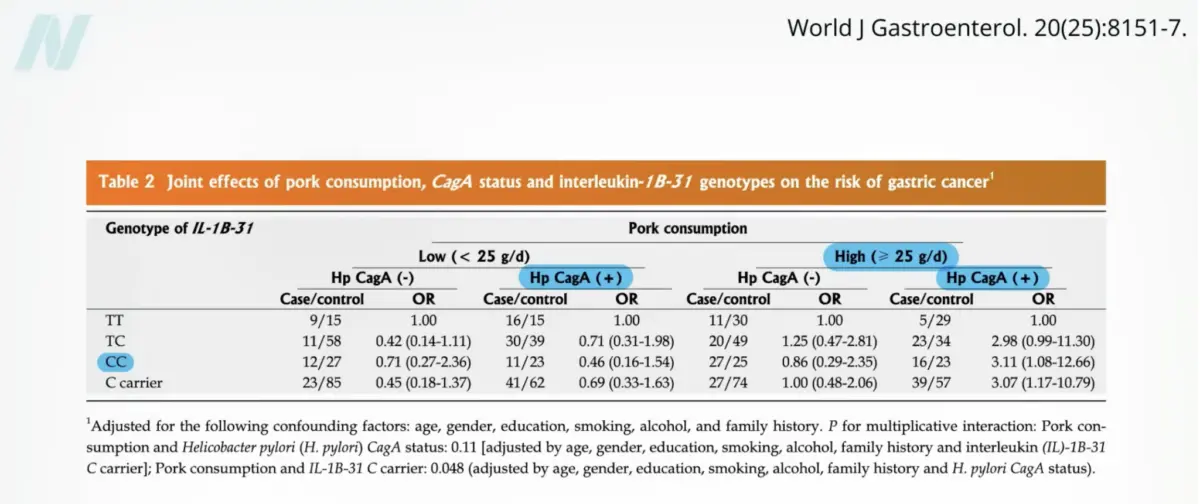
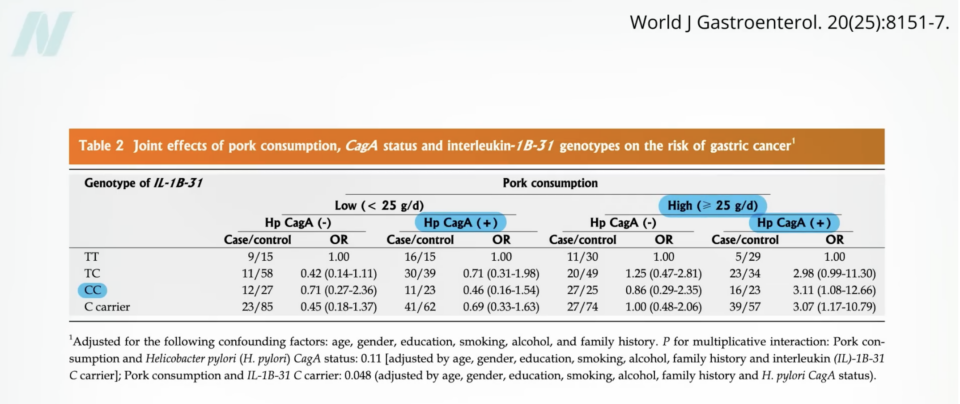
A striking study conducted by researchers in China highlights how diet can effectively override both genetic predisposition and environmental triggers. The findings indicated that even individuals who were genetically vulnerable and infected with a particularly pathogenic strain of H. pylori did not show a statistically increased risk of developing stomach cancer, provided their intake of pork remained low. Specifically, the risk appeared to escalate only when subjects consumed approximately one ounce or more of pork per day. To put this in perspective, an average pork chop contains roughly six ounces of meat, meaning that even moderate consumption patterns could theoretically shift an individual into a higher-risk category. This finding is significant because it suggests that our dietary habits can sometimes act as a deciding factor, potentially negating the impact of both our genetic blueprint and the presence of harmful infectious agents.
Traditional Medicine vs. Dietary Intervention
When an H. pylori infection is diagnosed, the standard medical protocol is a "triple antibiotic" cocktail. While highly effective, this regimen is often difficult for patients to adhere to. The sheer volume of medication, coupled with the frequency of dosing and the inevitable, often unpleasant, side effects, frequently leads to poor patient compliance. This reality has spurred a search for dietary interventions capable of eradicating the bacteria without the associated pharmaceutical burden.
Interest has increasingly turned toward cruciferous vegetables, particularly broccoli sprouts, which contain the compound sulforaphane. Long before its reputation as an anti-cancer and detoxifying powerhouse was established, sulforaphane was recognized for its potent antimicrobial properties. After anecdotal reports emerged of individuals with H. pylori-induced peptic ulcer disease finding significant relief after consuming three-day-old broccoli sprouts, researchers at Johns Hopkins University and other institutions initiated formal investigations.
The results were compelling. Laboratory studies demonstrated that broccoli sprout extracts could successfully neutralize antibiotic-resistant strains of H. pylori in a petri dish. In clinical applications, some patients who consumed as little as a third of a cup of broccoli sprouts daily for one week successfully eradicated their infections. Further randomized controlled trials comparing broccoli sprouts to alfalfa sprouts revealed that those consuming the equivalent of two to three servings of broccoli daily saw a significant reduction in markers of both H. pylori colonization and stomach lining inflammation. While standard antibiotic therapy remains the clinical gold standard with an approximate 90% eradication rate, broccoli sprouts have shown the ability to eradicate the bacteria in roughly 56% of cases. For those who do not meet the stringent criteria for antibiotic treatment, or who wish to pursue a natural, safe intervention, cruciferous vegetables offer a promising avenue for support.
The Potential of Allium Vegetables
Beyond the cruciferous family, the allium family—which includes garlic and onions—has long been associated with gastric health. Observational studies dating back to the 1960s, particularly those tracking Japanese migrants, suggested that diets rich in allium vegetables were protective against stomach cancer.
While dozens of subsequent studies have reinforced this association, the scientific community remains cautious. Observational data is inherently limited; it cannot definitively prove cause and effect. It is possible, for instance, that a low intake of garlic and onions is not a cause of stomach cancer, but rather a consequence. Patients suffering from long-term, H. pylori-induced stomach inflammation may naturally gravitate toward blander diets to minimize gastrointestinal discomfort, thereby reducing their intake of pungent alliums.
To move beyond observation, researchers conducted a massive, randomized, double-blind, controlled trial in 13 villages in China, involving thousands of participants at high risk for stomach cancer. The study tested various combinations of antibiotics, garlic supplements, and antioxidant supplements. The results provided a long-term look at disease prevention: short-term antibiotic treatment led to a significant decrease in precancerous stomach growths over seven years and a reduction in actual stomach cancer cases after 15 years.
The garlic component of the study was more nuanced. Initially, there was no observed benefit after seven years, and only a non-statistically significant reduction in cancer risk after 15 years. However, the 22-year follow-up—conducted 15 years after the active study concluded—revealed that participants who had taken the garlic supplements had a significantly lower risk of dying from stomach cancer. An interesting caveat, however, was that this protective effect seemed to manifest primarily among those who did not consume alcohol.
As research continues, the integration of such dietary strategies into broader health discussions offers a glimmer of hope. While diet cannot replace necessary medical treatments for severe infections, the evidence suggests that what we eat may play a pivotal role in creating an internal environment that is inhospitable to H. pylori and, by extension, less conducive to the development of stomach cancer. By focusing on protective, plant-based foods like cruciferous and allium vegetables, individuals may be able to influence their long-term health outcomes in ways that transcend their genetic predispositions.