
In the world of nutritional science, few topics are as contentious as the impact of red and processed meat on human health. A series of studies published in the Annals of Internal Medicine recently reignited this debate by challenging decades of dietary consensus. The papers presented a statistically significant association between lower consumption of red and processed meats and a reduced risk of total mortality, cardiovascular disease, and cancer. Yet, in a move that shocked many in the medical community, the authors concluded that individuals should effectively ignore existing dietary guidelines and continue consuming meat without restriction.
This recommendation, which stands in direct opposition to the guidance provided by major health organizations, has sparked a firestorm of criticism. To justify their findings, the panel of authors provided three primary arguments: personal taste preferences, the application of a specific evidence-grading system, and the supposedly "very small magnitude" of the health risks associated with meat consumption.
The Problem with Prioritizing Taste Over Health
The panel’s first argument—that people simply enjoy eating meat—has been widely dismissed as an inappropriate basis for developing public health policy. Critics argue that public health guidelines are intended to convey the scientific reality of health outcomes, regardless of whether those outcomes are convenient or palatable. While it is true that many people may be reluctant to change their habits, such as quitting smoking or increasing their physical activity, this lack of enthusiasm does not alter the underlying science of disease prevention. Suggesting that dietary recommendations should be shaped by consumer preference rather than clinical evidence sets a dangerous precedent that undermines the very purpose of nutritional guidance.
Questionable Methodology: The Misuse of GRADE
The second pillar of the researchers’ argument rests on their use of the GRADE (Grading of Recommendations, Assessment, Development, and Evaluation) approach. GRADE was originally designed to evaluate evidence from clinical drug trials, where the focus is on isolating a single intervention against a placebo. When applied to nutrition and lifestyle choices, however, the methodology becomes far less effective.
Experts have warned that applying the GRADE system to dietary habits is inherently flawed. It risks systematically undervaluing large-scale observational studies, which are the gold standard for understanding long-term diet-related health trends. Critics suggest that the panel used this framework to inappropriately minimize the credibility of evidence that they found inconvenient, noting that such a rigid application of GRADE could theoretically be used to undermine consensus on other established risks, such as the dangers of secondhand smoke, air pollution, or trans fats.
Downplaying the "Magnitude" of Mortality
The third argument—that the negative health impacts of meat are of a "very small magnitude"—serves as the core justification for the panel’s conclusion. The researchers essentially argued that even if meat consumption contributes to heart disease, cancer, and diabetes, the relative increase in risk is not large enough to warrant a change in behavior.
This perspective ignores the nuance of dietary substitution. Health outcomes are heavily dependent on what an individual chooses to eat instead of meat. Research consistently shows that replacing even 3% of calories from animal protein with plant-based alternatives is linked to increased longevity. The impact of such substitutions is not trivial: replacing red meat with plant proteins can reduce overall mortality by more than 10%, while substituting egg protein—which appears to be particularly associated with higher health risks—can lower the risk of premature death by over 20%. Therefore, telling the public that meat reduction is unnecessary ignores the significant life-extending benefits of shifting toward plant-based nutrition.

The Issue of Cherry-Picked Evidence
Perhaps the most damaging criticism of the Annals studies is the allegation that the authors omitted key bodies of evidence that did not support their pre-conceived conclusions. The panel’s meta-analysis appears to have selectively excluded randomized controlled trials that demonstrated a clear link between meat consumption and elevated cholesterol or blood pressure.
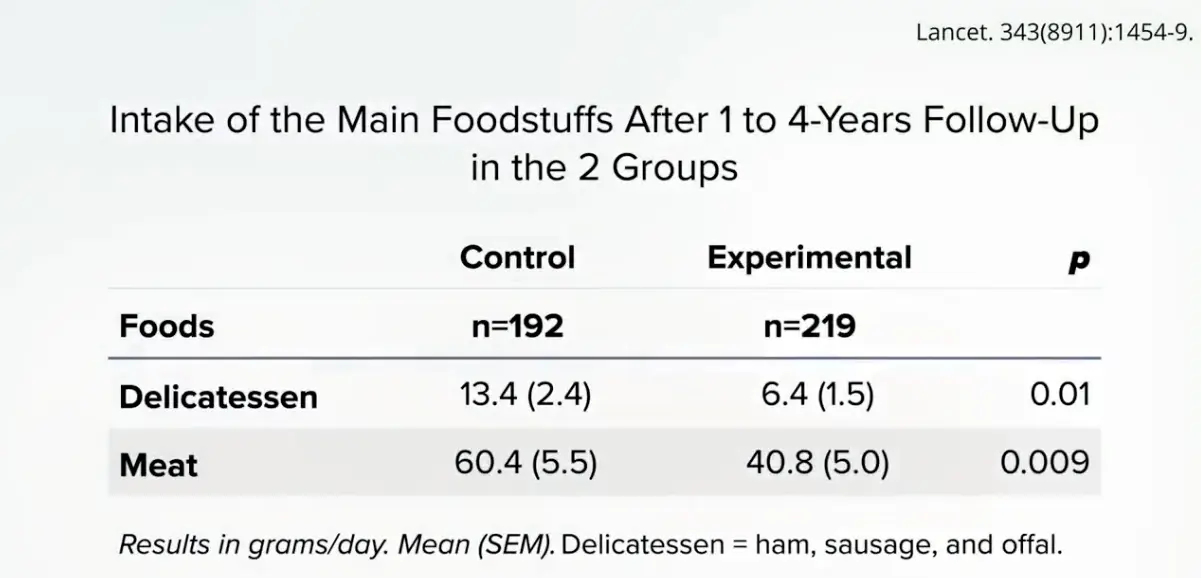
Crucially, the researchers chose to exclude high-quality studies, such as the Lyon Diet Heart Study, which demonstrated that a Mediterranean-style diet—characterized by a significant reduction in meat intake—resulted in a 70% reduction in all-cause mortality. The panel dismissed this finding as an "implausibly large treatment effect," a justification that has been met with incredulity by researchers who argue that the study was excluded simply because it yielded results that contradicted the authors’ preferred narrative.
Furthermore, the panel’s focus on "realistic" dietary changes led them to rely heavily on the Women’s Health Initiative study, which showed only a modest reduction in meat intake—roughly half an ounce per day. To use such a small decrease in consumption as evidence that there is "no need" to limit meat is, according to many public health experts, a fundamental misrepresentation of scientific data. It is akin to suggesting that if a study found that smoking only one fewer cigarette a day provided limited health benefits, then there is no reason for a heavy smoker to quit entirely.
A Public Health Perspective
The implications of this debate are far-reaching. Even by the panel’s own metrics, they found consistent, clinically meaningful, and statistically significant adverse effects of meat consumption on mortality, heart disease, and diabetes. The fact that they reached this conclusion despite the methodological hurdles they placed in their own path is a testament to the strength of the evidence linking meat to poor health.
The chair of nutrition at Harvard has estimated that a moderate reduction in red meat consumption could prevent up to 200,000 deaths annually in the United States alone. To dismiss this as a "small effect" is to ignore the profound impact on the families of those 200,000 individuals.
The parallels to the history of tobacco research are striking. Much like the industry-backed skepticism that once surrounded the link between smoking and lung cancer, the current defense of meat consumption relies on ignoring population-level data and demanding a standard of proof that is virtually impossible to meet in nutritional science. As one historical paper on the dangers of smoking noted, if the health risks associated with a new, non-addictive agent were as well-documented as those of meat consumption, they would be considered beyond scientific dispute. Because meat is a massive industry with significant economic influence, however, the scientific consensus continues to be challenged by those who favor status-quo consumption over public health.
Ultimately, the evidence remains clear: moderate reductions in red and processed meat intake are associated with a significant decrease in the risk of some of the world’s most common and deadly diseases. While the "meat panel" may suggest that the health consequences are minimal, the collective body of scientific research points toward a different conclusion—one where dietary choices have a measurable, life-altering impact on longevity and wellness.