
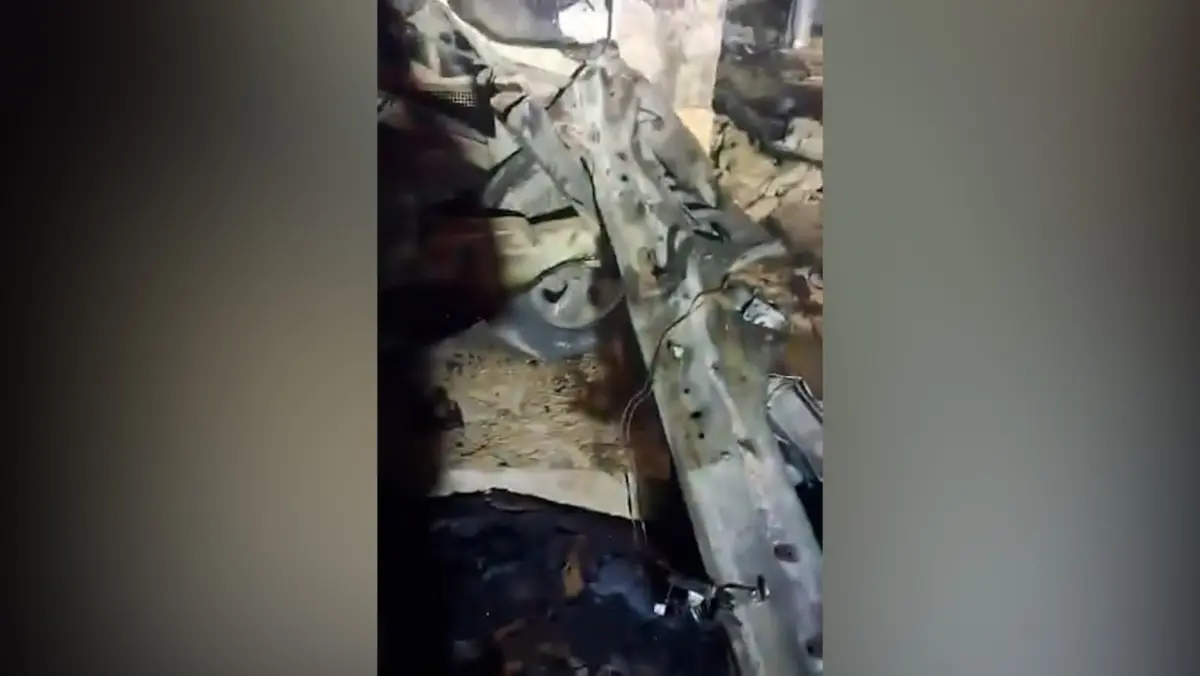
Syria’s Internal Security Forces have launched a full-scale investigation into a suspected bomb attack that struck a quiet residential neighborhood in a southeastern suburb of the Syrian capital, Damascus, on Saturday. The explosion, caused by an improvised explosive device planted inside a parked vehicle, claimed the lives of at least two people, including a young child, and left another person seriously wounded.
According to local reports and security officials, the blast occurred in Jaramana, a suburb situated on the southeastern edge of Damascus that is widely home to a large community of the Druze religious minority. The explosion targeted a vehicle described by eyewitnesses as a Kia Rio, which had been parked between two apartment buildings in an area traditionally considered a peaceful and stable residential zone.
The catastrophic force of the detonation resulted in immediate casualties. A man and his young daughter were killed outright by the blast. A third individual, identified as the man’s wife, sustained severe injuries and was rushed to a nearby medical facility, where she remains in critical condition. In the immediate aftermath of the incident, Syria’s Internal Security Forces swiftly cordoned off the entire perimeter, deploying forensic teams and investigators to comb through the wreckage, secure the scene, and piece together the exact circumstances and mechanics surrounding the explosion.
Tensions and Demographics in Jaramana
The location of the blast carries notable social and political context. Jaramana has long served as a vital cultural and demographic hub for Syria’s Druze religious minority. In recent times, the suburb has experienced periodic social and political friction, marked by tensions between certain segments of the local Druze population and the broader Sunni majority that backs the government of President Ahmed al-Sharaa.
Despite these underlying community complexities, residents and local observers typically view the neighborhood as a relatively sheltered residential enclave compared to other parts of the country that experienced heavier direct devastation during years of conflict. The sudden violence has therefore sent shockwaves through the local community, raising fresh anxieties over neighborhood safety and the ongoing vulnerability of civilian areas to targeted sabotage.
A Complex and Evolving Security Landscape in the Capital
Reporting from the scene of the blast, Al Jazeera correspondent Heidi Pett noted that the broader security situation across Damascus remains inherently complex. Although the security climate within the capital has recorded notable improvements since the collapse of the regime of former President Bashar al-Assad two years ago, underlying threats persist as remnants of extremist groups and clandestine cells attempt to destabilize the central government.
"In the last couple of months, there were two very high-profile incidents," Pett reported, highlighting the persistent challenges facing Syria’s emerging security apparatus. Among these prior high-stakes events was a sophisticated double-tap attack that occurred in July, coinciding with a diplomatic visit to the Syrian capital by French President Emmanuel Macron. Syrian authorities subsequently attributed that coordinated assault to clandestine cells affiliated with ISIL, also known as ISIS.
Another major security breach cited by observers occurred near the capital’s Palace of Justice at a popular venue known as the Lawyer’s Cafe. That location has frequently served as the backdrop for high-profile judicial proceedings and trials targeting former members and officials of the ousted Assad regime, making it a symbolic and high-risk target for saboteurs seeking to create maximum psychological and political impact.
Security analysts and correspondents point out that while the capital has experienced various security breaches, a significant portion of the bombings and violent incidents witnessed in recent months have not necessarily been indiscriminate attacks on ordinary civilian crowds. Instead, many have specifically targeted members, patrols, and official locations associated with the national security forces—tactics that authorities have consistently linked to underground ISIL networks attempting to reconstitute operational capabilities within urban centers.
Counterterrorism Efforts and Broader Regional Context
The latest explosion in Jaramana unfolds against the backdrop of an intensified nationwide counterterrorism campaign waged by Syrian authorities in close alignment with regional and international partners. In a significant policy shift last year, Damascus formally joined the United States-led international coalition against ISIL. Originally formed in 2014, the coalition has maintained an active role in carrying out targeted military operations, intelligence-sharing, and security coordination against the extremist group across both Syria and Iraq.
Syrian state television and internal security directorates have intensified operations to preemptively dismantle active sleeper cells. On September 27, security forces announced a major breakthrough with the arrest of four core members belonging to an active ISIL cell. According to official statements, the apprehended individuals were directly involved in planning and executing several coordinated attacks across different regions of the country.
Further demonstrating the active threat environment and the government’s counter-offensive measures, security forces reported successfully foiling a major plot targeting a police patrol in the wider Damascus countryside just last month. State media reported that an ISIL cell was actively preparing to strike the patrol when security forces intercepted the operation. Authorities have linked this specific network to a string of prior explosions and targeted assassinations across multiple strategic provinces, including Raqqa, Aleppo, Idlib, and Homs.
As the investigation into the Jaramana car bombing continues, forensic specialists are analyzing explosive residues and gathering digital and physical evidence from the wreckage of the Kia Rio. Internal Security Forces have appealed to local residents to come forward with any surveillance footage or eyewitness accounts that could help identify the perpetrators behind the attack, as the government continues its efforts to secure the capital and root out lingering insurgent threats.