
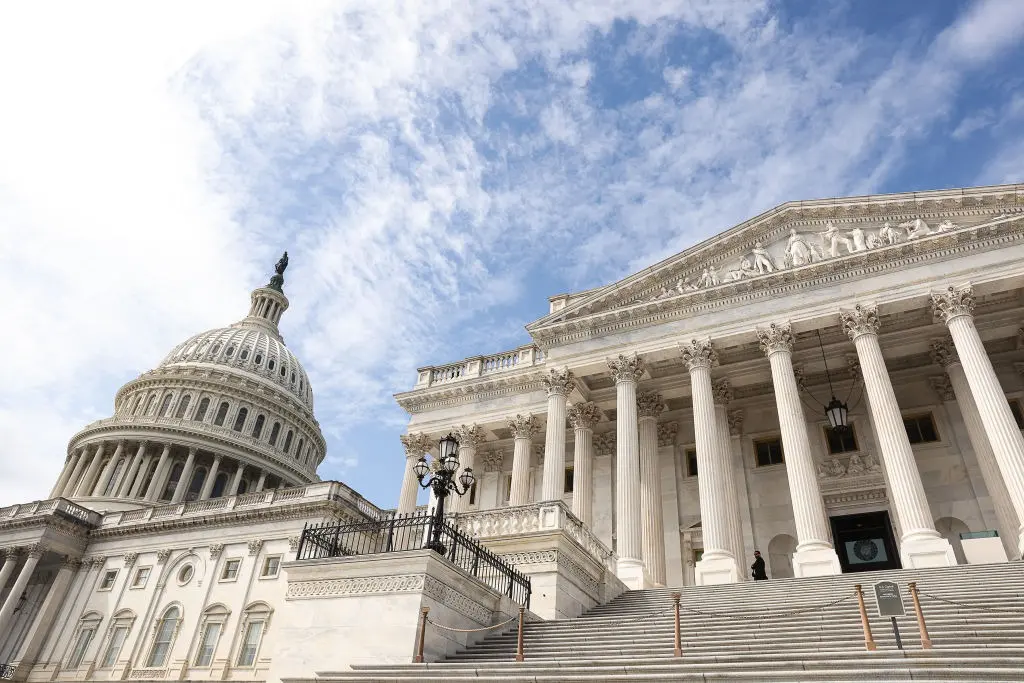
A firestorm of controversy has erupted in Washington following the U.S. Senate’s decision to advance a sweeping piece of bipartisan legislation aimed at streamlining infrastructure and energy development. The Bipartisan American Affordability and Jobs Act of 2026 (S.5653), introduced by Senator Shelley Moore Capito (R-WV), passed a significant procedural hurdle on Monday with a 73–25 vote. While supporters herald the bill as a necessary cure for the “red tape” stifling the American economy, a diverse coalition of preservationists, tribal leaders, and cultural organizations has mobilized against the measure, warning that it threatens to dismantle decades of protections for the nation’s historic and sacred sites.
The legislation, which is cosponsored by a bipartisan group including Senators Mike Lee (R-UT), Sheldon Whitehouse (D-RI), and Martin Heinrich (D-NM), arrives during the waning days of the current congressional session. With the Republican-controlled Senate scheduled to conclude its business by December 18 before a new group of senators is sworn in on January 3, the rapid progression of the 500-page bill has drawn intense criticism regarding the lack of time for public or legislative scrutiny.
The Argument for Regulatory Reform
Senator Capito, in her remarks on the Senate floor Monday, framed the legislation as an urgent economic imperative. She argued that the current federal permitting system is fundamentally broken, trapping trillions of dollars in potential growth within a cycle of bureaucratic delay.
“For far too long, critical investments in our nation’s infrastructure, energy production, and economy have been forced to sit on the sidelines due to endless red tape, duplicative reviews, and regulatory uncertainty,” Capito stated. To bolster her position, the senator cited data from the National Association of Manufacturers, asserting that permitting delays cost the U.S. manufacturing sector approximately $12.1 billion annually. According to projections provided by McKinsey, an estimated $1.8 trillion in potential investment remains locked in the federal pipeline. In her home state of West Virginia alone, Capito highlighted that $22.3 billion in projects are currently sidelined, a figure she attributed directly to the inefficiency of the current regulatory framework.
For proponents, S.5653 is not an attack on history, but a modernization of the federal government’s approach to land use and infrastructure. They argue that in an era of rapid energy transition and aging infrastructure, the ability to execute large-scale projects is paramount to national security and economic vitality.
The Preservationist Backlash
However, the bill’s passage has ignited a fierce backlash from those who view the National Historic Preservation Act (NHPA)—the target of the bill’s most significant changes—as a cornerstone of American environmental and cultural law. The NHPA, enacted 60 years ago, was designed to ensure that federal agencies carefully consider the impact of their decisions on the country’s heritage.
The primary point of contention is the proposed modification to Section 106 of the NHPA. Currently, this section mandates that federal agencies account for the impact of federally funded projects on historic properties and requires those receiving federal funds or permits to engage in a formal consultation process with tribal nations. According to reports from The Art Newspaper, S.5653 would fundamentally alter this dynamic by making tribal consultation optional rather than mandatory. Furthermore, the bill would eliminate the requirement for federal agencies to notify the public about potential harm to historic sites and would significantly narrow the legal definition of what qualifies as a "historic site."
The reaction to these provisions has been swift and organized. On Monday, approximately 800 protesters gathered on the West Lawn of the U.S. Capitol to voice their opposition. The demonstration featured a broad coalition of stakeholders, including leadership from the Association of African American Museums, the DC Preservation League, the American Institute of Architects, and the Archaeological Institute of America.
Representative Melanie Stansbury (D-NM) stood with the protesters, characterizing the legislation as a “dirty deal.” Critics of the bill have pointed to the haste of its introduction—noting that the 500-page document was unveiled just 48 hours before the Senate vote—as evidence of an attempt to bypass public debate on issues of profound cultural and historical significance.
A Coalition Under Pressure
The opposition to S.5653 is not limited to street protests. On November 6, the “106 Strong Coalition,” a massive alliance comprising more than 1,200 organizations, tribal nations, and heritage advocates, issued a formal letter to Congress demanding the defeat of the bill. The signatories represent a broad cross-section of American cultural life, including the American Alliance of Museums, various state museum associations, and numerous individual institutions dedicated to the preservation of history.
In their letter, the coalition members decried the bill as a “sweeping assault on the protections Congress enacted sixty years ago to ensure that federal agencies consider the consequences of their decisions for America’s historic and sacred places.” They argue that the bill’s changes would effectively silence the voices of communities and tribal nations whose history is most at risk of being erased by unchecked development.
The coalition’s argument centers on the idea that once a historic site is destroyed, it cannot be replaced. By reducing the consultation process to an optional exercise, they contend that the bill removes the only mechanism that forces developers and government agencies to search for alternatives that might preserve historical integrity while still allowing for infrastructure progress.
The Path Forward
As the Senate prepares for the final stages of the legislative session, the tension between economic growth and historic preservation remains unresolved. The bill’s proponents maintain that the current system is overly litigious and slow, preventing necessary updates to the national power grid and transportation networks. They argue that the current interpretation of the NHPA has been weaponized to block legitimate development, leading to the massive figures of “sidelined investment” cited by Senator Capito.
Conversely, the 106 Strong Coalition and their supporters in the House of Representatives maintain that the NHPA is not a barrier to progress, but a safeguard for national identity. They argue that true progress does not require the destruction of the sites that define the American experience. With the clock ticking toward the December 18 deadline, the debate over S.5653 has become a focal point for the broader struggle over the role of federal oversight in the 21st century.
Whether the bill will face further amendments in response to the massive outcry or if it will proceed toward a final vote in its current form remains to be seen. For now, the historic preservation community remains on high alert, bracing for what many believe could be the most significant rollback of heritage protections in modern American history. The outcome of this legislative battle will likely set the tone for how the federal government balances the competing demands of industrial development and the stewardship of the nation’s cultural legacy for years to come.