
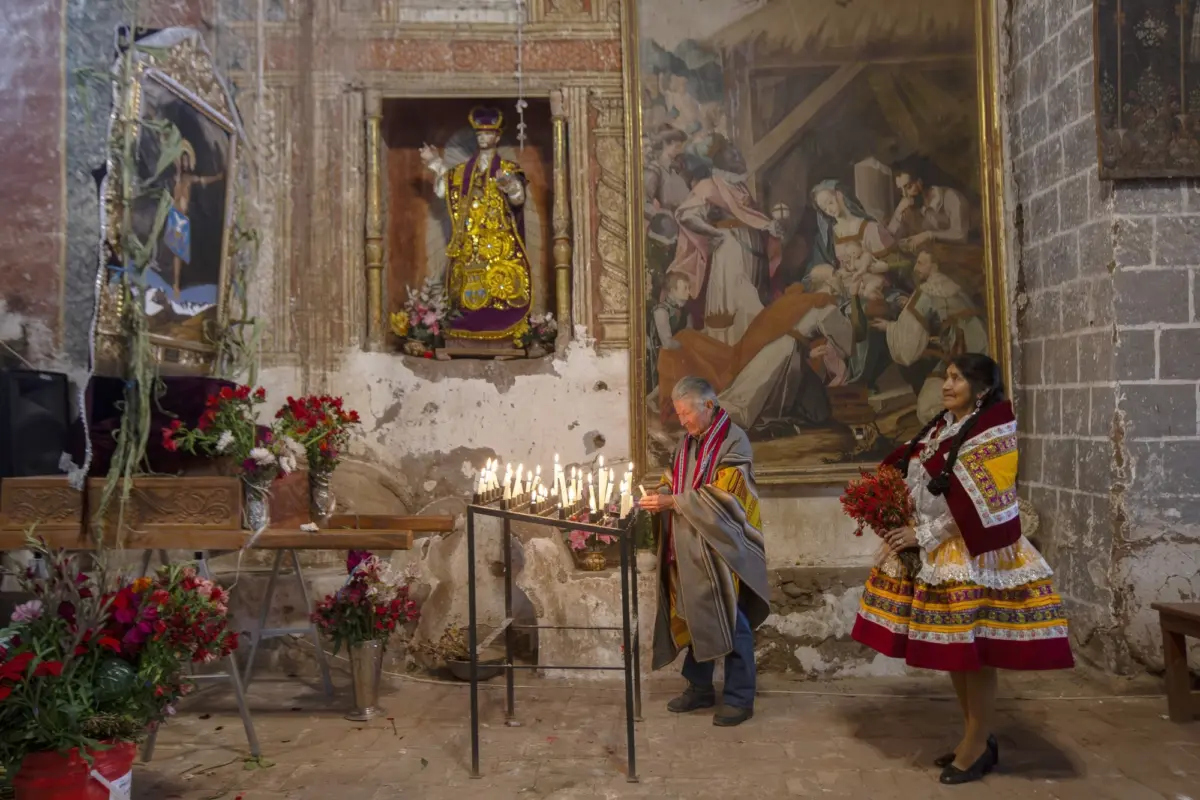
In a landmark collaborative effort, the Getty has announced a multi-year partnership with Peruvian government authorities to undertake the first-ever formal conservation project at the Church of Santo Tomás de Aquino. Located in the remote Andean highlands of the Cusco region, the site—commonly referred to by locals as the Church of Rondocan—is a repository of immense cultural and religious significance. This ambitious project, backed by a $5 million investment from the Peruvian government, aims to address long-standing structural vulnerabilities caused by seismic activity while safeguarding a vast collection of colonial-era artifacts that have remained largely untouched for centuries.
The Church of Rondocan stands as a testament to the complex architectural and artistic history of the Andes. Constructed with thick, traditional adobe brick walls in a distinctive Baroque style, the building is a prime example of the earthen sacred architecture that characterizes much of the region’s colonial history. However, its isolated location and the inherent fragility of its earthen materials have left it particularly susceptible to the frequent earthquakes that define the Andean landscape. Over the years, these tremors have caused significant damage to the structure, putting both the integrity of the building and its interior treasures at risk.
The conservation initiative, set to begin its primary construction phase in 2027, is a multi-disciplinary effort. The Getty Conservation Institute (GCI) will deploy its Seismic Retrofitting Project (SRP), which utilizes high-tech analytical techniques to stabilize earthen heritage sites. By pairing these modern engineering strategies with traditional preservation methods, the project seeks to ensure that the church can withstand future seismic events while maintaining its historical character. A regional office of the Ministry of Culture of Peru will work in tandem with the GCI to develop a comprehensive plan that balances structural fortification with long-term maintenance and monitoring protocols.
A Legacy of Preservation in the Andes
The commitment to the Church of Rondocan is not an isolated effort but rather the continuation of a long-term engagement between the Getty and Peruvian conservationists. Since 2011, the GCI has been actively working across Peru to protect the country’s most significant earthen architectural sites. These buildings are not merely historical monuments; they are central to the daily lives of the communities that inhabit these highland regions.
Claudia Cancino, principal project specialist at the GCI and project lead for the Sacred Heritage in the Andes Project, emphasized the vital importance of this collaboration in recent press materials. "These are the buildings in which so much of daily life in these regions takes place, but they require specialized efforts for their protection," she noted. "With this collective effort, we will be able to provide expertise and support for the Rondocan community, who have been the primary caretakers of the church and its incredible collections for generations."

For the local community, the church is more than a building; it is a spiritual anchor. The project acknowledges this by focusing on the "living" nature of the site. Unlike many heritage buildings that are converted into static museums, the Church of Rondocan continues to serve its original function. This reality presents a unique set of challenges and opportunities for the conservation team, as they must develop strategies that allow for the ongoing use of the space while ensuring the safety of the artifacts housed within.
Uncovering "Lost" Artistic Treasures
Beyond the structural restoration of the adobe walls, the project will focus on the conservation of more than 300 cultural objects housed inside the church. The collection is remarkably diverse, featuring 17th- and 18th-century paintings, gilded wooden retablos (altarpieces), complex sculptures, and a variety of ecclesiastical textiles.
Perhaps most significant among these items is a series of eight large easel paintings by the Italian Jesuit priest and painter Bernardo Bitti. Titled "Principales Misterios de la Vida y Muerte de Cristo Nuestro Salvador y de la Virgen Santísima" (Principal Mysteries of the Life and Death of Christ our Savior and the Holy Virgin Mary), the series was likely painted in Cusco in the late 1590s.
The story of how these paintings were rediscovered is a testament to the value of field research. When Getty staffers first visited the church in 2010, they were stunned to encounter the Bitti works, which had been widely presumed lost by art historians. The presence of these masterpieces in such an isolated location highlights the richness of colonial Andean art, much of which remains hidden in rural parishes far from the urban centers of Lima or Cusco.
As part of the upcoming conservation efforts, one of the paintings from the series, La Oración en el huerto ("Prayer in the Garden"), is scheduled to be transferred to the Getty in 2027. This move will allow for specialized scientific analysis and intensive conservation treatment, providing researchers with a clearer understanding of the materials and techniques used by Bitti.

Bernardo Bitti, who trained in Rome before joining the Jesuits, is credited with introducing Mannerist influence into the Peruvian artistic landscape. After arriving in Cusco in 1583, he became a central figure in the development of colonial art, constructing the high altar of the Jesuit church and exerting a profound influence on painters across the Andes, including those in La Paz, Juli, and Lima. His work serves as a bridge between European Renaissance aesthetics and the emerging visual culture of the colonial Andes.
The Value of Untouched History
The importance of the Rondocan collection extends beyond the individual works of art. Stéphanie Auffret, a senior project specialist at the GCI, has pointed to the remarkable state of the collection as a primary reason for the project’s significance. "What makes the church’s collection unique, beyond its richness for such an isolated church, is that no evidence suggests it has ever been restored," Auffret explained. "As such, it represents a rare opportunity to document the artifacts, generating knowledge useful to a variety of stakeholders."
Because the objects have largely escaped the interventions of later centuries, they offer a pristine look at original materials and techniques. The study of the lateral altarpieces, which still retain their original decorative surfaces, will provide scholars with a baseline for interpreting and conserving similar works in other churches across Peru.
Furthermore, the project highlights the complexities of conserving objects that remain in active use. Many of the sculptures in the collection, for instance, are carried by community members during processions such as Semana Santa (Holy Week). This dynamic interaction between the people and their heritage is what makes the project so distinct from traditional museum-based conservation. According to Auffret, preserving a collection that is actively utilized by the public presents both logistical challenges and the opportunity for a "valuable exchange" with the local community.
By integrating scientific expertise with the traditional knowledge of the local caretakers, the Getty and the Peruvian Ministry of Culture hope to create a model for sustainable heritage management. The goal is not merely to "fix" the church, but to ensure that the community has the resources, knowledge, and infrastructure to protect their own history for the coming generations. As the planning phase continues toward the 2027 start date for construction, the Church of Rondocan stands as a symbol of the enduring connection between the Andean people and the artistic legacy of their ancestors.