
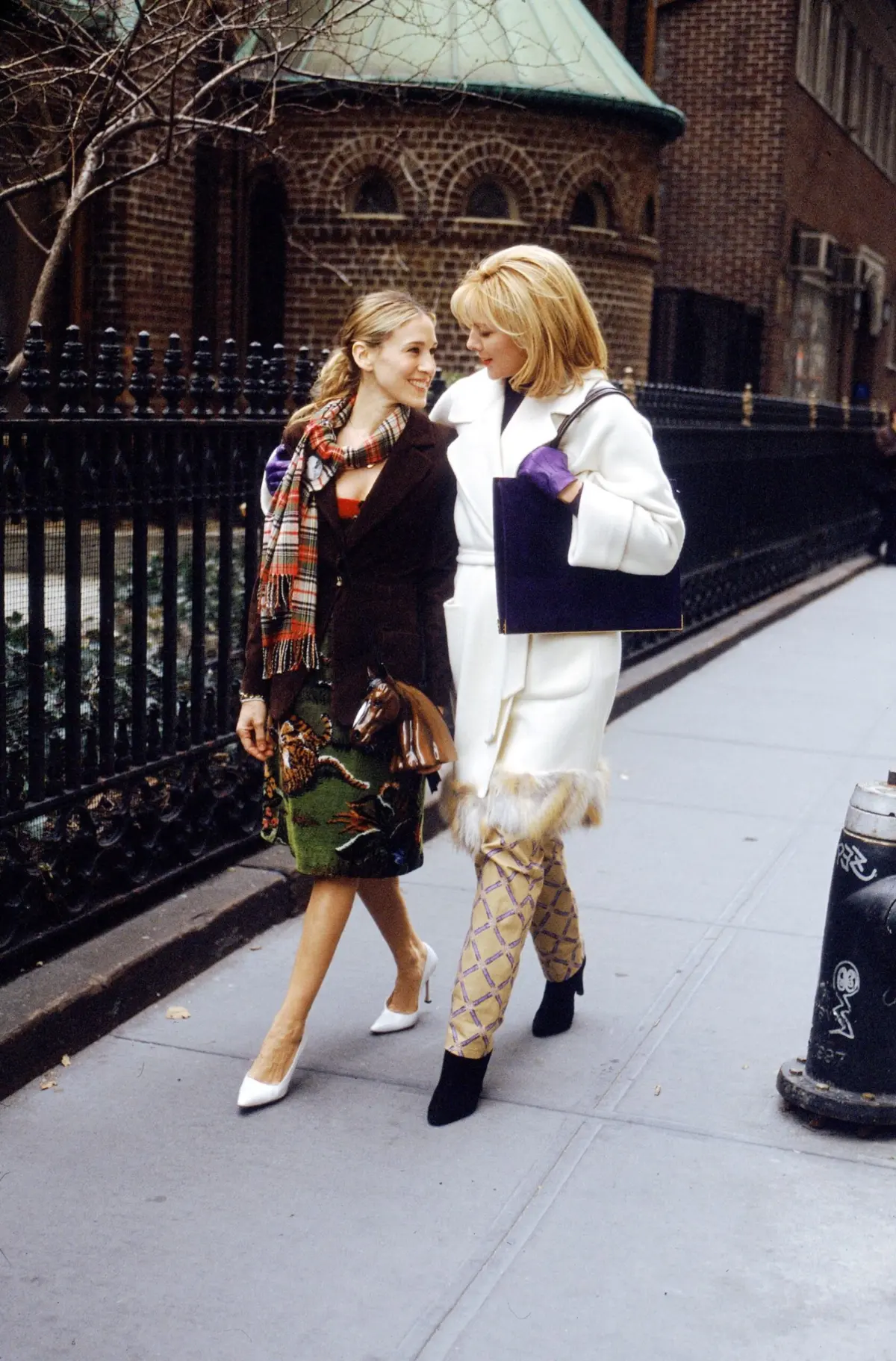
For my 30th birthday, I decided to host a game show about me. It was a spirited, slightly ridiculous affair held in a venue in West London, populated by the people I have known and loved through the various chapters of my life. The evening was designed to be a celebration of connection, featuring a series of lighthearted, curated rounds. Guests were tasked with writing and performing a rap verse over Skepta and JME’s "That’s Not Me," an arts and crafts segment where the most accurate—or perhaps most abstract—drawing of me was declared the winner, and a music round dedicated to the hits of the year I was born. There was even a "defend your embarrassing boyfriend" round, a nod to the complexities of modern dating that often find their way into our private conversations.
Leading up to the milestone of 30, I had been consumed by a stress that I find somewhat cringeworthy in hindsight. Thirty is an age that carries a heavy, almost crushing symbolic weight. I had inadvertently attached a sense of "completeness" to the number, laboring under the irrational fear that at 30, one becomes cemented in their identity, incapable of further change or evolution. I had spent years dragging my friends through intense, high-energy activities—from zip-lining and gymnastics to pole dancing and aerial skills—so a game show felt like a refreshing, lower-stakes option that everyone could actually enjoy. Despite the lingering, irrational anxieties I had harbored about the decade turn, the night was, by all accounts, the most successful celebration I had ever thrown.
Yet, amidst the chorus of singing, the rhythm of the dance floor, and the early morning revelry, there was a persistent, low hum of sadness that followed me throughout the night. Something was missing. It was not that I failed to appreciate the friends and family who had shown up to participate in yet another one of my eccentric ideas; rather, I felt haunted by the absence of friends whom I had simply assumed would be there to witness the day with me.
These were people I had once spoken to on a daily basis—friends with whom I had shared everything from the mundane, trivial details of my breakfast to the deepest, most personal intricacies of my life. To realize they were not present for such a milestone was jarring. It would be much easier to process if these friendships had ended with a dramatic, cinematic explosion—a tumultuous falling out with clean breaks and clearly defined lines of right and wrong. But they hadn’t. There was no singular, explosive event to point to, which only made the silence of their absence more painful.

The specific experience of grieving a friendship break-up that cannot be traced back to a single moment of betrayal is a form of "frozen grief," a term coined by psychologist Pauline Boss. You are effectively frozen when you cannot fully process a loss because the cause remains ambiguous. There is no closure because there is no clear end-point, leaving you in a state of perpetual, low-level mourning for a connection that simply evaporated.
In the digital age, friendship fallouts have become a staple of the "content factory." It is common to scroll through social media and see individuals applying makeup or skincare while narrating the story of a best friend who betrayed them. These clips often break the monotony of the doomscroll, offering a neat, digestible narrative: the storyteller is the victim, and the former "best friend" is the villain. Even when the creator poses the question, "Am I the problem here?", the format demands a clear-cut answer. I often find myself wondering how the dissolution of years-long, nuanced, and deeply complex friendships can be reduced to such short, superficial clips that strip ex-friends of their humanity and paint them as cartoonishly evil.
That said, I admit to a flicker of envy toward those who post such videos. They possess a coherent story, a timeline they can reliably use to trace the exact moment the friendship ended. They have a narrative structure to their loss, whereas I am left with the discomfort of having no such clarity.
My lack of understanding was consuming. Kat Vellos, the author of We Should Get Together and founder of the Platonic Action Lab, explains that friendships typically bloom from four essential seeds of connection: proximity, frequency, compatibility, and commitment. According to Vellos, when a friendship ends without a clear act of betrayal, it can often be attributed to the fading of one or more of these foundational seeds.

In my experience, certain friendships simply fizzled out as social groups splintered and evolved. Friends formed new alliances and moved into different social ecosystems that didn’t include me. Tracing where exactly things ended is difficult, but occasionally, I can pinpoint the last authentic conversation I had.
I recall a friendship with a woman named Fi. We used to speak every day, sometimes multiple times, but as our lives grew busier, the frequency of our contact naturally dwindled. A week prior to a planned catch-up, we had scheduled a hangout—nothing out of the ordinary, just a standard check-in. It was a hectic week for both of us, and we hadn’t managed our usual FaceTime sessions. On the day of our planned meeting, I texted her to confirm our plans. She replied instantly, but her words were a cold bucket of water: "Sorry, girl, I didn’t hear from you. I’m out with my other friend tonight."
We had never previously required that level of administrative confirmation; I had operated under the assumption that our friendship was fluid and existed without the need for rigid scheduling. That was the last time we truly spoke. I messaged her on her birthday, but she did not reciprocate on mine. When we saw each other in person once later on, it didn’t feel like "no time had passed." It felt like I had lived 40 different lives since our last real conversation. The distance was palpable, and the dynamic had fundamentally shifted.
As I grow older, the image of my future—previously defined by the traditional milestones of a partner and children—has become increasingly fuzzy. I am no longer certain that my life will follow a conventional family trajectory, and because of this, my friendships have become the cornerstones of my world. Friends are not merely consolation prizes for the absence of a romantic partner; they are, and should be viewed as, equally significant, if not more so.

The loss of a friendship feels like the loss of an imagined future that you had once planned to share. It is the mourning of a support system that you believed would be permanent. This pain is amplified when there is no lesson to be learned, no "wrong" to be rectified, and no grand resolution. There is only the unsatisfying realization that life is fluid, things change, and often, the shifting tides of our relationships are entirely beyond our control.
Despite the sadness that punctuated my 30th birthday, I felt an overwhelming sense of gratitude for the new relationships that have blossomed in the wake of the old ones. Life is a cycle of creating new rituals and sharing new memories. I have come to realize that there is a quiet, profound lesson to be found in this grief. As Elizabeth Day writes in her book Friendaholic: "Perhaps in the letting go, we had understood something integral about ourselves. Perhaps that was all right. Perhaps that was a kind of love." To acknowledge that a friendship has served its purpose and to let it go, even when it hurts, is perhaps the most honest way to honor the love that once existed.