
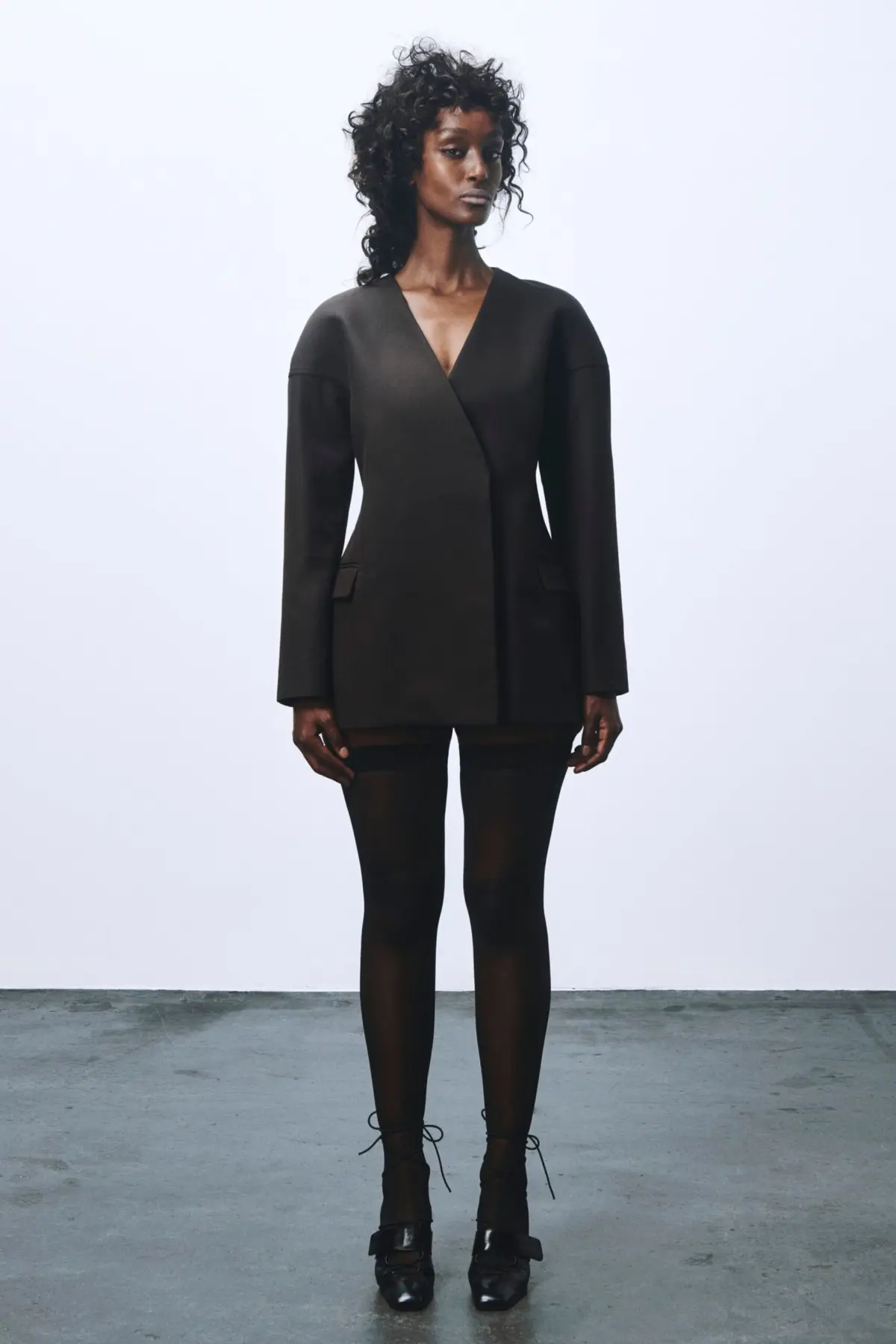
The human body in motion has long served as the primary muse for Sinéad O’Dwyer, a designer whose work has consistently challenged the traditional boundaries of garment construction. For her Spring 2027 collection, titled Notice Me, O’Dwyer deepened this exploration, creating a narrative that bridges the gap between high-concept performance art and the pragmatic realities of modern dressing. The collection, which was first unveiled within the grand, historic surroundings of the Victoria and Albert Museum’s Raphael Court, serves as a testament to the designer’s evolving philosophy: that clothing should not merely decorate the body, but should cultivate, capitulate to, and ultimately coalesce with its inherent brilliance.
At the heart of the collection lies a profound interest in the dynamics of visibility. A standout piece—a shimmering, sequin-covered slip dress—featured blurred, ethereal photographs of bodies captured in the visceral throes of performance. These images, lensed by photographer Ottilie Landmark, were not merely decorative; they originated from Knead, a movement piece O’Dwyer developed in collaboration with choreographer Grace Nicol at London’s Barbican Centre in 2025. That project, which investigated the complex tension between the act of watching, the vulnerability of being watched, and the human desire to be seen, provides the thematic scaffolding for Notice Me. The collection captures this psychological and physical energy, translating the fluidity of dance into a wearable vocabulary.
For those familiar with O’Dwyer’s trajectory, Notice Me represents a significant, albeit deliberate, shift in her creative approach. While her practice has historically been defined by complex, highly technical construction methods that prioritize inclusivity, this season marked a conscious effort to make her vision more accessible. "There’s a lot of newness, but I suppose for me it’s in a direction of making things a bit more easy to buy and wear," O’Dwyer explained. This statement underscores a key evolution: rather than relinquishing the intricate, body-inclusive techniques that have become the hallmark of her brand, she has refined them, proving that technical rigor and daily utility are not mutually exclusive.
This synthesis of spectacle and practicality is perhaps most evident in the expansion of her tailoring category. O’Dwyer has approached tailoring with an engineer’s eye, moving away from traditional rigid patterns. To achieve the collection’s distinct silhouette, she padded the back and seat of a mannequin, using that exaggerated curvature to inform the cut of jackets and shirts. The result is a series of garments that retain a masculine, oversized proportion while incorporating a sensual, inward curve at the waist. From double-breasted jackets to zippered corset tops paired with matching trousers and hip-skimming pencil skirts, the tailoring feels both utilitarian and deeply sculptural.
The material selection further bridges the gap between the athletic and the elegant. O’Dwyer utilized "pourable" sequin fabrics that seem to mimic the surface of sweat, constructing them onto stretch mesh to ensure the garments move in tandem with the wearer. Icy blue and green satin slip dresses, alongside a variety of fine knit gowns, demonstrate a mastery of drape; they hold their sculptural shapes while allowing for absolute freedom of movement. Sporty, high-performance stretch fabrics were employed for pale dresses and separates, featuring gathered bustlines that caress the body rather than encasing it.
The pattern cutting throughout the collection was explicitly designed to accommodate a diverse range of proportions, moving away from the restrictive reliance on fixed cup sizes or the necessity of extensive alterations. This focus on adaptability is further enhanced by the strategic use of zippers, which allow the wearer to adjust both the fit and the level of exposure. This interplay of elements—tough, athletic-inspired micro-shorts with doubled waistbands paired with delicate, sheer mesh bralettes adorned with tiny satin buttons and trailing ribbons—creates a tension that defines the collection’s character. It is a wardrobe that acknowledges the multifaceted nature of the modern individual, moving fluidly between moments of vulnerability and strength.
The attention to detail in Notice Me is staggering, particularly regarding the embroidery. The tiny satin buttons that adorn the collection represent some of the most labor-intensive work O’Dwyer has undertaken to date. She has been refining an embroidery technique that involves chain-stitching these buttons directly into the garment during the construction phase. On two of the collection’s most intricate, long-sleeved gowns, approximately 4,000 buttons were applied, a process that places these specific pieces firmly within the realm of bespoke, made-to-order couture rather than traditional ready-to-wear. This pragmatic distinction reflects the growing importance of occasionwear within O’Dwyer’s business, allowing her to dedicate the necessary time to such craftsmanship while streamlining other aspects of her production.
The launch of the Spring 2027 collection also marks a new chapter for the house, signaled by a refreshed brand identity and an updated logo. This evolution reflects the designer’s acute awareness that her client base has matured alongside her. By choosing to sell the collection exclusively through her own e-commerce platform, O’Dwyer is reclaiming control over the entire consumer experience—from pricing to the cadence of product releases. This autonomy allows her to maintain the integrity of her creative process while ensuring that the brand remains sustainable and responsive to her audience.
Ultimately, Notice Me is not a departure from the core tenets of O’Dwyer’s work, but a maturation of them. She has not abandoned the craftsmanship that initially brought her acclaim; rather, she has found more appropriate, sustainable homes for those techniques, while simultaneously making the more accessible components of her wardrobe easier to integrate into everyday life. Her allegiance to the ever-amorphous human body remains as insistent as ever, yet this latest collection suggests that accommodating the realities of that body—its need for comfort, its desire for self-expression, and its inherent variability—can be every bit as compelling as showcasing its more theatrical aspects.
The lookbook, captured by Ottilie Landmark following the V&A presentation, offers an intimate portrait of these clothes in quiet, private spaces, further reinforcing the idea that O’Dwyer’s designs are meant to be lived in. As the fashion landscape continues to grapple with the tension between the ephemeral nature of trends and the enduring need for quality, O’Dwyer’s Spring 2027 collection stands as a thoughtful meditation on what it means to dress the body today. By balancing the technical prowess of her early work with a newfound focus on the wearer’s practical needs, she has created a collection that is both intellectually stimulating and deeply personal, proving once again that she is one of the most vital voices in contemporary design.