
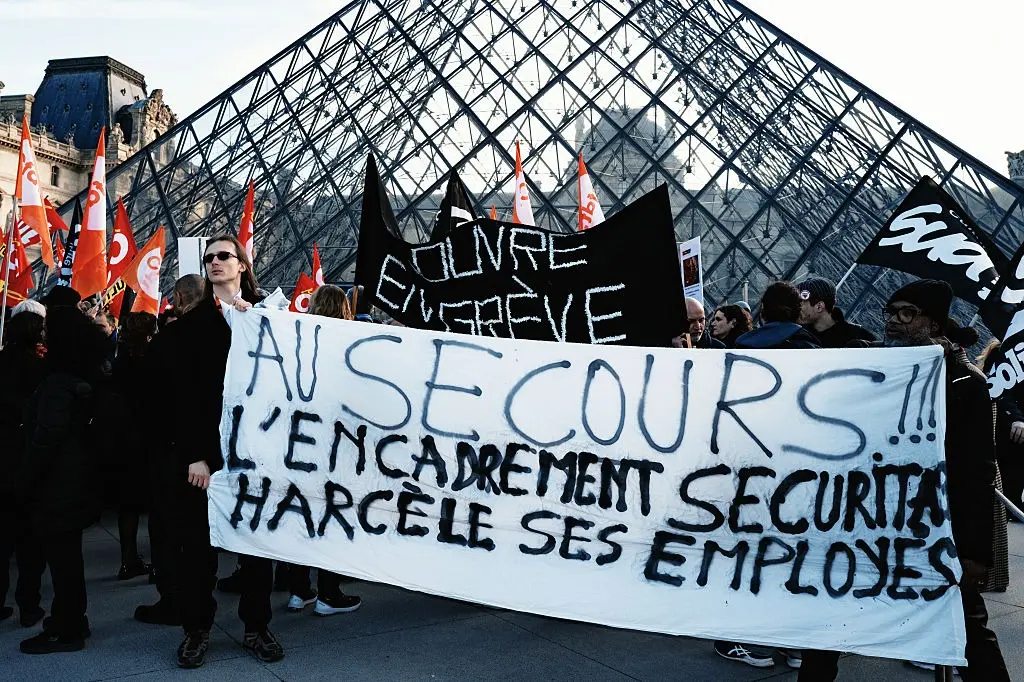
As nationwide demonstrations loom across France, with major industrial actions slated for Saturday, October 31, a significant domestic resolution has emerged at the heart of the French cultural establishment. The Louvre in Paris has officially signed a landmark agreement with labor unions, effectively drawing a close to months of uncertainty, walkouts, and the persistent threat of museum closures. The deal, finalized on Thursday, marks a pivotal shift in the institution’s relationship with its staff following a period of unprecedented volatility.
“The signature of the agreement amounts to a positive step for the Louvre,” a representative for the museum stated to Agence France-Presse (AFP), acknowledging the importance of stabilizing operations after a year of intense internal friction.
A Year of Turmoil and Confrontation
The resolution follows a tumultuous period for the world’s most-visited museum, which has been grappling with the aftermath of a catastrophic security breach. In a brazen daytime heist last year, the Louvre lost over $100 million worth of its historic crown jewels, an event that sent shockwaves through the institution and exposed critical vulnerabilities in its security and management infrastructure.
In the wake of that scandal, a broad coalition of French unions launched a series of strikes that began in December. The labor dispute was rooted in grievances far deeper than the theft alone, encompassing long-standing concerns regarding poor working conditions, a perceived insufficiency of personnel, and the opaque handling of major museum renovations. These strikes forced the museum to shutter its doors entirely for four days, with partial closures affecting operations for another four days, causing significant disruption to the visitor experience and the museum’s daily mission.
For months, the unions maintained an active “notice” of protest, a strategic maneuver that signaled they were prepared to block public access to the museum at any time. This ongoing standoff stood as one of the most protracted and damaging labor disputes in the modern history of the Louvre, creating an atmosphere of institutional paralysis that shadowed the tenure of the previous leadership.
Addressing Security and Compensation
The newly signed agreement addresses several key demands put forward by the labor coalition. According to reports from Le Quotidien de l’Art and various French media outlets, the Louvre has committed to a phased recruitment plan. The museum will hire 50 new security personnel in 2027, with the total number of new security staff reaching approximately 100 by the year 2028. This move is designed to bolster the physical presence of staff within the sprawling palace complex, which has long been a point of contention for those charged with protecting its vast collection.
In addition to expanding the workforce, the deal provides financial concessions. The museum has agreed to improve pay for specific worker categories, including a monthly raise of €50 ($56) for security staff. While modest in the context of broader inflation, the raise represents a symbolic and practical recognition of the increased pressure under which these employees have been working since the security lapses of the previous year.
Christian Galani, a representative of the French union CGT, emphasized the strategic importance of these changes. “The more of us there are carrying out our surveillance duties, the more we will deter criminals from targeting our institution,” he told AFP. For the union members, the recruitment of additional staff is not merely a labor benefit but a fundamental necessity for the integrity of the museum’s security protocols.
The Challenge of Infrastructure and Modernization
Beyond the immediate labor dispute, the Louvre is currently navigating the complexities of a massive, multi-billion-dollar renovation project. This ambitious plan includes critical upgrades to security systems, the necessary preservation of aging infrastructure that has suffered from decades of wear, and the creation of a dedicated entry and gallery space for the Mona Lisa.
However, the scale and management of this project have become a new focal point for union scrutiny. There remains a notable lack of consensus regarding the prioritization of these construction works and the overall transparency of the project’s execution. Union leaders have expressed a strong desire to have a seat at the table, ensuring that the staff’s frontline experience informs the museum’s strategic planning.
“We will quickly ask for a meeting on the management and prioritization of the construction works,” said Alexis Fritche, leader of the CFDT-Culture union, in comments to Le Quotidien de l’Art. Fritche noted that despite the scale of the investment, the staff remains largely in the dark regarding the specifics of the plan. “We still have very little visibility on the safety and security plan announced in November 2025,” she added. This highlights a lingering tension: while the current labor dispute has been settled, the broader challenge of aligning the museum’s ambitious architectural future with the daily realities of its workforce remains a work in progress.
A Change in Leadership and Atmosphere
The resolution of the strike comes after a period of profound leadership transition. Following the crown jewel heist, the museum’s former president, Laurence des Cars, resigned amid intense criticism from staff. Employees had frequently characterized her management style as top-down and disconnected, arguing that she prioritized high-profile, expensive projects while neglecting the deteriorating condition of the building and the chronic staffing shortages that left the museum exposed.
The arrival of Christophe Leribault as the newly appointed president appears to have played a significant role in de-escalating these tensions. Leribault’s approach has been perceived as more collaborative, and the successful negotiation of this agreement suggests a shift toward a more communicative relationship between the museum’s administration and its representative bodies.
As the Louvre looks toward the future, the stability provided by this agreement is essential. With the museum continuing its efforts to modernize its facilities and enhance security, the restoration of a functional, constructive dialogue between management and labor is a necessary prerequisite for restoring public confidence. While the broader French landscape remains marked by uncertainty, the Louvre has secured a period of internal peace, allowing the institution to focus on its dual mission: the preservation of its unparalleled artistic treasures and the protection of those who guard them.