
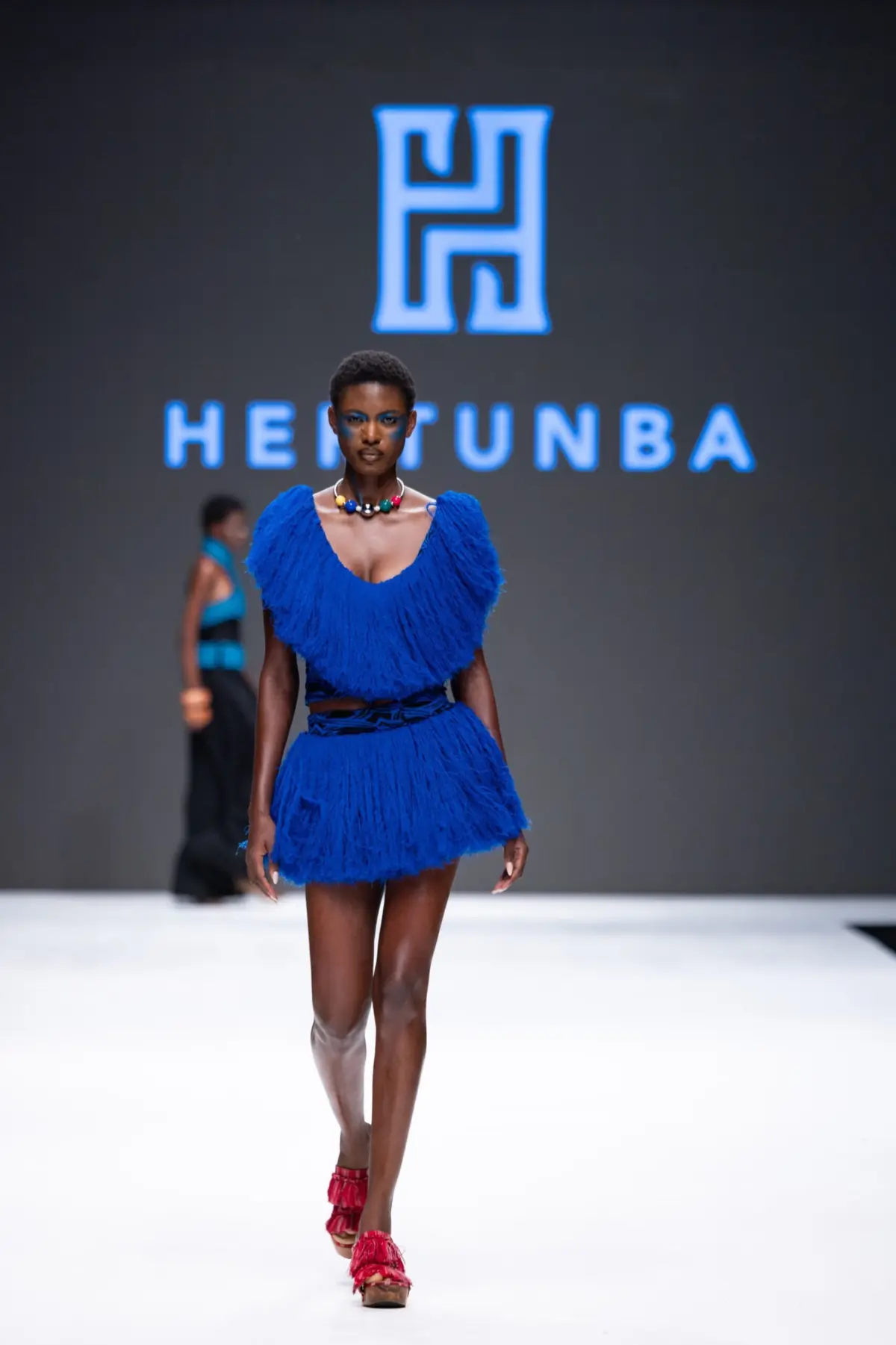
In the vibrant, sweltering heart of Lagos, the fashion industry recently gathered to witness a vision of a world reimagined. Florentina Agu, the founder and creative director of the burgeoning label Hertunba, used her Spring 2027 runway show to pose a provocative, foundational question: What would a world governed entirely by women look like, and how would that shift the sartorial choices of those living within it? The resulting collection is more than a seasonal update; it is a conceptual exploration of a society where the policing of women’s bodies has been dismantled, leaving behind a landscape where fashion serves as a canvas for the "daring and bold."
For Agu, this collection is deeply personal. As a firstborn daughter raised within the confines of a strict, religious household, the designer has spent much of her life navigating the tension between cultural expectations and her own sense of identity. Her work has consistently been a medium for processing these complexities, but the Spring 2027 collection represents a significant evolution in her creative journey. During a preview held ahead of the show, Agu spoke candidly about the persistent internal and external boundaries that still dictate her own wardrobe. Even as an independent, successful woman and a leader in her field, she acknowledged that she still finds herself censoring her style to appease societal standards.
This collection, therefore, acts as a bridge between her lived reality and a liberated ideal. "Even with all my independence and mental liberation, I can’t wear certain things," she admitted. In envisioning this new world, Agu looked toward the women of the diaspora—those who move through the world with an untethered sense of self, living freely and expressing their identities through their clothing without the heavy burden of societal judgment. By centering her designs on this concept, Agu has crafted a narrative that envisions a future Nigeria where women are not merely empowered in spirit, but entirely free in their fashion choices, liberated from the gaze that so often dictates what is "appropriate" or "modest."
The collection serves as a visual manifestation of this freedom. While the runway featured the signature elements that have come to define the Hertunba brand—the meticulously handwoven akwete skirts and the sleek, form-fitting dresses that highlight the female silhouette—Agu also introduced a series of design departures intended to challenge the status quo. These new pieces are intentionally playful and abbreviated, designed to celebrate the parts of the human body that are traditionally shrouded in secrecy or deemed "too much" for public display. By accentuating these areas, Agu is not merely designing clothing; she is making a political statement about the reclaiming of the body.
To bring this new aesthetic to life, Agu experimented with a broader palette of textures and materials. Beyond the brand’s established reliance on traditional handwoven textiles, the Spring 2027 collection incorporates intricate lace and the tactile, rhythmic beauty of wooden beads. These additions bring a sense of organic movement and craftsmanship to the runway. Among the standout looks were a striking blue and cream mini dress, featuring delicate fringe detailing that danced with every step, and a sophisticated black sequin maxi dress that offered a masterclass in evening elegance. Each piece feels like an invitation to shed the weight of expectation and embrace a more confident, liberated form of self-expression.
One of the most remarkable aspects of Hertunba’s success is the label’s ability to transcend the traditional age and size brackets that often segment the fashion market. At the venue, the audience offered a living testament to the brand’s reach. The crowd was a sea of women—both longtime devotees and new admirers—many of whom arrived wearing pieces from previous Hertunba seasons. This cross-generational appeal is at the core of Agu’s mission. She possesses a rare talent for making women of all ages feel both sexy and seen, validating their presence in the fashion space regardless of their body type or life stage. The atmosphere in the room was electric, defined by a sense of shared identity and mutual appreciation for a brand that understands the nuanced needs of the modern woman.
The execution of the show also highlighted the logistical discipline behind Agu’s creative vision. For several months leading up to the event, the designer worked in close collaboration with her team of artisans to ensure that the collection would be available to the public immediately following the runway presentation. In an era where the traditional fashion calendar often feels disconnected from the consumer experience, Agu has embraced the "see-now, buy-now" model. This approach is particularly critical for a brand that relies heavily on the time-intensive process of handweaving.
Managing the production cycle for a hand-crafted collection is a delicate balancing act, especially when considering the needs of clients living in tropical and equatorial climates. Agu’s foresight in beginning the production process months in advance ensures that her customers in these regions can acquire these pieces in time for the warm temperatures that characterize their seasons. This pragmatic approach to the retail experience was a welcome touch, especially given the environmental conditions of the show itself. Inside the venue, the intensity of the Lagos heatwave was palpable, with guests cooling themselves with folded paper programs as they watched the collection move down the runway. That the clothes were designed with such clear intent for the comfort and style of women in similar climates only reinforced the authenticity of the brand’s mission.
As the show concluded, it was clear that Agu had achieved more than just a successful runway presentation. She had successfully translated a complex, deeply internal struggle into a coherent and compelling vision for the future of women’s fashion. By blending the traditional techniques of akwete weaving with a modern, provocative design philosophy, she has solidified Hertunba’s position as a voice for the contemporary, liberated woman. The Spring 2027 collection does not just ask what a world without fashion policing would look like—it invites women to inhabit that world today, piece by piece, bead by bead, and stitch by stitch.
The immediate availability of the collection online signals a commitment to accessibility, ensuring that the dream of liberation is not just an abstract concept for the runway, but a tangible reality for women everywhere. Whether through the playful silhouettes that challenge traditional notions of modesty or the timeless elegance of her sequined gowns, Florentina Agu has crafted a collection that serves as a mirror to the resilience and beauty of the modern woman, offering a glimpse into a world where freedom is the ultimate accessory. As the fashion industry continues to evolve, Hertunba’s focus on the intersection of heritage, craftsmanship, and personal autonomy ensures that the brand remains a vital player in the ongoing conversation about what it means to be a woman in the 21st century.