
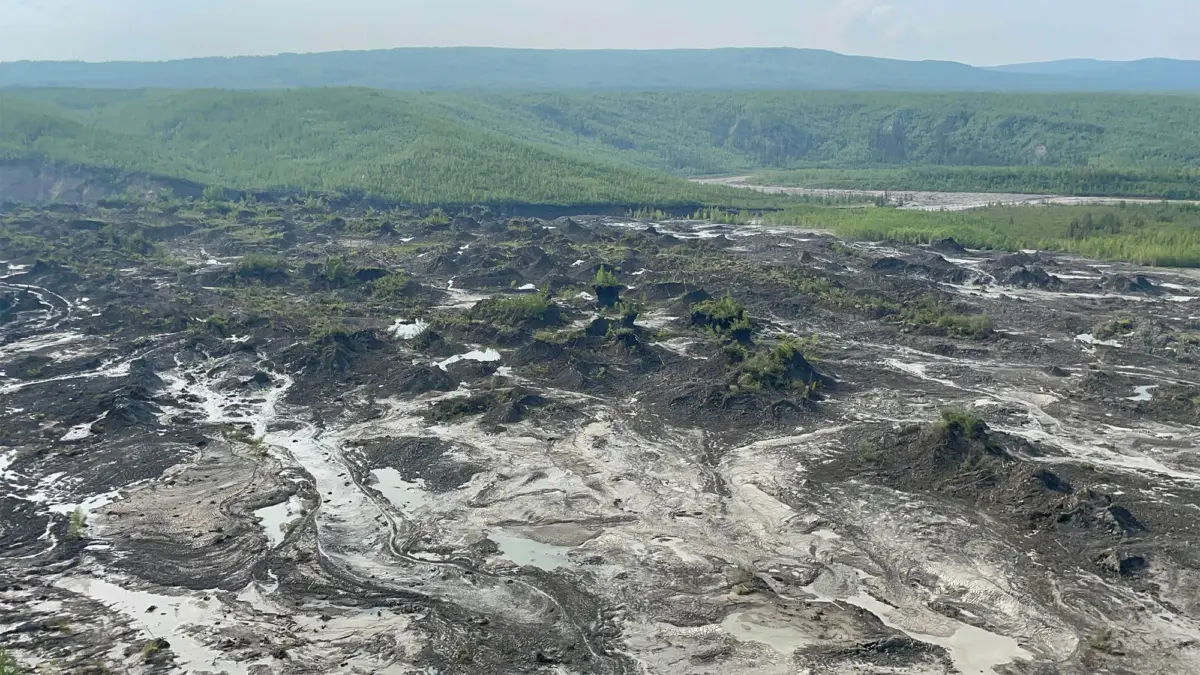
Nearly a decade ago, a helicopter pilot flying over Canada’s remote Northwest Territories noticed something startling and deeply unusual: a landslide so immense and powerful that it had entirely blocked a river, creating an entirely new lake in its wake. But while damming a waterway with earth is a known, if dramatic, geological event, it was not the sheer size of the slide that baffled observers. What the pilot was looking at was something completely unprecedented—a phenomenon so radically different from standard geological hazards that researchers have since classified it as an entirely new category of planetary disturbance: a "permafrost detachment slide."
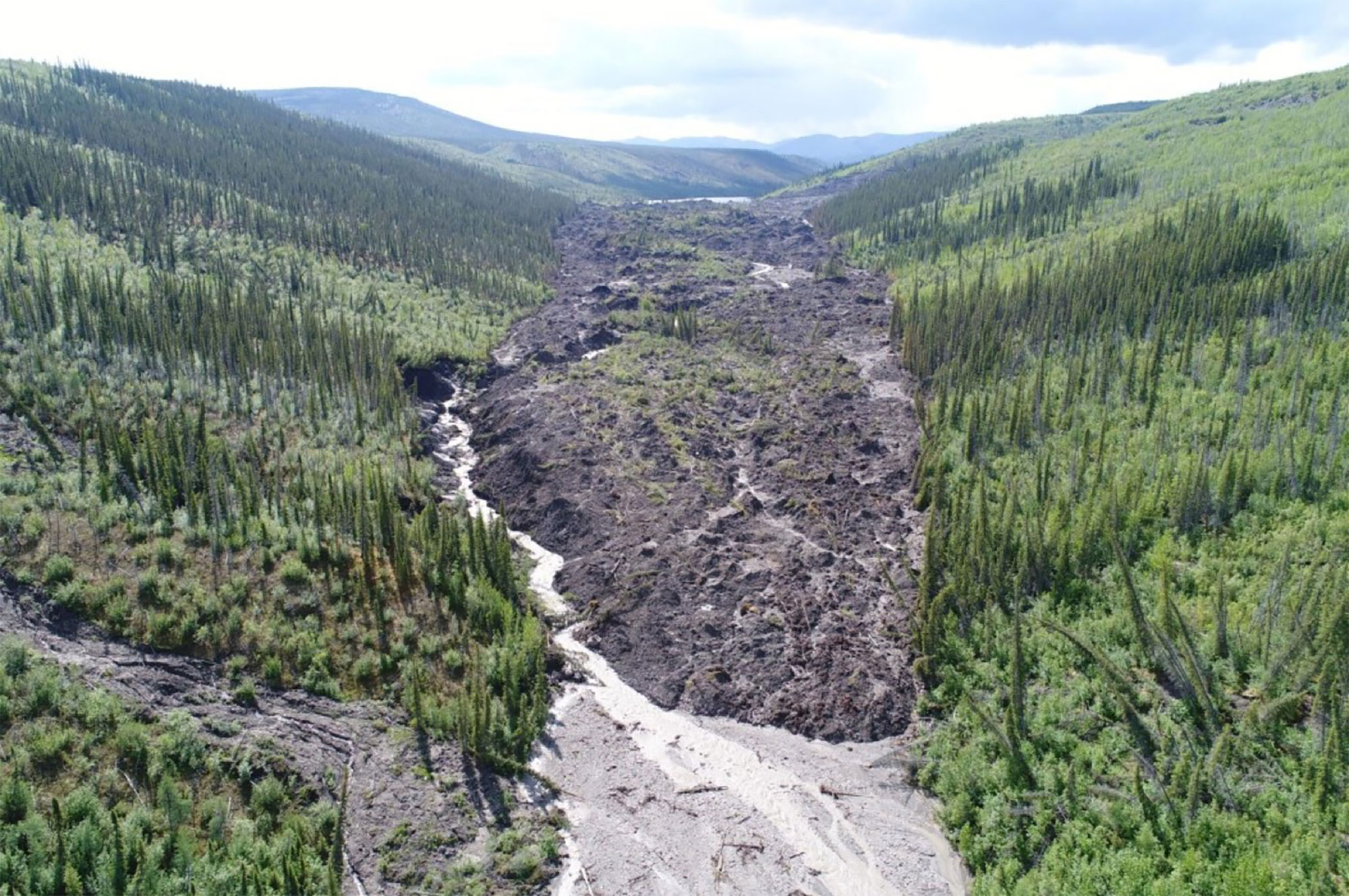
In a recently published scientific paper, a dedicated team of researchers describes two massive examples of these catastrophic events in the region. One of the slides stretched for an astonishing three-quarters of a mile, while the other spanned a full two miles. Combined, these two localized collapses shifted an estimated 30 million cubic yards of earth, completely rewriting the topography of the river valleys along the Johnson River in 2017 and the Redstone River in 2018.
To understand why these events shocked the scientific community, researchers point to the fundamental mechanics of how they occur. Unlike conventional landslides, which typically send a chaotic torrent of heavy rainwater, liquid mud, and shattered rock tumbling down a mountainside or slope, permafrost detachments operate on an entirely different physical level. They occur when frozen soils degrade internally and structurally, causing the landscape to fail catastrophically and abruptly. Even more unsettling to researchers, these two massive slides actually originated decades prior during a wildfire. The fire slowly and invisibly transformed the underlying permafrost over a span of thirty years until the land finally gave way, collapsing into a violent, shifting mass in a matter of mere hours or days.
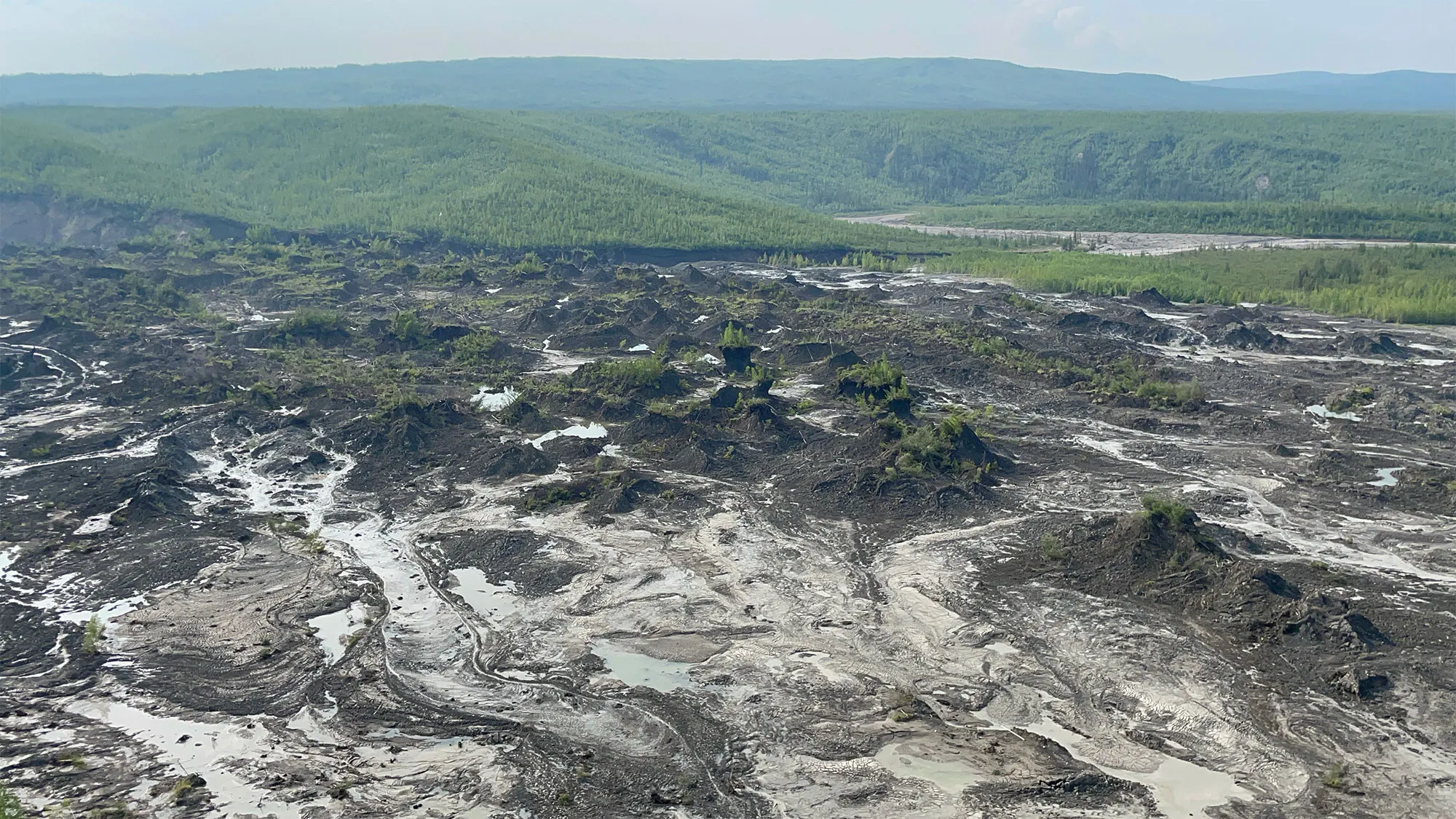
When the scientific team finally managed to visit the remote slide locations on the ground, they encountered a surreal landscape. The debris fields were heavily embedded with massive chunks of frozen material—some measuring up to 650 feet long.
"It’s a very dramatic manifestation of the changing climate," said geoscientist Joseph Young, the lead author of the research paper, who conducted the study while at the University of Alberta. "They’ve only started happening in the last 10, 15 years, and it’s a very drastic and abrupt change in the landscape."
Permafrost has long been understood by scientists as a major planetary wild card. At its core, permafrost is any ground—whether composed of dirt, rock, sand, or dead plant matter—that remains continuously frozen for two years or longer. Across the vast expanses of the Northern Hemisphere, these frozen subterranean zones cover an area roughly two and a half times the size of the entire continental United States. However, as global temperatures rise, the Arctic is warming at a rate four times faster than the rest of the planet.
This rapid heating has caused permafrost to thaw at an unprecedented pace. Across the far north, the ground is literally sinking, gouging massive, unstable potholes into the landscape—a widespread phenomenon known to scientists as thermokarst—which frequently releases large, hidden clouds of greenhouse gases into the atmosphere as the ancient organic matter within the soil begins to decay.
While thermokarst depressions are increasingly common, permafrost detachment slides represent a terrifying escalation in scale and intensity. Because a single detachment event involves millions of yards of earth moving at once, it introduces a completely new mechanism of landscape destruction.
"I think it’s fascinating that we’re discovering a new type of thermokarst," said David Olefeldt, a soil scientist at the University of Alberta who studies permafrost dynamics and was not involved in the new research paper. "This is a type of land collapse due to permafrost thaw which hasn’t really been observed before."
The chain of events leading up to the 2017 and 2018 collapses actually began decades earlier, in the summer of 1995, when a severe wildfire swept through the Northwest Territories. The intense flames burned away the thick mat of vegetation and forest canopy that naturally shaded the permafrost, shielding it from the intense solar radiation of long northern summer days. Stripped of this vital thermal insulation, the ground lost its protective climate barrier.
"After about 20 years or so, that thermal signature from the burned forest can reach the base of permafrost," Young explained. "It’s slight, but it’s there."
Crucially, the ultimate collapse of the permafrost did not happen from the top down, as might be expected with surface melting. Instead, the failure originated from the bottom up, working its way through the intricate, frozen mixture of soil, ice, and ancient organic material. As the deepest base of the permafrost warmed—even by a fraction of a degree—stress and tension cracks began to propagate through the frozen matrix. This internal fracturing created pools of relatively warm water at the surface, which subsequently seeped downward, further infiltrating and weakening the subterranean layers.
As the frozen mixture degraded, it initially began to slip downhill at a modest rate of just a few feet per year. Over time, that speed accelerated dramatically, reaching up to 80 feet annually, before the entire slope finally reached its breaking point and catastrophically gave way as a massive detachment slide.
"This kind of movement can create its own release of energy because of friction and cracking on the bottom," noted Vladimir E. Romanovsky, a permafrost geophysicist and professor emeritus at the University of Alaska Fairbanks, who was not involved in the new study. He noted that vast sheets of glacial ice creeping downhill exhibit similar behavior, occasionally undergoing sudden, violent surges and accelerations.
The physical evidence found at the sites confirmed this bottom-up failure mechanism. Had the ground degraded slowly from above, the researchers would have found a landscape dominated by a uniform layer of soupy mud. Instead, the discovery of enormous, intact blocks of frozen material proved that the subterranean foundation had sheared off from beneath.
Furthermore, the geological tumult did not cease the moment the land collapsed. The immense displacement of earth left sheer, exposed walls of permafrost standing on either side of the newly formed scars, leaving them directly vulnerable to the harsh rays of the sun.
"Just because you have this large detachment failure, that doesn’t mean it’s over," Young warned. "Actually, it means you’ve opened up more potential for failure."
The implications of these massive slides extend far beyond the remote river valleys of the Northwest Territories. As permafrost thaws and degrades, dormant microbes trapped within the soil for millennia begin aggressively feasting on the newly accessible organic material, expelling significant quantities of carbon dioxide and methane as they digest it. This biological activity threatens to accelerate a dangerous feedback loop: as warmer global temperatures thaw more permafrost, microbes release more greenhouse gases into the atmosphere, which in turn drives further warming, leading to even more permafrost degradation.
"That’s a major global concern," said Miriam Jones, a research geologist who studies permafrost at the United States Geological Survey and was not involved in the study. "It’s a feedback that many of us have been studying."
At the same time, ecological shifts are compounding the crisis. Across the Arctic, woody plants and shrubs are rapidly marching northward at a rate of miles per decade, a widespread ecological shift known as Arctic greening. In many areas, this dense proliferation of new shrubs traps thick layers of winter snow, insulating the ground and preventing the bitter chill of winter from penetrating deep into the underlying permafrost, thereby hastening its eventual decline.
More vegetation also provides an abundance of dry fuel for the very wildfires that initiate permafrost detachment slides in the first place. Compounding the danger, northern wildfires frequently burn deep into peat, a dense, carbon-rich organic material that has accumulated in northern soils over thousands of years. These persistent phenomena, often referred to as "zombie fires," can smolder quietly underground throughout the freezing winter months, surviving beneath the snowpack only to reemerge during the spring thaw and release massive additional quantities of carbon into the atmosphere.
The critical unknown facing scientists now is precisely how much more planet-warming gas might be spewed into the atmosphere as bacteria proliferate in the chaotic aftermath of these massive permafrost detachment slides.
"The short answer is: We don’t know how much, because we haven’t characterized and classified it," Young said. "But it could be quite severe, just because the size of these features."
Previous scientific research has already established that even much smaller, localized instances of abrupt permafrost thaw are capable of producing substantial carbon emissions. As researchers continue to monitor the changing northern landscape, many expect that these hidden geological hazards will not remain isolated events.
"I expect that we can see more of these types of surprises," Olefeldt said, "as we cross thresholds in other regions that have these vulnerabilities to collapse."