

For 18-year-old Elijah Lee, protecting the environment has never been an abstract debate about distant global timelines. Instead, it has always been intensely personal, defined by what is happening right outside his window.
Growing up in a predominantly Black, low-income community in Roanoke Rapids, North Carolina, Lee attended school directly adjacent to a heavy paper mill. Day after day, the facility filled the local air with heavy industrial pollution, coating his surroundings in a persistent reminder of corporate proximity. Even as a child, he found himself questioning why this heavily polluting facility appeared to be the primary employment option available to the people in his town, forcing residents into a difficult compromise between breathing clean air and securing a paycheck.
Now, as data centers rapidly expand across Virginia—the state where he moved as a teenager—Lee fears that the sweeping political promises of technological and economic growth driven by these massive facilities will once again bypass him, his neighbors, and his generation entirely. At 18 years old, Lee is preparing to cast a ballot in his very first midterm election. Climate policy ranks high among his personal concerns for the future, but he intimately understands why many of his peers and neighbors, struggling to stay afloat amid rising bills, might not put environmental protection at the absolute top of their voting priorities.
"It’s hard to care about the quality of your air or your food that you eat and whether or not that food is actually clean when you can’t even afford the food in the first place," Lee explained, capturing a fundamental economic tension felt in households nationwide.
Recent polling suggests that this tension is far from isolated; it is widespread across Black communities in key electoral battlegrounds. While Black voters may not always name broad terms like "climate change" as their single biggest election concern, deeper data reveals an overwhelming mandate for elected officials to actively address environmental threats, pollution, and the skyrocketing cost of living.
According to a comprehensive seven-state survey conducted by HIT Strategies for the Climate Equity Action Fund and the League of Conservation Voters, only 9 percent of Black registered voters ranked climate change among their top three issues motivating them to vote. By stark contrast, a resounding 74 percent selected the rising cost of living as a primary motivator.
At the same time, however, the survey exposed a profound nuance that defies simple political categorization. When respondents were asked about policy priorities rather than personal voting triggers, the vast majority made it clear they want climate policy and environmental protection to be high on the agenda for their elected officials. Notably, even among Black Republicans surveyed, 79 percent said it was critically important for political candidates to prioritize addressing climate change.
In-depth interviews with voters, community organizers, and policy advocates suggest that this apparent gap is not simply a messaging failure by political campaigns. Rather, it centers on a deep skepticism regarding whether voters can actually see a direct, tangible connection between high-level environmental policy and their immediate daily survival. More acutely, it reflects a growing crisis of trust: voters are left wondering whether they should even bother prioritizing climate positions when they feel they cannot trust elected officials to deliver lower utility bills, safe drinking water, and genuine protection from corporate pollution.
"Young people today want to ensure we have a future where we can live prosperously," Lee said. "We understand that the future requires environmental protections. But we also understand that it is not being prioritized today."
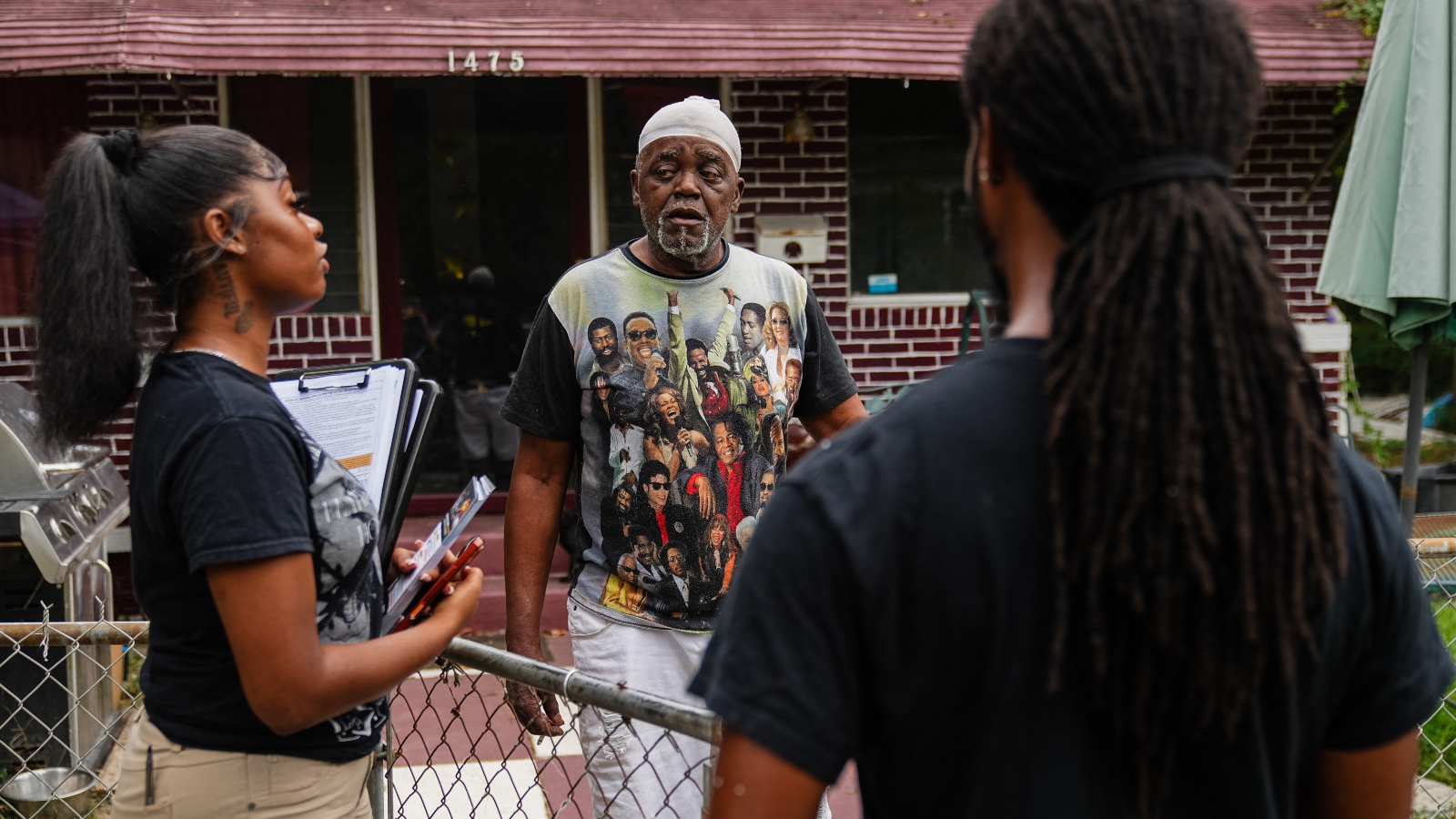
Climate politics at the kitchen table
The comprehensive survey, fielded from September 24 through October 10, captured the sentiments of 2,000 Black and Latino registered voters across critical swing states that are expected to heavily influence national politics. Respondents hailed from Arizona, Georgia, Michigan, Nevada, North Carolina, Ohio, and Pennsylvania—regions where political campaigns frequently pour millions of dollars into advertising. Crucially, seven in ten respondents indicated that they were highly likely to cast a ballot in the upcoming midterm elections.
When researchers drilled down into specific policy goals across both demographic groups, broad consensus emerged. A staggering 89 percent of respondents stated that it was vital for political candidates to prioritize lowering soaring energy costs. Furthermore, 86 percent emphasized the necessity of reducing dangerous air and water pollution, while 82 percent wanted candidates to focus on addressing broader climate change issues.
Erica Tebbs, a senior analyst at HIT Strategies who worked on the survey, noted that the core challenge facing political leaders and advocates is not convincing Black voters that environmental threats are real or pressing.
"The proof that is needed is that their concerns will be addressed and responded to by elected officials and that a vote will result in a real impact in their community," Tebbs said. "That’s where the doubts lie."
For Tebbs, these findings demonstrate that climate change’s relatively low ranking on lists of generic election issues should never be misinterpreted as public indifference or apathy. When survey questions pivot toward concrete, kitchen-table realities—such as the monthly cost of electricity, access to safe and clean drinking water, or vulnerability to extreme weather events—the concerns instantly become personal, urgent, and immediate. By contrast, abstract terms like "climate change" can often feel disconnected from the daily struggle of paying bills.
Bill Hairston, the national field director for the League of Conservation Voters, observes a remarkably similar dynamic during his grassroots conversations with everyday residents. The rapid, sprawling development of data centers to power the artificial intelligence boom and cloud computing, he noted, has quickly transformed into one of the primary issues pulling everyday people into broader discussions about energy policy and environmental justice. Local residents are increasingly alarmed about what these massive facilities mean for their household electricity bills, worsening air pollution, and the secondary pressures of local gentrification and skyrocketing housing costs.
"I think it’s actually just putting the two and two together," Hairston said.
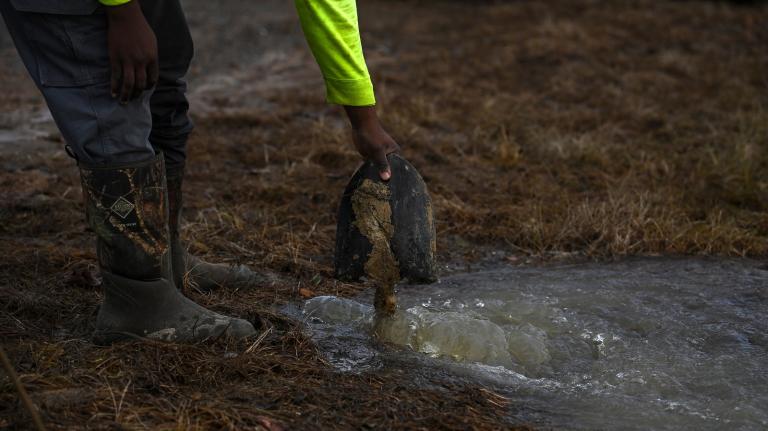
Hairston’s perspective is rooted in his own upbringing in Charleston, West Virginia, where his grandparents’ home was located in a marginalized, low-income Black neighborhood. On a daily basis, heavy coal trucks rumbled past their property, leaving a visible mark on the landscape. He vividly remembers that the grass surrounding the family home never looked healthy; instead, it was perpetually stained yellow, covered in a fine layer of industrial soot.
"I never saw my grandmother’s grass green," he recalled.
While he admits he didn’t fully connect those toxic environmental conditions to the political and corporate decisions shaping his neighborhood when he was young, Hairston believes contemporary voters should be making those connections much more frequently today. For him, ongoing community conversations about the influx of data centers offer an invaluable organizing opportunity. They allow advocates to connect a corporate industry’s physical presence directly with fundamental questions regarding public health, financial affordability, and the adequacy of government oversight. Rather than treating these as separate, compartmentalized issues, he wants residents to critically evaluate who is making these decisions and whose financial interests those choices ultimately serve.
Who pays for the data center boom?
The polling data revealed substantial, widespread anxiety among Black voters regarding the hidden economic fallout of the data center boom, particularly its impact on household electricity costs. This skepticism runs deep, fueled by a historical lack of faith that policy promises will ever genuinely benefit working-class households.
To test this skepticism, the survey presented respondents with a specific policy scenario: respondents were informed that Congress was actively considering legislation that would require massive corporations building energy-hungry data centers to pay directly for the electricity they consume, rather than quietly passing those immense infrastructure and power costs on to everyday residential consumers. Yet, even when this explicit consumer protection was described to them, 52 percent of Black registered voters still expected that the proliferation of data centers would ultimately drive up electricity costs for ordinary Americans.
"They don’t necessarily trust that this type of policy will really protect the public from taking on these costs," Tebbs explained, highlighting the pervasive cynicism surrounding federal intervention.
For Andrea Cristina Mercado, who leads the Climate Equity Action Fund, these survey results clearly demonstrate that Black communities are continuously confronting the negative fallout of failed historical policies related to both the environment and the economy.
Elijah Lee, who now resides in Virginia—widely recognized as the data center capital of the United States—serves as a living example of this community-level skepticism. He frequently questions the generous corporate tax breaks routinely offered to data center developers by state and local governments, as well as the grandiose promises of high-paying local jobs that politicians use to justify green-lighting these massive industrial footprints. He worries that local communities are continually asked to bear the heavy environmental and financial costs without ever receiving the promised community benefits in return.
"I understand the importance of wanting to bring money into Virginia," Lee said. But "to pass these things off as mass sources of employment is just not true."
For Mercado, this disconnect underscores why effective climate policy can never be divorced from broader conversations about economic survival and affordability.
"We actually believe that climate policy has to address the needs of working people," she said, adding that this economic squeeze is precisely what is driving "the emergence of a massive organic movement against data centers."

Shared concerns across party lines
Interestingly, the survey data revealed that concern about climate change and environmental degradation among Black voters extended more uniformly across party lines than it did among Latino voters.
Among Black Republicans surveyed, 79 percent stated that it was important for political candidates to prioritize addressing climate change. By comparison, among Latino Republicans, 59 percent expressed the same view.
Hairston attributes this broad, cross-partisan agreement among Black voters to shared lived experiences. Because Black communities are historically subjected to disproportionate levels of industrial pollution, substandard infrastructure, and climate-change-fueled weather events like urban flooding, the reality of environmental threat cuts through traditional partisan divides.
He views these shared lived experiences as a vital opening to organize around practical protections that transcend standard party labels. For climate advocates, however, the persistent challenge remains persuading a skeptical public that taking collective political action can actually yield concrete results.
Nearly half of all survey respondents expressed a deep-seated fatalism, stating that powerful political interests and wealthy corporations would always successfully block meaningful efforts to reduce climate harm, regardless of what ordinary citizens did. Many also expressed a disheartening belief that it was already far too late to reverse the damage.
Yet, despite this widespread skepticism, 45 percent of Black voters maintained faith in collective action, expressing belief that people working together through voting, community organizing, petitions, and economic boycotts could successfully hold both government officials and powerful corporations accountable to reduce the harmful effects of climate change.
Tebbs noted that these complex doubts regarding political agency resonate particularly strongly among younger generations. However, the tangible possibility of grassroots change remains clearly visible to young organizers, according to Lee. As a first-year college student, he pointed to a dedicated group of high school students in Spartanburg, South Carolina, who have actively organized against a locally proposed data center project, serving as a powerful reminder of youth demanding a direct say in the communities being built around them.
He hopes that older generations and established political leaders will finally take the time to listen to these urgent concerns, rather than automatically assuming that a generation raised alongside cutting-edge technology will blindly welcome every industrial project built to support it.
"We know that this is the future that we’re inheriting, the markets that we’re inheriting, the housing that we’re inheriting, the food prices that we’re inheriting," Lee said. "And so I think more than anything, I’m being driven by deep concerns, but also by a deep hope that we can turn this around."