
In the quiet, subterranean reaches of the Comme des Garçons headquarters in Aoyama, the morning light seems to hold a different quality. It is here, in the heart of one of fashion’s most avant-garde bastions, that Tao Kurihara has established a tradition that has become a quintessential late-season treat for the international fashion press. As the Tokyo collections draw to a close, her runway presentations offer a moment of meditative pause, a chance to step away from the relentless churn of industry expectations and into a space defined by intimacy, craft, and a singular, focused vision.
For her latest collection, titled "MY TRUE SELF," Kurihara sought to articulate a concept of purity and freedom, translating these abstract ideals into a tangible narrative defined, above all else, by the color white. The choice of palette was not merely an aesthetic decision but a thematic anchor, providing a blank canvas upon which the designer could explore the complexities of her own creative impulses.
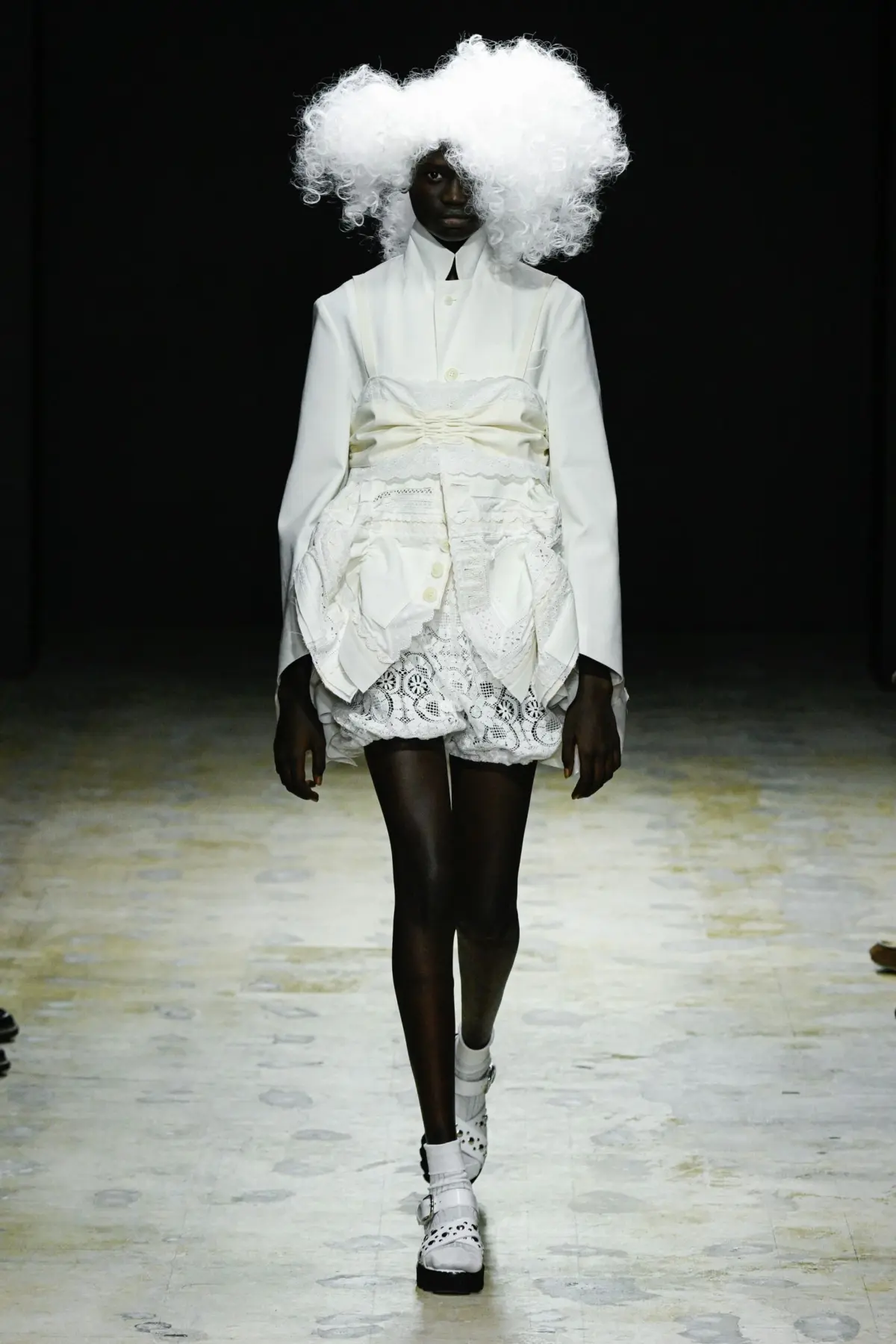
The collection opened with a delicate, almost domestic sensibility. The runway was filled with layers of intricate broderie anglaise and a series of complications involving doilies, which gave the garments a surreal, transformative quality. As the models moved, the lace-laden coats and dresses seemed to flicker between high fashion and the familiar textures of a home—suggesting the edges of curtains or the ornate patterns of a vintage tablecloth. This intentional blurring of lines between the interior world and the exterior silhouette set the tone for a show that felt deeply personal, yet strangely universal.
Following this initial exploration of white, the collection transitioned into a grounded, sophisticated chapter of gray tailoring. This interlude provided a structural anchor, demonstrating the precision and discipline that underpins Kurihara’s whimsical sensibilities. However, the respite was brief. The runway soon erupted into a vibrant, botanical cacophony. Floral details and Liberty-esque prints adorned cotton capris and ruffled skirts, signaling a shift toward a more playful, organic aesthetic. It was a rhythmic progression—from the silence of white to the structure of gray, and finally to the exuberant chaos of a garden in full bloom.
The visual storytelling was amplified by the styling, which leaned heavily into the ethereal. The models wore their hair in cloud-like, voluminous styles, crowned with straw and sprigs of foliage that echoed the collection’s botanical motifs. Integral to the visual impact were the garments themselves, which featured intricate botanical embroidery created in collaboration with the artist Hitomi Mori. Mori’s work, which is gaining significant attention for its delicate, hyper-detailed approach to flora, added a layer of tactile depth to the collection. The collaboration served as a bridge between fine art and wearable design, inviting the audience to look closer at the minute details of the embroidery—a detail that the designer encouraged, pointing attendees toward the artist’s work on social media platforms for a more intimate look at the craftsmanship involved.
The atmosphere was further heightened by the soundscape, composed by Kurihara’s husband. The music was a carefully curated blend of harp melodies, the sharp, rhythmic plinking of a piano, and the ambient, naturalistic sounds of birdsong. This audio narrative was a perfect complement to the collection’s storybook whimsy, grounding the audience in the specific, evocative world Kurihara had constructed.
Following the show, in the bustling CDG press room—which, for the duration of the season, serves as a central exhibition hub for all the brands under the Comme des Garçons umbrella—Kurihara reflected on the process behind "MY TRUE SELF." Characteristically cheery and contemplative, she described a desire to strip away the external pressures that often weigh upon designers in a high-stakes industry.
"I decided to just set aside all of my concerns and just create something I truly, purely wanted to make," Kurihara explained. "How should I put it? It’s like when a child draws a picture; they aren’t thinking about wanting to be praised. It’s that kind of mindset, a state of total, genuine focus."
This pursuit of a "childlike" mindset—a state of creation untainted by the anxiety of external validation—is a rare ambition in the modern fashion cycle. Kurihara acknowledged that the statement might imply that her previous collections lacked this sincerity, but she was quick to clarify the distinction. This time, she felt she had reached a point of distillation where the work was stripped of anything that didn’t come directly from her own intuition. "This time, I really felt I distilled everything down to just what I purely, from the bottom of my heart, wanted to create," she said.
To Kurihara’s credit, the resulting collection managed to avoid the common pitfalls of such an approach. It did not collapse into heavy-handed sentimentality or hollow nostalgia. Instead, the clothes possessed a quiet confidence; they simply existed on their own terms. The collection was an exercise in honesty, demonstrating that a designer can look inward for inspiration without sacrificing the rigor required to produce a compelling runway show.
This delicate balance between creative purity and commercial viability is a hallmark of the Comme des Garçons school of thought. Under the mentorship and influence of Rei Kawakubo, the house’s protégés have long been encouraged to push the boundaries of design while maintaining a functional relationship with the market. Kurihara’s collection was a testament to this philosophy. While the hand-embroidered botanical work by Hitomi Mori might be difficult to produce at scale, the house’s mastery of interpretation allowed for these artistic visions to be translated into more accessible formats. By magnifying the artwork and printing it onto dresses and T-shirts, the brand effectively bridged the gap between a singular, artistic expression and a wearable, commercial product, ensuring that the essence of the collaboration could be shared with a wider audience.
As the exhibition continues in the Aoyama headquarters, displaying the various collections from the house’s brands, "MY TRUE SELF" stands out as a moment of clarity. It serves as a reminder that even within the most established and historically significant fashion houses, there is space for the quiet, personal, and profoundly sincere. By choosing to focus on the act of creation rather than the reception of the work, Tao Kurihara has delivered a collection that feels refreshing, authentic, and entirely her own. The show leaves the audience with the sense that the most powerful creative statements are often those made in the simplest of ways, with a focus on the beauty of the materials and the joy of the craft. As the spring season in Tokyo concludes, this collection remains a poignant reflection on the enduring power of a designer’s true, unfiltered voice.