
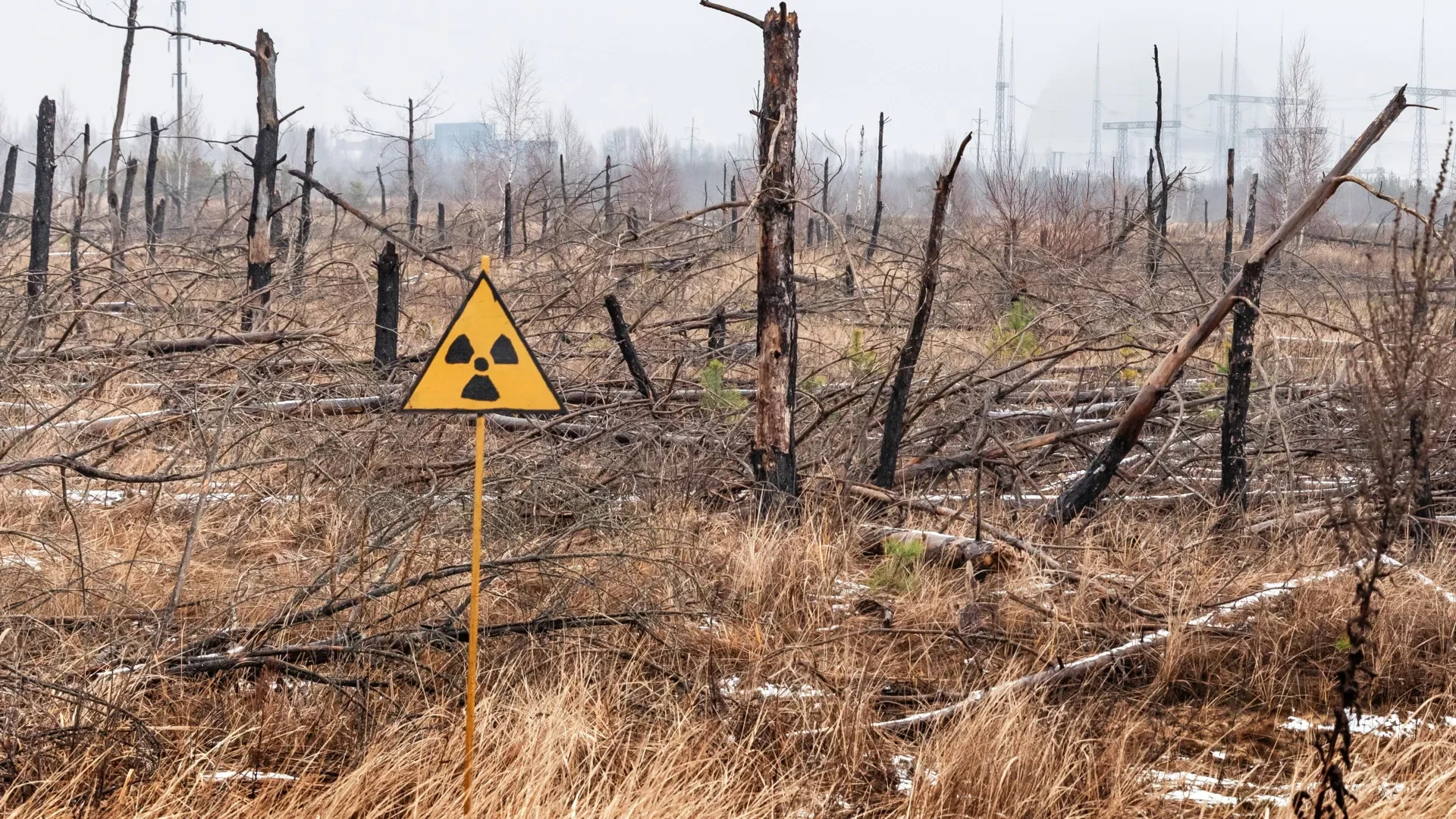
Nearly four decades after the catastrophic nuclear disaster at the Chornobyl nuclear power plant, microscopic radioactive particles remain scattered throughout the soil and environment of the surrounding exclusion zone. The devastating explosions that tore through the reactor in 1986 released monumental quantities of radioactive debris into the atmosphere, leaving behind a legacy of contamination that continues to pose serious health risks and ecological challenges. Even after forty years of environmental exposure, tiny particles measuring just 8 to 50 micrometers remain intensely radioactive. To this day, entering the heavily affected areas surrounding the site requires specialized protective clothing and strict safety protocols to prevent inhalation or direct contact with the hazardous dust.
Yet, despite the passage of time and continuous exposure to weathering, moisture, and fluctuating temperatures, scientists have taken a much closer look at these tiny remnants and uncovered a surprising finding: some of these particles have preserved a significant portion of their original internal structure.
"There are three classes of these particles," explains Tobias Weissenborn, a physicist and doctoral candidate at Leibniz University Hannover, who has been deeply involved in analyzing the makeup of the fallout. "First, there are particles that are chemically and physically still very similar to the nuclear fuel uranium dioxide. Then, there are particles that are partially or fully encased in, or completely fused with, their zirconium layer."
The second category of particles originated during the extreme, uncontrolled temperatures reached deep inside the melting reactor core. As the nuclear fuel melted down, it came into intense contact with zirconium, a highly durable and heat-resistant metal utilized extensively in the protective outer cladding of the fuel rods.
"The third type of particle was created when the graphite-moderator caught fire," Weissenborn adds, pointing to one of the most volatile phases of the initial disaster.
Under normal, day-to-day operating conditions, the graphite moderator inside a nuclear reactor serves a critical function by slowing down fast neutrons, thereby helping to sustain and control the nuclear chain reaction. During the disaster, however, the intense heat and breaches in the reactor containment caused the massive graphite blocks to ignite. The resulting graphite fire raged uncontrollably for ten days, lofting huge plumes of radioactive smoke, ash, and fuel fragments high into the atmosphere.
"In the process, the fuel oxidized into various uranium oxides," such as complex compounds like $U_3O_8$, notes Weissenborn.
Unlike more chemically stable materials, this specific form of uranium oxide is mechanically fragile. Because of its brittle nature, it can readily break apart into increasingly smaller, microscopic fragments under physical stress or environmental pressure. Once pulverized into these fine dusts, prevailing winds can easily carry the radioactive particles across vast distances through the surrounding environment. For humans and wildlife alike, inhaling these airborne radioactive remnants presents severe and long-lasting health hazards, as the alpha, beta, and gamma emitters interact directly with biological tissues.
Scientists Examine Chornobyl’s Radioactive Dust in Unprecedented Detail
Despite decades of intense scientific research following the 1986 accident, researchers still do not fully understand the precise mechanisms or varying speeds at which radioactive particles from Chornobyl break down in the wild. As these materials continue to weather over time, they can transform into several different chemical forms of uranium oxide, making their long-term environmental behavior exceedingly difficult to predict with absolute certainty.
Investigating these complex molecular and atomic changes requires exceptionally sophisticated and precise equipment. Among the most advanced tools available to modern physics is synchrotron X-ray diffraction, a powerful analytical technique that allows researchers to peer deep inside crystalline materials to reveal the exact arrangement of atoms within their structures.
Dr. Christoph Hennig, a skilled crystallographer at the Helmholtz-Zentrum Dresden-Rossendorf (HZDR), has successfully completed the very first structural analysis of radioactive fragments of this specific kind. The breakthrough work was conducted using the specialized capabilities of the Rossendorf Beamline located at the European Synchrotron Radiation Facility in Grenoble, France.
Working closely in collaboration with Weissenborn and other academic colleagues, Hennig analyzed a selection of six distinct radioactive particles that had been carefully recovered from the Chornobyl region. By identifying and mapping the various crystalline phases hidden within these microscopic remnants, the research team gathered critical new data. This information could eventually help specialists determine more accurately how rapidly radioactive substances escape from their host particles and migrate into the surrounding soil and groundwater systems.
"The colleagues from Hanover and I used various methods to isolate the particles from Ukrainian soil samples and attach them to tungsten electrodes," Weissenborn explains, detailing the delicate and hazardous preparation process required before the analysis could even begin.
Because the physical samples were intensely radioactive, they had to be securely enclosed within multiple, redundant layers of specialized containment vessels before they could be safely transported across international borders to the research facility in Grenoble. Once the samples arrived at the beamline, Hennig’s research team utilized high-intensity X-ray diffraction to examine their complex internal structures by precisely measuring the way X-rays scattered as they passed through the microscopic matrix of the fuel fragments.
"First, we had to figure out how to examine the particle structure," Christoph Hennig explains, highlighting the technical hurdles the team had to overcome. "Ultimately, we fully rotated the particles in an X-ray beam focused down to 100 micrometers—about the thickness of a human hair. We measured each particle from 2,000 different angles to seamlessly capture all the reflections."
The resulting high-resolution measurements allowed the scientists to clearly distinguish different uranium oxide phases within the radioactive fragments. This uncovered structural details and phase distributions that had previously remained completely inaccessible to earlier generations of researchers.
A Surprising Discovery About 40-Year-Old Nuclear Fallout
The final analytical results revealed something entirely unexpected. Despite spending nearly four decades subjected to the harsh and unpredictable elements of the outdoor environment, the nuclear fuel trapped inside the six examined particles had managed to retain a surprisingly large amount of its original crystal structure.
This discovery strongly suggests that at least some portion of the radioactive debris produced during the Chornobyl disaster is significantly more chemically stable than researchers had previously dared to believe.
That inherent structural stability could carry profound environmental implications for the region. Rather than rapidly dissolving and releasing their dangerous cargo of radioactive substances into the ecosystem, these resilient particles appear genuinely capable of locking fission products securely within their internal crystalline structures over extended periods. If future studies demonstrate that this behavior occurs more widely across the vast exclusion zone, it could help explain and limit the predicted movement of radioactive contaminants into nearby agricultural soils and vital water table systems.
However, the researchers are quick to emphasize that their new findings should not be misinterpreted as encouraging evidence that Chornobyl’s pervasive radioactive contamination is somehow becoming harmless or dissipating ahead of schedule.
"However, every single particle has a different structure," warns Weissenborn, tempering any overly optimistic conclusions drawn from the laboratory data, "and our experiment only studied six such particles from two different locations."
The relatively small size of the sample means that the current findings cannot yet establish a definitive baseline for how radioactive particles behave throughout the entire, highly diverse contaminated region. To understand the true range and variability of their structural stability more comprehensively, scientists would need to investigate a much larger pool of additional particles collected from a substantially broader and more representative range of geographical locations.
Why Chornobyl’s Radioactive Legacy Remains Unpredictable
Even if researchers were eventually able to acquire substantially more data from hundreds or thousands of samples, predicting the long-term dangers of Chornobyl’s diverse radioactive debris would remain an extraordinarily challenging endeavor. Individual fallout particles can differ wildly in their initial chemical composition, physical structure, and individual resistance to environmental weathering. All of these variables can independently affect when and how rapidly they eventually release their toxic radioactive inventories into the biosphere.
"And even if we obtained some averages at some point, we still wouldn’t be able to make universal statements about health risks in the region," Weissenborn cautions. "Because even if the particles decay in a largely uniform pattern, there will always be outliers, more persistent particles, that will release radionuclides at a later point in time."
These particularly persistent, slow-weathering particles could continue to release radioactive substances into the environment long after other, more fragile remnants have completely broken down and dispersed. This lingering variability significantly complicates ongoing efforts by international and local authorities to accurately assess future contamination levels and long-term public health risks.
For precisely that reason, the newly published findings do not imply that safety restrictions, access limits, or environmental monitoring protocols within the Chornobyl Exclusion Zone can be relaxed or removed anytime soon.
Scientific inquiry into the enduring, multi-generational consequences of the 1986 disaster is far from over. Weissenborn, Hennig, and their respective research teams are already actively conducting additional experiments. Their current work focuses heavily on analyzing highly radioactive transuranic phases found hidden within the remaining reactor debris, which could ultimately provide an even clearer and more comprehensive picture of how Chornobyl’s nuclear materials continue to transform over time and how long their environmental footprint will persist.