
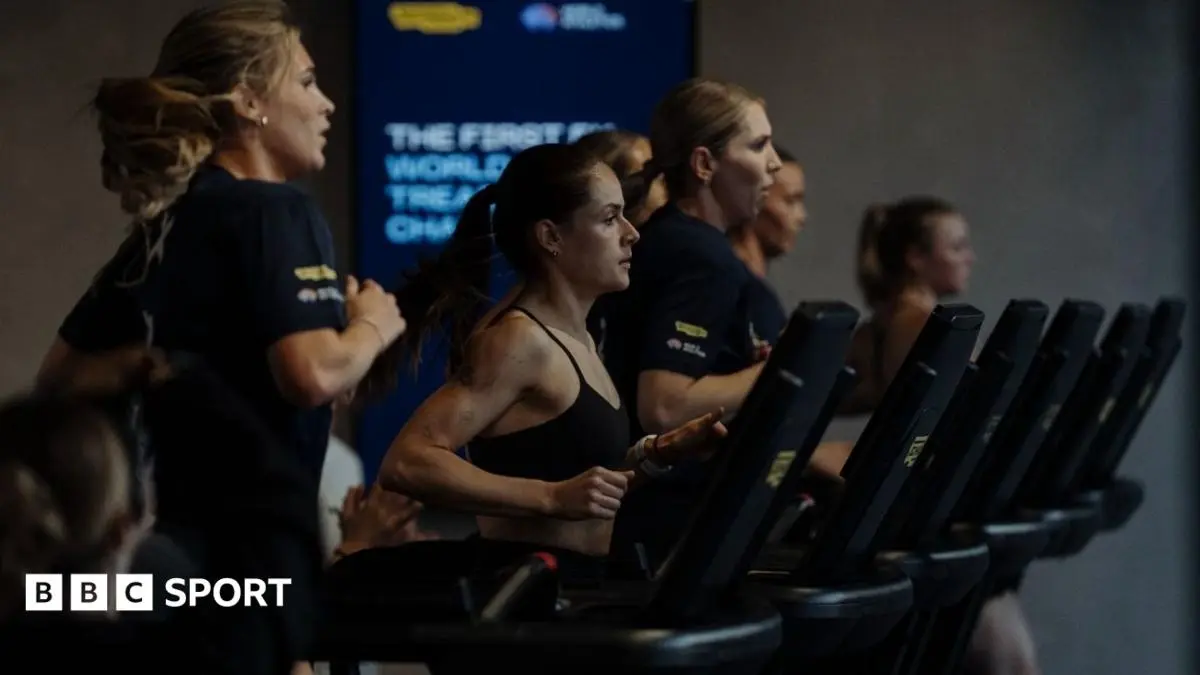
Runners around the globe have been given a unique pathway to international competition, with participants having until January 24 to complete a free 5km run at their nearest official Run X centre. The innovative tournament is designed to bridge the gap between indoor fitness and elite global competition, offering everyday runners a chance to represent their nations on an international stage.
Following the initial qualifying window, the top 25 per cent of runners across various age categories—ranging from 18 to 75 and above—will advance to represent their country at the regional stage. From there, the competition narrows further, with the 10 best men and women in each age category securing their places at the prestigious world finals, set to take place in Italy next March.
At present, the competitive landscape is still taking shape, with only 20 countries officially participating in the inaugural event. Furthermore, the complete list of elite professional runners registered to take part has not yet been publicly disclosed by organisers, leaving much of the competitive field shrouded in anticipation as the January deadline approaches.
To entice a robust turnout of both amateur and high-level competitors, organisers have incorporated substantial incentives alongside lucrative cash prizes. Successful participants could secure coveted wildcard entries to major international outdoor events, including the upcoming 2027 World Road Running Championships in China, bridging the divide between indoor treadmill training and elite road racing.
The treadmill has often been referred to anecdotally by runners as the "dreadmill" due to the repetitive, monotonous, and solitary nature of indoor running, particularly during long training blocks. However, World Athletics president Lord Coe believes the initiative represents a vital development for the sport. Speaking to BBC Sport, Lord Coe described the tournament as a "great opportunity" to introduce an entirely new audience to running.
Highlighting the broad demographic appeal of the format, Lord Coe noted that the competition spans a diverse range of age groups. He emphasized that it remains critically important for governing bodies to continue innovating and embracing modern technology to attract younger generations into the sport of running.
The long-term ambition for indoor treadmill running extends far beyond the current global championship. Organisers and industry figures harbor strong hopes that the discipline can be successfully integrated into official Esport competitions within the next five years, reflecting the growing convergence of physical sport and digital gaming technology.
The focus on accessibility is a central pillar of the initiative. Luke Townsend, education manager at Technogym UK, the co-organisers of the competition, explained to BBC Sport that while the endurance community features numerous long-distance challenges, there has historically been a lack of structured, accessible global platforms centered around the 5km distance. Townsend noted that this specific distance serves as an ideal and accessible starting point for a broad population of fitness enthusiasts.
The appeal of the event was evident during recent preview sessions, where elite professionals, such as elite British runner Purdue, shared the physical workspace of the treadmills with members of the ‘She Strides’ run club in Southampton. While members of She Strides typically prefer to run together outdoors, they chose to participate in the Run X initiative to highlight another critical aspect of indoor running: personal safety during the darker, colder months of the year.
The timing of the event coincides with seasonal shifts, as the clocks go back and millions of runners face the prospect of spending the vast majority of their training hours navigating poorly lit streets in the dark. Hollie Thackway, founder of the She Strides run club, pointed out that winter conditions disproportionately affect female runners, forcing many to alter or curtail their outdoor training routines because they simply do not feel safe outside.
Thackway explained that the availability of structured indoor running environments provides a practical lifeline for athletes who would otherwise be forced to halt their progress. By utilizing treadmills, runners can maintain their consistency, adhere to structured training programmes, achieve their personal athletic goals, and avoid abandoning their fitness routines entirely throughout the winter season. Consequently, Thackway views the event as a valuable platform to highlight these essential safety and accessibility benefits, ensuring that runners can pursue their passion year-round regardless of external weather conditions or safety concerns.