
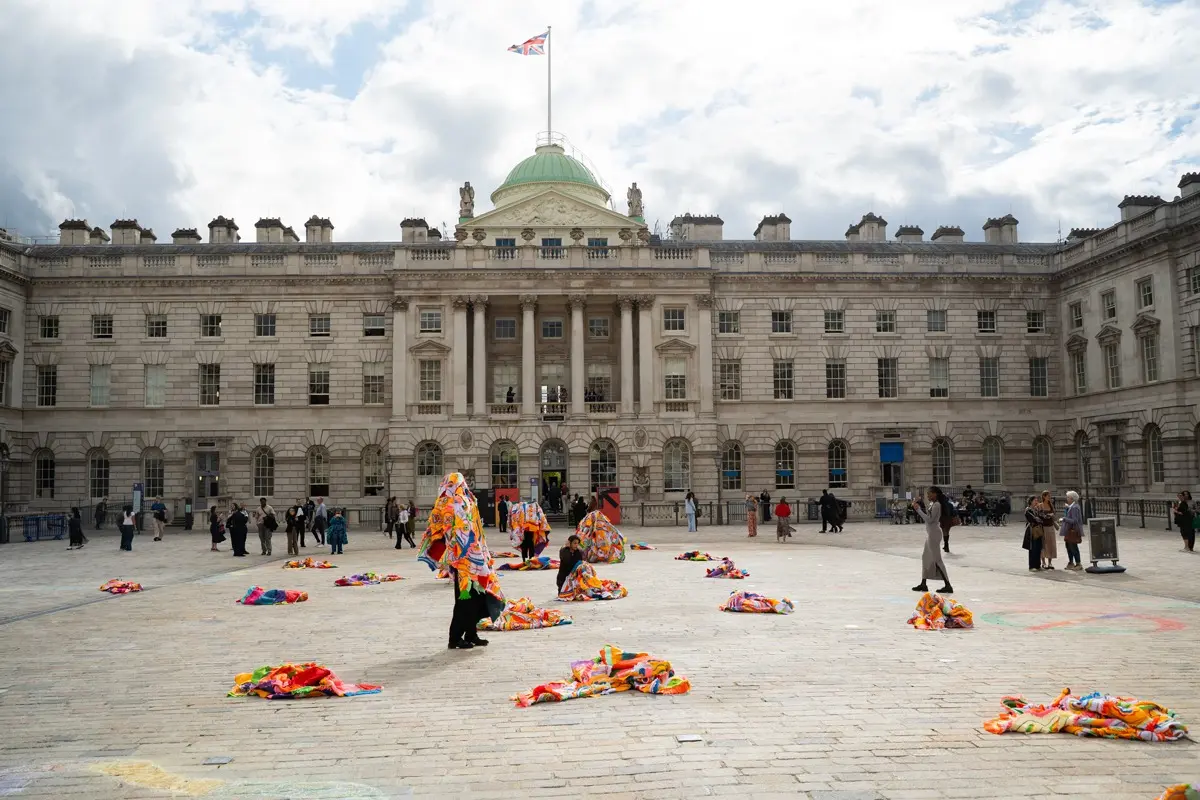
The 1-54 Contemporary African Art Fair, a cornerstone of the global art calendar and the premier international platform for contemporary art from Africa and its diaspora, has officially returned to London for its 14th edition. Hosted within the historic, neo-classical confines of Somerset House, the fair once again transforms the heart of the city into a vibrant nexus of creative exchange. This year’s installment is particularly significant, not only for the high caliber of contemporary work on display but for a strategic shift in focus that bridges the gap between the radical aesthetic experiments of the mid-20th century and the current market discourse.

The standout development of the 2026 edition is the introduction of a dedicated section focused on African modernism. Curated by the noted art historian Nancy Dantas, this initiative—titled "West Wind"—is a profound exploration of a pivotal era in African history. Drawing its evocative name from Miriam Makeba’s 1966 anthem for unity, the presentation is framed as a tribute to a period defined by political liberation, newfound independence, and a radical reimagining of identity.

The impetus for this curated section is as much institutional as it is intellectual. In 2025, the art world noted with concern the closure of the dedicated African modernism department at Sotheby’s, an event that left a palpable void in the secondary market and curatorial attention for some of the continent’s most significant historical figures. By centering "West Wind" at the heart of this year’s fair, 1-54 is stepping in to ensure that these masters are not relegated to the footnotes of art history. The section acts as a corrective measure, re-establishing a vital dialogue between the foundational figures of African modernism and the contemporary practitioners who continue to build upon their aesthetic and political legacies.

The showcase features a selection of mid-20th-century masters whose works remain as intellectually resonant today as they were during the post-colonial fervor of the 1950s and 60s. Among those highlighted are Ibrahim El-Salahi, the Sudanese visionary whose work blends Islamic calligraphy with modernist abstraction; Bertina Lopes, the Mozambican-Italian artist whose multifaceted career spanned the political shifts of the Lusophone world; and Seyni Awa Camara, the Senegalese sculptor whose powerful, large-scale ceramic figures evoke ancient mythologies while speaking to contemporary existential realities. These artists, among others, serve as the anchor for the fair, illustrating a vibrant period of aesthetic liberation that sought to decolonize the canvas and the clay, replacing Eurocentric tropes with imagery rooted in the specific histories and aspirations of the African continent.

The atmosphere at Somerset House this week is one of dynamic intersection. As collectors, curators, and enthusiasts move between the sprawling exhibition spaces, they are invited to trace the lineage of these ideas. The inclusion of these historical works adds a layer of intellectual depth to the fair’s broader mandate: to provide a global stage for contemporary African art while resisting the homogenizing forces of the international market. By honoring the past, 1-54 is effectively asserting that the "contemporary" in its title is not merely a marker of current production, but a living, breathing continuity that is firmly rooted in the struggles and triumphs of the previous century.

For long-time observers of the fair, the return to London marks a moment of maturation. Since its founding, 1-54 has successfully campaigned to move the conversation about African art away from simplistic categorizations and toward a more nuanced, site-specific understanding. The "West Wind" section is perhaps the most ambitious step yet in this journey. By positioning these historical masters alongside contemporary talents, the fair allows visitors to witness the evolution of visual languages across generations. It prompts questions about how current artists are responding to the legacies of independence, how they navigate the globalized art economy, and how they continue to utilize art as a vehicle for social and political commentary.

The logistical and curatorial success of this year’s fair rests on its ability to synthesize these disparate elements. Somerset House, with its deep historical ties to the British state and its long history of cultural patronage, provides a poignant backdrop for a fair that is explicitly focused on the decolonization of the art historical canon. The contrast between the building’s rigid, imperial architecture and the fluid, often defiant nature of the works on display creates a compelling tension that defines the visitor experience.

Throughout the week, the fair serves as more than just a marketplace; it is a center for discourse. Panel discussions and guided tours have focused heavily on the legacy of African modernism, with art historians and practitioners debating the ways in which the institutional neglect of these artists has shaped the current market landscape. The consensus among many of the galleries involved is that the market for African modernism is currently undervalued, and that the efforts at 1-54 are essential to rectifying this oversight. By providing a professional, scholarly, and high-visibility platform for these works, the fair is essentially creating a new market reality where the contributions of artists like El-Salahi and Camara are granted the institutional prestige they deserve.

As the fair progresses toward its close this Sunday, the emphasis remains on the dual nature of its mission: to celebrate the breadth of the current creative output and to act as a guardian for the historical movements that paved the way. The success of the 14th edition lies in this delicate balance. It demonstrates that the story of African art is not a closed book, but an evolving narrative that requires careful curation and a willingness to look backward to move forward.

The 10 best booths, which have been highlighted for their exceptional curation and the strength of their presentations, reflect this diversity of thought. From emerging painters pushing the boundaries of portraiture to established galleries presenting rare, archival-quality works from the 1960s, the fair offers a comprehensive snapshot of a continent in conversation with itself and the wider world. The energy at Somerset House is evidence of a thriving ecosystem—one that is increasingly confident in its own importance and determined to shape the global art historical narrative on its own terms.

As the London art world turns its attention to this year’s 1-54, the resonance of the "West Wind" section serves as a powerful reminder of the endurance of art as a political tool. The 14th edition is not merely a celebration of current trends; it is a profound engagement with the forces of history, identity, and the persistent, unyielding drive for cultural autonomy. With the fair running through Sunday, the momentum generated by this year’s thematic focus promises to have a lasting impact on the discourse surrounding African modernism for years to come.