
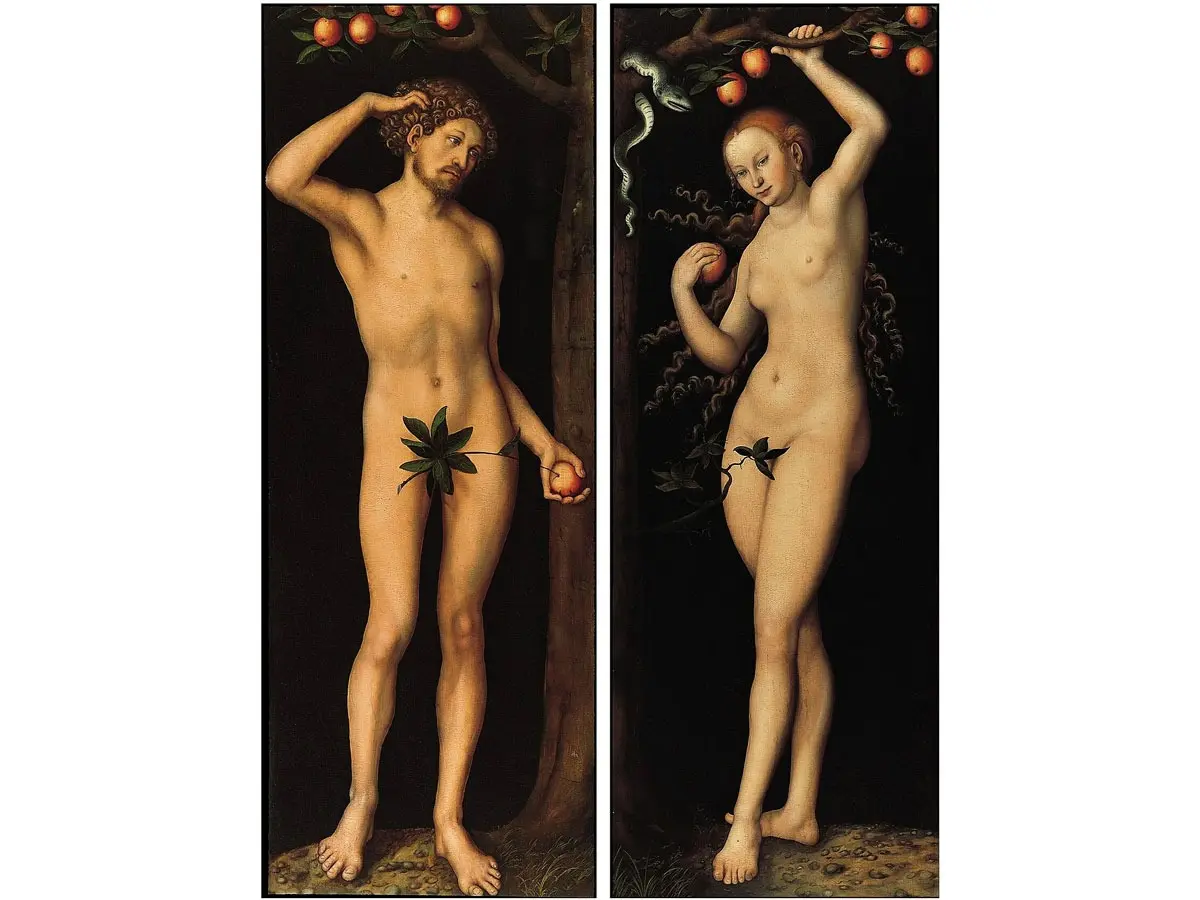
The Cranach Controversy: A Legal Stalemate Reinvigorated
The Norton Simon Museum in Pasadena, California, has moved to defend its collection in an ongoing, high-stakes dispute over a pair of Lucas Cranach the Elder’s masterworks. On Wednesday, the institution filed a countersuit against the Jewish Federation Los Angeles, marking the latest chapter in a long-running battle over the provenance of the Adam and Eve diptych, which dates back to approximately 1530.
The Jewish Federation’s recent claim to the works relies on a relatively new California statute designed to allow residents to revisit previously failed legal attempts to recover art seized or sold under duress during the Nazi era. However, the Norton Simon Museum is pushing back with a firm assertion of legal finality. In its court filing, the museum argues that the ownership of these works has already been settled in the federal courts. Specifically, the museum points to the protracted von Saher litigation, a landmark case that concluded with a court ruling in favor of the museum’s rightful title to the Cranachs.
“The finality of the prior von Saher judgment is beyond dispute,” the museum’s complaint states. The institution maintains that the judiciary has already examined the merits of the case and determined that the Norton Simon Museum is the sole, legal owner of the panels. By countering, the museum aims to block what it views as a redundant and meritless attempt to relitigate a settled historical and legal matter, setting the stage for a significant test of how new state legislation interacts with long-standing federal judgments.
Expanding the Met: New Commissions for 2027
Across the country, The Metropolitan Museum of Art has unveiled its ambitious plans for its 2027 public installations, selecting two internationally acclaimed artists to engage with the institution’s iconic architecture. The museum announced that Vietnamese-born artist Danh Vō has been commissioned for the 2027 Genesis Façade Commission. This prestigious opportunity will see Vō install four distinct sculptures on the Met’s 5th Avenue Beaux-Arts façade, marking the fourth time an artist has been invited to transform the museum’s exterior.
For Vō, the project offers a unique dialogue between the institution’s physical presence and the public sphere. “A façade is the place where the museum meets the street, and it is also an expression of its values over time,” Vō noted in a formal statement regarding the commission.
In a simultaneous announcement, the museum revealed that the Norwegian Congolese artist Sandra Mujinga has been selected for the 2027 Great Hall Commission. Mujinga is set to create a site-specific installation for the museum’s main entrance, a space that serves as a grand threshold for millions of visitors each year. Both commissions underscore the Met’s ongoing commitment to integrating contemporary perspectives into its historic setting, inviting artists to respond to the museum’s legacy while engaging with the changing social and aesthetic landscapes of the 21st century.
Global Shifts: Closures, Returns, and Restorations
The art world is currently navigating a period of significant geopolitical and cultural transition, reflected in a series of developments across the globe. In Indonesia, the Biennale Jogja Foundation has announced the difficult decision to cease operations after 16 years of cultural stewardship in Yogyakarta. The foundation cited a deteriorating environment for the arts, pointing to a "political regime" characterized by "chaotic economic and political policies," an increase in state-led censorship, and growing violence against activists and protesters. The closure of such a significant organization highlights the precarious nature of independent arts institutions in regions experiencing political instability.
Elsewhere, discussions regarding historical memory and public space continue to evolve. In the United States, plans are moving forward to restore and return a 1914 Confederate memorial to Arlington National Cemetery. The memorial, which had been removed three years ago, remains a subject of intense national debate due to its complex and controversial imagery, which includes a figure of a Black woman holding a white officer’s child and an enslaved person following his owner to war. The decision to reinstall the monument brings questions of historical interpretation and the role of public monuments in American society back to the forefront.
In South America, the cultural landscape of Brazil faces a delay in its highly anticipated expansion. The opening of the Centre Pompidou Paraná, a satellite of the famous Paris institution, has been pushed back to 2029. Local officials cited a shift in government priorities as the primary cause for the timeline adjustment, demonstrating the complexities of sustaining international museum partnerships amid domestic political transitions.
Meanwhile, a positive step in the global effort toward cultural restitution has occurred between Australia and Jordan. The National Gallery of Australia has returned a 14,000-year-old carved stone slab to Jordan. The artifact, which originated from the site of Wadi Al Hammah, had been held by the gallery since 1985. Its return marks a commitment to rectifying past acquisitions and returning cultural heritage to its country of origin.
Market Movements and Cultural Events
The high-end art market continues to see significant activity, with Carmen Thyssen-Bornemisza, the Spanish Baroness, set to bring a major work by Edward Hopper to the auction block. On November 18, Sotheby’s in New York will offer a 1944 painting of a sailboat at sea, a classic example of Hopper’s evocative, light-drenched style. The work carries a high estimate of $30 million, reflecting the enduring demand for mid-century American masterworks.
In the Middle East, the art scene is bracing for the inaugural Rubaiya Qatar, a new quadrennial event scheduled to run in Doha from November 21 to April 30. Organizers have confirmed a robust lineup featuring over 120 participating artists, signaling a major investment in the regional contemporary art scene and positioning Doha as an increasingly influential hub for global artistic exchange.
The Kicker: William Kentridge on the Absurdity of Disaster
As these institutional and market events unfold, individual artists continue to grapple with the complexities of the modern world. South African artist William Kentridge recently spoke with Ocula regarding the premiere of his latest film, A Nicely Built City (Never Resists Destruction), which is currently being showcased at London’s Goodman Gallery.
The stop-animation film, paired with an exhibition of related works, serves as a meditation on the industrial transformation of Johannesburg. It explores the inevitable reclamation of urban spaces by the wilderness as city centers face decay and collapse. When asked about the role of humor in addressing such heavy political and social themes, Kentridge rejected the idea that tragedy and comedy are mutually exclusive.
“I don’t think there’s a contradiction between the serious and the light, and how the one illuminates the other,” Kentridge explained. “I think the category of the absurd is also important. Tragedy isn’t a good way of dealing with social disaster. Comedy may be closer, but the category of the absurd, which can move between the two, is central.”
Kentridge’s reflection serves as a poignant reminder of the artist’s role in navigating the chaotic realities of the present. Whether through the preservation of historic monuments, the restitution of ancient artifacts, or the creation of new visual languages for the modern museum, the art world continues to act as a vital—and often contradictory—mirror to the state of global society.