
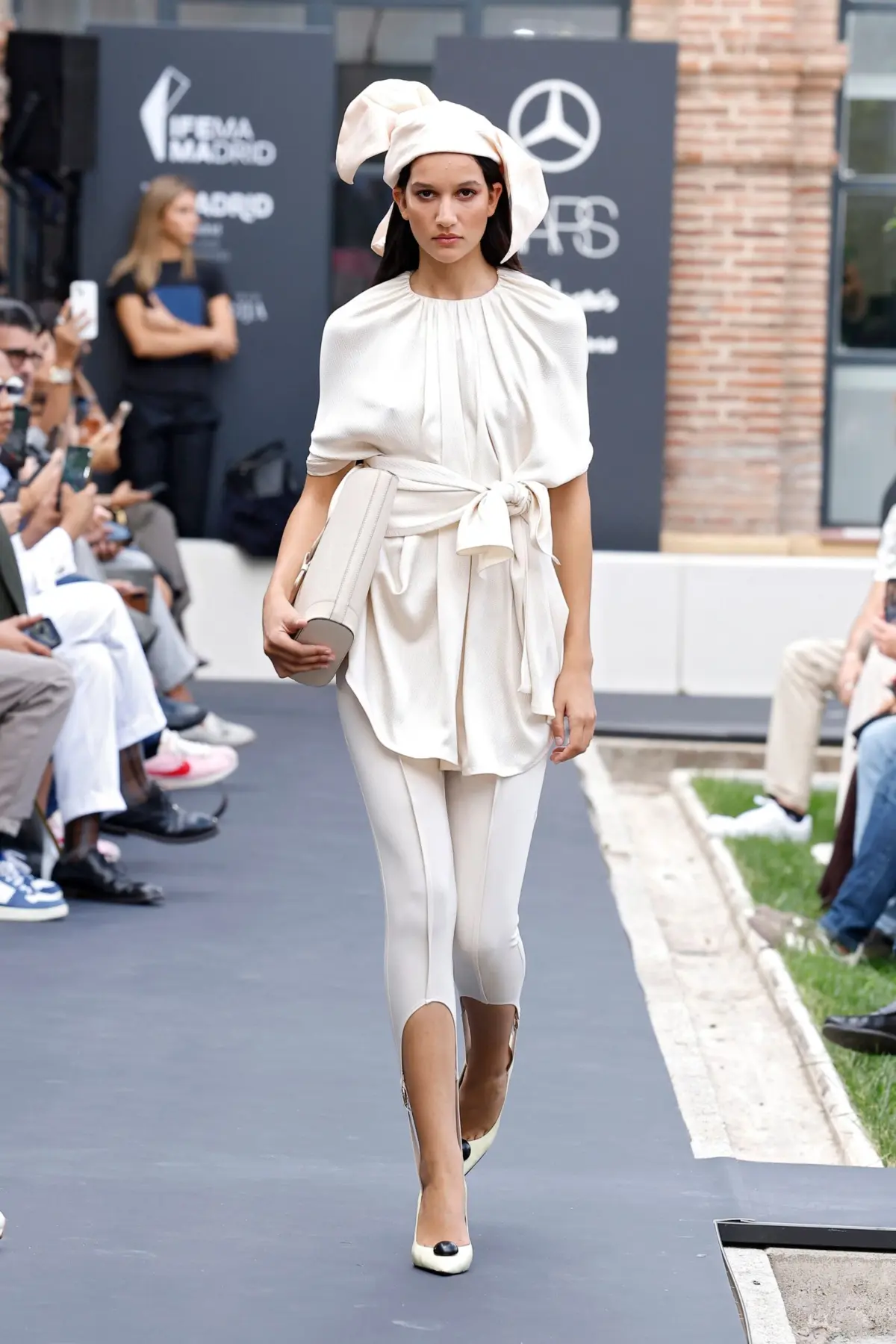
After a decade-long hiatus from the high-octane environment of the official Fashion Week Madrid calendar, designer Moisés Nieto has made a definitive return to the runway. The Jaén-born creative, known for his thoughtful approach to contemporary Spanish fashion, spent the last ten years exploring more intimate, unconventional presentation formats. However, this season marked a strategic shift, signaling a new chapter for both the designer and his namesake brand.
For Nieto, the decision to return to the official schedule was driven by a blend of artistic restlessness and long-term brand strategy. “When I left, I never said I wouldn’t come back, but I needed to take control of my presentations and do things my own way,” Nieto reflected on his decade of experimentation. “What brought me back was also the adrenaline of putting on a big show. I’m not comfortable doing the same thing all the time. It’s not that I get bored, but I need to keep evolving.”
This evolution is not merely a creative whim; it is a calculated move to position the brand for a wider international audience. While Nieto has historically focused on the domestic Spanish market, the shifting demographics of his retail footprint have necessitated a broader outlook. “Tourists shop a lot at our store, especially people from Northern Europe,” he noted. “I think I need that kind of visibility.” To support this ambition, Nieto is also re-entering the international wholesale market after an eight-year break. He recognizes that in the modern fashion ecosystem, a runway show is not just a creative statement—it is a vital commercial engine. “You also need strong imagery and a platform behind the collection, because that makes a big difference when it comes to selling it,” he explained.
The collection presented at Madrid Fashion Week served as a potent declaration of intent. Nieto’s primary goal was to present a nuanced, authentic portrait of his home region of Andalusia, one that actively dismantles the tired tropes and folkloric clichés often associated with the area. In the eyes of the designer, the global perception of Andalusia is too frequently reduced to superficial manifestations of flamenco fashion, vibrant tourism imagery, and stage-managed culture.
“I think we’ve boxed Andalusia into folklore, flamenco fashion, and the imagery associated with tourism and culture,” Nieto said. “To me, Andalusia is much quieter, darker, and more introverted than the way we sell it.”
To realize this vision, Nieto looked toward the intellectual and artistic pillars of the region. He drew profound inspiration from the haunting, evocative poetry of Federico García Lorca and the moody, somber canvases of painter Julio Romero de Torres. This intellectual grounding resulted in a collection that prioritized substance over spectacle. Nieto described his quintessential woman for this season as an understated figure, someone who intentionally avoids the ruffles, polka dots, and excessive ornamentation that define the traditional Andalusian stereotype.
Instead, the runway showcased simple, practical garments—dresses that seemed to be tied or draped around the body, emphasizing ease of movement and the functional needs of a contemporary, hardworking woman. The silhouettes were fluid and relaxed, signaling a move away from restrictive tailoring toward a wardrobe designed for the realities of modern life.
A notable departure for the brand this season was the introduction of knitwear. Nieto integrated silk and ponte fabrics, marking a new technical milestone in his design practice. This was paired with a variety of textures and silhouettes, including patchwork elements, equestrian-inspired fuseau pants, sashes, and tunic dresses. These pieces, according to the designer, were intended to “recall a more multicultural side of Andalusia,” moving beyond the expected aesthetic boundaries of the region.
The color palette further underscored this transition. Moving away from the soft pinks and vanilla tones that characterized his collections in recent seasons, Nieto embraced a more sophisticated and grounded spectrum. Black, burgundy, and cream formed the backbone of the collection, occasionally punctuated by sharp, deliberate flashes of electric blue and red. The overall effect was one of pragmatism and longevity. Rather than designing for the fleeting trend cycle, Nieto focused on creating garments intended to be worn, styled, and enjoyed repeatedly.
The cohesive vision was rounded out by strategic collaborations that complemented the clothing. Hats by Zahati, shoes by Adeba, and handbags by Paris/64 were selected to complete the looks, ensuring that the collection felt like a fully realized, wearable lifestyle.
For Moisés Nieto, this return to the runway is not just about the spectacle of a fashion show; it is about reclaiming the narrative of his own heritage and demonstrating that Spanish design can be both deeply rooted in local history and entirely relevant to a global, sophisticated consumer. By stripping away the cliches of his home region, he has managed to create a collection that feels intimate, personal, and profoundly honest.
As he re-engages with the international wholesale market and steps back into the spotlight of Madrid Fashion Week, Nieto’s focus remains clear: he is building a brand that prioritizes quality, utility, and an evolution of identity. The transition from the intimate presentations of the past decade to the grand scale of the runway signifies a designer who is not only comfortable with change but actively seeks it out. By blending the dark, introverted beauty of his Andalusian roots with a modern, pragmatic aesthetic, Nieto has set a course that is both respectful of his origins and ambitious for his future.
The collection serves as a testament to the idea that true evolution in fashion often comes from looking inward—distilling one’s influences down to their essence—rather than chasing the external noise of the industry. For Moisés Nieto, the runway is no longer just a place to show clothes; it is a platform to communicate a refined, thoughtful, and deeply personal vision of what modern Spanish fashion can represent on the world stage. As the brand moves forward, the impact of this "quieter" version of Andalusia will likely resonate with a customer base that values substance, narrative, and the quiet power of a well-crafted garment. With this latest showing, Nieto has successfully bridged the gap between his personal history and his international aspirations, proving that a designer can evolve while staying true to the values that defined his beginnings.