
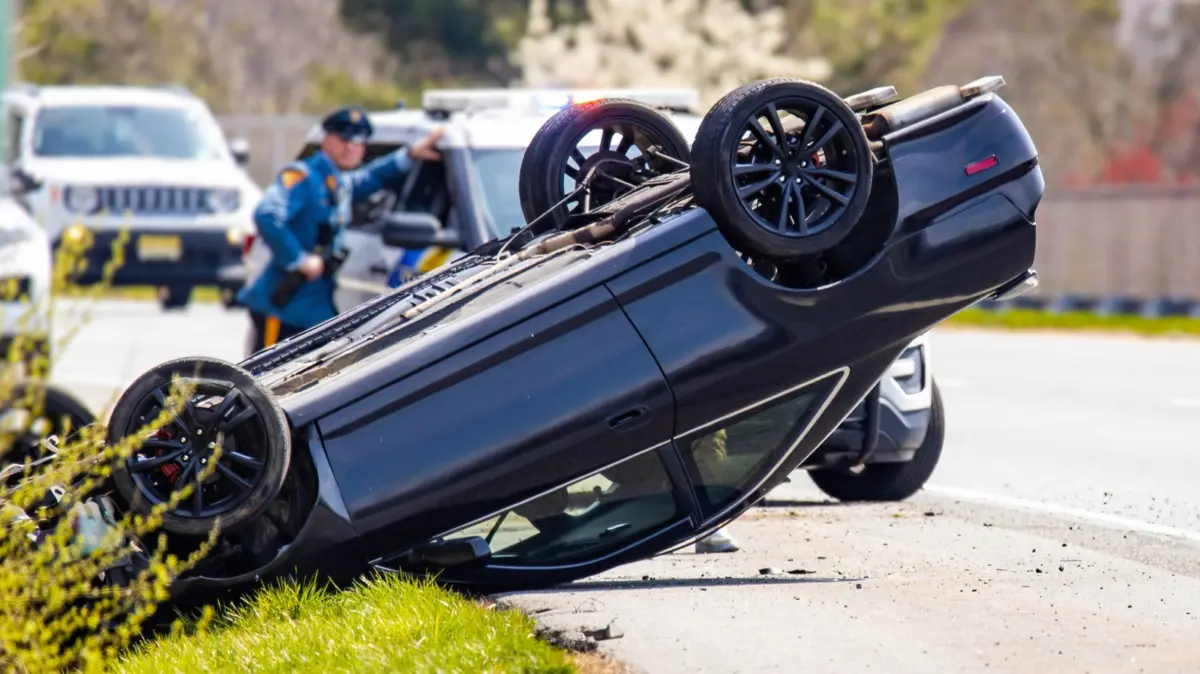
Despite what the rise of autonomous and driverless vehicles might suggest to the modern commuter, operating a motor vehicle is fundamentally an exercise in routine and habit. Once a driver fully comprehends the mechanical tools at their disposal, grows completely comfortable with the primary and secondary controls, and accumulates enough real-world experience behind the wheel, it is entirely possible to navigate a lifetime of travel without ever getting into a significant collision. The underlying reality, however, is that human beings are rarely operating at absolute peak capacity every single time they climb into a driver’s seat. Furthermore, public roadways are shared spaces populated by countless other unpredictable variables, making perfection an impossible standard.
Following an open call inviting the public to share their most memorable mistakes on the asphalt, the responses paint a vivid and sometimes wincing portrait of human fallibility. While everyday errors like accidentally initiating a left-hand turn onto the wrong side of a divided road can rattle a driver’s nerves for weeks, other motorists have endured far more dramatic encounters. Reading through the collection of missteps serves as a humbling reminder of just how quickly things can go wrong when managing several thousand pounds of steel, glass, and rubber. From architectural disasters to monumental lapses in spatial awareness, these are the moments out on the road that continue to disrupt the sleep of drivers years, and sometimes decades, later.
Witnessing the World’s Slowest Car Crash
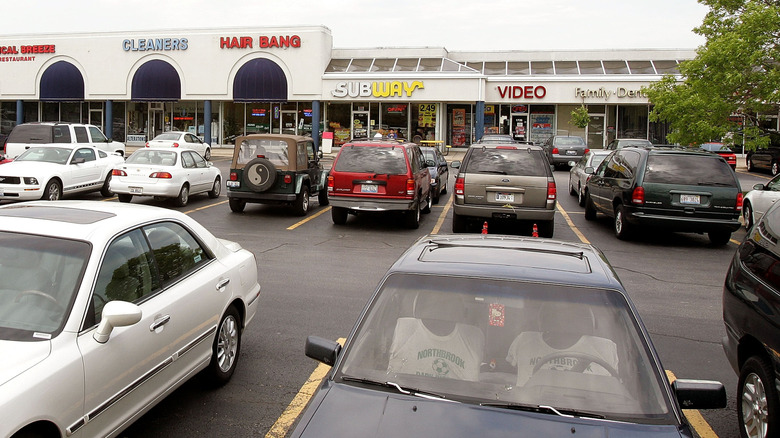
Not all haunting automotive memories stem from personal mistakes; some are forged simply by bearing witness to the baffling misfortunes of others. One reader recalled an incident from years ago while working retail with a friend in a suburban shopping plaza. The complex featured an internal intersection connected to a road explicitly restricted from handling shipping trucks, a rule clearly communicated by prominent concrete bollards and a low-clearance height restriction sign. Passenger vehicles could pass through without issue, provided the driver exercised basic spatial awareness.
As the two friends walked back to their storefront carrying takeout from a nearby Chinese restaurant, their attention was drawn to a motorist creeping forward in a 2000s Lincoln town car. The vehicle was moving at a snail’s pace, comfortably under five miles per hour, making the impending disaster all the more excruciating to watch. Despite the crawl-like velocity, the driver managed to guide the car directly into a concrete bollard, slowly tearing away the entire driver-side front end and door panel. While no physical injuries resulted from the encounter, the memory endured precisely because of the sheer avoidability of the obstacle.
Taking the Fuel Nozzle for a Ride
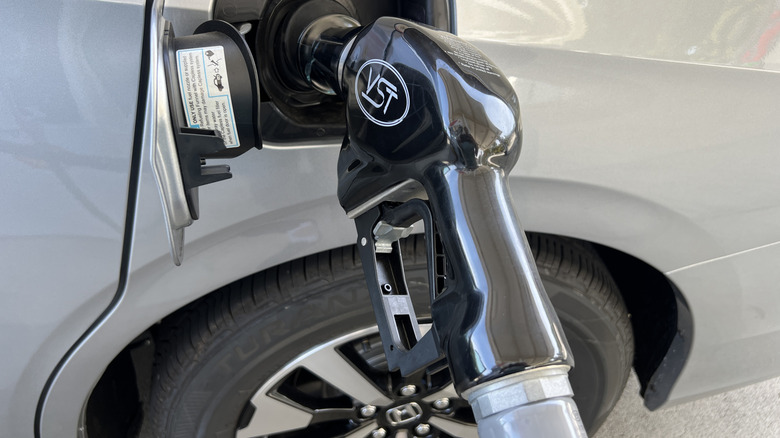
Routine maintenance tasks often breed a dangerous sense of complacency, as one motorist learned the hard way during an early morning errand. Driving his wife’s brand-new Civic Hybrid Sport—a vehicle treated with immense care after years of depending on a nine-year-old Subaru Outback—the driver pulled into a service station at approximately 5:00 a.m. to fill the tank.
After completing the refueling process, he stepped inside to purchase a breakfast pizza. To avoid dropping crumbs or grease inside the pristine cabin, he stood outside the vehicle to finish his meal. Once he thoroughly wiped his hands, he climbed back behind the wheel and drove off, completely oblivious to the fact that the fuel nozzle was still securely lodged in the gas tank. The resulting departure cleanly snapped the heavy hose right off the pump and severely damaged the actuator on the vehicle’s fuel door, leaving the driver with a stark reminder of how easily distraction can override common sense.
Save the Delivery, Wreck the Truck
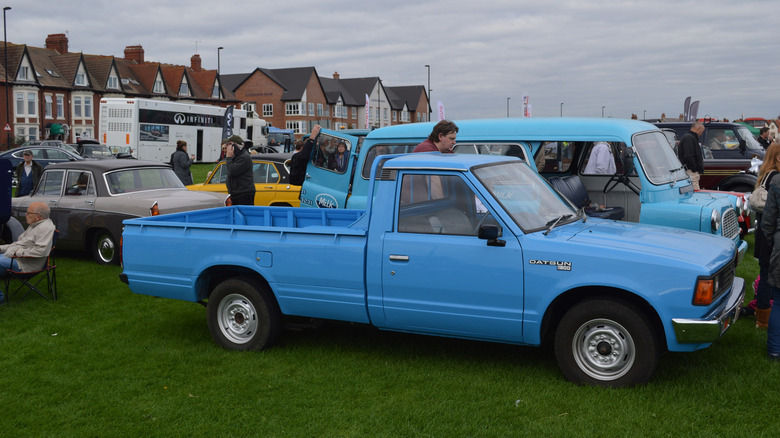
Balancing professional responsibilities with the physical act of driving has historically tripped up young workers, as one college student discovered in the 1980s while working as a delivery driver for a local pharmacy. The assigned work vehicle was a manual-transmission Datsun truck, which required constant physical engagement to operate smoothly.
While navigating the winding exit drive behind the strip mall where the pharmacy was located, a collection of delivery bags resting on the passenger seat began to slide off the cushion. Operating on pure reflex, the young driver reached across the cabin to catch the falling cargo. In doing so, his hand slipped on the steering wheel, sending the small truck veering directly into a steel security bollard. Although he was traveling at a modest speed of just 10 to 15 miles per hour, the impact caused noticeable damage to the truck’s front end. Fortunately, his employer—who had also served as his childhood baseball coach—chose forgiveness over termination, though the mental scar of the avoidable fender-bender remained.
Literally Driving Blind
Social gatherings can occasionally result in misplaced belongings, but losing critical items can escalate quickly when automobiles are involved. One reader recounted an evening where they misplaced their prescription eyeglasses at a party. Unwilling to risk navigating the high-speed environment of the local freeway without proper vision, the driver opted to stick to surface streets, confident that they could successfully navigate unfamiliar neighborhoods.
The makeshift navigation strategy came to an abrupt halt when police lights flashed in the rearview mirror. When the responding officer asked if the driver knew the reason for the stop, the reality of the situation set in: the motorist had spent blocks driving the wrong way down a one-way street, directly in front of the local police department headquarters.
The Personal Odometer is Starting to Get High
Even professional drivers with decades of pristine experience are not entirely immune to the limits of human endurance. One motorist, who spent a lifetime behind the wheel driving city transit buses, highway motorcoaches, and working as a tour bus operator, prided himself on achieving over a million miles of accident-free driving.

However, at the age of 67, fatigue finally caught up during a routine highway journey, resulting in the driver falling asleep at the wheel. The vehicle drifted off the pavement and straight into a roadside ditch. Fortunately, the ditch featured a wide, gentle slope that absorbed the vehicle safely without causing structural damage or injury. The sobering experience served as a permanent reminder that biological limits shift over time, drawing a stark contrast to earlier years when logging a thousand miles in a single day was routine.
To the Insurers: Car Crashed at a Standstill While Empty
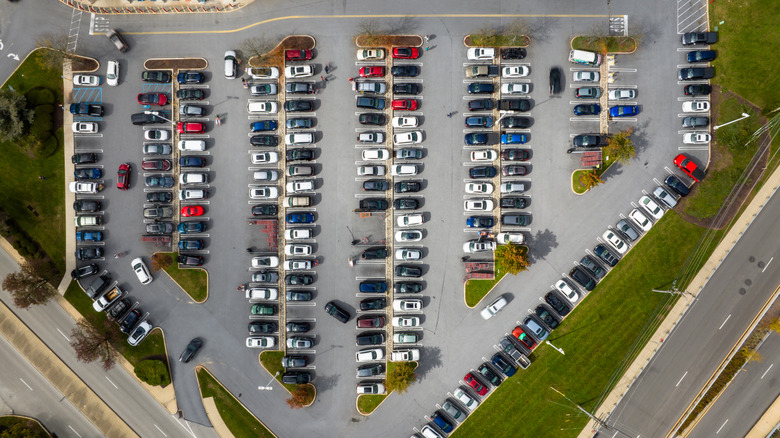
Insurance disputes frequently test the boundaries of logic, but few scenarios rival the frustration of being held accountable for a collision while completely absent from the vehicle. Approximately seven years prior, a motorist parked their car legally in a designated grocery store stall. While the owner was shopping inside, an intoxicated driver jumped a curb, crossed roughly ten feet of turf, and crashed directly into the parked, empty automobile.

In a twist of bureaucratic absurdity, the at-fault driver’s insurance company initially denied liability, arguing that had the victim’s car not been parked in that exact spot, the collision never would have occurred—thereby implying the parked car shared the blame. The victim’s own insurance legal team ultimately stepped in to resolve the matter, forcing the owner to file a claim and marring a previously unblemished personal record through no fault of their own.
Not Every Paved Road is Driveable
Navigating foreign infrastructure can introduce unexpected hazards, particularly for tourists unfamiliar with local traffic restrictions. During a vacation in Italy, one driver found themselves needing to execute a hurried three-point turn on a narrow cobblestone street after accidentally drifting toward a restricted traffic zone, known locally as a ZTL, in a historic hilltop village.
Trapped in the tight medieval lane while wrestling with the balky manual shifter of a rented diesel Fiat, the driver recalled feeling the intense, silent judgment of local residents watching from nearby windows and doorways. Accompanied by apologies offered in broken Italian, the stressful maneuver left a lasting impression, cementing a lifelong rule to always secure a comprehensive map of local traffic restrictions before exploring European towns.
Wrong State, But Whatever
Technological advancements in GPS navigation have largely eliminated the phenomenon of accidental cross-country detours, but earlier eras of driving relied entirely on physical paper maps. Reflecting on a road trip taken at the age of 18, one reader recalled an overnight driving shift while family members slept in the passenger seats.

Unfamiliar with the regional layout, the young driver continued straight ahead on an unrecorded highway for four to five hours. By the time morning arrived, the vehicle had crossed state lines and entered South Carolina—a destination that had no business being on the itinerary. Looking back, the motorist views the navigational blunder with humor, recalling an era when gasoline cost less than a dollar a gallon and youthful energy made unplanned geography lessons feel like an adventure.
Putting Your First Project Car Through Your Parents’ House
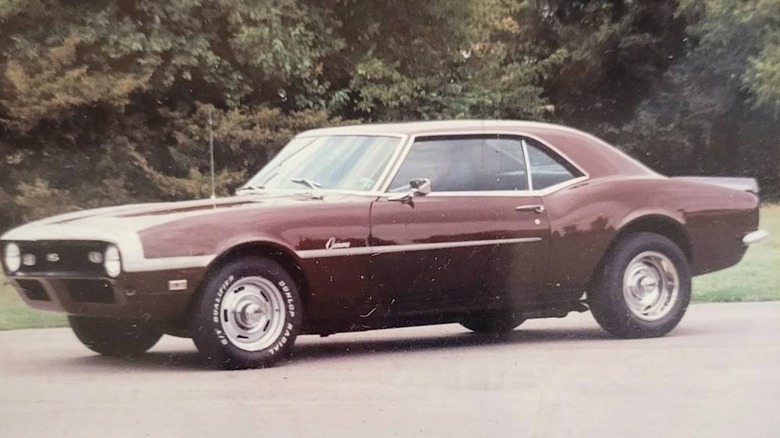
Automotive restoration projects often serve as intense learning laboratories for young mechanics, but they can also introduce catastrophic mechanical mishaps at home. During high school, one enthusiast acquired a classic 1968 Chevrolet Camaro, spending countless hours sourcing parts, installing new front-end body panels, and eventually applying a factory cordovan maroon paint job.

The project reached a critical milestone during an engine rebuild involving a small-block V8 and a factory Z28 intake manifold. With the automatic transmission newly bolted to the engine crank but the gear shifter not yet reconnected, a curious neighbor walked over to inspect the progress and asked how the motor ran. Standing outside the vehicle, the young builder reached through the open window and turned the ignition key. The engine fired up instantly, and because the transmission was uncoupled from the shifter controls, the car surged forward straight into the back wall of the family garage.
Quick reflexes allowed the owner to shut the engine down almost immediately, keeping structural damage to the house and vehicle relatively minor. While the garage wall was quickly patched, the Camaro wore the physical scars of the incident—including a broken grille, bent bumper, and dented header panel—for years afterward.
Can’t Remember the Crash, But Your Body Does
The most severe driving blunders often leave psychological and physical markers that persist long after the twisted metal has been cleared away. Reflecting on a high-speed collision on Highway 401 in Toronto, a motorist recalled an encounter with an intoxicated driver operating a 50-foot tractor-trailer that obliterated their Nissan 240Z.
The trauma was severe enough that the driver’s memory of the event cuts off entirely after catching a fleeting glimpse of a white wheel. Three days passed before consciousness returned in a hospital bed, followed by a three-year hiatus from driving altogether. Four decades later, the physical reminder of the accident remains etched directly into the driver’s back, serving as a permanent testament to the unforgiving nature of the highway.