
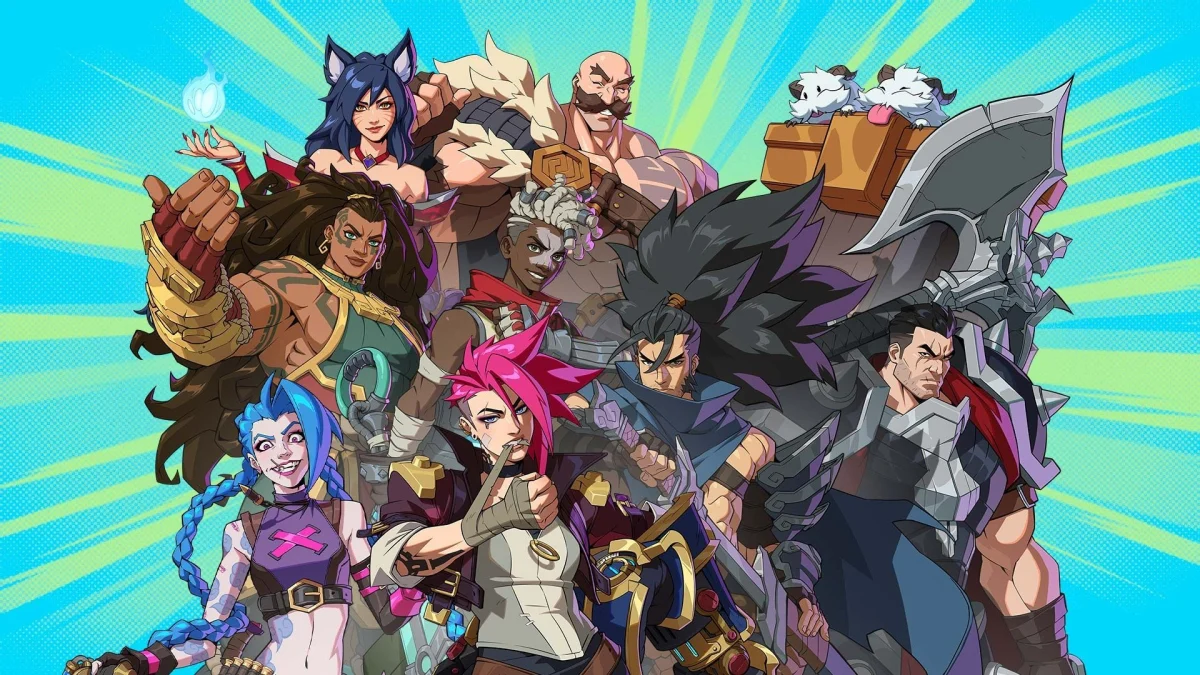
Riot Games’ ambitious foray into the fighting game genre, 2XKO, has become a case study in the harsh realities of the modern live service landscape. Despite a development period spanning several years and the backing of one of the industry’s most successful studios, the project ultimately failed to reach the critical mass required to justify its ongoing operational costs. According to Marc Merrill, co-founder and co-chairman of Riot Games, the game’s inability to attract a sufficiently large and active player base was the primary factor in the decision to cease active development.
In a recent appearance on The Lemonade Stand podcast, Merrill provided rare, candid insight into the internal metrics and strategic challenges that led to the decision. For a title like 2XKO to remain viable as a live service product—which necessitates constant content updates, server maintenance, and a robust competitive ecosystem—it required a consistent base of monthly active users in the "high hundreds of thousands, if not millions." While the game did manage to find an audience, Merrill admitted that this engagement was "not nearly enough" to support the infrastructure and long-term financial commitments inherent in the live service model.
The Financial and Engagement Reality
The decision to sunset active development, which was officially announced in August, followed a period where the company observed that the game cost significantly more to operate than it was generating in return. Despite efforts to inject new life into the title through updates, player engagement remained relatively flat. In the high-stakes environment of modern gaming, where titles often live or die based on their ability to maintain a persistent, growing community, this stagnation was a terminal diagnosis for the project.
It is important to note that 2XKO has not been taken offline entirely. The game remains accessible to players who wish to experience it, and it continues to be available as a free-to-play download on PC, PlayStation 5, and Xbox Series X|S. Riot has committed to keeping the servers operational "beyond 2026," ensuring that the community currently enjoying the title still has a place to play. However, the pivot away from active development signals that there will be no further major expansions, feature overhauls, or the kind of aggressive roadmap support that typically defines a thriving live service title.
The "Street Fighter 6" Factor and Timing Challenges
During his conversation on the podcast, Merrill pointed to external market pressures as a significant hurdle, specifically the arrival of Capcom’s Street Fighter 6. The fighting game community, often described as passionate but niche, saw a massive shift in attention when Street Fighter 6 launched in 2023. Merrill noted that the development cycle for 2XKO had been long, beginning roughly eight years prior to the debut of Capcom’s juggernaut.
"I think we had a window to do some great things to really help the fighting game community, and then Street Fighter 6 came out, which was something like eight years after we started working on 2XKO," Merrill explained. The delay in development meant that by the time 2XKO was ready to make its mark, the market had been fundamentally altered by a high-quality, highly anticipated competitor that effectively captured the zeitgeist of the fighting game scene.
Merrill reflected on the team’s internal sentiment during this challenging period. Despite the realization that the competitive landscape had shifted, the developers remained committed to the product. "We had an awesome development team of really talented people that did great work and made a beautiful game," he noted. "We’d already communicated all this stuff to players, and so we were like, ‘You know what? Let’s keep going, let’s give it to the community. Let’s see what happens.’"
Reflecting on the timeline, Merrill offered a poignant assessment of what might have been under different circumstances: "I think if we came out, ideally when we should’ve, years before Street Fighter, I think we would have made a really significant impact."
From Radiant Entertainment to Internal Challenges
The origins of 2XKO are deeply rooted in Riot’s history of strategic acquisitions. In 2016, Riot Games acquired Radiant Entertainment, the studio founded by fighting game legends Tom and Tony Cannon. At the time, Radiant was working on a promising title called Rising Thunder, which featured a more accessible, modern take on traditional fighting game inputs. After the acquisition, Riot initially removed Rising Thunder from storefronts and eventually cancelled its development, though they later performed a goodwill gesture by releasing it as open-source software for the community to continue building upon.
For Riot, the goal was to marry the DNA of Rising Thunder—specifically its simplified controls and innovative design—with the massive reach and world-building of the League of Legends IP. The vision was to create a "Riot-style" competitive ecosystem that would appeal to both casual players and the hardcore fighting game community.
However, the path from concept to execution was marred by internal friction. Merrill acknowledged that leadership changes over the years led to a lack of alignment regarding the game’s core strategy. This misalignment resulted in "managerial fracturing," where the development team found themselves receiving conflicting guidance. In a moment of executive accountability, Merrill stated, "We’ve got nobody to blame but ourselves."
Looking Back and Moving Forward
The story of 2XKO serves as a reminder of the volatility of game development, even for companies with the scale and resources of Riot Games. The project attempted to solve a difficult equation: balancing the technical depth required by fighting game purists with the accessibility needed to attract a wider, mainstream audience, all while operating under a business model that demands constant growth.
While the game failed to meet the lofty financial milestones required for a long-term live service project, the legacy of the development team’s efforts remains in the playable version currently available to the public. For those who dedicated time to the game during its development and early release, the experience stands as a testament to the talent involved, even if the market reality proved too difficult to overcome. As Riot Games looks to the future, the lessons learned from 2XKO—regarding the importance of strategic alignment, the impact of market timing, and the specific needs of niche communities—will likely inform how the studio approaches new ventures moving forward. For now, the servers remain live, allowing the community to continue enjoying the fruits of a project that, while commercially unsuccessful, was undeniably built with a high degree of care and ambition.