
Nerial, the acclaimed independent game development studio renowned for the sharp, innovative mechanics of the Reigns series and the strategic depth of Card Shark, has announced that it is effectively closing its doors. The studio, which had become a staple of the Devolver Digital publishing label, is entering what its founders describe as "hibernation mode," marking the end of a 13-year journey that saw the production of 11 distinct titles.
The announcement was delivered via a formal statement on social media, where studio founders Tamara Alliot and François Alliot confirmed the decision. "After 13 years and 11 published games, we have decided together with our partners at Devolver to end development and the studio," the pair wrote. This transition signals a significant shift for a team that had long been celebrated for its creative ingenuity and ability to transform simple, high-concept ideas into viral, critically praised hits.
The Evolution of an Indie Success Story
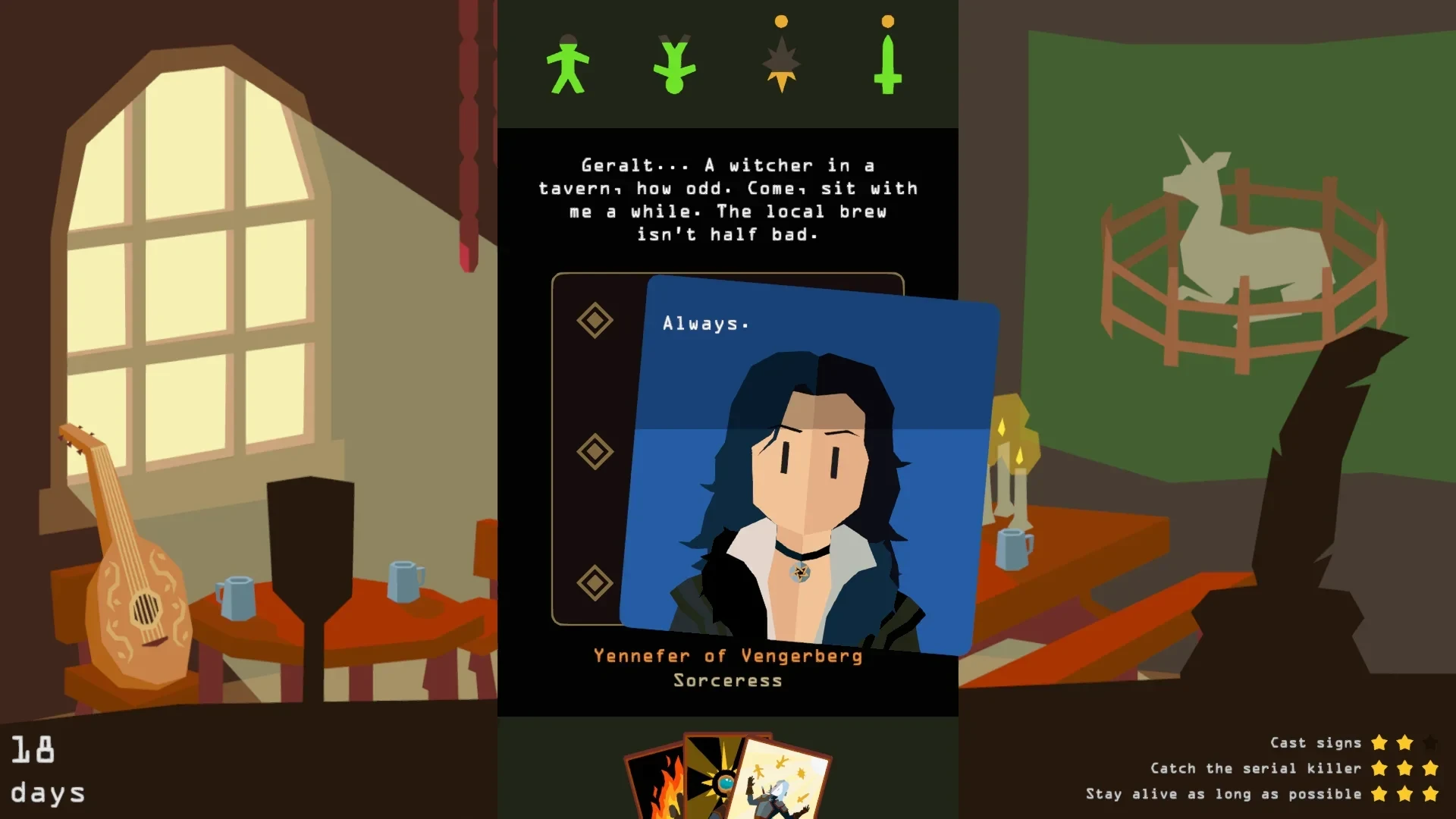
Nerial’s trajectory was long characterized by a unique, minimalist approach to game design. The studio first rose to prominence with Reigns, a title that successfully gamified the Tinder-like "swipe" mechanic to simulate the complex, often precarious life of a monarch. The game’s success was not merely a matter of clever design; it established a signature style for Nerial—witty, systemic, and surprisingly deep. This was followed by a successful expansion into licensed properties, including the well-received Reigns: Game of Thrones and Reigns: The Witcher.
In 2021, the studio’s success led to its acquisition by Devolver Digital, a move that brought Nerial fully into the fold of the publisher’s internal development ecosystem. At the time, the partnership seemed like a natural evolution for both parties. Devolver had served as the publisher for Nerial’s biggest successes, and the acquisition appeared to be a way to secure that creative synergy for the long term.
However, the reality of corporate integration proved more complex than the initial partnership. In 2024, the studio underwent a significant contraction, reducing its staff by 40%. At the time, the stated goal was to address issues regarding recent releases and to better align the team’s structure with the demands of future projects. Despite these efforts to stabilize, the financial pressure on the studio continued to mount.
Financial Pressures and Structural Challenges
The decision to cease operations follows a period of intense fiscal strain. Recent filings with the UK’s Companies House have revealed that the studio had been navigating two consecutive years of significant trading losses. The financial reports paint a stark picture: Nerial lost over £800,000 in 2025 and nearly £1 million in 2024. These figures underscore a growing dependence on financial support from their parent company, Devolver Digital, to keep the lights on.
Speaking to Kotaku regarding the closure, François Alliot provided context on why the transition from a "pure" independent studio to an internal component of a larger publisher had become increasingly difficult. When a studio is acquired, the creative process often undergoes a fundamental change. The freedom that comes with independent development—where a team can iterate on ideas at their own pace—is often replaced by the need to ensure that every project is a "Devolver game," designed to fit within the broader strategic roadmap of the parent company.
"Having been bought by Devolver, you become an internal studio, so that means each of our games needs to be a Devolver game," François explained. "And Devolver needs to publish all Nerial games, which it did match very well for Reigns, it did match very well for Card Shark, for example. So there is this common ground and we would have found a way."
However, that common ground began to shift as the creative process became more constrained by the expectations of the partnership. François noted that the need to constantly second-guess creative decisions based on external requirements began to erode the "concentrated energy" that had defined Nerial’s early years. The studio found itself in a position where the agility that once defined them was being stifled by the requirements of their new corporate structure.
A Broader Industry Crisis
The decision to close Nerial is not happening in a vacuum. The video game industry has been grappling with a severe, post-pandemic downturn, characterized by widespread layoffs, project cancellations, and studio closures. François pointed directly to this challenging environment, noting that the "crash" in the industry, combined with the disruptive influence of emerging technologies—specifically AI—had created an atmosphere where it was becoming increasingly difficult for smaller, specialized teams to sustain their operations.
"It’s become a bit difficult to push forward, especially with the current context," he said. "With post-COVID, there’s a bit of this crash in the video game industry that everyone knows. AI sucking out all the air from the room. So we are rebuilding, trying to rebuild strong roots. And for that, I need to take a step back."
For the founders, the decision to enter "hibernation" is an admission that the current model was no longer working. By stepping away, they hope to avoid the burnout and creative stagnation that comes with fighting to maintain a studio that is no longer able to operate on its own terms.

The Future of Nerial’s Catalogue
While the studio as an active development entity is winding down, its legacy remains firmly under the control of Devolver Digital. The publisher will retain the rights to Nerial’s existing catalogue, ensuring that titles like Reigns and Card Shark remain available to players. Despite the closure, the relationship between the two parties appears to remain cordial. François emphasized that they remain "very good friends," and the parting is amicable, driven by the realities of the business rather than a breakdown in the professional relationship.
For the nine remaining employees at Nerial, the closure is a difficult transition. The founders have expressed a strong desire to see their team members land on their feet, offering high praise for their contributions to the studio’s success. "The fabulous Nerial team will now seek new opportunities and we wholeheartedly recommend each and every one to any potential studios that will be lucky enough to have them," they stated.
Looking forward, the founders intend to take a break to reflect on the last 13 years before eventually returning to their roots. While François expressed a hope that he might be able to work with his former colleagues as contractors in the future, he acknowledged that he is not currently in a position to retain them as full-time staff.
The closure of Nerial serves as a poignant reminder of the fragility of the independent development scene, even for studios that have achieved significant critical and commercial success. It highlights the tension between the creative freedom required for innovative design and the fiscal realities of the modern gaming market. As the founders prepare for a period of introspection, the gaming community is left to look back on a body of work that pushed the boundaries of what mobile and indie games could achieve, proving that simple ideas, executed with passion, can have a profound impact.