
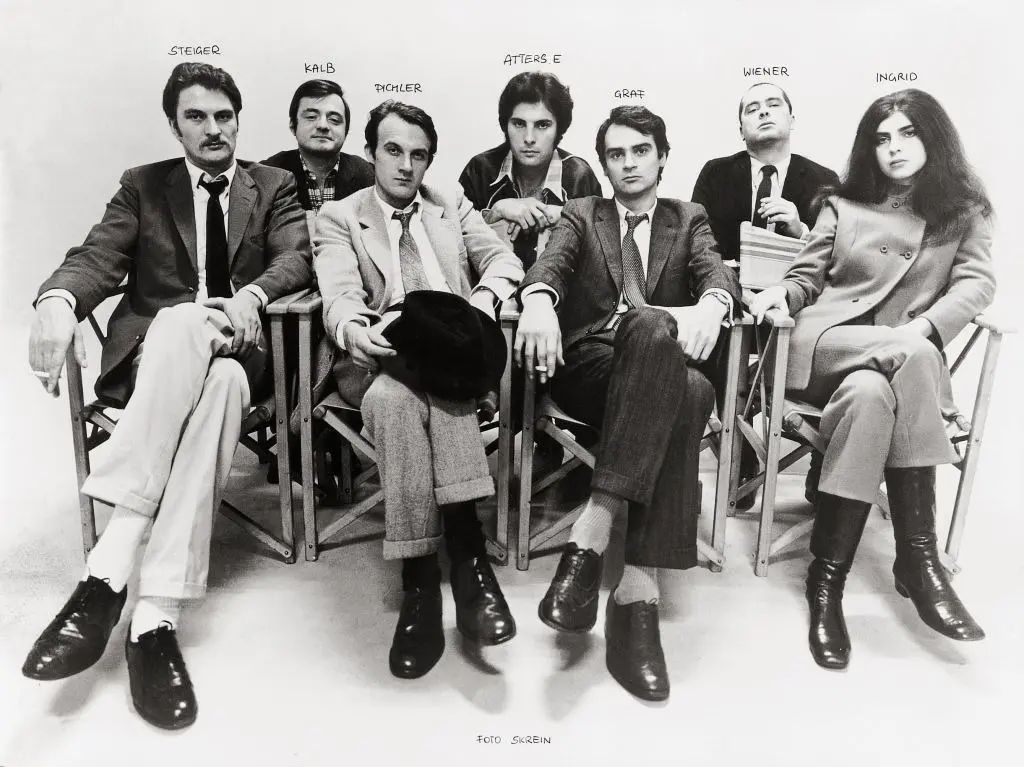
Ingrid Wiener, the multifaceted artist whose pioneering work bridged the worlds of textile art, conceptualism, and the provocative spirit of Viennese Actionism, has died at the age of 83. The news of her passing, just shy of her 84th birthday, was confirmed by Vienna’s Charim Gallery in a statement shared via social media. The gallery, which has long served as a champion of her work, did not disclose a cause of death.
For over five decades, Wiener remained a vital, if often unconventional, presence in the Austrian and international art scenes. Her practice was defined by a restless refusal to adhere to traditional disciplinary boundaries. Whether through her intricate, object-laden tapestries, her diaristic "dream drawings," or her collaborative ventures with some of the most influential figures of the 20th-century avant-garde, Wiener consistently sought to dissolve the barrier between the mundane reality of daily life and the subconscious realms of art.
A Legacy Forged in Rebellion and Collaboration
Born Ingrid Schuppan on October 2, 1942, Wiener’s formative years were deeply influenced by the cultural climate of post-war Austria—a society characterized by a pervasive, conservative traditionalism that many young artists of the time were eager to dismantle. Her early training at a textile school proved to be the bedrock of her career, though she quickly subverted the technical precision of weaving to serve more radical ends.
It was during these formative school years that she befriended Waltraud Höllinger, who would later achieve global recognition under the name Valie Export. Their partnership became one of the most significant creative alliances in contemporary art. Their early collaboration was marked by a characteristic boldness: in the 1960s, the two artists produced tapestries based on the designs of the celebrated Austrian artist Friedensreich Hundertwasser, which were exhibited and sold under his name—a gesture that reflected both their technical mastery and their interest in the conceptual play of authorship.
This collaborative spirit continued throughout the 1970s. Perhaps most famously, Wiener joined forces with Export and the Swiss provocateur Dieter Roth to experiment with the medium of tapestry. They attempted to revolutionize the craft by only weaving what could be seen behind the warp threads—an endeavor that, while technically near-impossible to execute in a traditional sense, resulted in a fluid, non-rigid aesthetic that would define Wiener’s mature style. Between 1974 and 1997, Wiener and Roth collaborated on five additional major tapestries, cementing a creative partnership that pushed the boundaries of what textile art could represent.
Weaving the Everyday into the Subconscious
Wiener’s signature tapestries were never merely decorative. They acted as physical archives of her life, integrating an eclectic array of found objects—cutting boards, old shopping lists, snippets of newspapers, electrical cables, and even perishable items like cucumbers. By weaving these disparate remnants of daily existence into the fabric, she created a tactile record of time and memory.
Often, these compositions were punctuated by handwritten texts, which served to embed her internal thoughts, emotional fluctuations, and personal observations directly into the weave. This preoccupation with the internal was further explored in her "Traumzeichnungen" (dream drawings). These watercolors were not mere illustrations; they were surreal, dream-inspired reinterpretations of daily life, where thoughts and narratives were distilled into strange, haunting imagery. This work captured the essence of her identity as an artist: someone who treated the fabric of life as a permeable surface, easily punctured by the subconscious.
Her collaborative reach extended far beyond the visual arts. She was deeply integrated into the circle of thinkers and artists associated with the Viennese Actionist movement, including figures like Konrad Bayer and filmmaker Ferry Radax. Her presence in this milieu was not merely peripheral; in 1959, she appeared alongside Bayer in Radax’s surrealist film Sonne halt!, a performance that highlighted her early involvement in the experimental spirit that would come to define her generation.
Life Beyond the Studio: Exile and Internationalism
In her personal life, Ingrid Wiener was married to the writer and artist Oswald Wiener, a central figure of the Viennese Actionist movement. Together, they became a dynamic force in the avant-garde scene. In 1969, the couple relocated to Berlin, a city then pulsating with creative energy and political tension. It was there that they opened several establishments, most notably the restaurant "Exile."
The restaurant served as a vital, informal hub for the international art crowd, bridging the gap between the domestic and the public spheres of art. It became a legendary meeting place for intellectuals, musicians, and artists, playing host to luminaries such as David Bowie and actor Peter O’Toole. This venture was, in many ways, an extension of Wiener’s artistic philosophy—a belief in the communal, the social, and the importance of creating spaces where the rigid boundaries of "high art" could be dismantled in favor of conversation and lived experience.
Following their time in Berlin, the couple eventually moved to Canada. It was in the vast, shifting landscapes of the Canadian wilderness that Wiener found new inspiration for her watercolors. These environments, stark and immense, provided a counterpoint to the urban intensities of Vienna and Berlin, allowing her to further explore the surrealist imagery that characterized her late-career dreamscapes.
A Renewed Recognition
While Wiener was a constant figure in the avant-garde, her work received a significant surge of renewed institutional and public attention in Austria at the turn of the millennium. A crucial turning point came in 2001, when the Charim Gallery included her work in the exhibition Diesseits und Jenseits des Traums: 100 Jahre Jacques Lacan (This Side of the Dream and the Other: 100 Years of Jacques Lacan).
Reflecting on the impact of that encounter, the gallery noted in its recent tribute: "While searching for artistic positions for the exhibition, August Ruhs introduced us to Ingrid’s dream drawings, and we were immediately captivated by them." This rediscovery led to a formal representation of her work, with Charim Gallery mounting several solo and two-person exhibitions that introduced a new generation of art enthusiasts to the depth and consistency of her practice.
As the art world mourns her passing, Charim Gallery is currently in the process of organizing a major exhibition of Wiener’s work, which will prominently feature her historical and significant collaboration with Valie Export. The exhibition, slated for early next year, is expected to serve as a comprehensive look at the scope of her contributions to 20th-century art.
Miryam Charim, the owner of the gallery, expressed the profound personal loss felt by those close to the artist. "We are deeply saddened by the passing of Ingrid Wiener," Charim said in a statement. "Over the years, our artistic collaboration with Ingrid developed into a close personal friendship. Ingrid was far more to us than an artist represented by the gallery. It is painful to lose Ingrid."
Ingrid Wiener leaves behind a legacy that is as complex and layered as the tapestries she created. She bridged the gap between the radical activism of the 1960s and the introspective, multidisciplinary practice of the contemporary era. Her career, intricately connected to one of the most important and volatile chapters of Austrian art, remains a testament to the power of weaving the personal, the political, and the dreamlike into a cohesive—and enduring—vision.