
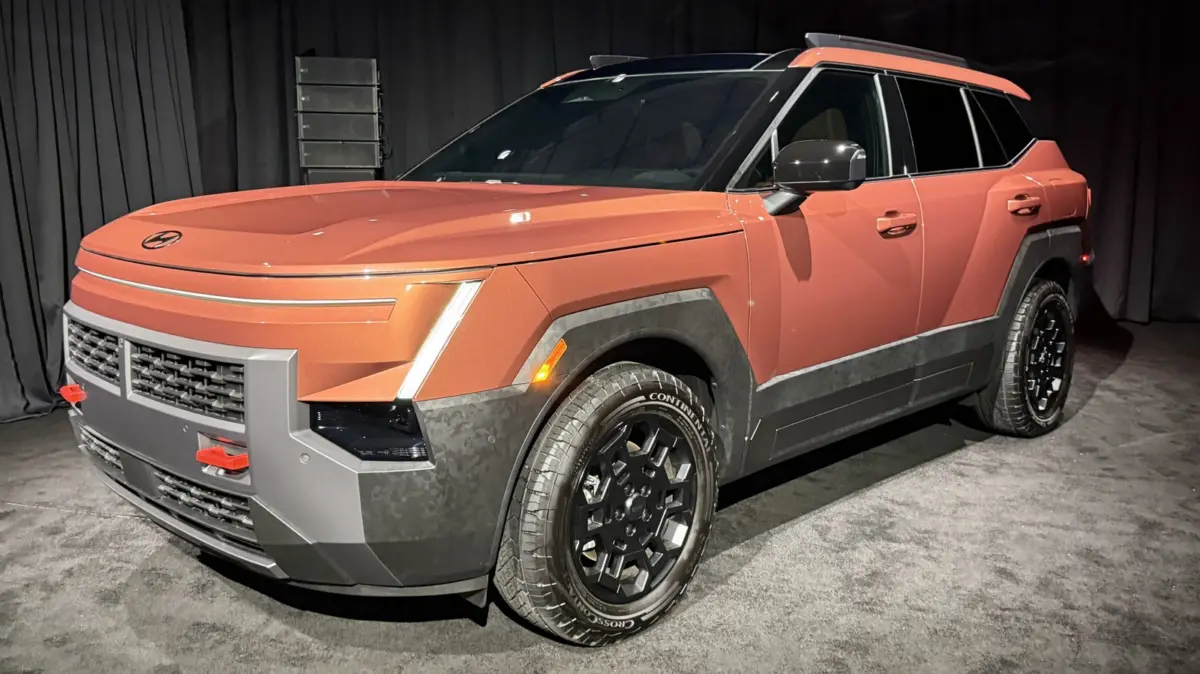
For automotive enthusiasts living in the United States, there is a familiar and frustrating narrative: a steady stream of brilliant, highly capable, and visually striking vehicles makes its debut in international markets, only to be kept indefinitely out of reach. American buyers often look on as other regions receive specialized trims, unique performance packages, and rugged off-road variants tailored for adventure. However, the automotive pendulum occasionally swings in the opposite direction. In a refreshing turn of events, Hyundai has announced a vehicle that will be reserved exclusively for the U.S. market: the all-new 2027 Hyundai Tucson XRT Pro.
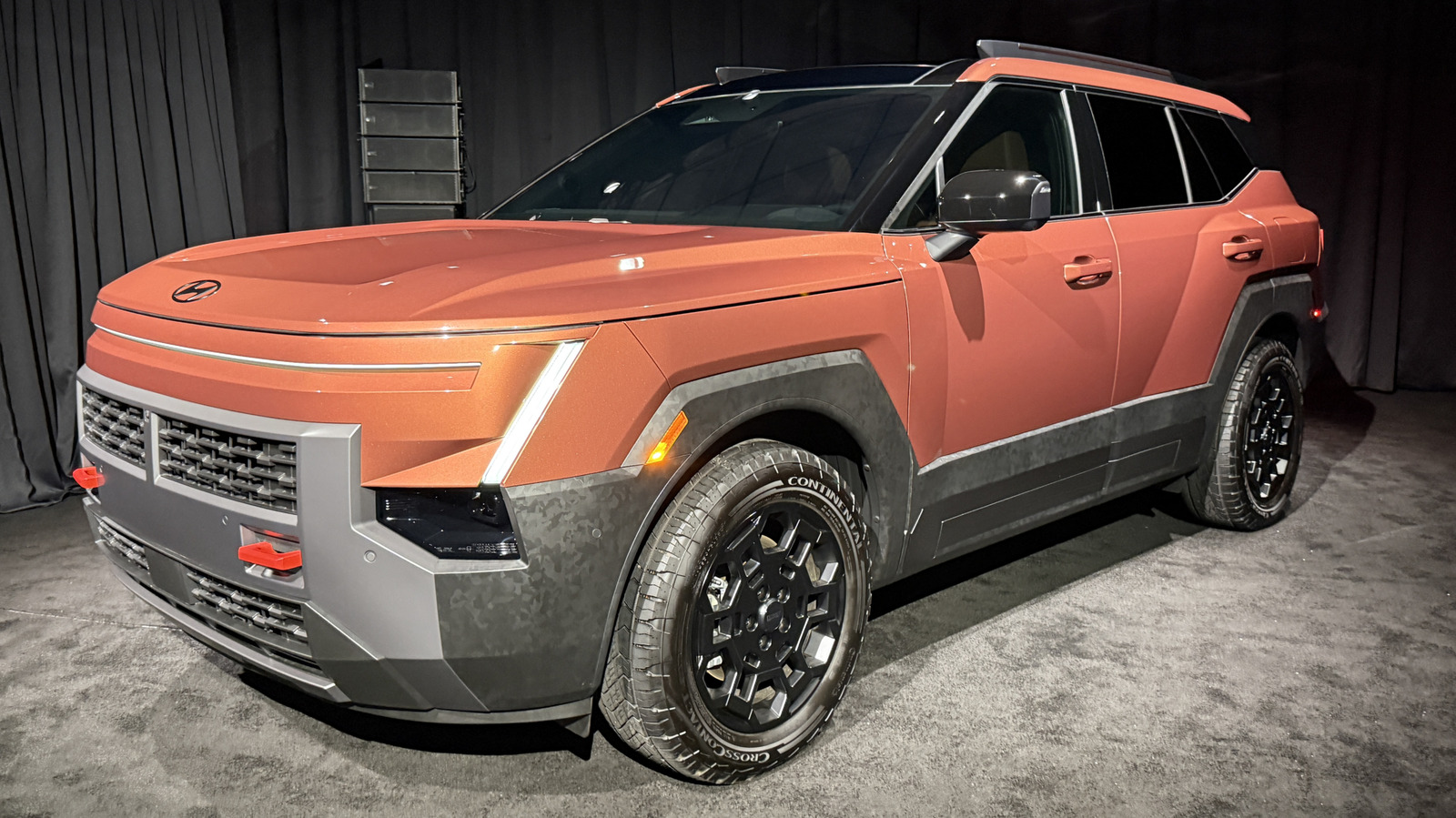
While previous iterations of the Tucson have worn the XRT badge, those packages primarily focused on superficial aesthetics—darkened trim pieces, unique wheels, and minor interior flourishes designed to give the impression of ruggedness without backing it up beneath the sheet metal. The upcoming XRT Pro, however, changes that formula entirely. Built to complement the boxier, more aggressive design language of the Tucson’s fifth-generation overhaul, the Pro model introduces actual mechanical enhancements. These upgrades are designed to give the compact crossover genuine capability when leaving the paved road behind, bridging the gap between a standard daily driver and a functional soft-roader.
The details of the new lineup were recently showcased at an exclusive media preview event in a warehouse in Jersey City, New Jersey, where Hyundai hosted automotive journalists to examine both the standard 2027 Tucson and the robust Tucson XRT Pro up close.
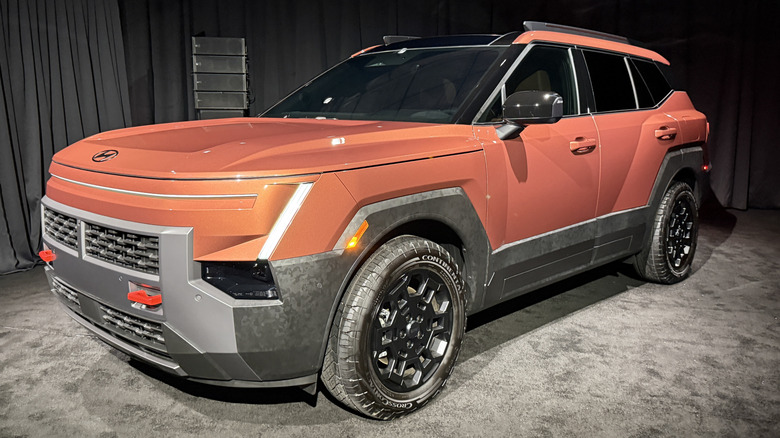
XRT Pro For You And Me
Underneath the ruggedized exterior, the foundation of the XRT and XRT Pro models remains grounded in efficiency and everyday usability. All variants carrying the XRT designation share the same modern hybrid powertrain. This setup pairs a turbocharged 1.6-liter inline-four internal combustion engine with an electric motor and a compact battery pack. Together, the system generates a respectable and adequate 233 horsepower alongside 280 pound-feet of torque.
According to preliminary estimates provided by the Environmental Protection Agency, this electrified powertrain achieves a combined fuel economy rating sitting just a tick below 40 miles per gallon. Performance-wise, the hybrid setup pushes the compact crossover from zero to 60 miles per hour in the mid-to-high eight-second range. Power is routed to all four wheels as standard equipment through a six-speed automatic transmission. While these figures may not shatter any track records or challenge heavy-duty performance vehicles, they deliver more than enough grunt for daily commuting, highway passing, and moderate trail navigation. Furthermore, the hybrid architecture enables a maximum towing capacity of 3,000 pounds, representing a substantial 1,000-pound increase over previous generations of the Tucson.
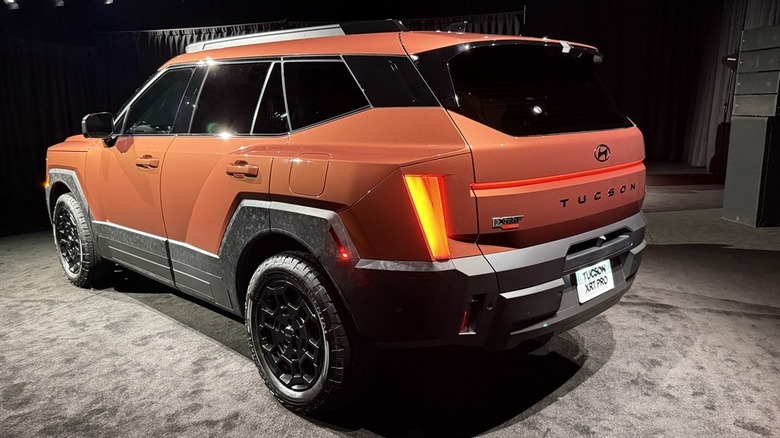
Visually, standard XRT models receive distinctive bumper treatments featuring rugged lower styling elements. A wide, fascia-extending frontal cladding merges seamlessly with extended black wheel arch trim that wraps continuously around the lower body and side skirts. To enhance the rugged visual theme, Hyundai has applied a forged-carbon-look design motif to various exterior plastic components, accompanied by faux skid-plate design elements that emphasize lower-body protection.
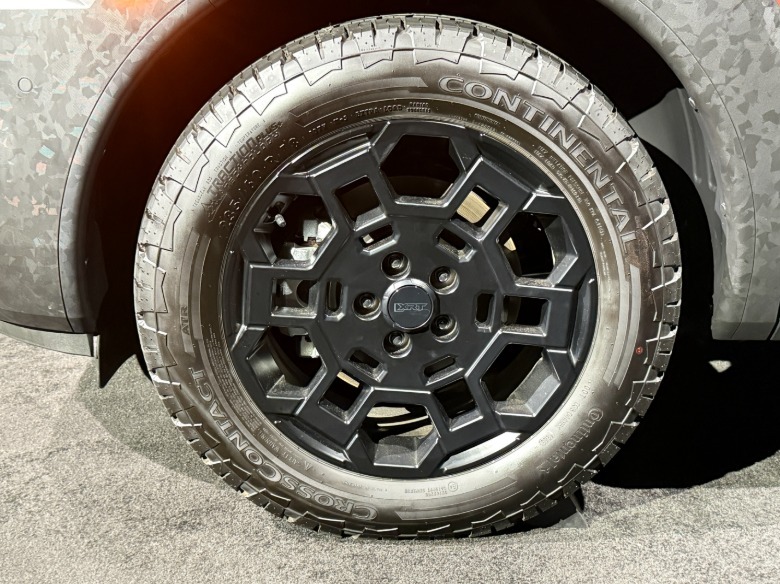
While these standard cosmetic touches improve the vehicle’s road presence, the XRT Pro takes the platform significantly further. Eschewing the purely cosmetic approach of its predecessor, the XRT Pro delivers comprehensive off-road engineering designed to provide tangible functionality on unpaved terrain. The mechanical enhancements begin with a set of chunky 235/50R18 Continental CrossContact all-terrain tires wrapped around unique 18-inch wheels. More importantly, Hyundai has raised the vehicle’s suspension, adding 1.2 inches of extra ride height to bring total ground clearance to an impressive 8.3 inches. This elevation improves the Tucson’s approach and departure angles, allowing it to clear obstacles that would routinely scrape a standard crossover. Additionally, the XRT Pro features functional front recovery hooks, expanding its utility should a driver find themselves needing a pull out of a sticky situation.
Get Smart
The evolution of the XRT Pro is not limited to mechanical hardware and suspension geometry; Hyundai has also integrated advanced software and driver-assistance technology specifically tailored for off-road environments. Among the most notable additions is a new system designated as Smart Terrain Assist. This technology continuously scans and analyzes the road or trail surface ahead, actively evaluating traction levels and potential slip conditions. Once the system processes the terrain data, it provides the driver with clear visual guidance using a color-coded "stuck score"—utilizing green, orange, or red indicators—while automatically recommending the safest and most efficient routes forward.
Smart Terrain Assist works in tandem with Automatic Terrain Detection, a comprehensive suite that features dedicated operating profiles for auto, snow, mud, sand, and rock conditions. By utilizing intelligent mode switching, the vehicle eliminates the guesswork traditionally associated with selecting the correct off-road settings, allowing drivers of varying experience levels to navigate challenging surfaces with confidence.
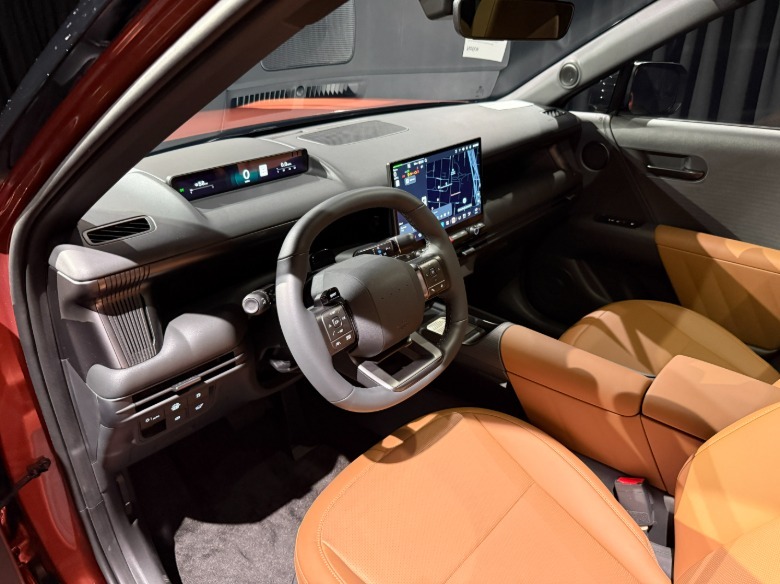
Complementing these diagnostic systems is an off-road-focused cruise control feature known as Target Speed. Operating at speeds between 1 and 16 miles per hour, Target Speed automatically manages both throttle application and braking to maintain a consistent, driver-selected pace regardless of the changing terrain beneath the tires. This allows the person behind the wheel to direct their complete attention toward steering and line selection without having to constantly modulate the pedals.
By outfitting the Tucson XRT Pro with these advanced technological safety nets, Hyundai is effectively offering an "easy mode" for trail driving. This approach aligns well with the reality of the compact crossover market, where the average buyer drawn to an adventure-themed vehicle may not possess extensive off-road driving experience. Rather than catering exclusively to seasoned off-roaders who demand complex manual locking differentials and heavy-duty transfer cases, Hyundai has engineered a soft-roader that is more approachable, safer, and significantly more capable than any version that has come before it.