
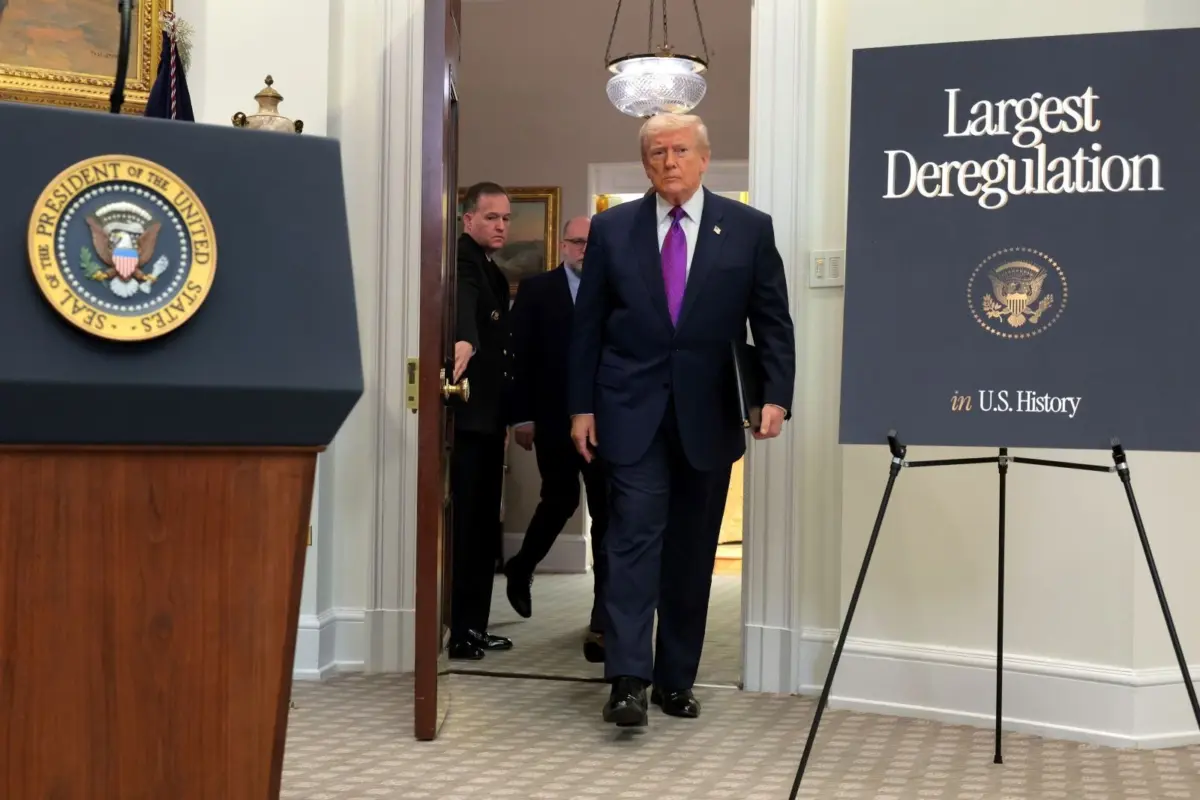
The Trump administration has moved to dismantle nearly all federal regulation of greenhouse gas emissions from passenger vehicles, announcing a final plan to ease fuel-efficiency requirements. This latest regulatory shift leaves the federal government with virtually no meaningful policy governing carbon pollution from cars and light trucks, which account for roughly 16 percent of total U.S. greenhouse gas emissions.
While the administration’s announcement marks a sweeping rollback of federal climate policy, the practical impact of the new rule is largely symbolic. Congress had already eliminated the financial penalties that automakers face for violating federal fuel-economy standards. Combined with a series of prior reductions in federal climate authority, these cumulative steps have effectively erased Washington’s oversight of automotive carbon output.
Yet, the regulatory landscape is far from uniform. One entity retains enough regulatory sway and legal authority to keep pressing car manufacturers toward greater fuel efficiency: the state of California.
California’s vehicle emissions rules remain in active effect, establishing a de facto baseline for fuel efficiency that automakers cannot fall below without risking substantial penalties. Although the Trump administration has aggressively challenged California’s authority to set its own distinct environmental standards, it has not yet claimed a complete victory. For now, the Golden State’s wounded but legally resilient regulations represent the single most important government policy on vehicle emissions in the United States.
The roots of California’s unique regulatory power trace back half a century. A special exemption embedded in federal environmental law allows the state to enforce tailpipe emissions standards that go further than federal requirements. In the 1950s, Southern California suffered from notoriously severe smog, prompting the state to pioneer its own vehicle emissions standards long before Congress established national benchmarks through the Clean Air Act. Recognizing the state’s persistent and severe air pollution challenges, lawmakers granted California unique authority to continue crafting its own automotive rules.
While California cannot use this special authority to directly mandate fuel-efficiency numbers, the mechanics of internal combustion make its rules equally potent. Because reducing fuel consumption is practically the only way to lower a gasoline-powered car’s greenhouse gas emissions, California’s stringent emissions standards produce an effect very similar to federal fuel-efficiency mandates.
The reach of these rules extends far beyond state lines. Under the Clean Air Act, other states are permitted to adopt California’s regulations, a pathway that 19 states and the District of Columbia have chosen to follow. Rather than manufacturing entirely different vehicles for different regional markets, many major automakers have found it more practical to build fleets that comply with California’s standards nationwide, even when those standards exceed federal requirements. According to state data, the states utilizing California’s vehicle emissions regulations accounted for approximately 40 percent of all new car sales in the United States in 2022.
In response to this widespread influence, the Trump administration has intensified its efforts to strip California of its special emissions powers. Last year, following a formal request from President Donald Trump’s Environmental Protection Agency, both chambers of Congress voted to block California’s ambitious effort to phase out the sale of new gas-powered cars by 2035. That phase-out plan had relied entirely on the state’s special regulatory waiver.
California quickly retaliated against the federal maneuver, filing a formal lawsuit against the Trump administration.
“What we’re seeing is a thinly veiled attempt by the president to retaliate against California for choosing progress over regression,” California Attorney General Rob Bonta stated after his office filed the litigation.
With its aggressive vehicle transition roadmap temporarily stalled, California has shifted its focus to enforcing its previous set of emissions standards, which were originally scheduled to expire in 2026. While these legacy standards will not force car companies to accelerate their greenhouse gas reductions beyond current trajectories, they serve as a critical guardrail, preventing automakers from backtracking on efficiency gains already achieved. The Trump administration subsequently asked Congress to overturn these older standards as well, but a federal judge blocked that effort in early September.
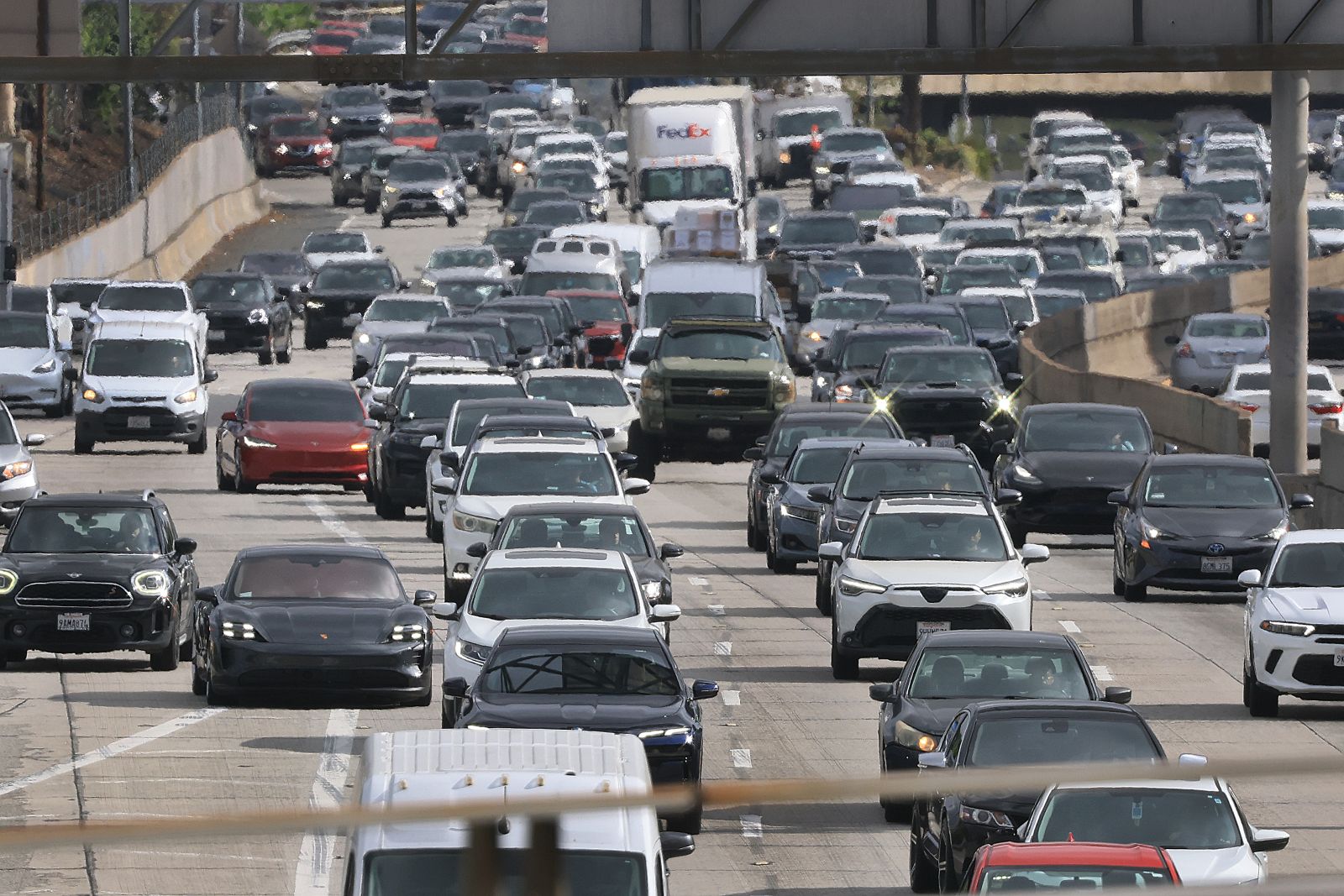
Automakers have remained largely tight-lipped regarding how they will navigate this growing regulatory uncertainty, including whether they will stay on course to meet California’s rescinded requirements if the courts ultimately allow the state to reinstate them. Industry executives are increasingly accustomed to regulatory whiplash as environmental policies shift dramatically between presidential administrations.
Beyond fluctuating government mandates, car manufacturers are also grappling with evolving consumer preferences. Industry representatives have pointed out that the aggressive fuel-efficiency standards implemented by the Biden administration—which were unwound by federal action—frequently clashed with what American buyers actually wanted to purchase. Automakers invested heavily in building electric vehicles to meet the prior federal benchmarks, but consumer adoption failed to match production capacity. That challenge was compounded when the Trump administration rolled out policies that terminated federal tax credits and other initiatives promoting EV growth.
Even so, shifting consumer habits may continue to push car companies toward greater fuel efficiency independent of Washington mandates. Rising gasoline prices, driven in part by geopolitical conflict involving Iran, have renewed consumer interest in fuel economy. Hybrid vehicles have steadily climbed in popularity, capturing a record 16 percent of passenger vehicle sales by the summer of 2026. Simultaneously, several major automakers refuse to abandon their long-term electric vehicle strategies, noting that zero-emission cars continue to see strong demand in international markets and are widely viewed as the inevitable future of global transportation.
“We’re in for the long haul, and we’re maybe a little slower on EVs, for instance,” General Motors President Mark Reuss said at an industry conference. “That’s OK, but the whole world is moving that way, and so we invested in the platforms that are EV platforms.”
Despite these evolving market dynamics, independent analysts note that consumer trends alone will not drive the rapid emissions reductions necessary to mitigate global climate change. California’s remaining standards provide an essential baseline, but the state’s blocked phaseout plans would have forced the industry much further along the path toward decarbonization.
The ultimate fate of California’s stricter rules will likely be decided in the federal courts, where legal experts suggest the state possesses a compelling case. The congressional maneuver used by Republicans to revoke the state’s permission waiver was highly unusual and potentially unprecedented. At the time the action was taken, both the Government Accountability Office and the Senate parliamentarian publicly declared the maneuver to be illegal.
“There are multiple levels of shenanigans, depending on your viewpoint, that are being litigated,” said Rebecca Higgins, vice president of policy at the Eno Center for Transportation, a nonprofit research institution. “That creates tremendous uncertainty.”
A federal court could ultimately rule that the actions taken by Congress and the Trump administration were unlawful. Alternatively, California’s aggressive phaseout schedule could find new life if a Democratic administration captures the White House in 2028.
However, legal analysts warn that a separate, ongoing Republican legal strategy could inflict more permanent damage on California’s regulatory authority. In a parallel lawsuit, the Trump administration is attempting to invalidate California’s foundational authority to regulate greenhouse gas emissions altogether, arguing that the state is illegally regulating fuel economy indirectly through its tailpipe rules.
While federal courts have historically ruled in California’s favor on similar jurisdictional questions, the case is currently winding its way through lower federal courts. If the dispute eventually reaches the U.S. Supreme Court, its outcome remains difficult to predict. The high court has never directly ruled on this specific intersection of state and federal authority, and its current conservative majority has frequently sided with the Trump administration on major environmental matters.
“That one feels like it could have the potential to sort of reset the authorities going forward,” Higgins said.