
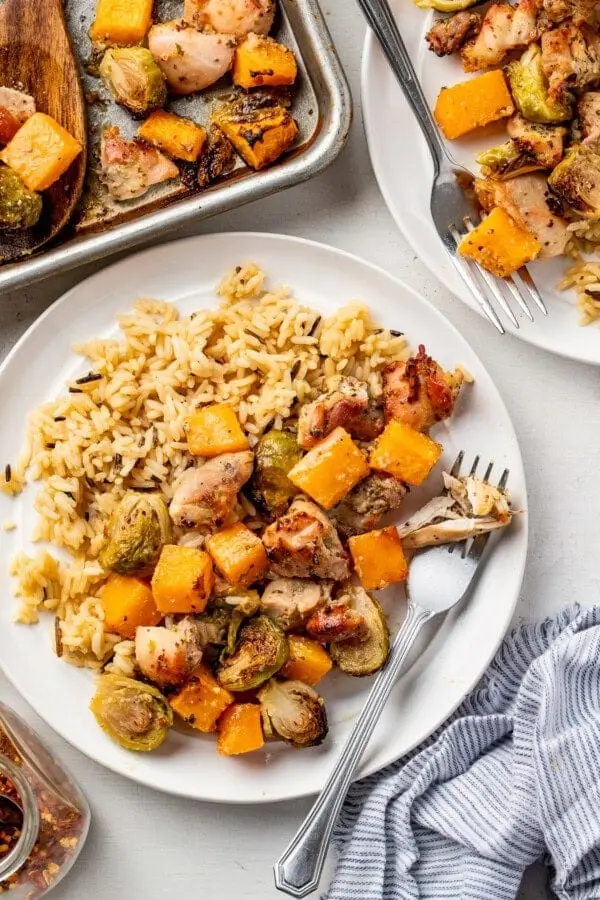
In the landscape of modern home cooking, the "sheet pan dinner" has ascended from a convenient shortcut to a culinary mainstay, particularly for busy households seeking to balance nutritional integrity with the harsh realities of a tight schedule. As the seasons transition and the appetite for heartier, autumnal flavors grows, the latest offering from the Skinnytaste kitchen—the Maple Dijon Sheet Pan Chicken—arrives as a timely response to the perennial challenge of preparing a high-protein, fiber-rich dinner without the burden of an extensive cleanup.
This dish, which features tender chunks of boneless, skinless chicken thighs paired with the earthy sweetness of roasted butternut squash and the characteristic bite of caramelized Brussels sprouts, is unified by a signature maple-mustard glaze. The recipe draws inspiration from the viral success of previous one-pan staples, such as the widely praised Sheet Pan Chicken Shawarma, yet it pivots toward a more seasonal profile that celebrates the harvest flavors of autumn.
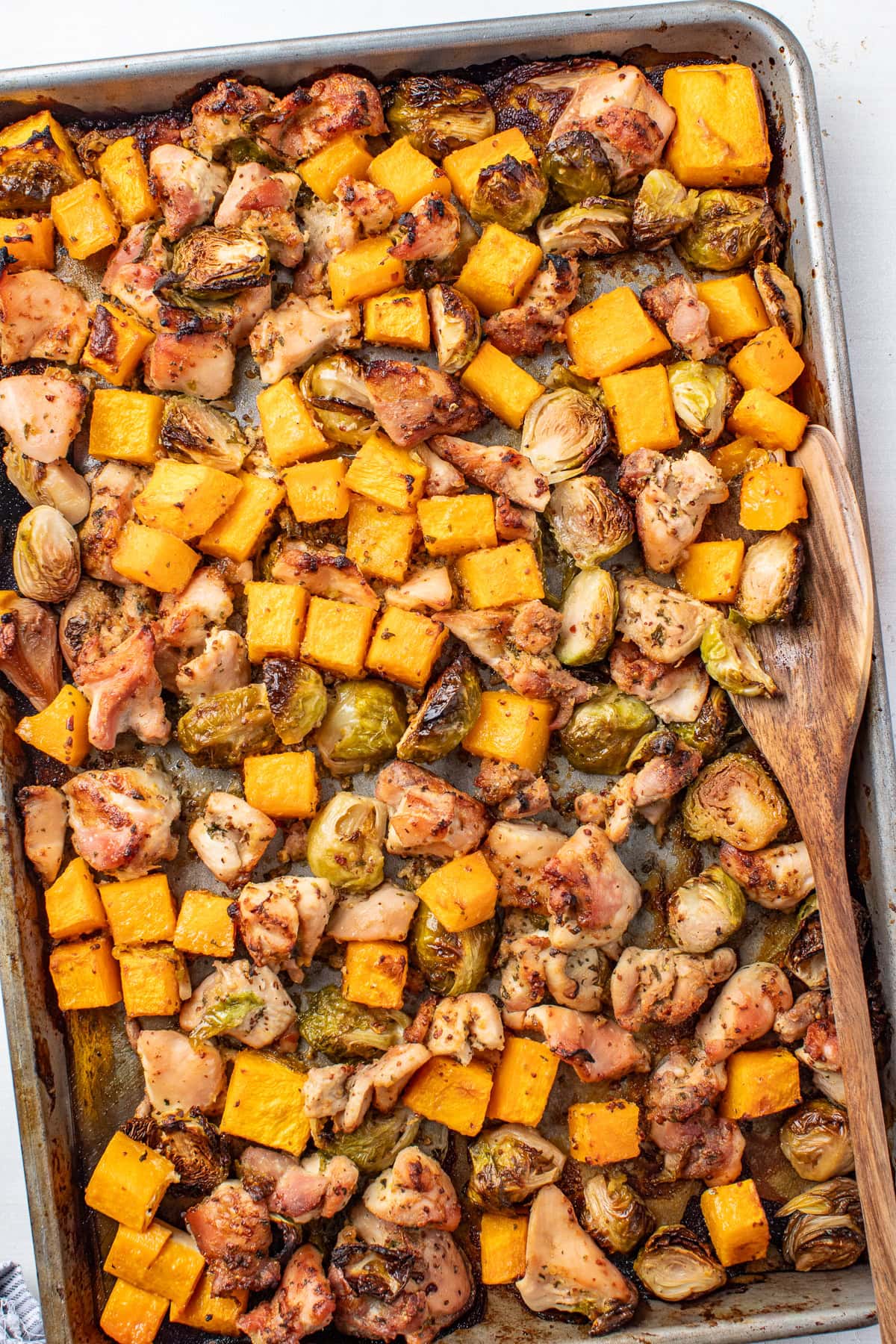
The Philosophy Behind the Single-Pan Approach
The popularity of the one-pan cooking method is rooted in its inherent efficiency, a concept that has been championed by culinary creators like Gina, the force behind Skinnytaste. The methodology is straightforward: by arranging all components—protein, starch, and vegetables—on a single sheet, the home cook can achieve a harmonious roast where the juices from the meat subtly enhance the vegetables. This not only builds depth of flavor but also addresses the practical pain points of domestic life.
For many, the deterrent to cooking a full meal on a weeknight is not the preparation of the ingredients, but the subsequent accumulation of pots, pans, and mixing bowls. The Maple Dijon Sheet Pan Chicken is designed to minimize this friction. By utilizing a single mixing bowl for the marinade and one sheet pan for the roasting process, the time spent at the kitchen sink is drastically reduced, allowing the cook to focus on the meal itself rather than the post-dinner labor. This philosophy of "one and done" has proven to be a vital tool for those looking to maintain a healthy, home-cooked diet while balancing professional or family commitments.
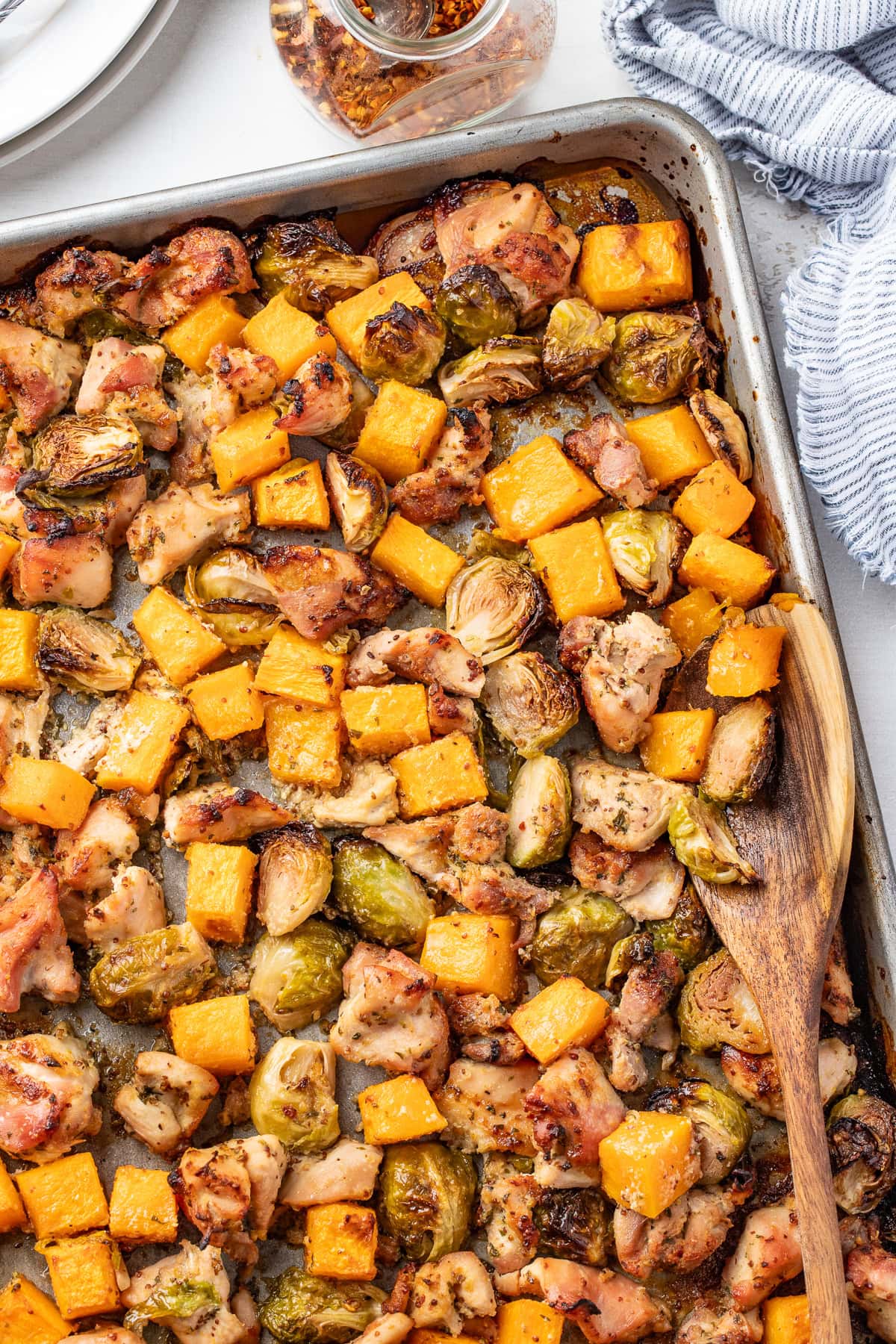
Balancing Flavor and Nutritional Density
At its core, this dish is an exercise in balancing sweet and tangy profiles. The maple-mustard sauce acts as a bridge between the savory, rich nature of the chicken thighs and the natural sweetness of the butternut squash. As the squash roasts, its sugars caramelize, creating a texture that contrasts beautifully with the slight bitterness of the roasted Brussels sprouts.
From a nutritional standpoint, the recipe is engineered to provide a robust profile of macronutrients. Chicken thighs offer a satisfying source of protein, while the inclusion of butternut squash and Brussels sprouts ensures a significant intake of fiber and essential vitamins. With approximately 37.5 grams of protein and 5 grams of fiber per serving, the dish is designed to be satiating, reducing the likelihood of late-night snacking. At roughly 361 calories per serving, it aligns with a health-conscious lifestyle, proving that convenience does not have to come at the expense of dietary goals.

Achieving the Perfect Roast
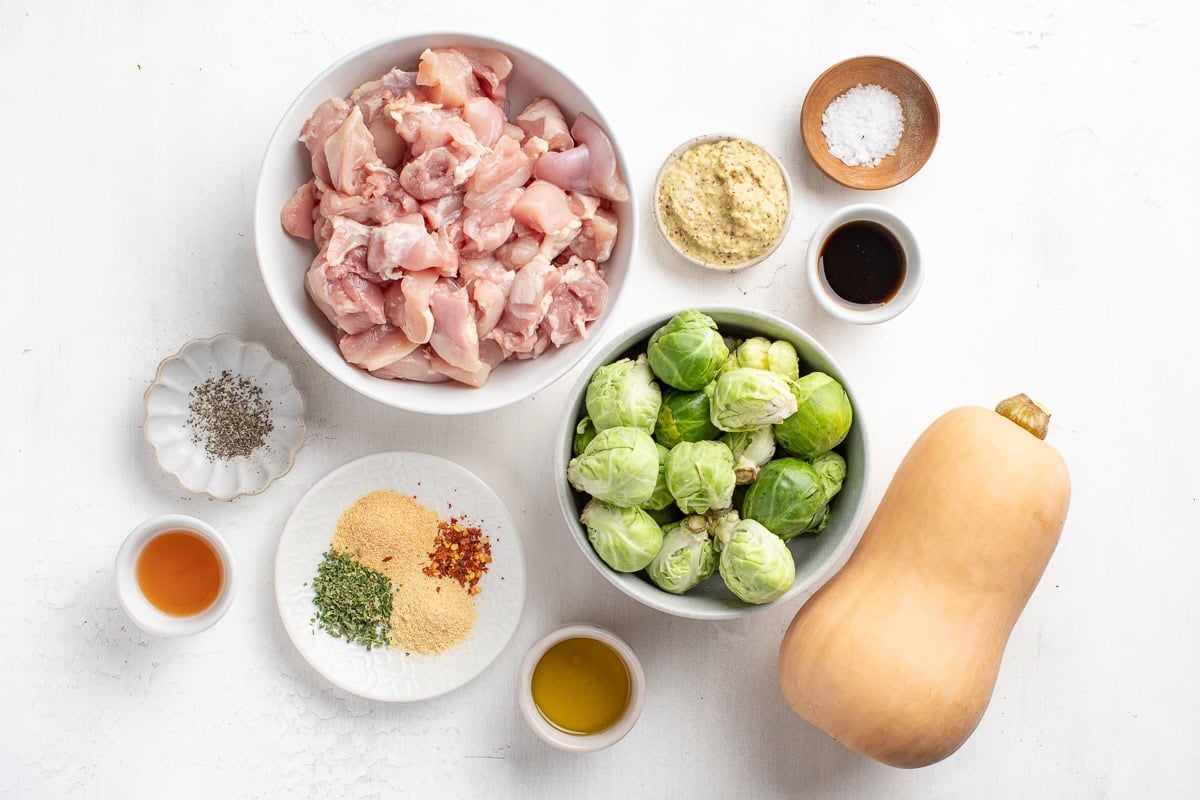
While the process of preparing this meal is streamlined, achieving the ideal result requires a basic understanding of roasting dynamics. The key to this dish lies in the uniformity of the vegetable cuts. Ensuring that the butternut squash is cubed into pieces of a similar size to the chicken thighs allows for even cooking, preventing the risk of some components being overdone while others remain raw.
The application of the maple-mustard sauce is another critical step. The sauce is designed to coat the ingredients thoroughly, creating a sticky, caramelized finish as the sugars in the maple syrup react to the high heat of the oven. Because the recipe relies on the interaction between the glaze and the heat, the oven temperature is a crucial factor. By allowing the ingredients to roast until the chicken is tender and the vegetables are charred at the edges, the cook achieves a level of texture that is difficult to replicate with other cooking methods like boiling or steaming.

Versatility and Adaptability
One of the significant advantages of the sheet pan model is its inherent flexibility. While the maple-dijon combination serves as the primary flavor profile, the dish is highly adaptable to the contents of a kitchen pantry or seasonal availability. For those who may prefer a different vegetable profile, the core technique remains the same, allowing for easy substitutions that can cater to varying personal tastes or seasonal shifts.
Furthermore, the dish excels in the context of meal prep. Because the ingredients hold up well to reheating, many home cooks utilize this recipe as a foundation for their work-week lunches. Whether stored in glass containers for the coming days or paired with a base of grains like brown rice, quinoa, or a blend of both, the chicken and vegetables retain their flavor and texture remarkably well. For those seeking a lighter alternative to grains, the dish is equally satisfying on its own or tossed into a fresh, crisp green salad, highlighting its versatility as both a main course and a component of a larger, more complex meal.
A Modern Solution for the Home Kitchen
As the culinary landscape continues to evolve, the demand for recipes that prioritize time management without sacrificing quality has never been higher. The Maple Dijon Sheet Pan Chicken is representative of a shift toward mindful, efficient cooking. It acknowledges that the modern cook is often time-poor but remains invested in the quality of the food they consume.
By stripping away the unnecessary complexities of traditional roasting—where different components often require different cooking vessels and timings—this recipe offers a clean, straightforward path to a balanced dinner. It serves as a reminder that with the right combination of ingredients and a simple, effective technique, it is entirely possible to produce a meal that feels both artisanal and accessible. As more individuals look to incorporate more high-protein and fiber-rich meals into their routines, dishes like this provide a sustainable, delicious blueprint for the future of home cooking, ensuring that even the busiest weeknights can conclude with a meal that is as nutritious as it is rewarding.