
From the rugged mountain ranges of Nepal to the dense forests of Canada and the tropical basins of Ecuador, Indigenous lands are increasingly bearing the brunt of catastrophic climate impacts. Extreme weather events—ranging from unprecedented wildfires and torrential floods to severe, prolonged droughts—are no longer arriving as isolated, one-off emergencies. Instead, Indigenous communities find themselves navigating overlapping and compounding crises, where one disaster strikes before the recovery from the previous one can even begin.
Yet, despite this escalating destruction, Indigenous peoples continue to demonstrate that they possess the deep knowledge, practical skills, and organizational frameworks required to respond effectively. According to a new report released by the global nonprofit Land Is Life, what is missing is not a blueprint for survival, but rather the willingness of global powers to step back, provide adequate funding, and let Indigenous governance systems do what they have proven they can do.
Even as scientists and international policymakers increasingly acknowledge the value of Indigenous ecological expertise in the fight against climate change, the report highlights a critical oversight: the foundational role that Indigenous governance plays in activating and sustaining those knowledge systems has not received the respect, legal backing, or financial support it deserves.
The comprehensive study, published during New York Climate Week, underscores that supporting Indigenous governance through robust legal recognition, direct and flexible financing, and genuine partnerships stands out as the single most effective way to reduce climate disaster risk worldwide.
Luisa Castañeda Quintana, the executive director of Land Is Life, emphasized that the report’s findings shift the narrative from mere victimhood to active leadership. “We show that it’s not that they are only the most impacted, but they are already implementing effective solutions,” Castañeda Quintana said. “When it comes to adaptation, we don’t really need to create new structures or systems. We just need to see what is working.”
The findings add to an expanding body of global research affirming that Indigenous self-determination, traditional land stewardship, and localized cultural practices are among the most reliable, time-tested climate solutions available. To illustrate this, the newly released report offers dozens of real-world examples from across the globe.
In Kenya, for instance, Indigenous Endorois and Tugen women have taken the lead in cultivating drought-resistant varieties of traditional foods such as sorghum and millet. During years marked by severe, crippling droughts that devastated conventional agriculture in the region, these resilient crops provided some of the area’s only successful harvests, keeping families fed when outside aid failed to arrive.
Meanwhile, in Brazil, the Coordination of Indigenous Organizations of the Brazilian Amazon—the nation’s largest regional Indigenous network—plays a vital operational role in organizing community-led fire management and rapid response. The network provides specialized training to local members and mobilizes immediate emergency response teams to protect critical forest ecosystems from devastating blazes.
The Land Is Life report is built on detailed case studies and more than 200 survey responses gathered from 46 countries. The research spans six distinct global ecosystems: forests, mountains, drylands, freshwater systems, grasslands, and coastal zones. Castañeda Quintana noted that undertaking a broad, cross-continental study was essential to demonstrate that climate change and environmental disasters do not respect national or ecological boundaries, meaning that human responses must similarly transcend borders.
Furthermore, the data paints a sobering picture of modern climate reality, proving that disasters rarely arrive in a neat, chronological sequence. More than 80 percent of survey respondents reported that they currently face two or more climate crises simultaneously, while over 90 percent noted a dramatic, ongoing rise in the frequency of these overlapping events.
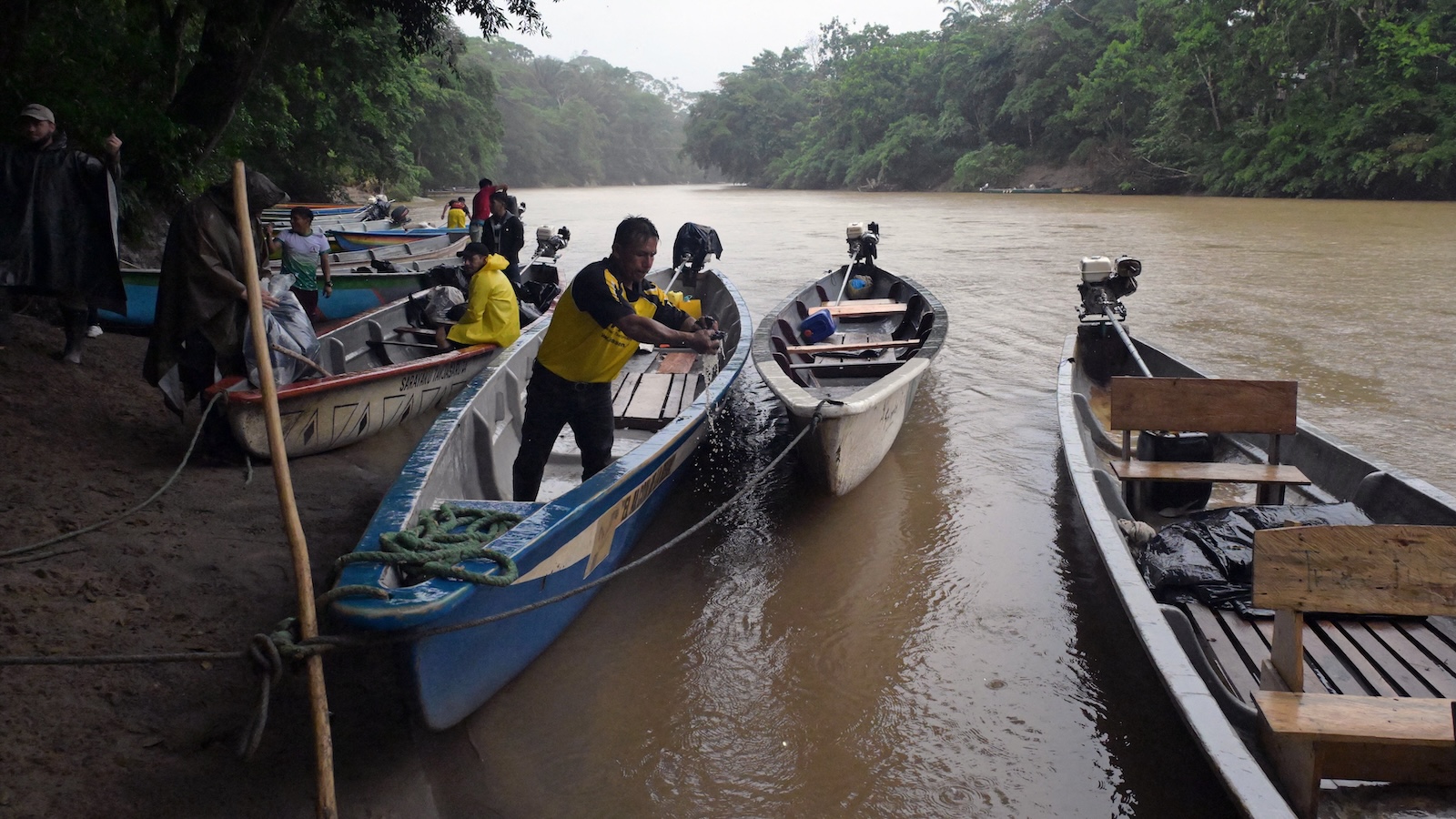
A stark example of this compounding pressure unfolded in 2019, when the Kichwa People of Sarayaku in the Ecuadorian Amazon confronted devastating floods along the Bobonaza River. The surging waters swept away homes and ruined vital food crops. However, Daniel Santi, the president of the community—which numbers roughly 1,600 people living across more than 500 square miles—explained that his community was able to mount an effective and organized response precisely because robust governance structures were already firmly established.
In essence, pre-existing self-determination and community governance gave the Kichwa people the autonomy to decide how best to prepare for, absorb, and recover from the shock. “This organization makes it possible to confront any problem and any threat,” Santi said.
The report argues that it is the powerful synthesis of Indigenous governance and traditional knowledge that makes these adaptation strategies uniquely effective. Knowledge rooted deeply in a specific landscape can be mobilized immediately when an emergency strikes. For example, Sarayaku elders noticed unusual rain and lightning patterns occurring far upstream at the river’s headwaters. Recognizing these signs as harbingers of severe flooding, they were able to issue early warnings to the wider community well before the waters rose.
The internal structure of the Sarayaku community includes clear, transparent decision-making processes, established mechanisms to address urgent humanitarian needs—such as providing emergency housing for families whose homes were destroyed—and dedicated representatives tasked with communicating status updates and community needs to external authorities. According to Santi, these organized responses are driven by minga, a traditional Kichwa concept embodying solidarity and collective responsibility.
Despite these proven successes, many national governments fail to legally recognize Indigenous peoples or their traditional forms of governance. Some administrations refuse to issue emergency alerts in Indigenous languages, while others actively criminalize Indigenous cultural practices. Such hostile or indifferent conditions severely undermine the impact of traditional knowledge and local governance systems.
Santi firmly believes that Indigenous nations have invaluable lessons to teach the wider world about adapting and responding to a rapidly shifting climate, but communities like his urgently need systemic support as environmental pressures accelerate. He is calling for stronger legal protections for Indigenous lands and sovereign authority, alongside long-term resources and collaborative partnerships that genuinely respect Indigenous leadership and decision-making processes.
A successful model of this collaborative approach can be found in Peru’s Ausangate Regional Conservation Area, where local Quechua communities joined forces with an established conservation organization. Together, they documented environmental indicators, improved community-led environmental monitoring, and pursued other initiatives that successfully combined traditional Indigenous knowledge with Western scientific research. According to the report, partnerships of this nature demonstrate how mutual respect and shared expertise can significantly bolster regional resilience.
Conversely, the report highlights persistent shortcomings in many mainstream global mitigation and adaptation strategies. These include climate initiatives that focus solely on short-term benefits, reject Indigenous self-governance in favor of heavy-handed external authority, and extract or celebrate Indigenous knowledge without offering tangible support to the people who safeguard it.
Even though a growing body of evidence confirms that Indigenous land stewardship works and that channeling direct financing to Indigenous communities yields superior global climate adaptation outcomes, actual funding and legal security remain dangerously insufficient.
“It’s always the lack of resources and the lack of access to funding that makes it so difficult for us to work, especially when climate change makes us the most vulnerable,” said Anisha Buda, a member of the Kaike Magar community and a program officer at the Indigenous Women Forum in Nepal.
Rather than dictating a rigid template for Indigenous governance, the report urges global governments, philanthropic institutions, and policymakers to foster the enabling conditions that allow Indigenous communities to thrive independently. Flexible, direct funding is identified as one of the most critical requirements.
Despite billions of dollars in climate pledges made by international bodies and wealthy nations, barely any of that money is directly earmarked for Indigenous peoples. Furthermore, Indigenous leaders report that even when funds are nominally designated for their communities, the money rarely reaches them.
“It’s also so frustrating, right?” Buda said. “Because there are so many projects that are supposed to be for Indigenous peoples, but they are implemented by non-Indigenous organizations and non-Indigenous peoples.”
These frustrations are compounded by the current geopolitical and economic landscape. With the United States and various European nations pulling back billions of dollars from previous international climate commitments, and ongoing wars in regions like the Middle East and Eastern Europe stretching global humanitarian and financial resources thin, Indigenous leaders worry their communities will be left even further behind in the fight for survival.
“We are in a moment where resources are scarce,” said Gisela Hurtado, the author of the new report. “Where can we put the little money that we have? Where can we put it to make it much more effective? And for me, for the report, the idea is put it into what already is working.”
As global temperatures continue to rise and the planet experiences increasingly severe ecological disruptions, Hurtado maintains that the community-led Indigenous responses documented in the report chart the only viable path forward.
“What they are seeing in the territories, we’re going to see it also in the future,” Hurtado said. “They are the ones that are much more connected with the Earth to know what is going to happen in the future.”