
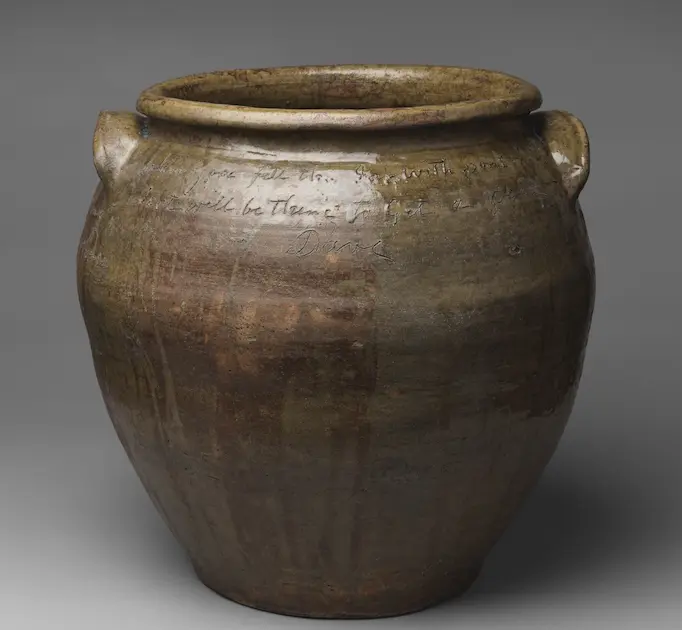
In a landmark moment for institutional ethics and the recognition of Black artistic heritage, two significant stoneware pots created by the 19th-century enslaved artisan David Drake—widely known as "Dave the Potter"—were formally returned to his descendants earlier this month. The repatriation, facilitated by a collaborative agreement between the Milwaukee Art Museum and the Dave the Potter Legacy Trust, marks a profound shift in how museums engage with the objects of enslaved creators. Following the transfer of legal ownership to the trust, the two institutions reached a subsequent agreement that ensures both vessels remain accessible to the public: one has been purchased back by the museum, while the other will be showcased through a long-term loan.
This resolution represents the culmination of a decade-long journey that began when Drake’s work first surfaced within the Milwaukee art community. As reported by The Milwaukee Journal Sentinel, Drake’s vessels were introduced to the museum in 2010 through the efforts of the Chipstone Foundation. At the time, the foundation mounted an exhibition that purposefully juxtaposed Drake’s 19th-century stoneware with contemporary sculptural works by the Chicago-based artist Theaster Gates. The exhibition sparked an immediate and intense fascination among visitors, prompting the foundation to launch extensive public programming aimed at deconstructing the historical context of Drake’s work and exploring the weight of his legacy within the modern American landscape.
A Legacy of Resilience and Craft
David Drake’s story is one of extraordinary defiance and creative mastery. Enslaved in Edgefield, South Carolina, during the antebellum period, Drake produced massive, wood-fired stoneware vessels that are now celebrated for their aesthetic beauty and historical importance. Despite the brutal conditions of his forced labor, Drake was famously literate—a dangerous and often illegal skill for an enslaved person at the time. He frequently signed his pots, dated them, and inscribed them with original poetic couplets, effectively leaving behind a permanent, undeniable record of his existence and intellect.
The Chipstone Foundation, a Wisconsin-based organization dedicated to the study and preservation of American material culture with a specialized focus on decorative arts, took a deeper interest in these vessels three years after the initial 2010 exhibition. In 2013, the foundation acquired two of Drake’s pots. These pieces were subsequently integrated into the Milwaukee Art Museum’s galleries as part of the "Dave Project," a long-term collaboration between the foundation and the museum intended to highlight the intersection of historical craft and the lived experiences of the enslaved people who produced them.
Reconnecting with the Past
For the descendants of David Drake, the return of these objects is not merely a legal or administrative milestone; it is a profound act of familial reclamation. Yaba Baker, a fourth-generation great-grandson of the artist, has been a vocal advocate for the preservation of his ancestor’s story. In his comments to The Milwaukee Journal Sentinel, Baker emphasized the importance of ensuring that Drake’s work serves as a testament to his strength.
"We believe it is important that people continue to be inspired by his unwavering perseverance in life and the brilliance that it took to create these amazing pieces of art," Baker noted. By securing the return of these vessels to the family trust, the descendants have ensured that they maintain agency over how their ancestor’s work is presented and understood. Furthermore, Baker expressed satisfaction with the arrangement to keep the pieces on public display in Milwaukee, noting that this proximity ensures that Drake’s legacy and lineage will remain accessible to the public and future generations of scholars and admirers alike.
The Role of Institutional Dialogue
The Milwaukee Art Museum has framed this repatriation as part of a broader commitment to ethical curatorial practice. Kantara Souffrant, the museum’s curator of community dialogue, has been instrumental in navigating the sensitive conversations surrounding the trust and the ownership of the pots. According to Souffrant, the project has evolved into a space where institutions can reckon with the complex history of objects produced under the duress of enslavement.
"The work of the Dave the Potter Legacy Trust is so invested in the idea of what it means to be a person who is descended from enslaved people," Souffrant explained. She emphasized that for the descendants, these objects are more than just historical artifacts; they are conduits for connection. "They are able to see these objects as a way of really, truly gathering your family—family you didn’t know," she added.
By prioritizing the voices of the descendants, the museum has moved beyond traditional acquisition models, acknowledging that the provenance of items created by enslaved individuals carries a unique moral imperative. The repatriation is seen as a way of validating the family’s role in the ongoing stewardship of Drake’s narrative.
Looking Toward the Future
The arrangement, which sees one pot purchased by the museum and the other held on long-term loan, serves as a model for future collaborations between cultural institutions and the descendants of enslaved artisans. It preserves the scholarly and public-facing mission of the museum while respecting the primary claim of the descendants.
As the objects remain in the Milwaukee Art Museum, they continue to serve as focal points for the "Dave Project," offering visitors a tangible link to the past. The vessels stand as enduring reminders of Drake’s technical skill—his ability to fire massive quantities of clay into durable, functional art—and his intellectual defiance in the face of a system designed to strip him of his humanity.
The ongoing presence of these works in the museum, now with the blessing and partnership of the Dave the Potter Legacy Trust, ensures that the conversation surrounding David Drake remains active. It is a dialogue that extends beyond the aesthetic appreciation of stoneware, inviting viewers to engage with the realities of American history, the importance of lineage, and the power of art to bridge the gaps created by time and systemic oppression. Through this partnership, the Milwaukee Art Museum and the Drake family have ensured that the potter’s voice—once silenced by the shackles of slavery—will continue to resonate for years to come.