
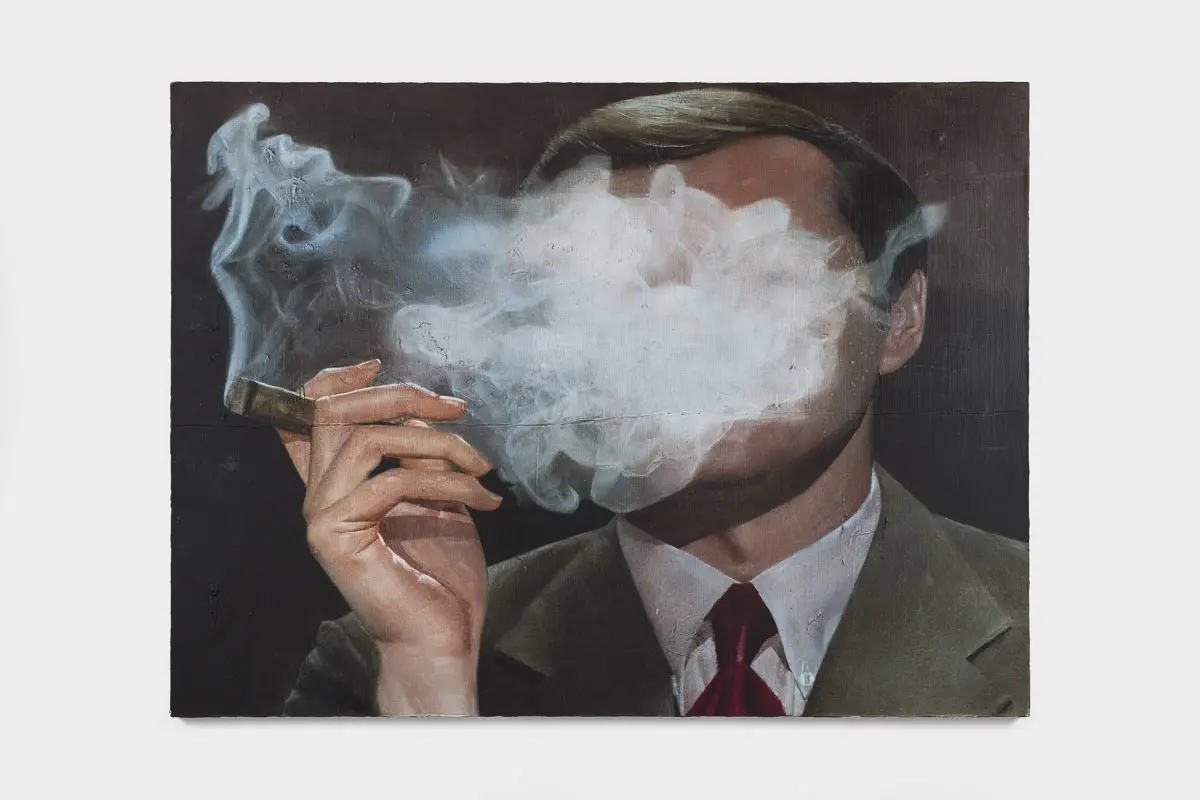
It is an age-old truism in the art world, yet one that demands constant reiteration: the intersection of market valuation and genuine artistic merit is rarely a straight line. The history of the art market is littered with instances where commercial success has detached entirely from the aesthetic or conceptual quality of the work on display. Simply because a canvas fetches a high price at auction does not guarantee its place in the canon of art history, nor does the lack of such a price tag suggest a deficiency in talent.
These are the inherent cruelties of a market driven by speculation, trend-chasing, and capital mobility. While seasoned collectors and critics have long understood this paradox, the past five years have pushed the discrepancy to an uncomfortable extreme. As we navigate the latter half of the 2020s, the tension between the "ultra-contemporary" market—a term coined to describe the explosive, often volatile interest in artists under 40—and the actual substance of the work being produced has become impossible to ignore.

The Rise of the Ultra-Contemporary
The term "ultra-contemporary" has become a shorthand for a specific kind of market frenzy. It refers to a cohort of artists who are often still in the nascent stages of their careers, with styles that have yet to fully mature or settle into a definitive voice. Despite this, the auction block has treated their output with the kind of urgency typically reserved for blue-chip masters. Works by artists in their twenties and thirties have frequently hammered for hundreds of thousands of dollars, fueled by a speculative appetite that prioritizes liquidity and "newness" over long-term historical significance.
This phenomenon has reshaped the structural landscape of the art industry. Mega-galleries, once the exclusive domain of established, museum-tested names, have increasingly turned their sights toward the very young. It is now common to see artists who have not yet hit their thirtieth birthday represented by global powerhouses, granted the sort of institutional stage and promotional machinery that was once the culmination of a decades-long career.

However, there are growing signs that this bubble may be beginning to lose its air. Recent reports, including data from the 2026 Art Basel and UBS Global Art Market Report, suggest that the fervor surrounding this specific market segment is showing signs of cooling. Market observers have begun to whisper about a "bust," noting that the frantic pace of the last few years is unsustainable. When the hype machine falters, what remains is the art itself—and it is here that the fundamental question of quality must be addressed.
Dollars Versus Substance
When the discourse surrounding an artist becomes dominated by auction records, hammer prices, and the "flip" potential of their latest output, the actual substance of the work is frequently relegated to the background. We have entered an era where we speak more about dollar signs than we do about composition, conceptual rigor, or the evolution of an artist’s vision. To discuss the work itself feels, in some circles, like an afterthought—or worse, an impediment to the narrative of financial success.

To test the health of this current landscape, one must look at the output. A recent survey of six solo gallery exhibitions in New York, all featuring artists under the age of 45 who possess auction records of $200,000 or higher, offers a sobering diagnostic tool. These shows, which should represent the pinnacle of current creative production, provide a rare opportunity to separate the market’s noise from the artist’s signal.
The results of such an assessment are, quite frankly, discouraging. With the exception of a single exhibition that managed to balance technical ambition with a distinct, evolving aesthetic, the overall picture is not a pretty one. Many of the works on view feel hurried, as if the pressure to maintain a market presence has forced these artists into a cycle of repetitive production. In several instances, the technical execution feels thin, the conceptual frameworks appear underdeveloped, and there is a palpable sense that the artist is performing for an audience of investors rather than engaging in a dialogue with art history.

The Cost of Accelerated Success
The primary casualty of this market-driven approach is time. Artistic maturity is not a function of demand; it is a function of sustained, often quiet, experimentation. It requires the freedom to fail, to iterate, and to move away from styles that have proven commercially viable in favor of ones that are more honest or complex. When an artist is thrust into the global spotlight before they have had the chance to find their footing, the market effectively freezes them in a state of early-career mimicry.
Take, for example, the works currently appearing on the secondary market. Often, they display a reliance on the "signature style" that brought the artist their initial success. There is a lack of the jagged edges, the awkward experiments, and the profound shifts that characterize the work of a truly evolving artist. Instead, we see a polished, commodified aesthetic—a brand identity that is easily recognizable at a fair booth or in a high-resolution auction catalogue, but which lacks the depth to sustain interest beyond the immediate moment.

This is not to blame the artists themselves, many of whom are caught in a machinery that prioritizes growth at any cost. Rather, it is an indictment of a gallery-auction ecosystem that incentivizes the rapid consumption of ideas. When galleries push young artists to produce at a scale and speed that is unsustainable, they risk burning out the very talent they are trying to promote.
A Reckoning on the Horizon
As the "ultra-contemporary" market faces potential contraction, the industry may be forced into a long-overdue period of reflection. The artists who survive this downturn will likely be those who possess the intellectual and artistic resilience to withstand the fluctuation of their own market value. The ones who will struggle are those who have conflated commercial demand with artistic excellence.

For the collector, the lesson is clear: the most expensive works are not necessarily the ones that will hold their value—or their meaning—in the coming decades. True quality is rarely found in the frantic, hype-filled openings that have defined the last half-decade. It is found in the work that resists easy categorization, the work that demands more from the viewer than a passing glance, and the work that suggests the artist is thinking about their place in history rather than their place on a sales ledger.
The current New York gallery scene, with its mixed bag of offerings from these high-priced, youthful stars, serves as a mirror for the broader market. It reflects a world that is obsessed with the "now" but largely indifferent to the "next." As the market cools, the conversation must shift. We must stop asking what an artist is worth and start asking what they are contributing. If the recent shows in New York are any indication, that shift cannot come soon enough. The industry has spent the better part of five years treating art like an asset class; it is time to remember that, first and foremost, it is a practice. Whether the market survives its current "bust" or not, the work that will ultimately matter is the work that possesses the integrity to stand independently of the auction gavel.