
In the ongoing debate over public health policy, a recurring critique has surfaced from corporate interests: that the vast body of observational nutrition literature is fundamentally unreliable. Critics argue that because these studies do not adhere to the gold-standard design of randomized controlled trials (RCTs), their findings should be dismissed as "low-quality." This skepticism, often amplified by industry-funded research, has created a significant hurdle in the establishment of dietary guidelines intended to protect the public. To understand whether this criticism holds water, it is essential to examine the realities of nutrition research, the limitations of the drug-trial paradigm, and the strategic use of scientific methodology to undermine public health.
The Challenges of Dietary Research
While randomized controlled trials are the undisputed gold standard for assessing pharmaceutical interventions, they are notoriously difficult to apply to the complexities of human nutrition. In a drug trial, researchers can easily control the dosage and ensure a double-blind environment where neither the doctor nor the patient knows who is receiving the medication and who is receiving a placebo. However, diet is not a drug. It is a lifelong, cumulative exposure. Dietary-related diseases—such as heart disease or certain cancers—take decades to develop. It is practically impossible to force participants to adhere to a strictly controlled diet for the years or decades required to observe these "hard endpoints." Furthermore, there is no such thing as a "placebo food."
Because of these inherent limitations, nutrition science relies heavily on observational studies that track large cohorts of individuals over long periods. By observing patterns in diet and health outcomes, researchers can identify significant links between specific foods and disease risk. Critics often dismiss these findings as speculative, yet the data tells a different story. When comparing results from large-scale observational population studies to those of randomized trials, research consistently shows little evidence of significant discrepancy. In approximately 90% of treatments examined, the findings from both methods not only point in the same direction but are of the same general magnitude.
The perceived conflicts often touted by skeptics—such as the famous disparity regarding hormone replacement therapy (HRT) and heart health—frequently boil down to nuances in methodology rather than an inherent failure of observational study design. For example, early observations suggested Premarin might reduce heart attack risk, while subsequent RCTs seemed to contradict this. Upon closer inspection, the discrepancy was rooted in the timing of the intervention—specifically, when the medication was started in relation to the patient’s age and health status. Once these variables were properly accounted for, the studies were shown to be consistent with one another.
The False Equivalence of Drugs and Diet
Even if one were to concede that observational studies provide a different level of evidence than an RCT, it is a category error to suggest that we need the same level of certainty for a dietary recommendation as we do for a high-risk pharmaceutical intervention. The consequences of prescribing a drug are vastly different from the consequences of recommending a vegetable.
Prescription drugs are a leading cause of mortality in the United States and Europe, ranking behind only heart disease and cancer. Each year, roughly 100,000 Americans die from the side effects of prescription medications, even when those drugs are taken exactly as directed. Given the immediate, life-threatening risks associated with potent pharmaceuticals, a "rock-solid" guarantee of safety and efficacy is an ethical requirement. We are, in effect, "playing with fire" when we introduce new chemicals into the human body, and rigorous, double-blind, placebo-controlled trials are the only way to manage that risk.
However, telling someone to eat more broccoli or reduce their soda intake carries an entirely different risk-benefit profile. The demand for the same level of proof for dietary guidance as for chemotherapy or surgery is not a pursuit of scientific rigor; it is an inappropriate application of a pharmaceutical-focused paradigm to the field of nutrition.
The Strategic Use of "Low-Quality" Labels
This confusion is often weaponized by industry-funded interests. A notable example is the paper funded by the sugar industry, which concluded that dietary guidelines advising people to reduce sugar intake were untrustworthy because they were based on "low-quality evidence." The authors utilized the GRADE (Grading of Recommendations, Assessment, Development, and Evaluations) system, a tool designed for clinical medicine, to assess nutritional guidelines. By applying a framework inherently biased against the observational studies necessary for nutrition research, they ensured a predetermined, negative outcome.

Critics of this approach point out that there are far more appropriate tools for evaluating nutrition research, such as NutriGrade. Unlike GRADE, NutriGrade is specifically engineered to account for the unique challenges of dietary studies, including the critical factor of funding bias. Under the NutriGrade system, industry-funded trials are downgraded to reflect the conflict of interest, a nuance that the sugar industry-backed researchers conveniently ignored by opting for the rigid, inappropriate drug-trial paradigm.
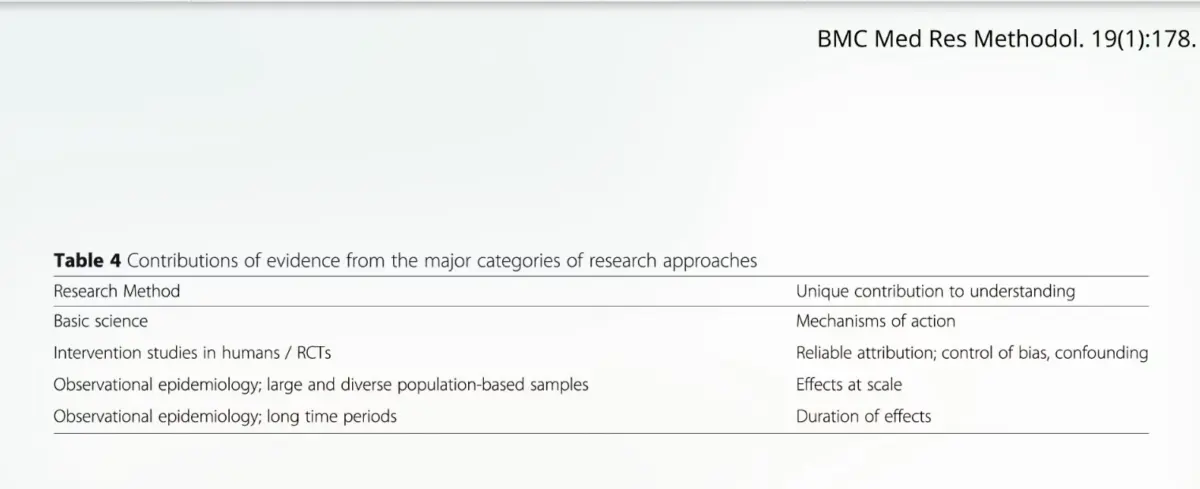
Similarly, the HEALM framework—or Hierarchies of Evidence Applied to Lifestyle Medicine—was developed to address the fact that existing clinical tools are simply not feasible for answering questions that cannot be solved through a standard randomized trial. Each research methodology, from laboratory mechanistic studies to huge population-based cohorts, provides a distinct and necessary piece of the puzzle.
Lessons from the Trans Fat Crisis
The effectiveness of combining these methods is best exemplified by the story of trans fats. For years, researchers utilized a multi-pronged approach: randomized controlled trials demonstrated that trans fats negatively altered heart disease risk factors, while massive observational studies showed a direct correlation between trans fat intake and the incidence of heart disease. Together, this body of evidence was considered strong enough to justify public health action.
The result was the near-total removal of trans fats from the U.S. food supply, an intervention estimated to prevent as many as 200,000 heart attacks annually. Had officials waited for an RCT on "hard endpoints"—essentially forcing thousands of people to eat canisters of shortening for decades to see who died first—the toll on human life would have been catastrophic. Public health officials are tasked with making the best possible decisions based on the total balance of available evidence. This is the same principle applied to established hazards like lead or PCBs; we do not wait for randomized experiments to prove that poisoning children is harmful before setting safety limits.
The Ongoing Battle for Scientific Integrity
The pattern of using industry-funded researchers to undermine public health advice continues, most recently seen in the context of red and processed meat consumption. When organizations rely on the flawed, drug-oriented GRADE approach to assess the risks of meat consumption, they predictably conclude that the evidence is "low quality." By hiring the same researchers who designed the sugar industry’s "low-quality" study, meat-industry-funded groups have successfully mirrored the same playbook: creating doubt where there is, in fact, a substantial scientific consensus.
The irony is not lost on experts who note that these industries often point to the inconsistency of guidelines over time as evidence of their unreliability. Yet, when one examines the history of these guidelines, the inconsistencies are frequently the result of earlier, industry-funded interventions. For instance, a 2002 Institute of Medicine report, which suggested a massive portion of the daily diet could consist of added sugar without health consequences, was itself partially funded by an institute bankrolled by soda and candy companies.
As we continue to navigate the complex relationship between corporate influence and dietary science, it remains vital to distinguish between genuine scientific uncertainty and manufactured doubt. Public health guidelines are intended to evolve, but they must be built on a holistic view of the evidence—one that respects the limitations of nutrition research rather than exploiting them to protect industry profits. Whether it is sugar or meat, the goal remains the same: ensuring that the public has access to clear, evidence-based guidance that prioritizes human health over the interests of the entities that profit from it.