
The golden age of Kickstarter—characterized by record-shattering, multi-million dollar campaigns that seemed to fund entire studios overnight—may be a relic of the past. However, a new report from Ico Partners analyst Thomas Bidaux reveals that the platform has transitioned from a chaotic, speculative gold rush into a steady, reliable engine for independent game development. Far from being a dying medium, crowdfunding remains a sophisticated, if demanding, tool for developers looking to bridge the gap between initial concept and a finished, publishable product.
According to research from Ico Partners, the video game sector raised a total of $26 million on Kickstarter in 2025. This figure is remarkably consistent with 2024’s performance, cementing 2025 as one of the most successful years for the platform since the industry-wide boom of 2015. While the sheer volume of projects has seen a slight, 4% dip—with 443 projects successfully reaching their funding goals—the quality and financial weight of those campaigns remain robust. Notably, 55 projects secured over $100,000, while 11 high-profile campaigns managed to eclipse the $500,000 mark.
"The last time there were this many $500k-plus projects was in 2015," Bidaux observes. "There are early indicators that 2026 will be in line with the 2025 pace. Kickstarter is not funding the whole video games industry, but there are good opportunities for the projects going on the platform."
The New Reality of Crowdfunding
Despite the positive data, developers on the ground are quick to clarify that crowdfunding is no longer a "get rich quick" scheme for under-funded teams. David Harper, Managing Director of Skyhook Games, which recently turned to the platform to secure funding for Lawn Mowing Simulator 2, notes that the landscape has shifted significantly. For developers today, the "background challenges" are increasingly complex.
"Gamers can be paralyzed by choice," Harper explains. "Marketing channels are flooded, curation is light, and the economy—both within the games industry and more generally—has been pretty tough."
The barrier to entry has arguably never been higher. In the early 2010s, titles like Frontier’s Elite: Dangerous could secure over £1.5 million with little more than a vision and a rough prototype. Today, the audience expects a polished, near-complete experience before they commit their capital. As Bidaux points out, the days of pitching a rough concept on a whim are effectively over.

"You need to have the game in a state where you can capture release-quality footage, and it is even better if you can offer a demo," Bidaux says. "Alongside that, you need to be quite advanced in your marketing effort. You need an audience already engaged and interested in the game. The campaign will help reach more people, but you need a starting base to make it work."
This reality creates a paradox for studios in distress: you cannot use Kickstarter as a lifeboat if you are already sinking. Because a successful campaign requires substantial upfront investment in marketing and vertical slices of gameplay, it is a tool for developers who are already stable, not necessarily those who are desperate.
Navigating Bad Actors and Platform Risks
Even with a perfect campaign strategy, developers face external threats that are difficult to mitigate. Harper’s experience with Lawn Mowing Simulator 2 serves as a cautionary tale regarding the rise of fraudulent pledging. During their campaign, Skyhook Games dealt with large, suspicious pledges that briefly inflated their total, only for those accounts to be purged by the platform’s security measures.

In the final 24 hours of their campaign, the removal of these fake pledges dropped the project below its funding target. While Kickstarter stepped in to offer a one-week extension—a move that eventually allowed the project to succeed—the incident highlighted the precarious nature of relying on third-party platforms.
"We’d been ‘funded’ for over three weeks, but the size of the withdrawn pledge meant that we were suddenly back below our campaign target," Harper says. "The situation made it pretty tough for us to ever really feel in control of our destiny."
Harper admits that this is a difficult issue for platforms to solve, as excessive security measures can inadvertently stifle legitimate backers. He suggests that the only real safeguard is to limit the size of the highest-tier pledges, effectively capping the risk a single bad actor can pose to a campaign’s viability.

The Critical View: Is Crowdfunding Worth the Effort?
Not everyone in the indie scene is convinced that the rewards of crowdfunding outweigh the systemic risks. Daniel Milo, an indie director at Timeless Toucan, has been vocal about his skepticism. He argues that the pressure to launch a "mostly finished" game often forces studios into a corner.
Milo points out that when a developer releases their game on storefronts like Steam after a campaign, the platform often fails to account for the core audience’s sentiment, essentially "punishing" them by ignoring the buzz generated by the crowdfunding process. Furthermore, an unsuccessful campaign can create a negative brand association that haunts a studio when they attempt to pitch to traditional publishers.
"There are plenty of systemic problems with crowdfunding, and due to competitiveness, many studios are forced to engage in tactics I frown upon," Milo says. "Due to the nature of all-or-nothing funding and the culture of ‘funded in 35 seconds’, studios are encouraged to place their target drastically below what they actually need to raise, risking a ‘funded’ game that can’t reach the release line."

Milo suggests that developers in need of capital should prioritize traditional funding paths, such as seeking out publishers, angel investors, or venture capitalists. If a project is strong enough to succeed on Kickstarter, he argues, it is likely strong enough to show the traction required to satisfy professional investors.
Building a Community Before the Launch
For those who choose to proceed, the consensus among successful developers is unanimous: the work begins months before the "Launch" button is pressed. Hrvoje Horvatek, CEO of Ironward, suggests that studios should have a "Coming Soon" page active for months, ensuring they have at least 500 followers before they even consider going live.
"Do not launch unless you reach at least 500 followers," Horvatek advises. "That’s the only way to ensure you will get a decent start even if all your marketing efforts end up not working as expected."

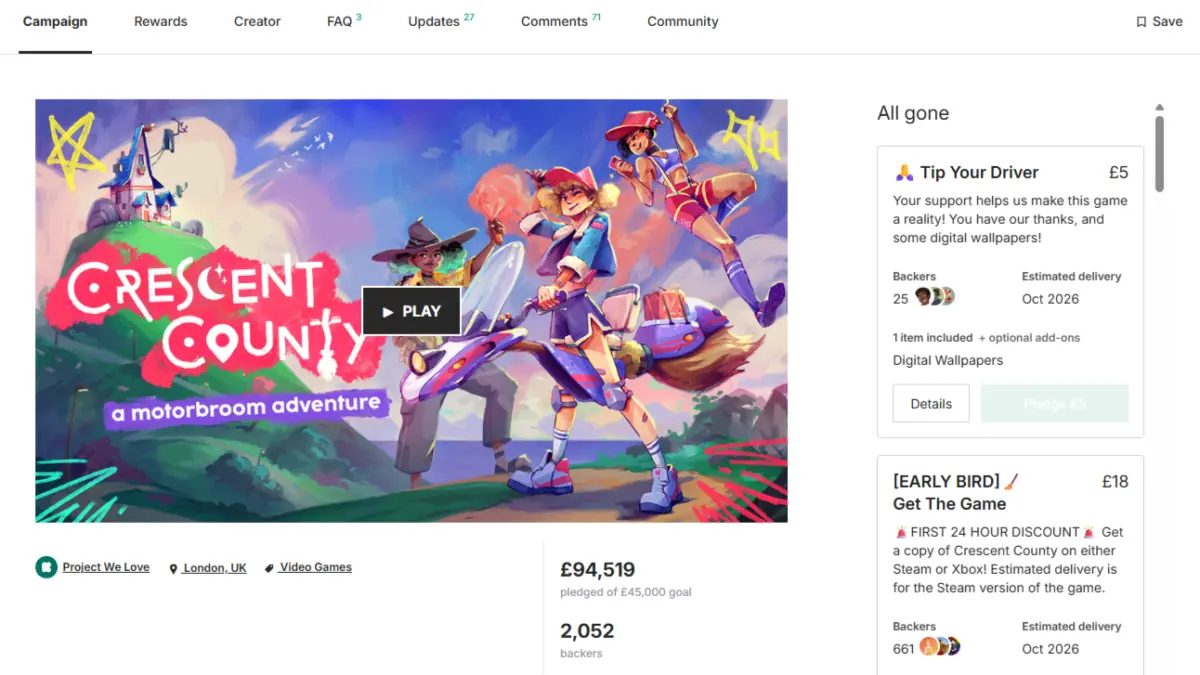
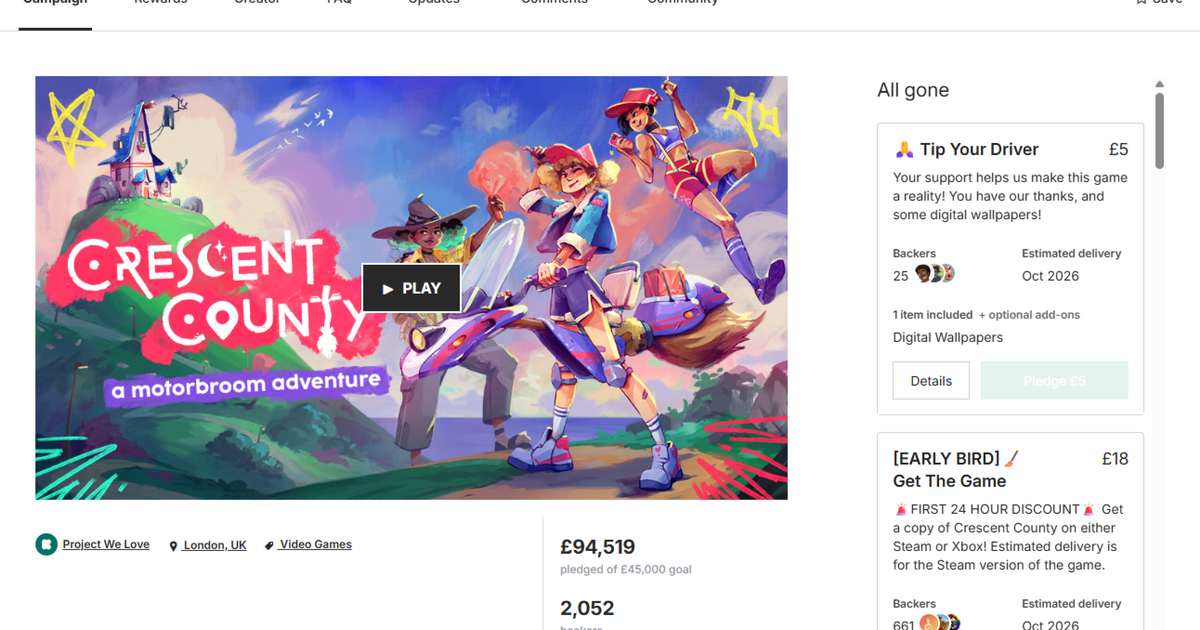
This preparation extends to the campaign page itself. It is no longer enough to have a text-heavy pitch. Modern backers expect a visual feast, including high-quality GIFs, polished screenshots, and professional graphic design. Anna Hollinrake, co-founder of Electric Saint, whose Crescent County project recently doubled its funding goal, emphasizes that authenticity is the secret ingredient.
"Don’t be afraid to put in working sketches and early ideas, because people love to see that, especially now in the age of AI," Hollinrake says. "People are much more excited to see your thought process. I absolutely recommend being vulnerable about it and being honest. People on Kickstarter really value genuineness."
Hollinrake also cautions against the administrative pitfalls of the platform, noting that once rewards are claimed, they are often locked. Developers must be meticulous in their planning, as there is little room to correct errors once the money begins to flow.

A Future for Crowdfunding
Despite the warnings, the experts remain optimistic. Thomas Bidaux sees "untapped potential" for games on the platform, provided developers understand that crowdfunding is essentially a marketing exercise disguised as a fundraising one.
"With the marketing for games getting more and more challenging, this is an excellent extra beat to add to a project that can fund itself and have an amazing halo effect on your audience," Bidaux concludes.
For Skyhook’s David Harper, the experience was grueling but educational. "Overall, the concept of video game crowdfunding is in a good place. The challenges are still very real, but if you take your time, do your research and have a compelling project, there’s every chance of finding success. We learned a great deal during our campaign… if we found ourselves in a similar situation in the future, we certainly wouldn’t rule out crowdfunding again."