
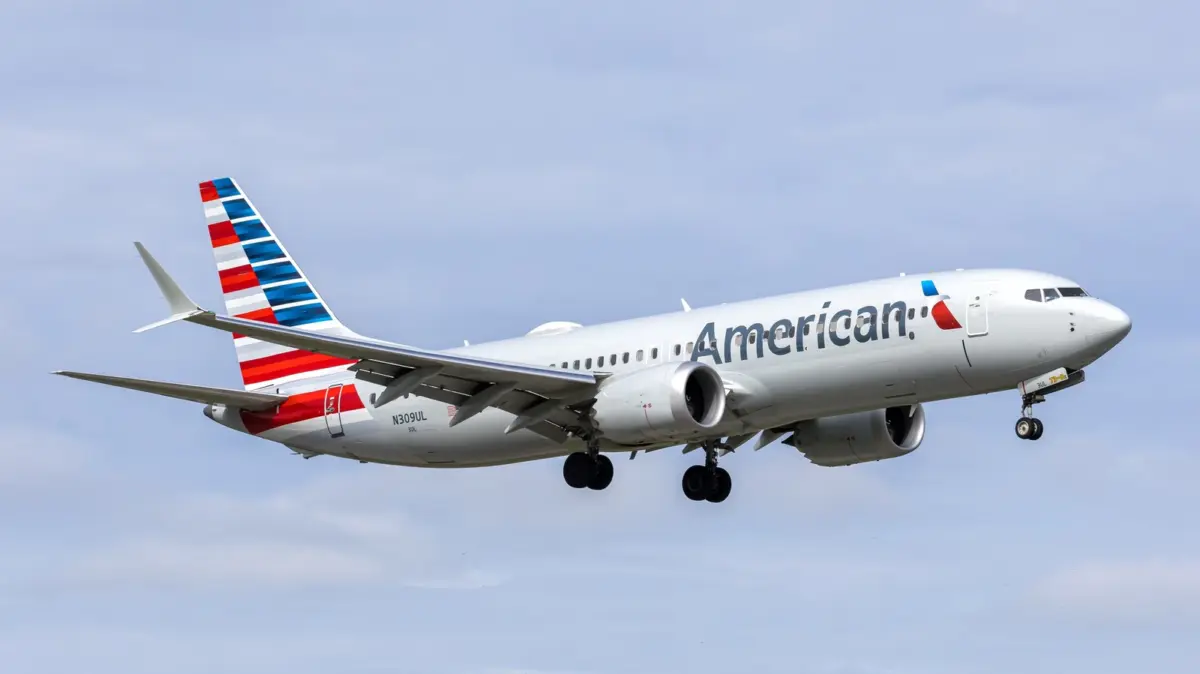
The rising fuel prices caused by the ongoing U.S.-Israeli war against Iran are extending their reach far beyond local gas stations, significantly altering the economics of commercial aviation and the cost of air travel. Travelers planning their next trips should prepare for higher ticket prices, as major carriers grapple with unprecedented operational expenses. American Airlines has announced that the latest geopolitical conflict and subsequent fuel price spikes have added an estimated $1 billion to its jet fuel costs for the fourth quarter of the current financial year.
While the major carrier is attempting to mitigate these surging expenses by preemptively canceling select flights and curbing overall fuel consumption, the immense financial burden will ultimately be passed down to consumers through increased ticket prices. The economic fallout highlights the far-reaching consequences of a conflict that many observers initially anticipated would be brief and contained, demonstrating how prolonged geopolitical instability continues to ripple through the global economy and everyday consumer goods and services.
The scale of the financial impact on the airline industry was detailed by American Airlines Chief Financial Officer Devon May during his appearance at the Morgan Stanley Laguna Conference. Speaking to investors and analysts, May broke down precisely how volatile fuel price fluctuations directly influence the company’s bottom line and operational planning. According to financial reporting from the event, May stated that every incremental one-cent-per-gallon increase in the price of Jet A-1 fuel adds approximately $10 million in direct costs to the airline’s ledger each quarter.
While American Airlines’ fuel expenditures largely aligned with corporate expectations during the third quarter, the trajectory for the fourth quarter shifted dramatically. Current market prices for jet fuel are now tracking roughly $1 dollar per gallon higher than the internal financial guidance issued by the company as recently as July. This staggering dollar-per-gallon spike directly correlates to a $1 billion increase in quarterly fuel costs alone, underscoring the extreme financial pressures currently facing legacy carriers.
Airlines are planning to cut flights, but aiming to add premium seats long-term
In response to these soaring operational costs, American Airlines, alongside industry peers such as United Airlines and Southwest Airlines, has indicated plans to strategically reduce the total number of scheduled flights. By operating fewer flights, the airlines aim to curb overall fuel consumption and tighten capacity to protect profit margins. Industry analysts note that budget-friendly, off-peak domestic flights are primarily on the chopping block as carriers optimize their route networks for maximum profitability.
Despite airfare having steadily climbed since the beginning of the year, all three major airlines report that consumer demand for travel has remained remarkably resilient. Rather than retreating from the market entirely, American Airlines hopes to capitalize on the current economic landscape by strategically increasing the proportion of premium seats across its fleet. Speaking at the same conference alongside CFO Devon May, American Airlines CEO Robert Isom elaborated on this long-term cabin strategy.
"Those 30% of seats, they’re only going to grow in our fleet as the reconfigurations come on board as the new aircraft deliveries come on," Isom told attendees, emphasizing the airline’s pivot toward high-yield revenue streams.
This strategic shift highlights a broader, fundamental transformation within the commercial aviation industry: the traditional, ultra-low-cost airline model is effectively becoming a relic of the past. The pressures of high fuel prices, combined with shifting consumer expectations and post-pandemic economic realities, have heavily punished carriers operating at the lowest end of the pricing spectrum. This was underscored earlier in the year when Spirit Airlines finally ceased its flight operations entirely after filing for Chapter 11 bankruptcy protection for the second time in a single year.
The erosion of the low-cost model is visible across the entire domestic market. Southwest Airlines, historically known for its accessible pricing, straightforward fare structures, and egalitarian open-seating policy, announced earlier this month that it will launch a dedicated airport lounge network next year. The introduction of lounges represents the final, decisive step in Southwest’s ongoing transition away from its traditional low-cost roots toward a mainline carrier status, a transformation that also included the introduction of checked bag fees and assigned seating.
As major airlines restructure their cabin layouts, introduce loyalty-driven amenities, and adjust capacity to manage soaring expenses like the billion-dollar fuel penalty driven by the conflict in the Middle East, the modern aviation landscape is making its priorities clear. The industry is increasingly ready and willing to move away from common, budget-conscious flyers, concentrating instead on affluent travelers who are able and willing to pay extra for comfort and premium service up front.