
For more than half a century, the Endangered Species Act has stood as an indomitable pillar of environmental conservation in the United States. Signed into law in 1973, the landmark legislation accomplished what many once thought impossible, bringing iconic American wildlife like the bald eagle, the Florida manatee, and the humpback whale back from the brink of total annihilation. It established a legal framework that treated the survival of the country’s rarest creatures as a matter of national priority and public trust.
Now, however, the federal government has advanced its most aggressive challenge yet to those foundational protections. The U.S. Fish and Wildlife Service has enacted a sweeping directive establishing that killing a federally protected animal is no longer considered illegal under the law—provided that the death was accidental or unintentional.
This consequential policy shift follows closely on the heels of another recent regulatory revision stipulating that the severe degradation or destruction of an endangered animal’s natural habitat no longer qualifies as "harming" the species. Working in tandem, these two administrative changes fundamentally alter the enforcement mechanism of the Endangered Species Act. By effectively removing the teeth from the statute, the administration’s actions pave the way for heavy extractive industries—including commercial logging, mining, intense regional development, and industrial navigation—to operate across sensitive ecosystems with minimal regard for the vulnerable wildlife that calls those areas home.
The dramatic shift in federal policy essentially distills the future of the nation’s most endangered fauna down to the interpretation of two seemingly simple words embedded in the 1973 text: "harm" and "take." Within the legal framework of the statute, the word "take" serves as the primary statutory prohibition against killing, capturing, or injuring a protected creature. Under the newly minted guidance, the boundaries of that prohibition have been dramatically constricted.
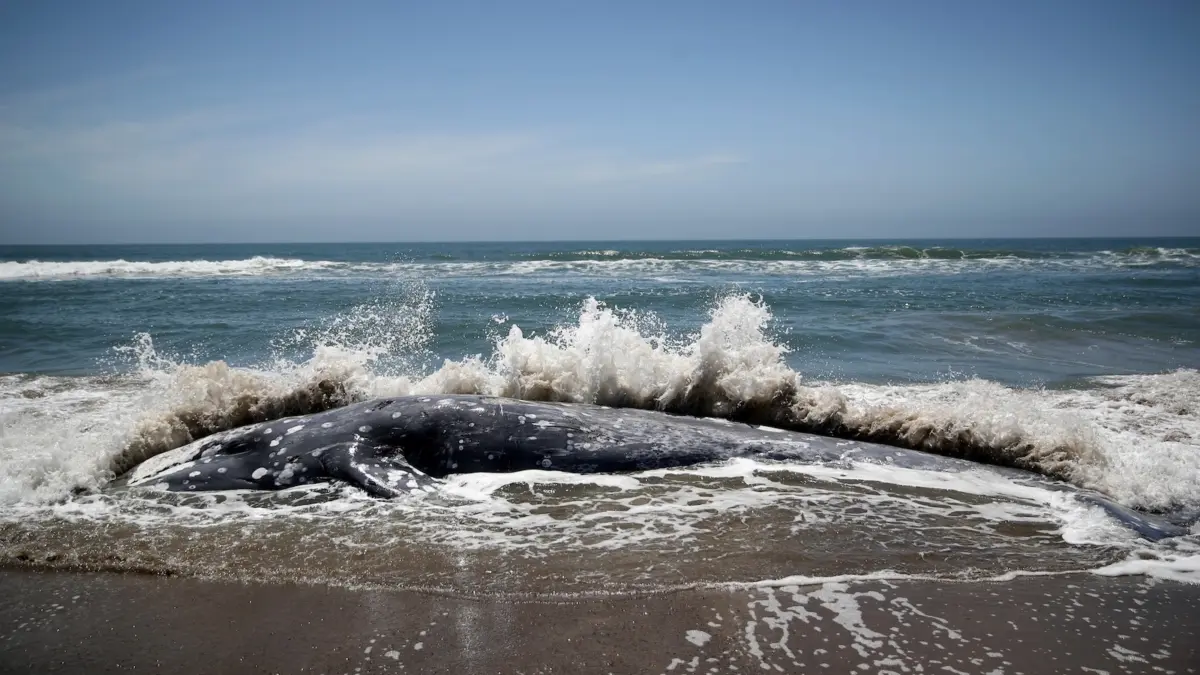
"A vessel that inadvertently strikes a whale has not taken it, because the vessel’s course was not set against the whale," states the internal agency memo, which bears the signature of Brian Nesvik, director of the U.S. Fish and Wildlife Service. "Felling a tree is not a take of the bats roosting in it unless the tree was felled for the purpose of killing or capturing them."
Legal scholars and environmental attorneys immediately noted that this interpretation represents an unprecedentedly narrow view of statutory language that has governed American conservation for decades. Consequently, the policy changes are virtually guaranteed to face fierce and immediate challenges in the federal court system. The conflict builds upon an already contentious legal landscape; almost two dozen state attorneys general recently filed lawsuits against the administration over separate modifications to the law, and a wave of new litigation from major environmental advocacy organizations is anticipated in the coming weeks and months. If historical precedent serves as any reliable indicator, the federal agency may soon find itself defending a vulnerable legal position in familiar judicial territory.
"They are trying to disregard 50 years of the act, and how the agency—and everybody—has always interpreted this word," said Ryan Shannon, an attorney at Defenders of Wildlife, a prominent conservation nonprofit that has spearheaded endangered species recovery initiatives for decades. "This is not a bunt—they are really swinging for the fences with this."
The stakes of the dispute are extraordinarily high because the words "harm" and "take" form the very core of what has historically made the Endangered Species Act so remarkably effective at checking unchecked industrial expansion.
The decades-long battle to protect the northern spotted owl serves as a textbook example of this dynamic. For generations, intensive commercial logging throughout the Pacific Northwest systematically eliminated vast swaths of the old-growth forest canopy that the owls required for survival. However, after the species was officially listed under federal protection in 1990, cutting down those vital forest habitats was legally designated as a form of harming the owl, and therefore constituted an illegal "take" under the law.
For decades, the statute has remained a consistent point of friction for commercial industries seeking to exploit natural resources. Environmental organizations have frequently relied on the Endangered Species Act as a primary legal instrument to halt or curtail corporate projects involving logging, mineral extraction, and large-scale infrastructure development in ecologically sensitive regions.

By altering these definitions, critics argue the federal government has fundamentally inverted its mandate. "The administration is telling every industry in America that killing endangered wildlife is fine as long as it wasn’t their primary goal," said Andrew Wetzler, an executive at the Natural Resources Defense Council, in a public statement. "But unintentional harm is exactly what is driving many species towards extinction."
The judiciary has previously grappled with the precise legal definitions of these terms. In the landmark 1995 Supreme Court case Babbitt v. Sweet Home, the high court ruled that modifying a creature’s natural habitat—such as logging the ancient forests where northern spotted owls reside—unquestionably counts as harming the animal. In a strongly worded dissenting opinion at the time, the late Justice Antonin Scalia argued that the statutory definition of "take" should be strictly limited to the direct, purposeful killing or physical injury of wildlife. The Trump administration’s new policy memo explicitly adopts Justice Scalia’s historical minority interpretation, despite the fact that a majority of the Supreme Court explicitly rejected it three decades ago.
The policy shift also collides with the broader evolution of administrative law. Earlier this summer, when the administration introduced revisions narrowing its definition of what actions constitute harming an animal, officials argued that there exists a "traditional meaning" of the word "take," pointing exclusively to the direct killing or capturing of wild fauna. Yet the verb "take" is notoriously complex and difficult to define with absolute precision, having famously tormented lexicographers and dictionary editors for more than a century. Back in 2001, professional lexicographer Kory Stamper spent weeks attempting to catalog and define every nuance of the word, later reflecting that the exhaustive linguistic ordeal nearly unspooled her sanity, driving her to temporary panic and despair.
Compounding the legal vulnerability of the new guidance is a major 2024 Supreme Court ruling establishing that federal courts—rather than administrative agencies—hold the ultimate authority to interpret federal statutes. While that judicial decision was widely interpreted as a severe blow to broader federal environmental regulations, it could ironically mean that the administration lacks the final say in how the Fish and Wildlife Service interprets the statutory boundaries of the Endangered Species Act.
These converging legal factors render the agency’s new directive legally precarious, according to Brett Hartl, director of government affairs at the Center for Biological Diversity, an environmental conservation group.
The memo is "essentially performative cruelty for the sake of it" and is "barely worth the paper it’s printed on," Hartl asserted. "They’re trying to turn it into an anti-poaching statute, but it’s actually supposed to be the strongest conservation law in the world."
Ironically, the administration’s sweeping regulatory rewrite could ultimately leave corporate entities in a more complicated and uncertain position than before. According to Shannon, the policy abruptly upends decades of settled regulatory expectations that industries had learned to navigate. Corporate legal teams now face a difficult strategic dilemma: they must decide whether to advise their clients to immediately exploit the agency’s lax new enforcement approach, or exercise caution in anticipation that federal courts or a future administration will ultimately reinstate the historical protections.
For corporations that value long-term regulatory stability above short-term gains—including commercial timber enterprises and large-scale real estate developers—this radical deregulatory swing may represent a legal shift far more extreme than anything they originally requested.
If the federal courts ultimately side with the administration and allow the new policy to stand, the ecological consequences will not be distributed evenly across the animal kingdom. Species that gained federal listing in more recent decades were routinely granted explicit "critical habitat protections," which established an additional layer of rigorous regulatory scrutiny for any human activities capable of degrading their environment—protections that eventually became mandatory for all newly listed creatures.
However, many of the nation’s most iconic species—those listed during the formative early years of the Endangered Species Act, including the Florida panther and the California sea otter—never received those supplementary habitat designations. Instead, their long-term survival has historically depended entirely on the broader statutory language embedded in the words "harm" and "take." Consequently, the animals that the American public once sought to protect with the highest degree of urgency may now find themselves the most dangerously exposed.