
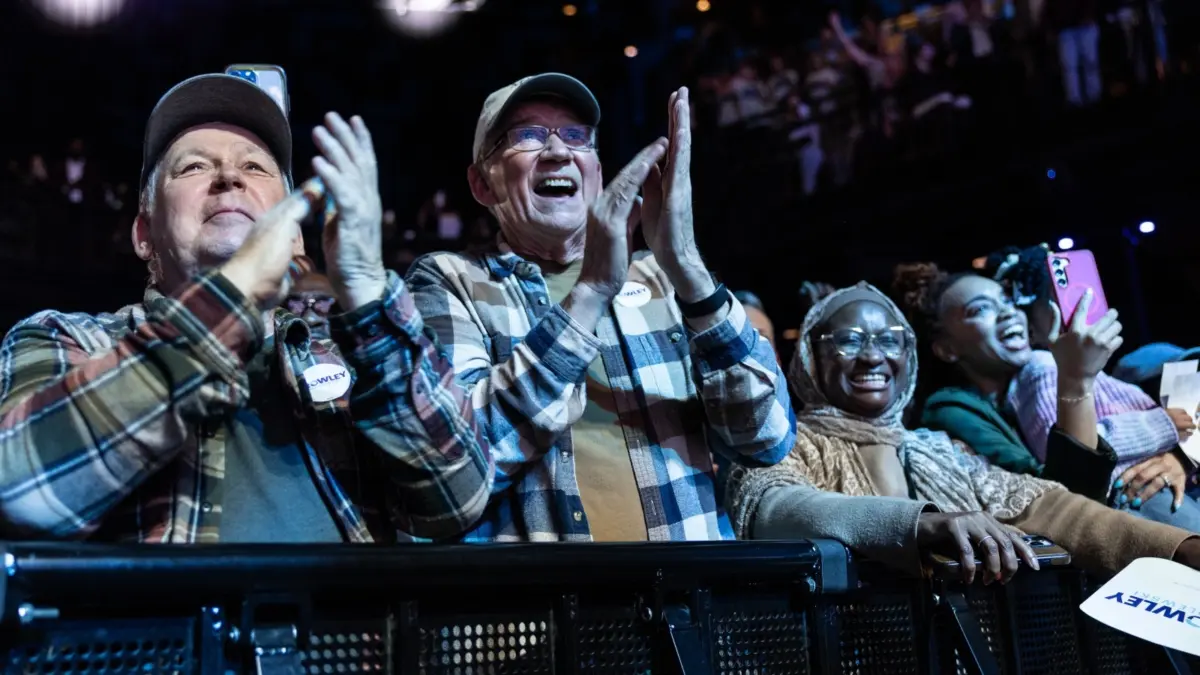
On a crisp October evening in Detroit, the state’s political landscape was on display as the two candidates vying to represent Michigan in the United States Senate took the stage at the influential Detroit Economic Club. For a full hour, Democrat Abdul El-Sayed and Republican Mike Rogers fielded questions on the pressing economic, social, and environmental challenges facing the state.
For El-Sayed, the debate marked a stark contrast from his earlier political iterations. Years ago, during his prior run for governor and his emergence as a prominent progressive voice, El-Sayed had made a national name for himself by directly linking public health crises to the escalating climate emergency. At the time, he published a fierce, widely circulated defense of the Green New Deal, championing its comprehensive economic, health, and planetary benefits. Yet, during his appearance at the Detroit Economic Club last month, El-Sayed did not utter the phrase "Green New Deal" a single time.
Instead, the only references to the landmark climate resolution came from his opponent. Rogers invoked the Green New Deal as a blunt political weapon to attack El-Sayed and the broader Democratic platform, warning the audience of looming fiscal threats. "We need to make sure we don’t have the largest tax increase in the history of the country," Rogers told the crowd, framing it as the inevitable outcome of what "the other team is talking about doing."
Casting a vote for El-Sayed, Rogers argued, would usher in an unwanted era of "big government, government control, more rules, more regulation, another Green New Deal." This line of attack has become a standard refrain across conservative circles following President Donald Trump’s concerted effort to rebrand the climate movement’s push for massive public investment in renewable energy as a "Green New Scam."
Despite the partisan friction and the weaponization of progressive climate terminology during the debate, El-Sayed handily won the Senate race just two weeks later.
His victory, alongside those of other progressive candidates across the country, points to a broader evolution in how Democrats approach environmental policy. According to a recent analysis by the Climate and Community Institute (CCI), El-Sayed exemplifies a newly emerging class of "green economic populists." These candidates are successfully running for public office—and winning—by pivoting away from federal acronyms and instead connecting the urgent need for climate action to everyday kitchen-table issues, such as soaring utility bills and the vast hoarding of wealth by a handful of powerful individuals and corporations.
Patrick Bigger, research director at the Climate and Community Institute, noted that El-Sayed "clearly gets it." Describing the senator-elect’s platform as "really exciting," Bigger pointed to proposals that advocate for stricter regulations on energy-intensive data centers and major utility companies. These policy planks represent a pragmatic and promising climate agenda, even if politicians choose not to explicitly label them under traditional federal banners.
For instance, modern voters frequently push back against the rapid proliferation of massive data centers in their local neighborhoods for various reasons. While these facilities are undeniably required to support our increasingly digitalized reality, progressives now recognize a strategic opportunity to take the corporations behind them to task, compelling them to commit to meaningful measures that reduce their immense strain on local environments and municipal water supplies. Similarly, in communities where voters have rallied behind demands to lower skyrocketing utility bills, elected officials now possess a clear mandate to talk further about investing in cheaper, decentralized renewable energy systems, such as solar and wind power, which insulate consumers from the volatile fossil fuel market.
Bigger recently led an in-depth CCI analysis that scored candidates running in primary and midterm elections based on three key evaluative questions. First, researchers examined whether a candidate was actively pushing for renewable energy or other tangible climate actions. Second, they checked whether the candidate explicitly named the rising cost of living as a paramount voter concern and presented a concrete plan to lower those financial burdens. Finally, they looked at whether the candidate articulated a populist vision by directly blaming wealthy corporations and powerful individuals for driving both the escalating climate crisis and the concurrent affordability crunch. CCI’s findings suggest that candidates like El-Sayed who successfully check all three boxes are defining the new template for climate champions in modern American politics.
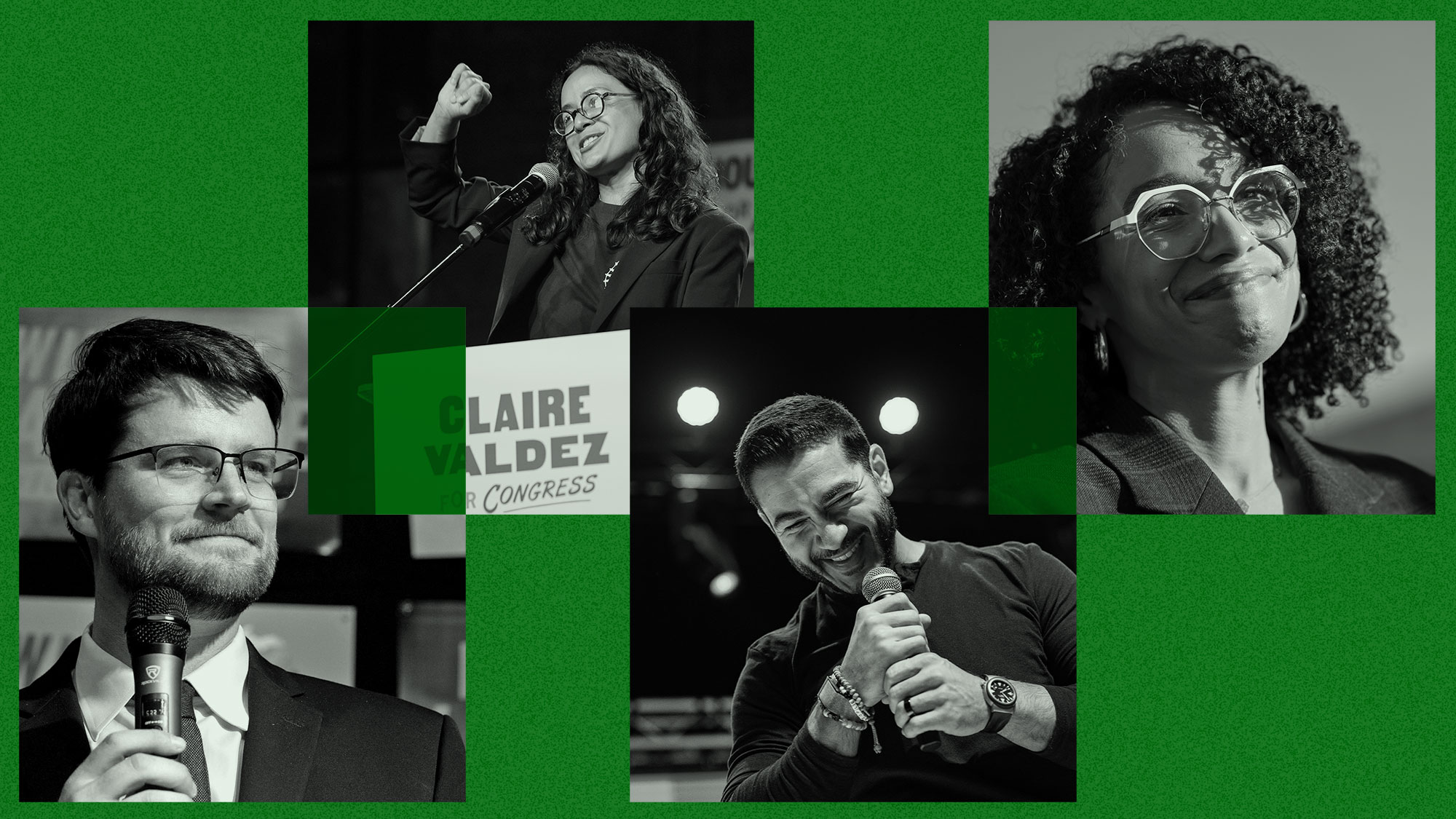
Other prominent progressives highlighted in the report include Will Lawrence, a co-founder of the Sunrise Movement—the youth-led climate organization that first thrust the Green New Deal into the national spotlight back in 2018. Lawrence, who is set to represent Michigan’s 7th District in the upcoming Congress, proudly features his extensive history of grassroots climate organizing on his campaign website. "I will be among the most knowledgeable and dedicated members of Congress on water, climate and energy policy," Lawrence writes to his constituents. "I will fight for investment to secure the climate we depend on, adapt to the changes we can’t prevent, and finally drive our electric bills down."
According to Bigger, these "new folks headed to the House and the Senate who are really on board with a robust transformative approach to climate" represent "a major shift" in legislative advocacy.
Even so, not all climate progressives heading to Washington next year are entirely hesitant to utter the words "Green New Deal." Representatives-elect Claire Valdez and Darializa Avila Chevalier, both victors in New York City races, explicitly name the framework on their official campaign websites and in press interviews. Yet, even these candidates demonstrate a willingness to refresh and broaden their rhetoric. Valdez and Avila Chevalier’s platforms also incorporate sweeping concepts like ensuring "a livable planet for all" and fighting for "a livable world for everyone."
This diversity in messaging tactics partly reflects the fractured and defensive nature of the broader climate movement, particularly as the political terrain shifted following Trump’s return to the presidency with an explicit mandate to roll back Biden-era environmental protections and administrative rules.
Aru Shiney-Ajay, executive director of the Sunrise Movement, observed that if progressive Democrats have altered their messaging on climate, it is largely because the political and environmental terrain they must navigate has fundamentally transformed as well. "I think, as the climate crisis gets worse and worse, it’s becoming increasingly clear that the strategy, policy-wise, needs to be incorporating climate change into every single aspect of what we’re doing," Shiney-Ajay said. In her view, effective climate policy should never be framed as a localized, isolated issue separate from the broader economy, infrastructure improvements, or foreign policy. Instead, "It should be the defining framework within which we have to think about how we run our society."
In 2018, the Sunrise Movement burst onto the national political stage through high-profile demonstrations outside House Minority Leader Nancy Pelosi’s office, with the Green New Deal serving as their singular, non-negotiable top priority. Just seven years later, the realities of political organizing have evolved; members of the Sunrise Movement recently voted to reorganize their strategic priorities around fighting authoritarianism and countering the second Trump administration. Shiney-Ajay openly acknowledged that the broader climate movement has undeniably suffered setbacks in recent years amid shifting federal priorities and legislative gridlock.
However, she emphasized that institutional setbacks do not mean the American public has become apathetic or disengaged from the realities of the climate crisis. In fact, public opinion data indicates that voters across the entire political spectrum are more attuned to environmental and economic pressures than ever before.
"People are actually really hungry for something to do about climate change," Shiney-Ajay said. "I think we will actually see a lot of momentum around stopping the climate crisis. And I certainly hope to build a movement that makes that possible."
Wherever climate progressives and newly minted green economic populists take office, the CCI report stresses that the time for theoretical debate has passed and the time to govern has arrived. Solving an issue as complex as global climate change will inevitably require far more than the span of the next two years, or even a single presidential term. For now, however, the new class of lawmakers arriving in Washington is proving that political victories on climate are possible when tied directly to the economic survival of everyday working families.